Escenario de intercambio de ataques nucleares y visión general de la supervivencia.
Análisis exhaustivo de la fenomenología de las detonaciones nucleares, los riesgos radiológicos y los marcos para la supervivencia sistémica.
La investigación científica sobre la guerra nuclear requiere una comprensión multidimensional de la física, la química atmosférica, la radiobiología y la ingeniería civil. Una detonación nuclear representa una perturbación sin precedentes de los sistemas terrestres, liberando energía a través de la rápida reconfiguración de los núcleos atómicos. Esta energía se manifiesta en una secuencia de fenómenos físicos, comenzando con una descarga de radiación ionizante a escala de microsegundos y culminando en cambios climáticos a escala de décadas.
El siguiente análisis explora los mecanismos deterministas de las explosiones nucleares, las consecuencias radiológicas resultantes, los efectos ambientales más amplios y las estrategias basadas en evidencia para garantizar la resiliencia humana y sistémica en el entorno post-ataque.
Física Determinista de la Detonación Nuclear
La energía liberada en una explosión nuclear proviene de la fisión de núcleos pesados, como el uranio-235 o el plutonio-239, o de la fusión de isótopos ligeros como el deuterio y el tritio. A diferencia de los explosivos convencionales, que dependen de reacciones químicas entre moléculas, las reacciones nucleares operan a nivel del núcleo atómico, produciendo densidades de energía millones de veces mayores por unidad de masa. Esta enorme liberación de energía ocurre en una fracción de microsegundo, elevando la temperatura de los residuos del arma a varios decenas de millones de grados Kelvin y generando presiones internas que superan un millón de veces la presión atmosférica.
Formación de la bola de fuego y dinámica de los pulsos térmicos
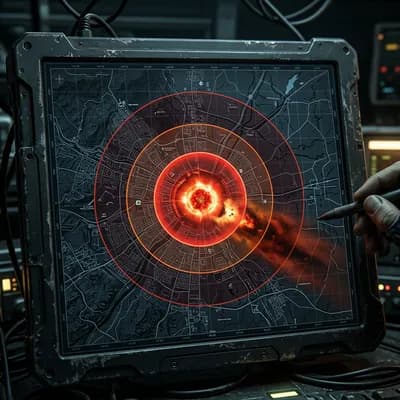
La fase inicial de una detonación nuclear en la atmósfera está dominada por la emisión de rayos X. Debido a que el aire a nivel del mar es relativamente opaco a estos fotones de alta energía, los rayos X se absorben en cuestión de unos pocos metros del punto de detonación, calentando el aire circundante hasta convertirlo en una masa esférica incandescente conocida como bola de fuego. En menos de un milisegundo, la bola de fuego de un dispositivo de 1 megatón (Mt) se expande hasta un diámetro de 440 pies; en 10 segundos, alcanza un diámetro máximo de aproximadamente 5700 pies (más de una milla) y comienza a elevarse como un globo aerostático a velocidades de 250 a 350 pies por segundo.
La radiación térmica representa aproximadamente el 35 por ciento de la energía total liberada. En una explosión atmosférica, esta radiación se emite en dos pulsos. El primer pulso es extremadamente breve y consiste principalmente de luz ultravioleta. El segundo pulso, que transporta la mayor parte de la energía térmica, dura varios segundos y es responsable de incendios generalizados y daños biológicos. El brillo de la bola de fuego es tal que puede ser vista desde cientos de millas de distancia; las explosiones de megatones a gran altitud han sido observadas a distancias de 700 millas.
El color de la bola de fuego y la nube resultante en forma de hongo experimenta una evolución química. Inicialmente, la nube puede aparecer roja o rojizo-marrón debido a la formación de óxidos de nitrógeno ($NO_2$, $N_2O_4$) a través de la interacción a alta temperatura entre el nitrógeno y el oxígeno en la atmósfera. A medida que la nube se enfría, el vapor de agua se condensa en gotas, lo que hace que la nube evolucione a una apariencia blanca y parecida al coliflor, que es la forma característica de "hongo" que alcanza la estabilización aproximadamente 10 minutos después de la explosión.
| Parámetro del efecto térmico | Medición/Valor para una explosión de 1 Mt | | :--- | :--- | | Tiempo para alcanzar el diámetro máximo | 10 segundos | | Diámetro máximo de la bola de fuego | ~5.700 pies | | Temperatura inicial | > 10.000.000 K | | Tasa de ascenso (inicial) | 250–350 pies/segundo | | Partición de energía (térmica) | 35% | | Distancia de visibilidad (alta altitud) | ~700 millas |
Propagación de la onda de choque hidrodinámica y la onda de explosión.
Aproximadamente el 50 por ciento de la energía de un arma nuclear se libera como una explosión mecánica y un impacto. Esto comienza como un frente de choque de alta presión que se propaga hacia afuera desde la bola de fuego. En una explosión en el aire, que ocurre a una altitud diseñada para maximizar los daños por la explosión, la onda de choque golpea el suelo y se refleja hacia arriba. La interacción entre la onda de choque primaria (incidente) y la onda reflejada crea una "onda de choque vertical", un frente de onda vertical que se mueve horizontalmente sobre la superficie con una presión significativamente mayor y un mayor potencial destructivo.
La métrica principal para evaluar los daños por la explosión es la sobrepresión, que es la presión por encima de los niveles atmosféricos estándar (14,7 psi). El daño estructural se determina por la sobrepresión máxima y la duración de la fase de presión positiva. Las estructuras residenciales suelen ser vulnerables a niveles bajos de sobrepresión; por ejemplo, una casa modesta con una pared frontal de 50.000 pulgadas experimenta una fuerza de 25 toneladas incluso con una sobrepresión de tan solo 1 psi.
| Sobrepresión máxima (psi) | Daño esperado a las estructuras | | :--- | :--- | | 1.0 | El vidrio de las ventanas se rompe; las puertas se vuelven difíciles de abrir | | 5.0 | Destrucción completa de la mayoría de los edificios residenciales sin refuerzo | | 10.0 | Colapso de edificios comerciales y fábricas de ladrillo | | 20.0 | Demolición de estructuras de hormigón armado | | 100.0 | Destrucción de búnkeres de almacenamiento nuclear reforzados | | 500.0 | Colapso de silos de misiles y centros de comando |
Si bien el cuerpo humano es notablemente resistente a la sobrepresión directa, a menudo sobreviviendo a presiones de hasta 30 psi sin lesiones internas fatales, los efectos secundarios y terciarios de la explosión son letales. Estos incluyen el colapso de edificios sobre los ocupantes, el impacto de escombros a alta velocidad (como fragmentos de vidrio que viajan a cientos de millas por hora) y el desplazamiento físico de las personas contra objetos sólidos.
Incendios masivos y la tormenta de fuego urbana
El destello térmico enciende materiales inflamables, como papel, vegetación seca y telas finas, en una vasta área. Para un dispositivo termonuclear de gran tamaño, esta zona de ignición puede extenderse hasta 20 millas desde el punto cero. Si la densidad de estos incendios es lo suficientemente alta, pueden coalescer en una tormenta de fuego. Este fenómeno se caracteriza por un "efecto chimenea", donde la liberación masiva de calor provoca que el aire suba rápidamente, arrastrando vientos superficiales desde la periferia a velocidades de huracán. Estos vientos entrantes impiden que el fuego se propague hacia afuera, pero lo hacen arder con una intensidad extrema, consumiendo el oxígeno disponible y produciendo concentraciones letales de monóxido de carbono. Los sobrevivientes en refugios dentro de una zona de tormenta de fuego pueden sucumbir a la asfixia o al calor, incluso si el refugio permanece estructuralmente intacto.
Fenomenología radiológica
La radiación nuclear se divide en radiación inmediata (inicial) y radiación residual (remanente). La radiación inmediata ocurre durante el primer minuto de la detonación y consta principalmente de rayos gamma y neutrones producidos por las propias reacciones nucleares o por la captura de neutrones por los núcleos atmosféricos. La radiación residual, o lluvia radiactiva, se refiere a la desintegración de los isótopos radiactivos durante horas, días y años.
Mecanismos de Ionización: Alfa, Beta y Gamma
Los peligros de la radiación nuclear están definidos por el tipo de partícula emitida durante la desintegración radiactiva. Las partículas alfa son agrupaciones pesadas y con carga positiva compuestas por dos protones y dos neutrones. Aunque son muy energéticas, tienen un alcance corto (unos pocos centímetros en el aire) y no pueden penetrar la capa externa de la piel humana. Sin embargo, si los emisores de partículas alfa son inhalados, ingeridos o entran a través de una herida, causan daños severos y localizados a los tejidos sensibles y al ADN.
Las partículas beta son electrones o positrones de movimiento rápido. Son más penetrantes que las partículas alfa y pueden causar "quemaduras beta" en la piel, pero son más peligrosas cuando se internalizan. La radiación gamma consiste en fotones de alta energía (radiación electromagnética) que son muy penetrantes. Los rayos gamma pueden viajar distancias significativas a través del aire y requieren un blindaje denso, como plomo, hormigón o tierra gruesa, para reducir su intensidad.
El Mecanismo de la Lluvia Radiactiva.
La formación de la lluvia radiactiva depende en gran medida de la altura de la explosión. En una explosión en el aire, la onda expansiva no toca el suelo, y los residuos radiactivos del arma se condensan en partículas extremadamente finas que son elevadas a la estratosfera. Estas partículas pueden permanecer suspendidas en el aire durante años, contribuyendo eventualmente a la radiación de fondo global, pero sin representar una amenaza local inmediata significativa.
En una explosión en la superficie, la onda expansiva vaporiza y arrastra grandes cantidades de suelo y escombros. Los isótopos radiactivos se condensan sobre estas partículas más grandes y pesadas, que vuelven a la Tierra relativamente rápido, creando una zona de intensa "lluvia radiactiva local" en dirección al viento desde el punto de la detonación. La mayor concentración de lluvia radiactiva se produce cerca del punto de la detonación, pero los niveles peligrosos pueden extenderse hasta 10 a 20 millas o más, dependiendo de la velocidad del viento y la potencia de la explosión.
La regla empírica de 7:10 de la desintegración radiactiva
La radiactividad de la lluvia radiactiva está dominada por isótopos de vida corta que se desintegran rápidamente. La regla empírica de 7:10 proporciona un modelo general para esta desintegración: por cada aumento de siete en el tiempo después de la detonación, la tasa de exposición a la radiación disminuye en un factor de diez.
| Tiempo después de la detonación | Nivel de radiación (relativo a 1 hora) | | :--- | :--- | | 1 hora | 100% (por ejemplo, 1000 R/h) | | 7 horas | 10% (100 R/h) | | 49 horas (aproximadamente 2 días) | 1% (10 R/h) | | 343 horas (aproximadamente 2 semanas) | 0.1% (1 R/h) | | 2401 horas (aproximadamente 14 semanas) | 0.01% (0.1 R/h) |
Esta rápida degradación subraya la importancia crítica de permanecer resguardado durante las primeras 48 horas. Al final del primer día, la posible exposición ya ha disminuido en aproximadamente un 80 por ciento, y al final del segundo día, el riesgo se reduce en un 99 por ciento.
Consecuencias ambientales y climáticas a largo plazo
Un intercambio nuclear a gran escala provocaría cambios ambientales mucho más persistentes que la explosión y la lluvia radiactiva inmediatas. Estos efectos se deben principalmente a la inyección de carbono negro (hollín) en la atmósfera superior.
El invierno nuclear y el paradigma del enfriamiento global
La combustión de ciudades e instalaciones industriales modernas liberaría millones de toneladas de hollín a la estratosfera. A diferencia del polvo volcánico o del humo troposférico, el hollín estratosférico es "auto-elevante": absorbe la energía solar, calienta el aire circundante y asciende aún más en la atmósfera, donde está protegido de la eliminación por la lluvia. Esta capa de hollín actúa como un velo, bloqueando la luz solar entrante y enfriando la superficie de la Tierra.
Los modelos actuales del sistema terrestre (ESM, por sus siglas en inglés) sugieren que un conflicto global entre Estados Unidos y Rusia podría liberar 150 teragramos (Tg) de hollín, lo que provocaría que las temperaturas superficiales disminuyeran en más de 20 grados Celsius en regiones agrícolas clave. La recuperación del clima global llevaría al menos 15 años. Incluso un conflicto regional limitado (por ejemplo, India-Pakistán) que liberara 5 Tg de hollín causaría un enfriamiento global significativo y alteraría los patrones de lluvia, poniendo en peligro la seguridad alimentaria de miles de millones de personas.
Agotamiento de la capa de ozono estratosférico y radiación UV-B
El mismo hollín que enfría la superficie también calienta la estratosfera, alcanzando temperaturas significativamente superiores a la normal. Este calentamiento, combinado con la liberación de óxidos de nitrógeno ($NO_x$) producidos por el calor extremo de la explosión, desencadena ciclos catalíticos que destruyen la capa de ozono.
Durante los primeros años, el humo mismo protegería la superficie de la radiación ultravioleta. Sin embargo, a medida que el humo se disipa después de 3 a 8 años, la capa de ozono, que se prevé que perderá hasta el 75 por ciento de su masa total, permitiría que niveles extremos de radiación UV-B y UV-A llegaran a la superficie. Los valores del índice UV podrían superar 35 en las regiones tropicales y 45 en las regiones polares. Estos niveles son peligrosos para toda la vida, causando quemaduras graves en minutos, aumentando el riesgo de cáncer de piel y cataratas, y dañando el ADN de las plantas y los organismos marinos.
| Parámetro Atmosférico | Conflicto Global (150 Tg de Hollín) | Conflicto Regional (5 Tg de Hollín) | | :--- | :--- | :--- | | Pérdida Global de Ozono | ~75% en el pico | ~25% en el pico | | Tiempo de Recuperación | ~15 años | ~12 años | | Índice UV (Trópicos) | > 35 (años 4-8) | Elevado en menos de 1 año | | Peligro Primario | Daño al ADN inducido por los rayos UV | Reducción de la Productividad Primaria Neta (PPN) inducida por los rayos UV |
Estrategias de Supervivencia y Mitigación: Los Días Después
La supervivencia en las inmediaciones de una detonación nuclear depende de la aplicación de tres principios fundamentales de protección radiológica: tiempo, distancia y protección.
Respuesta Táctica Inmediata
Si se advierte a las personas sobre un ataque inminente, deben buscar refugio en el edificio más cercano, alejándose de las ventanas para evitar lesiones por el destello de calor y los cristales voladores. Si se observa una explosión, acostarse boca abajo en el suelo ayuda a proteger la piel del calor y evita que el cuerpo sea lanzado por la onda de choque. Después de que pasa la onda de choque, existe una "ventana de oportunidad" de aproximadamente 10 a 15 minutos antes de que comience a caer la lluvia radiactiva desde la nube en forma de hongo. Este tiempo debe utilizarse para llegar al refugio más adecuado.
Factores de Protección (FP) y Protección
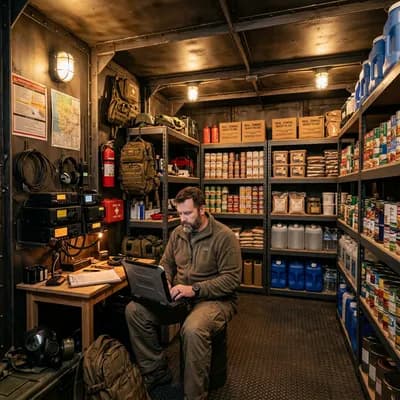
La eficacia de un refugio se mide por su Factor de Protección (FP), que representa la relación entre la dosis de radiación recibida en el exterior y la dosis recibida en el interior. Un FP de 10 reduce la dosis a una décima parte. Los materiales densos son los escudos más eficaces. El espesor de un material necesario para reducir la radiación gamma en un 50 por ciento es su Capa de Mitad de Valor (CMV); el espesor necesario para reducirla en un 90 por ciento es la Capa de Décima de Valor (CDV).
| Material | Densidad (g/cm3) | Capa de Mitad de Valor (cm) | Capa de Décima de Valor (cm) | | :--- | :--- | :--- | :--- | | Plomo | 11.3 | 0.7 | 2.1 | | Acero (Hierro) | 7.8 | 1.6 | 5.3 | | Hormigón | 2.25–2.35 | 4.8 | 15.7 | | Tierra (Suelo) | ~1.5 | ~7.5 | ~25.0 | | Agua | 1.0 | ~10.0 | ~33.0 |
Un sótano en una casa de entramado de madera típicamente proporciona un FP de 10, mientras que el centro de un edificio grande de varios pisos de ladrillo o hormigón puede proporcionar un FP de 100 o superior. Los que se refugian deben permanecer lo más alejados posible de las paredes exteriores y los techos, donde se acumulan las partículas de precipitación radiactiva.
Descontaminación e Higiene
Las personas que se encontraban al aire libre cuando llegó la contaminación radiactiva deben someterse a descontaminación antes de ingresar al área principal del refugio. Quitar la capa exterior de la ropa elimina hasta el 90 por ciento del material radiactivo. La piel y el cabello deben lavarse con agua y jabón o limpiarse con un paño húmedo si el agua escasea. Es fundamental no utilizar acondicionador para el cabello, ya que puede adherir las partículas radiactivas a las fibras del cabello.
La seguridad del agua y los alimentos es primordial. Los envases sellados de alimentos y agua almacenados dentro de un edificio son seguros para el consumo. Si los envases estuvieron fuera, deben limpiarse con un paño húmedo antes de abrirlos. Se deben evitar fuentes de agua abiertas, como barriles recolectores de lluvia o lagos, hasta que se hayan analizado.
Manejo médico de lesiones radiológicas
La exposición a la radiación ionizante provoca el síndrome agudo por radiación (SAR), también conocido como enfermedad por radiación. La gravedad del SAR depende de la dosis total absorbida, medida en Grays (Gy) o Sieverts (Sv).
El SAR progresa a través de tres fases distintas:
- 01.Fase prodromal: Ocurre dentro de minutos a días después de la exposición. Los síntomas incluyen náuseas, vómitos y diarrea.
- 02.Fase latente: Un período de aparente recuperación que dura desde días hasta semanas, dependiendo de la dosis.
- 03.Fase de enfermedad manifiesta: El reaparición de los síntomas a medida que los daños subyacentes en la médula ósea, el tracto gastrointestinal o el sistema nervioso central se hacen evidentes.
| Dosis (Gy) | Síndrome | Inicio de los síntomas iniciales | Supervivencia (sin atención médica) | | :--- | :--- | :--- | :--- | | 1–2 | Hematopoyético | 2–6 Horas | ~95% | | 2–6 | Hematopoyético | 1–2 Horas | 5%–95% (Dependiente de la dosis) | | 6–10 | Gastrointestinal | 10–60 Minutos | < 5% | | > 20 | Neurovascular | Minutos | 0% |
Protocolos de Yoduro de Potasio (KI)
El yodo radiactivo (I-131) es un componente principal de la lluvia radiactiva inicial y es fácilmente absorbido por la glándula tiroides. Para prevenir esto, se administra yoduro de potasio (KI) para saturar la tiroides con yodo estable. El KI debe tomarse dentro de un período de tiempo limitado: idealmente antes o dentro de unas pocas horas de la exposición, para ser eficaz.
| Grupo de Edad | Dosis (mg) | Requisito de tiempo | | :--- | :--- | :--- | | Adultos (>18 años) | 130 | < 24h Antes / < 8h Después | | Embarazadas/Lactantes | 130 | < 24h Antes / < 8h Después | | Niños (3–18 años) | 65 | < 24h Antes / < 8h Después | | Lactantes (1 mes–3 años) | 32 | < 24h Antes / < 8h Después | | Recién nacidos (<1 mes) | 16 | < 24h Antes / < 8h Después |
Es importante tener en cuenta que el KI solo protege la tiroides y no protege al resto del cuerpo de la radiación gamma externa ni de otros isótopos como el cesio-137 o el estroncio-90.
Purificación del agua y resiliencia alimentaria
A medida que la amenaza inmediata de la lluvia radiactiva disminuye, la atención se centra en la supervivencia a largo plazo en un entorno contaminado por isótopos radiactivos. Los tres isótopos más peligrosos presentes en el agua y en el suelo son el yodo-131 (vida media: 8 días), el estroncio-90 (vida media: 29 años) y el cesio-137 (vida media: 30 años).
Métodos de descontaminación del agua
Los filtros mecánicos estándar (por ejemplo, filtros de café, filtros de arena) pueden eliminar partículas grandes de la lluvia radiactiva, pero son ineficaces contra los radionuclidos disueltos. Para una purificación eficaz, se requieren los siguientes métodos avanzados:
- Ósmosis inversa (OI): Fuerza el agua a través de una membrana semipermeable, eliminando hasta el 99 por ciento de los contaminantes radiactivos.
- Intercambio iónico: Utiliza resinas para intercambiar iones radiactivos (como $Sr^{2+}$ y $Cs^+$) con iones inofensivos. Este es un proceso similar al utilizado en los ablandadores de agua domésticos.
- Destilación: Hervir agua y condensar el vapor elimina eficazmente los minerales y los isótopos radiactivos. Aunque requiere mucha energía, es un método fiable para obtener agua pura.
- Carbón activado: Es eficaz para adsorber algunos isótopos y gases radiactivos como el radón, aunque debe utilizarse en combinación con otros métodos.
Remediación agrícola y gestión del suelo
Para reanudar la producción de alimentos, el suelo debe descontaminarse. Los radionúclidos tienden a acumularse en la capa superior del suelo (hasta 40 cm). Las estrategias de descontaminación incluyen:
- Arado profundo: Voltear el suelo para enterrar la capa contaminada a una profundidad de 3 pies, colocándola así por debajo de la zona de las raíces de muchos cultivos.
- Fitoremediación: Plantar especies hiperacumuladoras como girasoles, que extraen el estroncio y el cesio del suelo. Luego, las plantas se cosechan y se eliminan como residuos radiactivos.
- Enmiendas del suelo: Agregar cal (calcio) para competir con la absorción de estroncio-90, o fertilizante de potasio para competir con el cesio-137.
- Remoción: Raspar y eliminar físicamente la capa superior del suelo, aunque esto es difícil a gran escala.
| Método de remediación | Isótopo objetivo | Eficacia/Mecanismo | | :--- | :--- | :--- | | Arado profundo | Todos | Enterramiento por debajo de la zona de las raíces | | Girasoles | Sr-90, Cs-137 | Bioacumulación en la biomasa | | Cal (Ca) | Sr-90 | Competencia química en las raíces | | Potasio (K) | Cs-137 | Competencia química en las raíces | | Raspado | Todos | Remoción física de la capa superior de 5–10 cm |
Vulnerabilidad regional: Europa Central y Eslovenia
El contexto geopolítico de Europa Central lo convierte en una región de alto riesgo en caso de un intercambio nuclear, particularmente debido a la presencia de activos de compartición nuclear de la OTAN e instalaciones nucleares nacionales.
Análisis de objetivos estratégicos y patrones de viento.
En el noreste de Italia, las bases aéreas de Aviano y Ghedi almacenan aproximadamente de 60 a 70 bombas nucleares B61 como parte de la disuasión nuclear de la OTAN. En caso de un ataque a estas bases, la trayectoria de la lluvia radiactiva para la vecina Eslovenia estaría determinada por los vientos predominantes. El viento "Bora", un viento descendente fuerte y del noreste, es una característica dominante de la región, especialmente en invierno. Un evento de Bora podría suprimir la lluvia radiactiva o transportarla al Adriático, mientras que una "Bora oscura" ciclónica podría provocar lluvia, lo que podría causar un fenómeno de "rainout", donde las partículas radiactivas se eliminan del aire y se concentran en el suelo.
Los vientos en las capas superiores de la atmósfera en Europa Central típicamente se propagan desde el suroeste al noreste, siguiendo el chorro de aire. Esto significa que una detonación en Italia o en Europa Occidental probablemente provocaría que la lluvia radiactiva se dirigiera hacia Eslovenia, Hungría y la región del Báltico.
Infraestructura nuclear nacional: Central nuclear de Krško
La central nuclear de Krško, en Eslovenia, de propiedad conjunta con Croacia, representa un riesgo significativo localizado. Aunque la central cuenta con estrictos procedimientos de emergencia, un accidente grave resultante de ataques convencionales o nucleares podría liberar una cantidad de material radiactivo comparable al escenario PWR-1A WASH-1400. Los planes de evacuación actuales implican un movimiento radial de la población dentro de un radio de 8 km y una evacuación dirigida por el viento dentro de un radio de 16 km. La Administración Eslovena para la Protección Civil y la Asistencia en Caso de Desastre (ACPDR) coordina estos planes, que son revisados regularmente por el OIEA.
| Instalación / Ubicación | Tipo de Activo | Riesgo para Eslovenia | | :--- | :--- | :--- | | Base Aérea de Aviano (Italia) | Almacén de Material Nuclear de la OTAN | Alto (Trayectoria de la lluvia radiactiva) | | Base Aérea de Ghedi (Italia) | Almacén de Material Nuclear de la OTAN | Alto (Trayectoria de la lluvia radiactiva) | | Central Nuclear de Krško | Reactor de Potencia | Alto (Término fuente/Contaminación local) | | Centro de Podgorica | Reactor de Investigación/Residuos | Moderado (Contaminación local) |
Resiliencia Socioeconómica y Recuperación Global
La supervivencia definitiva de la civilización humana después de una guerra nuclear depende de la capacidad de transición de una economía globalizada e industrializada a sistemas localizados y resilientes. La pérdida inmediata de la red eléctrica debido al pulso electromagnético (PEM) sería el mayor obstáculo para la coordinación. El PEM es el resultado de la interacción de los rayos gamma con la atmósfera, creando campos electromagnéticos intensos que pueden dañar equipos electrónicos e infraestructura de energía a miles de kilómetros.
Soluciones Alimentarias Resilientes
Ante la ausencia de la agricultura tradicional basada en la luz solar durante un invierno nuclear, la humanidad debe ampliar las fuentes alternativas de alimentos. La investigación señala varias tecnologías prometedoras:
- Cultivo de algas: Las algas crecen rápidamente en condiciones de poca luz y son resistentes al enfriamiento.
- Proteína unicelular (PU): Microorganismos cultivados en biorreactores utilizando gas natural (metano) o biomasa leñosa como sustrato.
- Agricultura fúngica: Los hongos y otras especies fúngicas pueden descomponer la gran cantidad de biomasa muerta (árboles, cultivos) causada por el enfriamiento repentino.
- Relocalización de invernaderos: Trasladar la producción agrícola a regiones ecuatoriales donde las temperaturas podrían permanecer por encima del punto de congelación.
El principal desafío no es la falta de fuentes físicas de alimentos, sino la ruptura del comercio y la cooperación. Sin envíos internacionales de granos, países como Eslovenia, que no son autosuficientes en la producción de alimentos, enfrentarían escasez extrema incluso sin ataques nucleares directos.
Síntesis de hallazgos y conclusiones estratégicas
El análisis de los impactos de la guerra nuclear revela una jerarquía de efectos que transitan desde la física de las microsegundos hasta la ecología de la década. La supervivencia inmediata en caso de un intercambio nuclear es cuestión de conciencia táctica y disciplina radiológica: comprender el momento de la lluvia radiactiva y la física de la protección. Sin embargo, la supervivencia a largo plazo de la especie es una cuestión de resiliencia sistémica global.
Información crucial para la estabilidad posterior a un intercambio:
- Prioridad de la protección: Las primeras 48 horas son las más peligrosas. Un factor de protección de 10 a 100 puede marcar la diferencia entre la supervivencia y una ARS (síndrome de irradiación aguda) fatal.
- Gestión de isótopos: Se debe priorizar el yodo-131 en el primer mes, seguido de una gestión a largo plazo del estroncio-90 y el cesio-137 en alimentos y agua.
- Bifurcación climática: Los sobrevivientes deben prepararse para un período inicial de frío y oscuridad extremos, seguido de una segunda crisis de radiación ultravioleta extrema.
- Recuperación descentralizada: La pérdida de la red eléctrica (pulso electromagnético) y el comercio global requieren el desarrollo de sistemas localizados y redundantes para la purificación del agua, la producción de alimentos y la comunicación.
Las consecuencias ambientales y sociales de un conflicto nuclear son tan profundas que trascienden los objetivos militares tradicionales de un primer ataque. Los modelos sugieren que el "ganador" de un intercambio nuclear probablemente sufriría un colapso total de sus propios sistemas agrícolas en cuestión de años, debido al invierno nuclear y la pérdida de la capa de ozono. Esta realidad científica subraya la imperativa geopolítica de la prevención, al tiempo que refuerza la necesidad de marcos sólidos de protección civil para los sobrevivientes de este evento catastrófico.
Referencias
- Investigación sobre la eliminación de la lluvia radiactiva de las tierras de cultivo - AgEcon Search