Métodos de Purificación de Agua Clasificados
并非所有脏水都以相同的方式无法饮用。从煮沸和中空纤维过滤到二氧化氯和蒸馏,这里有一个实地测试的应急净水方法排名——以及每种方法实际去除的污染物。
人体生理学可以忍受数周不进食和几天没有庇护所,但脱水会在二十四到四十八小时内开始损害判断力、体温调节和肾功能。为了解渴而饮用未经处理的沟渠、河流或洪水中的水,是用短期缓解换取隐孢子虫、贾第鞭毛虫、霍乱或诺如病毒——这会将一个可控的供水短缺变成几天内的致命性液体流失。
然而,在购买任何滤水器或药片之前,你需要了解大多数装备博客忽略的一个区别:生物病原体与化学和物理污染物。
- 病原体是活的或具有传染性的生物:大型原生动物(贾第鞭毛虫、隐孢子虫,1–15微米)、较小的细菌(大肠杆菌、沙门氏菌、弧菌,0.2–2微米)和微小病毒(诺如病毒、轮状病毒、甲型肝炎,0.02–0.1微米)。
- 化学和溶解的危害包括重金属(铅、砷)、农用杀虫剂、PFAS、燃料泄漏、工业溶剂和溶解盐。
没有单一的超轻便口袋小工具可以彻底消除所有危害。此外,澄清总是先于消毒:如果水源看起来浑浊或呈茶色,让沉淀物在一个桶里静置一小时,然后将其通过干净的头巾、咖啡滤纸或磨坊袋过滤,然后再运行任何滤水器、化学药片或紫外线灯。悬浮的淤泥会迅速堵塞膜孔,并阻挡微生物免受紫外线和氯气的保护。
以下是野外净水方法从最可靠到严格应急备用方案的排列。
1. 煮沸(生物安全金标准)
如果你有燃料、金属炊具和时间,热灭菌仍然是地球上最宽容的生物杀菌步骤。
根据 CDC 和世界卫生组织的数据,将清水煮至持续滚开一分钟(并在海拔 6,500 英尺 / 2,000 米以上——水在此处沸点较低——时需3 分钟),可以灭活 99.99% 的肠道原生动物、细菌和病毒,即使在化学药片减缓作用的冷水中也是如此。事实上,大多数病原体在高于 160°F (71°C) 时就会死亡,因此等待可见的滚开状态可以建立一个可观的安全余地,而无需使用温度计。
- 优点: 不受机械故障影响;杀死标准徒步滤水器遗漏的病毒;不需要任何专用滤芯。
- 局限性: 燃烧大量木柴或营地燃料;不去除任何沉淀物、重金属、杀虫剂或盐分;直到通过干净容器间倾倒使其冷却和曝气,水才会不再是过热且平淡的味道。
2. 微滤和净水器(最佳日常野外主力)
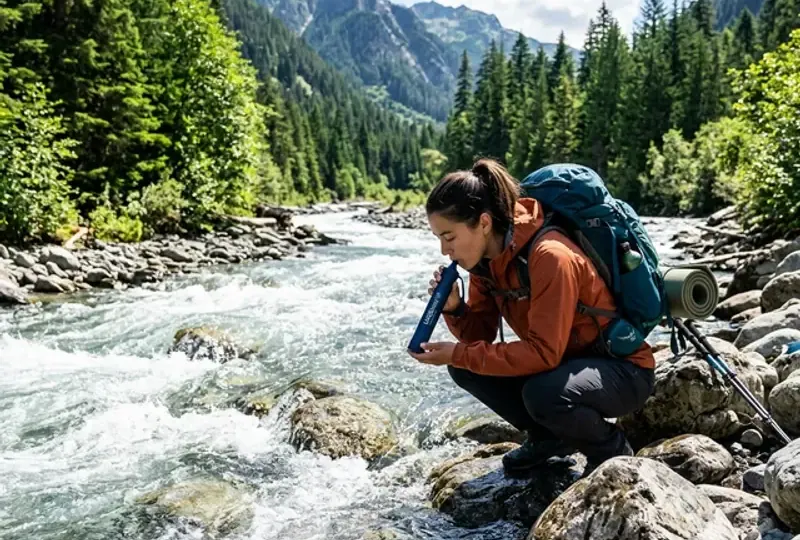
泵式、挤压式和重力滤水器构成了现实的离网补给饮用水的基础,因为它们能立即产生凉爽、口感良好的水,且无需消耗燃料。了解孔径大小的差异至关重要:
- True purifiers (0.02-micron ultrafiltration or electro-adsorptive media) go further, stripping out sub-micron viruses alongside bacteria and protozoa—essential when drawing water near flooded septic fields, livestock pastures, urban canals, or developing regions.
- Activated carbon stages integrated into gravity units adsorb chlorine, foul tastes, and certain volatile organic compounds (VOCs), though carbon exhausts far faster than mechanical membranes.
Crucial field warning: Never allow a wet hollow-fiber membrane filter to freeze solid. Ice expansion invisibly fractures the microscopic fibers inside the housing, ruining pathogen protection with zero outward cracks. In winter, sleep with your filter inside your jacket or sleeping bag.
3. Chemical Disinfection (Lightweight, Reliable Redundancy)
Chemical treatment belongs in every go-bag and home closet because tablets weigh ounces and never crack in freezing temperatures. Still, chemistry varies sharply by compound:
- Chlorine Dioxide (Tablets or Two-Part Drops): The clear winner among chemical options. Unlike standard chlorine bleach or iodine, chlorine dioxide penetrates the tough outer shell of Cryptosporidium cysts—provided you respect full contact times (typically 30 minutes for bacteria/viruses, up to 4 hours in cold or slightly cloudy water for Cryptosporidium). Leaves far less chemical aftertaste than bleach.
- Unscented Sodium Hypochlorite (Household Bleach, 6%–8.25%): Cheap and widely available for bulk emergency storage. EPA guidelines specify roughly 8 drops (about 1/8 teaspoon) of 6%–8.25% unscented, non-splashless bleach per gallon of clear water, doubled if cloudy, mixed thoroughly and rested 30 minutes. Note two catchpoints: liquid bleach loses potency after six to twelve months on the shelf, and standard chlorination struggles against Cryptosporidium (requiring filtration or boiling first).
- Iodine Tablets: Effective against bacteria and viruses, poor against Cryptosporidium, harsh in taste, and unsafe for prolonged use by pregnant individuals or people with thyroid disorders. Strictly second-string today.
4. Ultraviolet (UV-C) Light Pens (Fast, Zero Taste, Fragile)
Portable UV-C wands (such as SteriPEN units) scramble microbial DNA and RNA across bacteria, protozoa, and viruses in roughly 90 seconds per liter without altering flavor.
They shine for international travelers filling clear tap water in hotels. In a disaster zone or muddy creek, however, UV-C carries two glaring weaknesses: suspended turbidity casts microscopic shadows where bacteria survive, and dead batteries or a dropped quartz bulb turn the device into a paperweight. Never rely on UV as a primary survival method without a pre-filter and chemical backup.
5. Thermal Distillation (Slow, Fuel-Hungry, Unmatched for Heavy Contamination)
Distillation boils contaminated water in a sealed chamber and condenses pure steam into a clean catch vessel, leaving behind salts, lead, arsenic, fluoride, radionuclides, and biological pathogens alike.
这是唯一可用的家庭方法,能够脱盐海水或从工业径流中去除溶解的重金属。难点在于热力学:汽化水需要巨大的能量,而且产出量小、速度慢。此外,沸点低于水的挥发性有机化学品(如汽油或某些溶剂)除非经过活性炭后过滤,否则会与蒸汽一起气化。
6. 紧急备用方案:SODIS 和生物砂滤器
当电力、燃料、过滤器和药片全部耗尽时,仍有两种低技术含量的方法可以提供缓冲:
- 太阳能消毒(SODIS):将干净、透明的 PET 塑料瓶装满水(切勿使用玻璃瓶,因为它会阻挡紫外线 A),然后将其平铺在波纹屋顶上接受直射阳光照射 6 个连续小时——或在阴天下持续 48 小时——利用组合的紫外线辐射和太阳热能来杀死细菌和病毒。它在冰冻天气、深阴影或浑浊的水中无效。
- 简易沙子、砾石和木炭过滤器:将洗净的沙子、豌豆大小的砾石和碎硬木炭分层放入桶中,可以去除浮游碎片、蠕虫和一些有机气味,极大地提高水体的清澈度。了解其严格限制:自制的沙/木炭柱无法消毒病原体。在澄清水之后,务必进行煮沸或化学处理。
智能分层系统
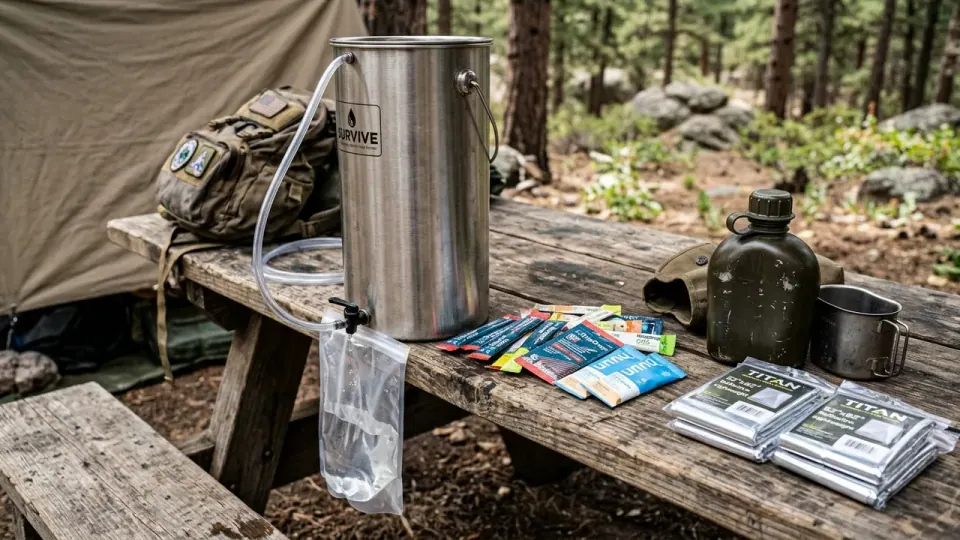
不要将饮水安全寄托于单一的“神奇吸管”。建立一个三级家庭急救包:两周份交替储存的食品级容器中的水、用于日常供水的可靠重力微滤器搭配活性炭,以及备用的二氧化氯药片和用于煮沸的不锈钢锅。干净的水运输沉重且难以临时解决——在自来水还通畅时就解决它。
权威来源与进一步阅读
实时汇总 USGS 5.0+级地震、NASA EONET 野火、火山与风暴、UN/EC GDACS 灾害警报和 NOAA 地磁指数的地理空间动态。
相关报告与深度情报
模拟防火墙手册:将民用控制系统、太阳能逆变器与冷库压缩机物理隔离以抵御 AI 蠕虫
继 FBI 发布 FLASH-20261113-001(ARTEX)警告、欧洲冷链控制器遭入侵以及 2.58 美元 TCP/IP 零日漏洞发现工具问世之后,物理韧性要求将关键逆变器、水井和制冷设备隔离到离线局域网中,并配备纯硬机电故障安全保护。