Building Resilient Communities
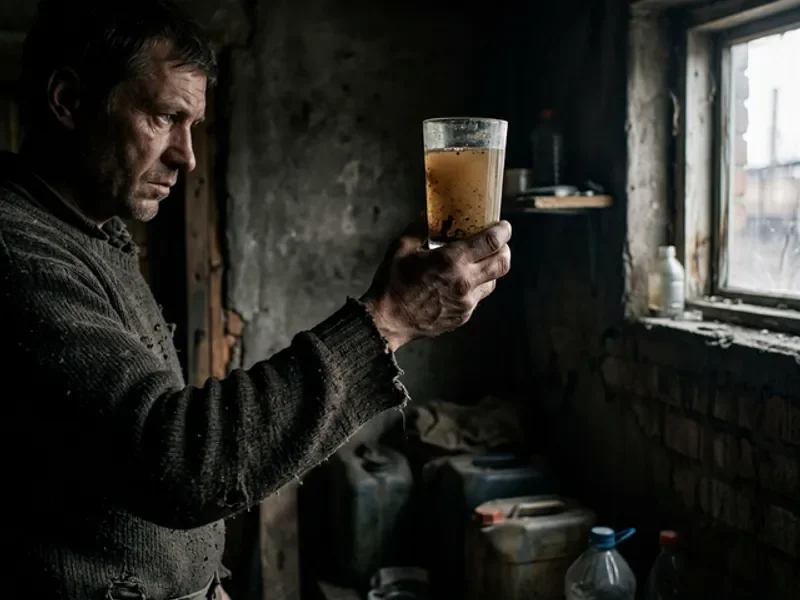
Disaster after disaster proves that isolated households burn through supplies and margin within days. Here is how to build practical neighborhood networks, skill banks, and local mutual aid before a systemic shock arrives.
Modern preparedness culture has a dangerous blind spot: it sells survival as a solo consumer purchase. Catalogs and forums are full of rugged individuals convinced that a stocked pantry, a generator, and a locked gate will carry them through a prolonged grid outage or economic breakdown. Field reporting from real disasters tells a very different story.
Look at what happened during the 2021 Texas winter freeze, the aftermath of Hurricane Helene across western North Carolina, or the 2003 Northeast blackout—emergencies where CDC public health readiness guidance emphasizes neighborhood-level support alongside household kits. Households that tried to ride out those crises entirely alone ran into hard mathematical limits within seventy-two hours. A single person cannot pull twenty-four-hour watch, haul water, clear downed timber, tend an injured relative, and repair a failed inverter at the same time. Once sleep deprivation sets in, judgment collapses. The difference between households that endured and those that broke down almost always came down to whether they belonged to a functioning local network before the lights went out.
Why Lone-Wolf Survival Fails Under Sustained Stress
Self-reliance is a valuable foundation, not a complete strategy—a reality underscored in the community vs. lone-wolf survival debate. Even a well-equipped family possesses only a fraction of the specialized skills required to keep modern life running when municipal services stall. You may know how to wire a solar charge controller, yet lack the training to suture a deep laceration, rebuild a small-engine carburetor, or diagnose contaminated well water.
Historians and disaster sociologists have documented the same pattern for decades: in the acute phase of a crisis, neighbors—not federal convoys—serve as first responders. During prolonged economic shocks, such as the Argentine currency collapse of 2001, formal supply chains froze while informal neighborhood barter clubs (trueque) kept clinics open and food moving. Isolation does not buy safety; it strips away redundancy. Every tool you fail to share, every elderly neighbor left unchecked, and every dispute left unresolved becomes an operational liability when systems strain.
Mapping Neighborhood Capacity Before a Crisis
Building local resilience does not mean handing out flyers announcing that you store six months of freeze-dried rations. In fact, loud operational advertising undermines security. Effective organizers start quietly, treating their block or rural road as an informal ecosystem of skills, tools, and vulnerabilities.
Begin by taking stock of what already exists within walking distance:
- Medical and care capacity: Retired nurses, paramedics, veterinarians, and pharmacists who understand survival medicine, triage, and trauma care when hospitals are overwhelmed.
- Mechanical and infrastructure trades: Electricians, plumbers, HVAC technicians, welders, and heavy-equipment operators who can isolate damaged gas lines, rig temporary power, or keep septic systems functioning.
- Food and water assets: Households with deep wells, rainwater cisterns, productive vegetable gardens, fruit trees, or livestock knowledge.
- Vulnerable households: Seniors on oxygen concentrators, infants, or residents without vehicles who will need immediate check-ins during heatwaves, freezes, or evacuations.
You uncover these assets through ordinary civic participation—helping clear storm drains, training with a local FEMA Community Emergency Response Team (CERT), showing up at volunteer fire department suppers, joining a community garden, or organizing a street tool swap. When people already know each other's names and habits in calm weather, crisis coordination happens without panic or suspicion.
Trust, Friction, and Local Governance
Romantic depictions of mutual aid often skip the hardest part: people under stress argue. Unspoken expectations destroy neighborhood cohesion faster than external threats. If one household brings a chainsaw and five gallons of fuel to clear a blocked road while three others watch from their porches, resentment sets in by afternoon.
Resilient groups prevent that friction by establishing clear norms early. Economist Elinor Ostrom, who won the Nobel Prize for studying how communities manage shared water, forests, and fisheries without state collapse, identified simple principles that apply just as cleanly to neighborhood preparedness:
- 01.Clear boundaries: Know who is part of the mutual-aid circle and what shared resources cover.
- 02.Proportional contribution: Match tasks to ability—someone physically unable to buck fallen oak trees can run radio check-ins, cook hot meals for work crews, or mind young children.
- 03.Low-cost conflict resolution: Designate two or three level-headed residents everyone respects to mediate disputes over noise, pets, water allocation, or security shifts before grievances fester.
Trust is built in small, verifiable installments. Lending a pressure washer and returning it clean with a full tank builds more genuine social capital than hours of abstract political agreement.
Shared Micro-Infrastructure That Pays Off Now
The strongest community resilience projects—building on baseline planning frameworks like Ready.gov hazard preparedness—deliver tangible value even if civilization never misses a beat. Waiting for a disaster to test equipment or cooperation guarantees failure.
Consider practical shared investments across three to ten trusted households:
- Backup power islands: Rather than ten households running noisy portable gas generators on dwindling fuel cans, one home with a properly installed solar-plus-battery system and transfer switch can serve as a designated charging hub for medical batteries, radios, and chest freezers.
- Tool and repair libraries: A shared inventory of heavy-duty items—log splitters, sump pumps, torque wrenches, food dehydrators, water-testing kits—cuts individual costs while ensuring someone nearby owns the specialized gear no single budget justifies.
- Bulk procurement co-ops: Pooling orders for winter firewood, bulk grains, canning lids, or livestock feed lowers unit costs, shields members during stagflation and supply-chain shocks, and deepens supply relationships with regional farms rather than distant warehouses.
Regular maintenance days—testing backup pumps every autumn, rotating stored fuel, practicing household response drills outlined by the American Red Cross, or running a neighborhood chili cook-off using camp stoves—keep hardware serviceable and muscle memory sharp.
Communications and Security Without Paranoia
When cellular networks saturate or fiber lines go dark, rumor fills the vacuum within hours. Neighborhoods without reliable local information make bad decisions, from premature evacuations into gridlocked highways to unnecessary panic over distant events.
Establishing an off-grid neighborhood communications tree requires minimal hardware. Low-cost Family Radio Service (FRS) or General Mobile Radio Service (GMRS) handhelds, paired with an agreed-upon channel and twice-daily check-in windows (say, 08:00 and 20:00), keep an entire street coordinated without touching cell towers. Adding one or two licensed ARRL amateur radio operators or a shortwave receiver lets the group verify regional weather advisories, road closures, and grid restoration timelines.
Physical security flows naturally from the same cohesion. Desperate outsiders rarely target a cohesive block where porch lights work on batteries, neighbors track unfamiliar vehicles calmly, and watch shifts rotate among rested adults. Equally important, looking after vulnerable neighbors reduces the odds of localized desperation turning inward.
The Long Work of Staying Connected
Community resilience is never finished, because neighborhoods change—people move, roofs age, and new risks emerge. Yet the core arithmetic stays constant. Individual stockpiles buy you hours or weeks; trusted local networks buy you years. Start with the people within earshot of your front door, build habits of reciprocity before stress arrives, bookmark practical mutual-aid and emergency-planning tools in our useful survival websites directory, and treat social trust as the most durable piece of survival gear you own.
Recommended Reading
- Governing the Commons by Elinor Ostrom — Landmark empirical research on how local communities sustainably manage shared resources without external enforcement.
- A Paradise Built in Hell by Rebecca Solnit — Historical reporting on how ordinary citizens self-organize mutual aid in the wake of major disasters.
Real-time geospatial feed aggregating USGS M5.0+ earthquakes, NASA EONET wildfires, volcanoes, severe storms, UN/EC GDACS alerts, and NOAA geomagnetic status.
Related Reports & In-Depth Intel
Surviving the Stagflation Trap
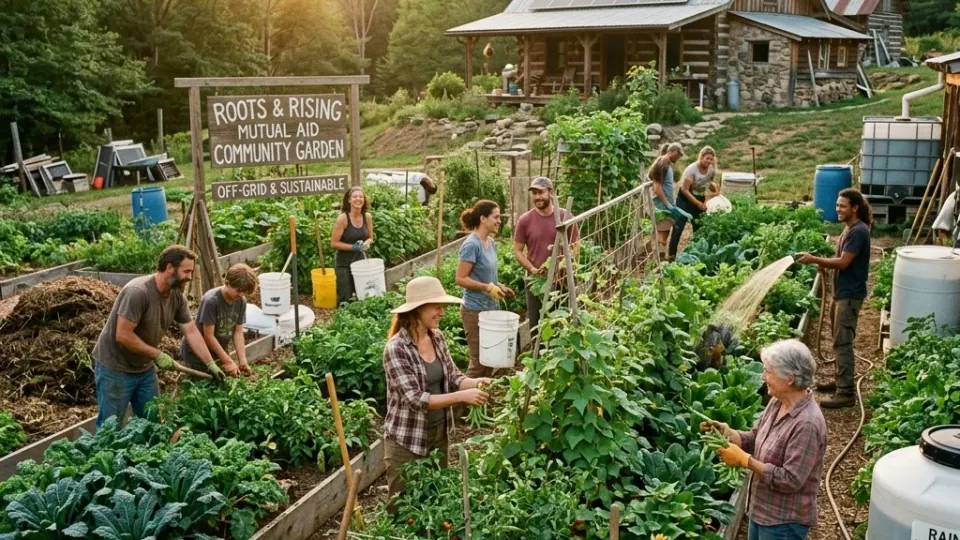
With runaway inflation meeting economic stagnation, traditional investment strategies are obsolete. Learn how to cut costs, allocate assets, and build mutual-aid communities to survive the stagflation era.

The Great Eurasian Energy Severance
The synchronous closure of the Strait of Hormuz by Iranian naval swarms and targeted Russian pipeline interdiction across the Baltic have fractured global hydrocarbon distribution. We analyze the 150-dollar crude price shock, strategic reserve depletion, and the onset of industrial energy rationing.

The Sovereign Debt Cascade
With sovereign interest payments exceeding tax revenues, we analyze the trigger points for the next wave of hyperinflation and how to protect your assets.
Collapse of the Rule of Law
When legal systems fracture, order does not vanish evenly—states tighten emergency control over strategic zones while abandoning outer neighborhoods to predatory crime. Here is how institutional breakdown unfolds and how to survive it.