Surviving the Stagflation Trap: Financial Hardening, Cost-Cutting, and Local Community Resilience
With runaway inflation meeting economic stagnation, traditional investment strategies are obsolete. Learn how to cut costs, allocate assets, and build mutual-aid communities to survive the stagflation era.
The global economy is entering a prolonged period of stagflation—a destructive economic condition characterized by stagnant growth, high unemployment, and persistent inflation. In this environment, traditional financial models break down. The value of paper currencies degrades daily, while the job market contracts, making wage increases impossible. Surviving this economic trap requires a complete departure from conventional personal finance strategies.
To survive stagflation, individuals must undergo a process of financial hardening. This brief details practical, aggressive cost-cutting measures, discusses asset reallocation toward tangible goods, and outlines the methodology for building resilient, local mutual-aid communities.
---
The Anatomy of the Stagflation Trap
Stagflation is particularly dangerous because it disables the standard tools of central bank intervention. Typically, when inflation is high, central banks raise interest rates to cool the economy. However, raising rates in a stagnant economy risks triggering a deep depression. Conversely, lowering interest rates to stimulate growth only fuels inflation. The result is a policy paralysis where the average citizen is squeezed from two directions: rising costs for food, energy, and housing, and static or declining incomes.
For the middle and working classes, this manifests as a silent erosion of living standards. Savings accounts lose purchasing power rapidly, and standard stock-and-bond portfolios fail to beat the real rate of inflation. Relying on digital wealth or institutional pension systems becomes a high-risk gamble. In a stagflationary crisis, wealth is redefined: it is no longer about how much currency you possess, but about your access to essential resources and your capacity to produce them.
---
Aggressive Cost-Cutting: Auditing and Optimizing the Household
The first line of defense is reducing your monthly cash burn rate. This is not about minor frugality; it is a systematic audit of every dollar leaving your household. The goal is to eliminate non-productive expenses and redirect capital toward tangible, resilient assets.

#### 1. The Expenditure Audit
Review the past three months of bank and credit card statements. Categorize every transaction into three groups:
- Critical (survival): Housing, base food staples, essential medicine, and basic utility access.
- Secondary (operational): Transportation to work, internet access, and communication tools.
- Non-Essential: Restaurant meals, entertainment subscriptions, branded clothing, and gym memberships.
Eliminate the non-essential category immediately. Cancel all recurring digital subscriptions and replace them with free, open-source, or offline alternatives.
#### 2. Energy Hardening
Energy costs are a primary driver of stagflation. Reduce your utility dependence through passive and active measures:
- Install heavy insulation on doors and windows to reduce heating and cooling requirements.
- Transition your lighting systems to low-wattage LEDs.
- Audit your appliance use: run washing machines only with full loads, dry clothes on lines rather than in dryers, and unplug vampire electronics when not in use.
- Invest in high-efficiency, multi-fuel portable stoves for backup cooking.
#### 3. Food Optimization
Evaluate your food budget. Stop purchasing processed, pre-packaged goods and transition to buying raw bulk ingredients (rice, beans, oats, flour, and oil) which are cheaper and have long shelf lives. Master basic food preservation techniques like canning, dehydrating, and vacuum sealing to prevent food waste and lock in current prices before further inflation occurs.
---
Asset Reallocation: Tangible Wealth in a Paper Collapse
In a stagflationary environment, paper assets are liabilities. Fiat currencies (Dollars, Euros) lose purchasing power, and the stock market struggles as corporate profit margins are squeezed by rising input costs. You must reallocate your capital into tangible assets that retain intrinsic value.
| Asset Class | Strategy | Primary Benefit | | :--- | :--- | :--- | | Precious Metals | Physical Gold & Silver (in hand, no paper ETFs) | Long-term wealth preservation and hedge against currency devaluation. | | Productive Tools | Hand tools, sewing machines, mechanical parts, gardening implements | Tangible items that allow you to produce, repair, or maintain infrastructure. | | Agricultural Inputs | Heirloom seeds, organic fertilizers, soil amendments, water storage | Directly translates to food security and local bartering power. | | Barter Staples | Small lighters, medical supplies, salt, spices, fuel stabilizers | High-velocity trade items in a local cash-strapped economy. |
Avoid speculative digital bubbles or high-fee financial products. Focus on assets that you can physically touch, store, and utilize to generate value. If a crisis worsens, a well-stocked tool shed and a year’s supply of food will be far more valuable than a digital stock portfolio.
---
The True Currency: Building Local Community Networks
No matter how well-prepared an individual is, a single household cannot survive long-term systemic collapse in isolation. The "lone wolf" survivalist is a myth; history shows that during prolonged depressions, communities that collaborate survive, while isolated units fail. Building local resilience networks is a critical component of economic defense.
#### 1. Establishing Barter Clubs
As cash becomes scarce, barter and trade become the dominant economic models. Organize a local barter network within your neighborhood.
- Identify the skills of your neighbors: mechanical repair, medical knowledge, agricultural expertise, carpentry, and electrical work.
- Create a list of available tools within the group (rototillers, chainsaws, welding equipment) to avoid redundant purchases.
- Agree on a loose value system based on hours of labor or direct resource exchange rather than depreciating fiat currency.
#### 2. Community Gardens and Food Co-ops
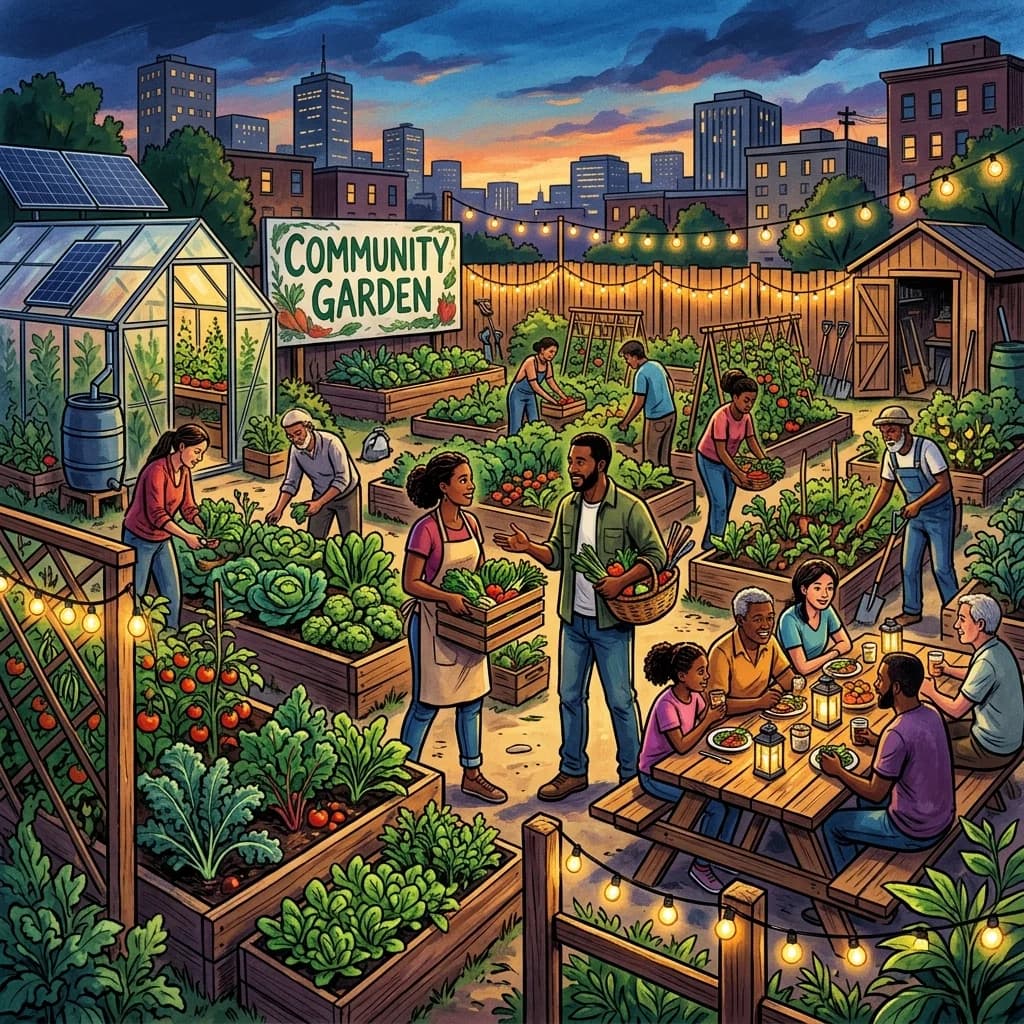
Pool local land resources. If your property lacks sufficient sunlight, collaborate with neighbors to turn unused lawns or vacant lots into productive community gardens. By purchasing seeds and fertilizers in bulk, you reduce costs for everyone. Share the labor of cultivation, harvest, and preservation.
#### 3. Security and Mutual Aid
Economic desperation leads to rising crime rates. Establish a neighborhood watch program that relies on communication networks (such as local FRS/GMRS radios) rather than cell phone infrastructure. Ensure that elderly or vulnerable neighbors are checked on regularly. By creating a culture of mutual support, you reduce the likelihood of local social unrest and build a secure perimeter for your community.
---
Tactical Checklist for Stagflation Resilience
To transition from passive concern to active preparation, execute the following steps immediately:
- 01.Calculate your baseline survival burn rate: Determine the absolute minimum amount of cash required to keep your household secure for one month.
- 02.Build a 3-month physical cash reserve: Keep this in small bills at home, secured in a fireproof safe, to handle immediate banking holidays or card processor outages.
- 03.Secure a 6-month supply of basic staples: Focus on calorie-dense, shelf-stable foods that your family actually eats.
- 04.Acquire a comprehensive medical kit: Stock up on prescription medications, trauma supplies, and basic OTC drugs.
- 05.Establish a secondary power source: Buy a portable solar generator and panels to run critical devices (medical equipment, communication gear, small refrigerators).
- 06.Set up a rainwater harvesting system: Install rain barrels on your downspouts and learn how to purify the water.
- 07.Obtain physical reference guides: Buy books on basic mechanics, first aid, food preservation, and local agriculture; do not rely on digital access.
- 08.Learn one manual skill: Practice sewing, carpentry, basic engine repair, or gardening until you can produce value without electricity.
- 09.Meet your immediate neighbors: Initiate simple conversations about shared security and resource coordination.
- 10.De-leverage your life: Pay off high-interest consumer debt immediately to prevent variable interest rates from consuming your declining income.
Stagflation is a slow-motion test of endurance. By cutting costs, investing in tangible tools, and strengthening local relationships, you can transform your household from a vulnerable consumer unit into a resilient, self-sustaining hub.