Analysis of the 2026 Middle East War and Global Economic Recession
The 2026 conflict between the US, Israel, and Iran has triggered a systemic global economic shock, closing the Strait of Hormuz and disrupting energy, semiconductor, and food supply chains.
# Strategic Analysis of the 2026 Middle East Conflict and Global Economic Contagion
Executive Overview and Strategic Context
The coordinated military strikes executed by the United States and Israel against the Islamic Republic of Iran that commenced on February 28, 2026, have catalyzed a profound structural shock to the global economic architecture. This intervention, which included the targeted assassination of Supreme Leader Ali Khamenei, triggered immediate and severe retaliatory measures across the region. The subsequent escalation has transformed a regional security crisis into a systemic global economic contagion, exposing the deep vulnerabilities embedded within international supply chains, energy markets, and advanced manufacturing sectors.
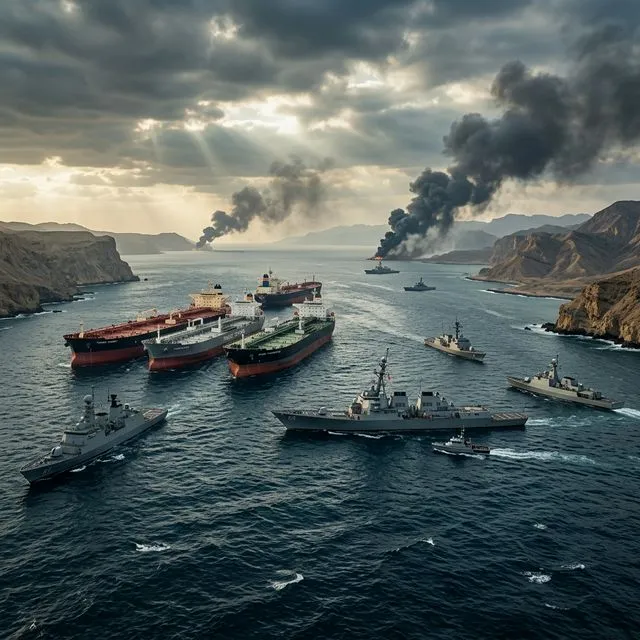
The most consequential strategic development of this conflict has been the effective closure of the Strait of Hormuz. By completely halting commercial transit through this maritime chokepoint, Iranian military forces have removed approximately twenty million barrels of crude oil per day from global circulation, representing roughly twenty percent of the total global oil supply. Simultaneously, the conflict has severely degraded the production and distribution of liquefied natural gas, particularly following targeted drone strikes on Qatari gas facilities.
!Strait of Hormuz Blockade *The closure of the Strait of Hormuz has paralyzed global energy markets, removing 20% of the world's oil supply.*
The economic ramifications of these physical disruptions are propagating rapidly through the global economy. Asset repricing across commodities, equities, and fixed income markets indicates that market participants expect a protracted period of constrained supply. The conflict has initiated a classic supply-driven inflation dynamic, compelling central banks to abruptly halt anticipated monetary easing cycles. Furthermore, the interruption of raw material flows from the Persian Gulf extends far beyond hydrocarbons. The suspension of regional fertilizer exports threatens a global food security crisis, while a sudden scarcity of helium poses an immediate threat to the global semiconductor industry.
Energy Market Dynamics and the Strait of Hormuz Blockade
The global energy market has experienced unprecedented volatility following the cessation of transit through the Strait of Hormuz. As a critical artery for international trade, the strait facilitates the movement of hydrocarbons from major regional producers including Saudi Arabia, Iraq, Kuwait, and the United Arab Emirates to consumer markets predominantly located in Asia and Europe.
Crude Oil Pricing Trajectories and Supply Deficits
The immediate market reaction to the hostilities was characterized by extreme price action. Within days of the initial strikes, the price of Brent crude surged from a baseline of approximately seventy dollars per barrel to an intraday peak exceeding one hundred ten dollars per barrel. At its absolute zenith during the first week of March, Brent crude traded near one hundred twenty dollars per barrel, a valuation not recorded since the onset of the conflict in Ukraine in 2022. The West Texas Intermediate crude benchmark followed a similar trajectory, rebounding by thirty-two percent to reach over one hundred one dollars per barrel.
Energy Market Metrics Overview
| Metric | Pre-Conflict Baseline | Crisis Peak (March 2026) | Current / Projected Range | | :--- | :--- | :--- | :--- | | Brent Crude Oil | ~$70 / bbl | $120 / bbl | $85 - $95 / bbl | | WTI Crude Oil | ~$76 / bbl | $101 / bbl | ~$90 / bbl | | Dutch TTF Gas | €30 / MWh | €50 / MWh | €100+ / MWh (if prolonged) | | Global Oil Supply | 100M bpd | 80M bpd (20% loss) | Dependent on Hormuz access |
This dramatic price escalation reflects the physical reality of the largest supply disruption in the history of the oil market. By the second week of March, the collective oil production of major Gulf states had declined by at least ten million barrels per day due to the inability to export volumes and the rapid exhaustion of local storage capacity. While prices subsequently retraced to a range between eighty-five and ninety-five dollars per barrel following speculative comments regarding a potential early cessation of hostilities, the underlying structural deficit remains unresolved.
To mitigate the catastrophic loss of supply, international organizations and national oil companies have deployed emergency contingencies. The International Energy Agency announced a historic coordinated release of four hundred million barrels from strategic petroleum reserves across its member nations. Simultaneously, Saudi Aramco mobilized its East-West pipeline infrastructure to reroute crude oil away from the Persian Gulf to the Red Sea port of Yanbu.
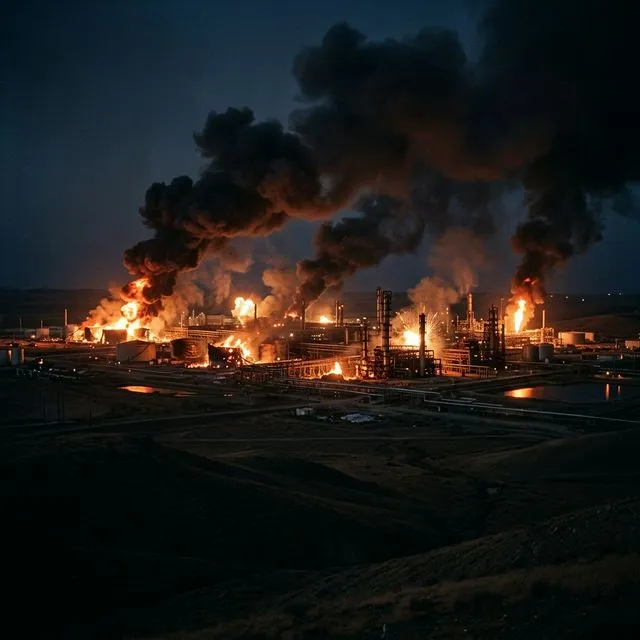
!Iran Infrastructure Strikes *Strikes on critical infrastructure have severely degraded production capacity across the region.*
Macroeconomic Contagion and Monetary Policy Shifts
The transmission of elevated energy prices into the broader global economy has fundamentally altered the macroeconomic outlook for 2026. Prior to the conflict, global central banks were broadly anticipated to execute a series of interest rate reductions as post-pandemic inflation metrics gradually approached target levels. The Middle East conflict has abruptly reversed these expectations, introducing severe stagflationary risks characterized by stagnant economic growth coupled with resilient inflation.
Inflationary Pressures and Supply-Driven Dynamics
The mechanism by which the oil and gas shock influences broad inflation is highly direct. Energy acts as a primary input cost for transportation, manufacturing, heating, and agricultural production. As these input costs rise, corporations are forced to pass the expenses onto consumers to protect profit margins, resulting in broad-based consumer price inflation.
Economic models indicate that the energy shock will add between half a percent and one full percentage point to global inflation metrics by the end of 2026. The International Monetary Fund estimates that a ten percent increase in energy prices that persists for a year pushes up global inflation by forty basis points and slows global economic growth by up to two-tenths of a percent.
!Global Market Recession *Global markets have reacted sharply to the conflict, with recession fears mounting as inflation spikes.*

Sectoral Disruption: Aviation, Agriculture, and Manufacturing
Aviation Logistics and Tourism
Airlines have been forced to execute massive operational pivots, grounding thousands of flights and completely redrawing global flight maps to circumnavigate the conflict zone. These mandated detours significantly increase flight durations, requiring higher fuel burn and precipitating complex logistical challenges. The World Travel and Tourism Council estimates that the Middle East visitor economy is currently hemorrhaging approximately six hundred million dollars per day in lost revenue.
Agriculture and Global Food Security
The closure of the Strait of Hormuz has severed the global agricultural sector from its most important source of soil nutrients. Approximately one third of all seaborne trade in urea, and a quarter of globally traded ammonia, originates in the Persian Gulf.
#### Global Fertilizer Export Dependency Matrix
| Country / Region | Import Dependency | Strategic Impact | | :--- | :--- | :--- | | Sudan | 54% | Severe risk of crop failure | | Somalia | 30% | Acute food insecurity threat | | Kenya | 26% | High inflationary pressure on food | | Global Urea Trade | 33% | Regional production halt | | Global Ammonia | 25% | Supply chain collapse |
Advanced Manufacturing and the Helium Bottleneck
Qatar operates the Ras Laffan industrial complex, a massive facility that synthesizes approximately thirty to forty percent of the total global helium supply. When Iranian military strikes forced QatarEnergy to abruptly halt all natural gas processing operations, the global helium market immediately lost over one third of its total production capacity. The absence of Qatari helium presents an existential threat to the global semiconductor industry, particularly in Taiwan, South Korea, and Japan.
Geopolitical Realignment and Great Power Competition
The 2026 conflict is accelerating a fundamental realignment of global geopolitical architecture. China, as the largest global importer of crude oil, has maintained a posture of calculated diplomatic restraint while benefiting from its massive strategic petroleum reserve and deep bilateral relations with Iran. Meanwhile, the Russian Federation occupies a highly advantageous position, as extreme price escalations enrich its state treasury and force Asian consumers to seek alternative suppliers.
Conclusion
The economic consequences of the 2026 Middle East war demonstrate the extreme fragility of a highly optimized global economic system. The primary conclusion of this analysis is that the era of cheap, reliable energy has been structurally interrupted. For corporate entities and sovereign governments alike, the strategic imperative moving forward is the aggressive diversification of critical supply chains and a departure from pure economic efficiency toward systemic resilience.