Batteries in the Dark
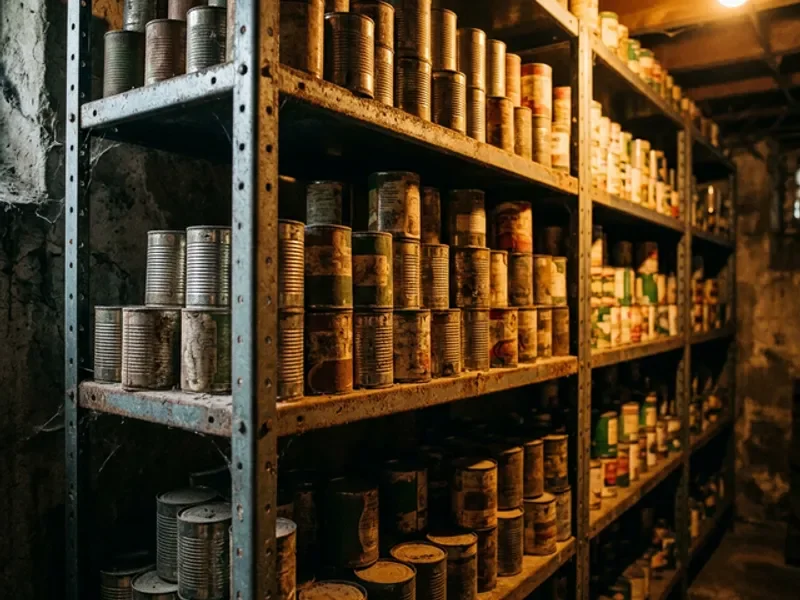
When the electrical grid fails for weeks instead of hours, battery chemistry, cold-weather charging limits, and DC load math decide what keeps running. A field guide to survival energy storage.
# Batteries in the Dark: Energy Storage for a Collapsing World
During the first forty-eight hours of a prolonged electric grid failure, almost everyone feels prepared. Phones still hold a charge, car alternators top off USB banks, and flashlight drawers seem full. By day five, reality hits hard. Disposable batteries disappear from local hardware shelves, cheap lithium power stations drain down to zero because an inefficient AC inverter stayed switched on overnight, and freezing weather cuts battery capacity in half right when medical equipment, water pumps, and radios matter most.
Reliable off-grid power is not about hoarding giant stacks of mismatched cells in a closet. It is an engineering problem—documented across NREL battery energy storage and microgrid research—built around chemistry selection, realistic watt-hour sizing, cold-weather protection, and disciplined DC load management. Get those four fundamentals right, and modest solar panels paired with a generator can keep critical household systems alive for months. Get them wrong, and you can ruin thousands of dollars of lithium hardware in a single frosty morning.
Matching Battery Chemistry to the Job
No single battery chemistry handles every survival role cleanly. Mixing up primary storage cells, small rechargeables, and bulk household banks leads to corroded gear, dead packs, and wasted fuel.
- Primary Lithium (`AA / AAA / CR123A`) vs. Alkaline: Ordinary alkaline cells are cheap for daily remotes, yet they suffer steep voltage sag under high draw, freeze near
-18°C, and routinely leak corrosive potassium hydroxide sludge that ruins flashlight contacts in storage. Primary lithium-iron-disulfide cells (`Energizer Ultimate Lithium`) cost more up front, weigh a third less, hold charge for up to twenty years, never leak, and deliver crisp power down to-40°C. Keep alkalines out of critical medical thermometers, optics, and emergency headlamps.
- Low-Self-Discharge `NiMH` (Replacing Obsolete `Ni-Cd`): Nickel-cadmium cells once dominated tough industrial tools, but cadmium is toxic, suffers voltage memory issues, and has largely vanished from quality retail gear. Modern low-self-discharge NiMH cells (such as Eneloop) hold 70 to 85 percent of their charge for years on the shelf, survive 500 to 2,000 recharge cycles, and charge easily off tiny 5V folding solar panels for AA/AAA headlamps and handheld weather radios.
- Flooded Lead-Acid and `AGM`: Deep-cycle lead-acid batteries remain cheap per amp-hour and tolerate freezing charging temperatures better than unheated lithium—yet they carry steep drawbacks. Pulling a lead-acid bank below 50 percent depth of discharge cuts lifespan rapidly, meaning a "100 Ah" 12V lead-acid battery really gives you only ~600 usable watt-hours. Worse, leaving lead-acid discharged for even a week triggers irreversible sulfate crystallization on the lead plates.
- `LiFePO4` (Lithium Iron Phosphate): Today's gold standard for stationary home backup and portable power stations. Unlike volatile cobalt-rich NMC lithium-ion cells found in e-bikes and older power banks,
LiFePO4resists thermal runaway even if punctured, tolerates 80 to 90 percent depth of discharge, and delivers 3,000 to 6,000+ cycles—easily a decade of daily blackout cycling.
The Freezing Trap That Kills Lithium Banks
Every winter blackout—a seasonal vulnerability highlighted in NERC Grid Reliability Assessments—produces the same costly failure: owners mount LiFePO4 batteries inside unheated garages, sheds, or vans and plug solar panels in as soon as the sun rises at -5°C.
While LiFePO4 chemistry discharges safely down to -20°C (with reduced voltage sag), charging a standard LiFePO4 cell below `0°C` (`32°F`) permanently plates metallic lithium onto the anode, destroying internal capacity and risking internal short circuits. Quality Battery Management Systems (BMS) enforce low-temperature charge cutoffs that block incoming solar power until cells warm up; cheap bargain batteries often lack working low-temp sensors altogether. Either install your bank inside the conditioned living envelope—paired with deep-freeze thermal envelope heating—wrap packs inside insulated foam enclosures fitted with thermostatic 12V heating pads, or choose self-heating LiFePO4 modules.
Real-World Watt-Hour Math and the Inverter Tax
Marketing slogans promising a "2,000W Solar Generator" mislead buyers into confusing peak inverter output (watts) with energy capacity (watt-hours). A 1,000 Wh power station running a 1,000W space heater dies completely in roughly 50 minutes.
Start with a strict survival load audit focused on essentials rather than the baseline household consumption tracked in the U.S. EIA Electric Power Monthly:
- CPAP / Medical Concentrator (DC direct) — vital life-support equipment covered in Ready.gov power outage safety guidance: ~45–60W × 8 hours = 360–480 Wh/night
- High-Efficiency 12V Chest Freezer / Fridge: ~45W compressor cycling 35% of the day = 380–550 Wh/day
- VHF/UHF Ham Radio + Weather Receiver (Rx/Tx intermittent): 60–120 Wh/day
- LED Task Lighting & Phone/Tablet Recharging: 80–150 Wh/day
Even a lean emergency household consumes roughly 1,000 to 1,500 Wh every twenty-four hours—before running a well pump, microwave, or electric kettle.
Crucially, never run small DC loads through a big AC inverter. Leaving a 2,000W pure-sine-wave inverter switched on 24 hours a day to power a single Wi-Fi router or CPAP burns 25 to 50 watts continuously just in idle conversion overhead—wasting 600 to 1,200 Wh every day before powering anything useful! Wire refrigeration, lighting, radios, and USB-C charging straight into native 12V or 24V DC fuse blocks (using properly crimped Anderson Powerpole or blade-fuse circuits), reserving the AC inverter solely for short bursts like running a circular saw or induction burner.
Charging Resilience and Long-Term Storage Discipline
Solar panels alone fail during grey November weeks unless sized generously. A realistic rule for northern winter overcast conditions is harvesting only 10 to 20 percent of a panel's nameplate rating. Pairing a modest 400W–800W folding or roof-mounted MPPT (Maximum Power Point Tracking) off-grid solar energy array—planned using U.S. Department of Energy solar guidance—with a **dual-fuel or diesel backup generator wired into a high-amperage LiFePO4 charger** gives you true hybrid resilience: run the generator hard at efficient load for two hours to cram 2,000 Wh into the battery bank, then shut the engine off and enjoy twenty-two hours of silent, fuel-saving DC power. Keep spare MC4 solar branch connectors, automotive blade fuses, inline circuit breakers, and a 12V DC-to-DC alternator charger in your kit so any running vehicle becomes a mobile emergency charger.
Finally, protect batteries sitting idle between crises. Store LiFePO4 and standard lithium-ion power banks in cool, dry air between 10°C and 20°C at 50 to 60 percent state of charge—never parked at 100 percent in hot garages or left flat near zero where parasitic BMS drain drags cells below recovery voltage. Check stored packs quarterly, top up to mid-charge, label purchase dates cleanly with masking tape, and keep vetted off-grid engineering references from our useful survival websites directory saved offline. In an extended grid failure, disciplined battery hygiene turns darkness into manageable routine.
Real-time geospatial feed aggregating USGS M5.0+ earthquakes, NASA EONET wildfires, volcanoes, severe storms, UN/EC GDACS alerts, and NOAA geomagnetic status.
Related Reports & In-Depth Intel

Grid Down: The First 72 Hours
The first 72 hours of a major grid failure are a race against falling water pressure, dead cell towers, food spoilage, and carbon monoxide hazards. Here is a practical hour-by-hour response checklist for households.

Nuclear Fallout: Preparing for the Worst-Case Scenario
Outside the immediate blast zone, nuclear fallout follows predictable physics that reward basic shelter, shielding mass, and patience over panic. Here is how radiation decays—and what actually protects you in the first 48 hours.
The Looming Water Crisis
Municipal taps depend on continuous grid electricity, intact chemical supply chains, and overdrawn aquifers. How water infrastructure fails during crises and how to build reliable home storage and multi-stage purification.
The Analog Firewall Manual
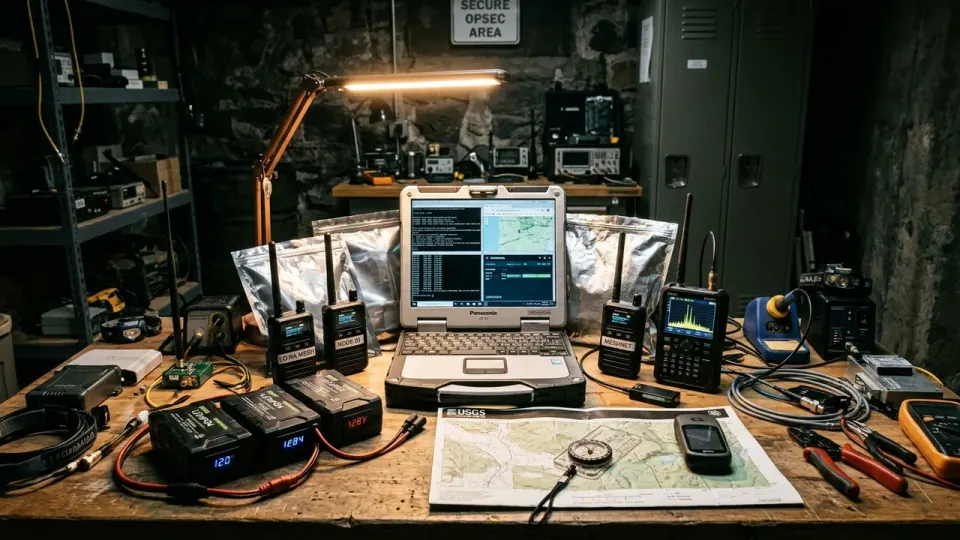
In the wake of FBI warning FLASH-20261113-001 (ARTEX), European cold-chain controller hacks, and $2.58 TCP/IP zero-days, physical resilience demands isolating critical inverters, wells, and refrigeration equipment onto offline LANs backed by hard electromechanical failsafes.