Extreme Cold Survival Blueprint
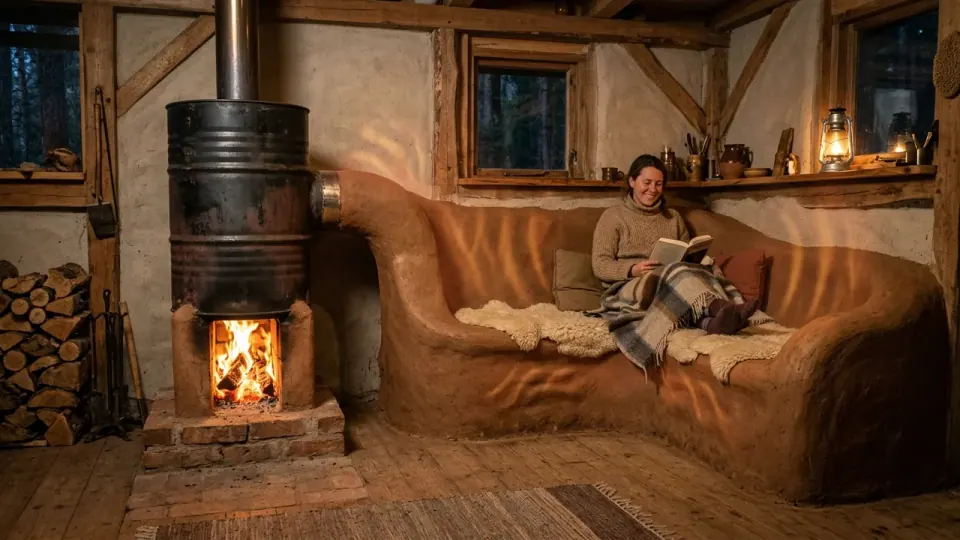
A life-saving technical blueprint for surviving catastrophic sub-zero winter grid outages and heating fuel interdictions by constructing hyper-efficient rocket mass heaters and engineered indoor micro-climate survival envelopes.
When the electrical grid fails during a catastrophic mid-winter polar vortex or coordinated infrastructure sabotage, modern residential structures transition from protective shelters into thermal death traps within the first forty-eight to seventy-two hours of a nationwide blackout. Modern suburban homes and multi-story urban apartment buildings are engineered with zero passive thermal autonomy; their survivability is entirely contingent upon continuous, centralized electrical power to drive blower motors, circulation pumps, and digital thermostat relays for natural gas, fuel oil, or heat pump furnaces.
Once that electrical lifeline is severed in sub-zero ambient temperatures (-15°C to -30°C)—conditions monitored continuously on our planetary hazard radar alongside NOAA National Weather Service cold-safety alerts—indoor temperatures plummet precipitously. Municipal water supply pipes within exterior walls freeze and burst, destroying living areas with ice and toxic water damage. Desperate occupants frequently succumb to acute hypothermia or commit fatal operational errors: burning raw charcoal briquettes, unvented kerosene heaters, or open wood fires indoors without adequate draft, leading to lethal carbon monoxide (CO) asphyxiation or uncontrollable house fires.
To survive prolonged winter blackouts and fuel rationing when external municipal fuel supplies are severed, you cannot heat an entire 2,000-square-foot house. You must execute an immediate two-phase thermal survival protocol aligned with Ready.gov winter weather preparedness: engineering an airtight, high-efficiency Micro-Zoned Thermal Envelope, and deploying a clean-burning, hyper-efficient Rocket Mass Heater (RMH) capable of extracting maximum heat from tiny quantities of salvaged scrap wood.
Phase I: Micro-Zoned Thermal Architecture
The fundamental thermodynamic error committed by untrained civilians during winter blackouts is attempting to maintain normal living space geometry. Heating a standard living room with nine-foot ceilings and expansive exterior window surfaces requires between ten and twenty kilowatts of continuous thermal energy—a burn rate that will exhaust a household's winter wood reserve in days.
Instead, you must instantly collapse your living envelope into an engineered Room-Within-a-Room micro-climate:
1. Room Selection and Solar Orientation
Select an interior room on the first floor (above the freezing basement) that possesses:
- The minimum volume necessary to house all family members (typically an 8x10 foot or 10x12 foot room).
- Minimum exterior wall exposure; ideally an interior room surrounded by dead-air buffer spaces such as closets, hallways, or pantries.
- If an exterior wall is unavoidable, select a south-facing room to harvest passive daytime solar thermal radiation through double-glazed windows.
2. Sealing the Thermal Envelope and Eliminating Infiltration
Convective cold-air drafts (infiltration) account for up to seventy percent of heat loss in unpowered homes, a vulnerability addressed in U.S. Department of Energy weatherization and air-sealing guidance. You must seal the micro-zone hermetically:
- Window Armor: Cut rigid 2-inch polyisocyanurate or extruded polystyrene (XPS) foam insulation boards to friction-fit tightly inside every window casing. Tape all seams with high-tack foil HVAC tape. Hang heavy wool survival blankets or multi-layered moving quilts over the entire window frame, tucking the edges beneath taped battens to create a multi-layer stagnant air gap.
- Doorway Air-Locks: Never exit your micro-zone directly into an unheated hallway. Construct a two-stage airlock at the door using two overlapping heavy wool blankets separated by a two-foot vestibule space. Seal all baseboards and electrical outlet wallplates with removable silicone caulk or painter's tape to block freezing air entering through stud cavities.
- Floor Cold-Sinks: Concrete slabs and subfloors act as massive conductive heat sinks, rapidly draining body heat through footwear. Cover the floor with thick closed-cell foam sleeping pads, interlocking gym tiles, thick cardboard layers, and wool carpets.
| Configuration | Floor Area Heated | Hourly Fuel Demand | Temp Delta (+C) |
|---|---|---|---|
| Full House (Unzoned) | 180 m² (2,000 ft²) | 8.5 kg Seasoned Oak | +4°C (Severe Loss) |
| Single Sealed Room | 25 m² (270 ft²) | 2.2 kg Scrap Wood | +14°C (Marginal) |
| Insulated Micro-Tent | 4 m² (43 ft²) | Body Heat + 0.4 kg | +22°C (Survivable) |
3. The Emergency Core: The Arctic Shelter Tent
Within your insulated micro-zone room, pitch a heavy-duty four-season expedition tent or construct a low-clearance frame shelter out of dimensional lumber or furniture, draped with 7-mil reflective mylar emergency tarps (aluminized side facing inward) and heavy wool blankets.
The human body at rest continuously radiates between 80 and 100 watts of thermal heat. In an insulated, small-volume tent housing three to four individuals, metabolic body heat alone will elevate the interior tent air temperature by 15°C to 20°C above the ambient room temperature, creating an absolute survivable sanctuary even if the surrounding house drops to -10°C.
Phase II: The Emergency Rocket Mass Heater (RMH)
While an insulated micro-tent preserves body heat, prolonged multi-week survival requires an active heat source to cook food, melt snow for potable water, and prevent interior ambient temperatures from dropping below freezing. Conventional cast-iron wood stoves, while effective, have severe liabilities: they are heavy (150-250 kg), consume enormous quantities of split cordwood, require complex masonry chimneys, and exhaust over thirty percent of their fuel energy straight out the chimney as unburned creosote smoke.
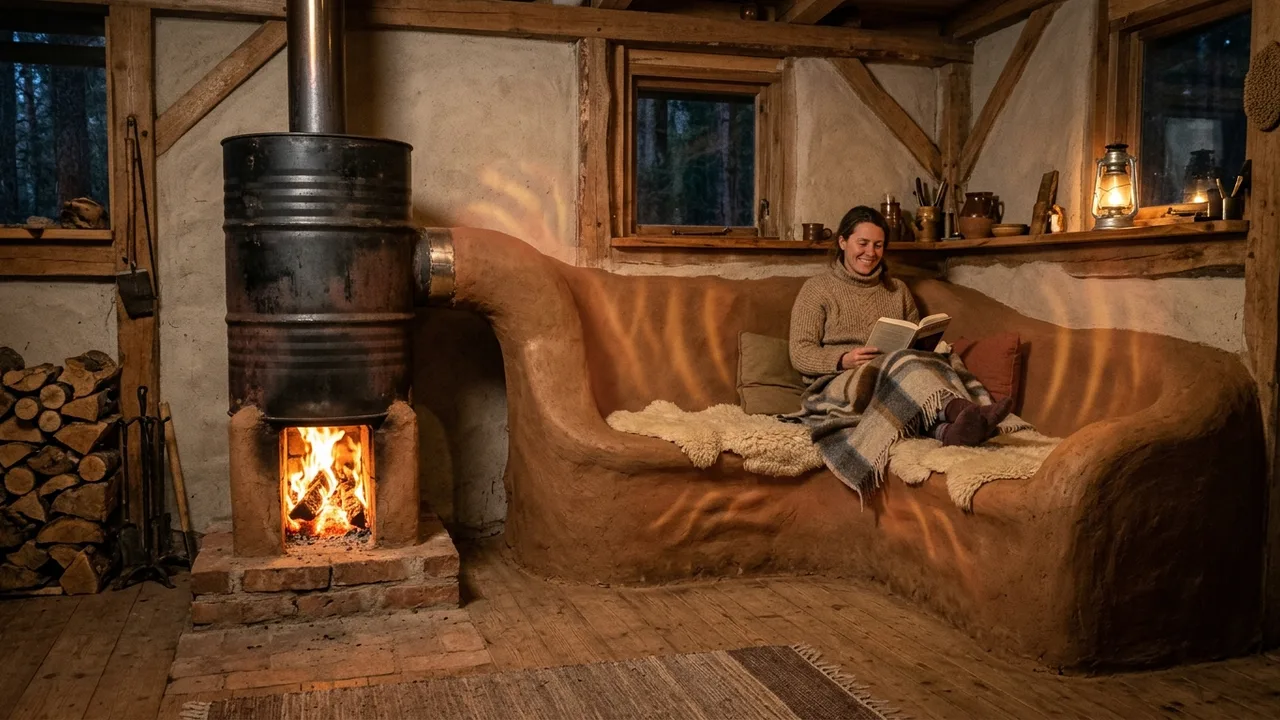
The Rocket Mass Heater (RMH) is the most efficient, clean-burning solid-fuel thermal technology available to survivalists, advancing the clean-combustion principles promoted by the EPA Burn Wise wood-heating program. By combining a super-insulated vertical internal combustion chamber (the "heat riser") with a large thermal storage mass (sand, gravel, cob, or water barrels), an RMH achieves:
- Over 90% Combustion Efficiency: Temperatures inside the insulated heat riser exceed 1,000°C (1,830°F), completely combusting wood gases, pitch, and carbon particulates. The exhaust exiting the final flue pipe is virtually smoke-free, consisting almost entirely of water vapor and carbon dioxide.
- Over 80% Reduction in Wood Consumption: An RMH extracts heat from pencil-thin twigs, dry branches, scrap construction dimensional lumber (2x4 offcuts), and dry pallet wood, eliminating the exhausting necessity of felling, hauling, and splitting heavy hardwood logs in deep snow.
- Thermal Flywheel Storage: Instead of radiating intense, transient heat that quickly dissipates when the fire dies, the RMH exhaust gases are routed through a dense bench of earth, rock, or water before exiting outdoors. This thermal mass absorbs the heat and radiates gentle, life-sustaining warmth for twenty-four to thirty-six hours after the fire has been extinguished.
Engineering Parameters for an Emergency Indoor RMH
In an acute grid-down crisis, an operational RMH can be assembled inside a residential dwelling utilizing salvaged materials within six to eight hours:
- 01.The Fuel Feed and Burn Tunnel: Constructed from heavy-duty high-alumina firebricks (or dense structural clay bricks salvaged from exterior landscape walls). The feed is a vertical 6-inch square drop chute where wood sticks are fed gravity-downward.
- 02.The Insulated Heat Riser: The critical core engine. An 8-inch galvanized steel flue pipe is placed inside an outer 12-inch metal duct tube or empty 30-pound freon canister. The gap between the inner and outer tube is packed tightly with expanded perlite, vermiculite, or dry wood ash. This extreme insulation keeps the combustion chamber white-hot, creating a powerful thermal draft (the "rocket roar") that pulls combustion air downward into the feed tube without any mechanical fans or back-puffing.
- 03.The Combustion Barrel (Radiant Bell): A salvaged 55-gallon steel oil drum is inverted over the insulated heat riser, with a 2-inch clearance at the top. The hot flue gases hit the top of the steel barrel (which reaches 400°C, providing an instant surface for boiling water and cooking), drop down the sides, and enter the exhaust manifold at the bottom of the drum.
- 04.The Thermal Mass Heat Exchange Bench: The exhaust gases exiting the bottom of the barrel are routed through 6-inch single-wall stove pipes laid horizontally through an elongated bench constructed of clay, masonry rubble, sand, and gravel. The thermal mass absorbs the heat, cooling the exhaust gases down to a safe 40°C to 60°C.
- 05.Flue Exhaust and Carbon Monoxide Safety: The cooled exhaust pipe is vented to the exterior through a non-flammable thimble in an exterior window or existing chimney flue. Critical Safety Imperative: Install a battery-powered carbon monoxide detector at floor level following CDC carbon monoxide poisoning prevention rules, and ensure an external combustion air intake pipe feeds outdoor oxygen directly into the burn tunnel to prevent oxygen depletion inside the micro-zone.
| Component | Salvage Material | Critical Engineering Rule |
|---|---|---|
| Feed Chute | Firebrick / Heavy Clay Paver | 150 mm Square / Vertical |
| Internal Heat Riser | 150 mm Heavy Steel Flue Pipe | Must be Insulated w/ Perlite |
| Radiant Drum Bell | 55-Gallon Steel Barrel | 50 mm Clearance Above Core |
| Thermal Storage Mass | Sand, Cob, Gravel, Concrete | Min. 400 kg Mass for Memory |
| Exhaust Flue Duct | 150 mm Rigid Metal Duct | Pitch Upward 20 mm per m |
Hydrological Freeze Protection and Medical Cold-Care
Maintaining personal thermal homeostasis requires active management of secondary cold-weather physiological hazards:
- Preventing Burst Water Mains: Before ambient indoor temperatures drop to zero, locate the main municipal water shutoff valve (curb stop or basement valve) and close it completely. Open every faucet, shower valve, and outdoor spigot at the highest and lowest points of the house to drain water lines completely. Pour non-toxic propylene glycol RV antifreeze or high-salinity brine into all toilet bowls, sink traps, and appliance drain pumps to prevent ice expansion from shattering ceramic fixtures.
- Caloric and Hydration Demands in Extreme Cold: Under cold stress, the human body burns between 3,500 and 5,000 calories daily through non-shivering thermogenesis and muscular shivering—a reality that makes winter fuel and grocery buffer planning vital before cold snaps arrive. Consume high-fat, high-density foods (pemmican, butter, tallow, nuts, and chocolate) immediately before sleep to fuel metabolic furnace heat throughout the night.
- Hydration Vigilance: Never consume un-melted snow; the latent heat of fusion required to melt snow in the stomach will rapidly drop your core body temperature, accelerating clinical hypothermia. Always melt snow in metal vessels on your RMH cooktop and consume fluids warm.
Winter is an unsparing, thermodynamic judge of human preparation. By refusing to heat empty space, collapsing your living footprint into an engineered micro-tent envelope, and harnessing the hyper-efficient power of rocket combustion mass storage—backed by weather and emergency monitors cataloged in our Useful Websites directory—you will transform an unpowered, frozen house into an unshakeable winter fortress.
Real-time geospatial feed aggregating USGS M5.0+ earthquakes, NASA EONET wildfires, volcanoes, severe storms, UN/EC GDACS alerts, and NOAA geomagnetic status.
Related Reports & In-Depth Intel

Hyperthermia and Grid Outages
A comprehensive, field-tested survival manual for enduring prolonged 45°C+ heatwaves when the electrical grid collapses and air conditioning is offline. Passive cooling, electrolyte chemistry, and microclimate engineering.
Outliving the Typhoon and the Mud After
As Super El Niño fuels violent coastal typhoons over baked clay soils, surviving the storm means moving early, dodging contaminated floodwater, disinfecting wells, and stripping wet drywall before black mold claims the house.
Emergency Potable Water Engineering
A comprehensive survival engineering guide for producing medical-grade potable water from ocean brine, hyper-saline aquifers, and toxic industrial runoff using salvaged multi-stage solar distillation basins and silver-impregnated biochar filters.

Emergency Calorie Security
When industrial supermarket supply chains fail and synthetic nitrogen fertilizer vanishes, dietary survival cannot be sustained on salad greens. Here is the operational agronomy guide to producing millions of dense calories using biochar-buffered soil mounds.