Emergency Potable Water Engineering
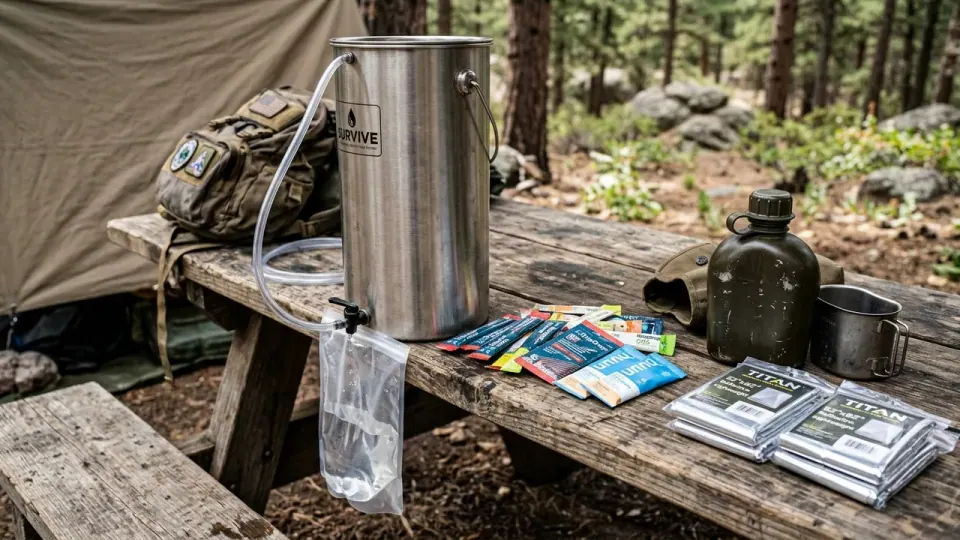
A comprehensive survival engineering guide for producing medical-grade potable water from ocean brine, hyper-saline aquifers, and toxic industrial runoff using salvaged multi-stage solar distillation basins and silver-impregnated biochar filters.
In severe climate collapse scenarios, prolonged drought events, or industrial grid-down disasters, water is the uncompromising chronometer of human survival—a vulnerability reinforced by Ready.gov emergency water planning guidance and our briefing on preparing for the looming water crisis. While a healthy individual can survive for over three weeks without food, acute dehydration induces cognitive delirium within thirty-six hours and fatal hypovolemic shock within seventy-two to ninety-six hours. Yet, the most lethal misconception pervasive in civilian prepper literature is the belief that standard commercial backpacking filters (such as hollow-fiber 0.1-micron membrane squeeze filters or gravity bags) can render any outdoor water source drinkable.
Hollow-fiber micro-filters and ceramic candles are mechanical strainers designed exclusively to trap microscopic biological pathogens: protozoan cysts (Cryptosporidium, Giardia) and bacteria (E. coli, Salmonella). They possess zero physical capability to remove dissolved chemical toxins, heavy metals (arsenic, lead, mercury), volatile organic compounds (petroleum distillates, PFAS, pesticides), or dissolved mineral salts (sodium chloride, magnesium sulfate)—a limitation detailed in our essential disaster water purification guide.
When municipal pressurized water distribution systems fail, municipal wastewater treatment plants overflow into freshwater rivers, and prolonged El Niño droughts—monitored across regional streamflow basins via the USGS National Water Dashboard and our crisis data portal—drop aquifer water tables until only brackish, hyper-saline groundwater remains, standard filtration fails completely. Consuming water with total dissolved solids (TDS) exceeding 1,000 parts per million (ppm) damages renal tubule function; drinking coastal ocean brine (35,000 ppm TDS) accelerates cellular dehydration, causing rapid kidney failure and death.
To achieve true hydrological autonomy under extreme collapse conditions, survivalists must master two foundational, off-grid purification technologies complementing CDC emergency drinking water safety protocols: Cascading Multi-Stage Solar Distillation Stills to strip heavy mineral salinity through phase-change evaporation, and Silver-Impregnated Pyrolyzed Biochar Adsorption Columns to eradicate toxic industrial chemicals and volatile organics.
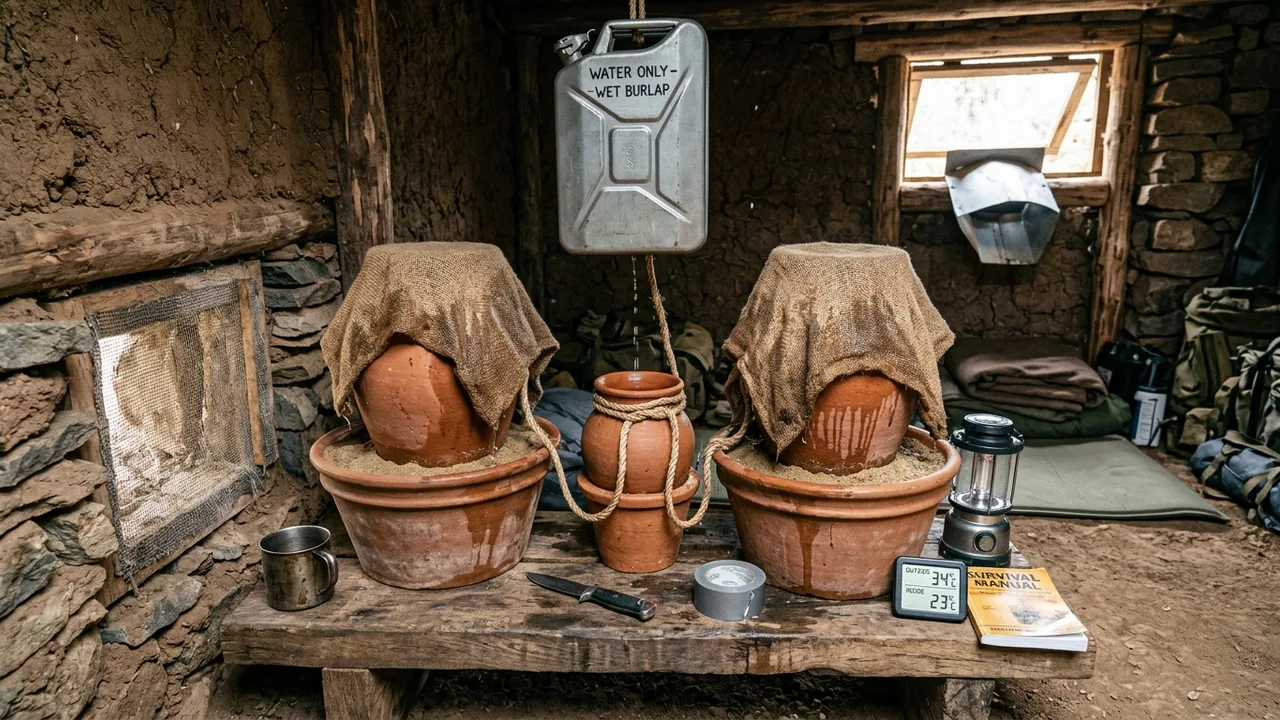
Physics of Phase-Change Purification: The Multi-Stage Solar Still
Distillation is nature’s ultimate purification mechanism. When water undergoes a thermal phase change from liquid to vapor, it leaves one hundred percent of its dissolved mineral salts, non-volatile heavy metals, radionuclides, and biological pathogens behind in the brine basin. When that clean water vapor condenses against a cooler surface, the resulting liquid condensate is pure, mineral-free distilled water.
However, standard primitive survival solar stills—such as digging a hole in the ground covered with a sheet of plastic weighted with a rock—yield fewer than 0.5 to 1.0 liters of water per day, far below the minimum baseline physiological requirement of 3.0 liters per person per day.
To achieve family-scale potable water yields (12 to 20 liters per day) from ocean seawater or stagnant brackish ponds, you must engineer a Multi-Stage Cascading Basin Solar Still:
Structural Blueprint and Materials Selection
- 01.The Basin Enclosure: Fabricate an insulated box (typically 1.0 meter by 1.5 meters) using exterior-grade plywood or salvaged sheet metal. Line the interior with 2 inches of closed-cell polyisocyanurate foam insulation to prevent conductive heat loss through the bottom and sides.
- 02.The Solar Absorber Liner: Line the basin with heavy-duty 45-mil ethylene propylene diene monomer (EPDM) pond liner or food-grade high-temperature silicone rubber. The liner must be matte black to maximize solar radiation absorption. Avoid standard black PVC or construction poly-sheeting, which off-gasses toxic phthalates and volatile plasticizers at elevated temperatures.
- 03.The Condensation Glazing: Cover the basin with a pane of 4-millimeter tempered glass (salvaged sliding glass patio door panes or storm windows are ideal). Mount the glass at a precise angle of 25 to 35 degrees matching your local latitude. Critical Engineering Rule: Glass is far superior to plastic sheeting because glass possesses high surface energy, promoting "film-wise" condensation where water sheets smoothly downward into collection troughs rather than forming droplets that detach and drip back into the dirty brine basin.
- 04.Thermal Wicking Arrays: Suspend vertical baffles or horizontal steps lined with black cotton canvas or burlap inside the basin, fed via capillary action from the saline reservoir. This increases the evaporative surface area by over 300 percent compared to a flat pool of standing water.
| Parameter / Component | Raw Input Quality | Post-Distillation Output |
|---|---|---|
| Total Dissolved Solids | 35,000 ppm (Ocean Seawater) | <15 ppm (Pure Distillate) |
| Heavy Metals (Pb/As) | 250 ppb (Industrial Spill) | Non-Detectable (<0.01 ppb) |
| Pathogen Load (CFU) | High Coliform Count | 0 CFU (Sterilized by Heat) |
| Daily Water Output | High Solar Insolation (Summer) | 4.5 - 6.2 Liters / m² / Day |
| Lifespan of Hardware | Requires Daily Brine Flushing | 15+ Years (Glass/EPDM) |
Optimizing Thermodynamic Output: The Latent Heat Recovery Loop
Standard single-basin stills waste immense energy: when water vapor condenses on the underside of the glass, it releases its latent heat of vaporization (2,260 kilojoules per kilogram) directly into the atmosphere through the glass.
In an advanced double-effect solar still, a secondary thin aluminum condensation sheet is suspended beneath the outer glass. The latent heat released by condensing vapor on the aluminum plate warms a secondary, elevated pre-feed tray of raw brackish water, doubling your daily distillate yield to over 10 liters per square meter of collector area on sunny days.

Phase II: Eliminating Volatile Organics with Silver-Impregnated Biochar
While solar distillation removes all dissolved mineral salts, bacteria, and heavy metals, it possesses a critical chemical limitation: Volatile Organic Compounds (VOCs). Low-molecular-weight industrial solvents, petroleum distillates (benzene, toluene), pesticides, and chlorine possess boiling points lower than or near that of water (50°C to 100°C). When contaminated wastewater is heated in a solar still, these volatile toxic chemicals vaporize along with the water vapor, co-condensing into your clean collection trough—which is why turbid chemical runoff should first undergo chemical flocculation and activated carbon salvage alongside EPA emergency drinking-water disinfection guidelines.
To eliminate VOCs, endocrine disruptors, and chemical runoff—and remove synthetic particulates tracked in our household water and kitchen decontamination guide—all distillate (or pre-filtered freshwater) must pass through a Deep-Bed Activated Biochar Adsorption Column.
Manufacturing Activated Biochar at Homestead Scale
Standard wood charcoal from an open campfire is chemically inadequate; it is saturated with tars, polycyclic aromatic hydrocarbons (PAHs), and unburned resin oils. True activated biochar must be manufactured via controlled, oxygen-starved pyrolysis:
- 01.Top-Lit Updraft (TLUD) Gasification: Pack seasoned, resin-free hardwood chunks (oak, beech, maple, or coconut shells) into a 5-gallon metal bucket with small ventilation holes in the lid, nested inside a ventilated 55-gallon steel burn barrel. Fire the outer chamber to heat the inner canister to 650°C to 800°C in the complete absence of oxygen. This drives off all volatile wood tars, leaving a pure, crystalline carbon skeleton.
- 02.Thermal Activation: While the biochar is still glowing red-hot inside the retort, quench it with boiling water or superheated steam. This thermal shock explodes microscopic pores throughout the carbon lattice, expanding its internal surface area from 50 square meters per gram to over 800 to 1,200 square meters per gram—a single gram of activated biochar possesses the surface adsorption area of two full-sized tennis courts.
- 03.Colloidal Silver Impregnation (Bacteriostatic Doping): In stagnant post-disaster environments, carbon filters can become breeding grounds for bacterial biofilms. To render the biochar permanently antimicrobial, soak the crushed activated carbon in a dilute solution of colloidal silver (50 ppm) or silver nitrate for twelve hours before air-drying in the sun. The metallic silver nanoparticles bind to the porous carbon pores, exerting an oligodynamic cytotoxic effect that permanently eliminates bacteria on contact.
Assembling the Gravity Multi-Layer Filter Column
Assemble the purification column inside a food-grade 5-gallon HDPE bucket or 4-inch vertical PVC pipe, layered from bottom to top:
- Bottom Layer (10 cm): Clean, boiled pea gravel surrounding a food-grade stainless-steel mesh drain screen.
- Support Layer (5 cm): High-silica washed coarse sand to prevent carbon migration into the clean effluent reservoir.
- Adsorption Core (30 cm): Crushed, activated, silver-impregnated biochar, graded to a uniform granular size of 1 to 3 millimeters (do not pulverize into fine powder, which will clog and arrest gravity flow). Pack the bed firmly to eliminate preferential flow channeling.
- Pre-Filtration Cap (10 cm): Fine silica masonry sand topped with a layer of dense cotton muslin cloth to trap gross suspended sediment, silt, and algae before they foul the active biochar pores.
| Filter Bed Layer | Depth & Material Matrix | Specific Functional Role |
|---|---|---|
| Top Cloth Pre-Filter | Tight-Woven Cotton / Canvas | Traps Silt, Mud, Gross Dirt |
| Upper Sediment Bed | 100 mm Washed Quartz Sand | Blocks Suspended Organics |
| Biochar Core Engine | 300 mm Pyrolyzed Ag-Biochar | Adsorbs VOCs, PFAS, Toxins |
| Lower Barrier Bed | 50 mm Coarse Silica Sand | Retains Carbon Particulates |
| Bottom Drainage Bed | 100 mm Boiled River Gravel | Enables Free Gravity Flow |
Re-Mineralization and Water Quality Verification
Pure distillate harvested from a solar still and polished through biochar is chemically pure, but it is aggressive and flat-tasting because it lacks natural electrolyte minerals. Long-term consumption of pure distilled water can leach sodium, potassium, and magnesium ions from gastrointestinal mucosal tissues, contributing to systemic electrolyte imbalances during heavy physical labor in hot environments.
To restore biological harmony to your potable water supply:
- The Re-Mineralization Siphon: Route your polished distillate through an open vessel containing clean food-grade limestone (calcium carbonate), crushed oyster shells, and food-grade unrefined sea salt at a ratio of 0.2 grams of salt per five liters of water. This elevates the pH from acidic (5.8) to a healthy alkaline range (7.2 to 7.8) and restores essential calcium and magnesium ions.
- Testing and Verification: Always verify your output utilizing a reliable handheld digital Total Dissolved Solids (TDS) meter against World Health Organization (WHO) drinking-water quality standards. Raw seawater reading 35,000 ppm should exit the solar still below 20 ppm; post-remineralization water should register between 80 and 150 ppm TDS.
Water is the irreducible boundary of human civilization. By combining the natural phase-change thermodynamics of the cascading solar still with the ancient, industrial-grade adsorption physics of pyrolyzed silver-biochar, you possess an unshakeable technological blueprint to transform the most toxic, saline sludge into life-sustaining, crystal-clear water for your family and community.
Real-time geospatial feed aggregating USGS M5.0+ earthquakes, NASA EONET wildfires, volcanoes, severe storms, UN/EC GDACS alerts, and NOAA geomagnetic status.
Related Reports & In-Depth Intel
Outliving the Typhoon and the Mud After
As Super El Niño fuels violent coastal typhoons over baked clay soils, surviving the storm means moving early, dodging contaminated floodwater, disinfecting wells, and stripping wet drywall before black mold claims the house.

Emergency Calorie Security
When industrial supermarket supply chains fail and synthetic nitrogen fertilizer vanishes, dietary survival cannot be sustained on salad greens. Here is the operational agronomy guide to producing millions of dense calories using biochar-buffered soil mounds.
Post-Disaster Toxic Floodwater Salvage
In the aftermath of catastrophic storms, dam breaches, or industrial sabotage, surface water is heavily poisoned with petrochemicals, heavy metals, and dead biologicals. Here is the life-saving chemistry manual for producing pristine drinking water from toxic slurry.
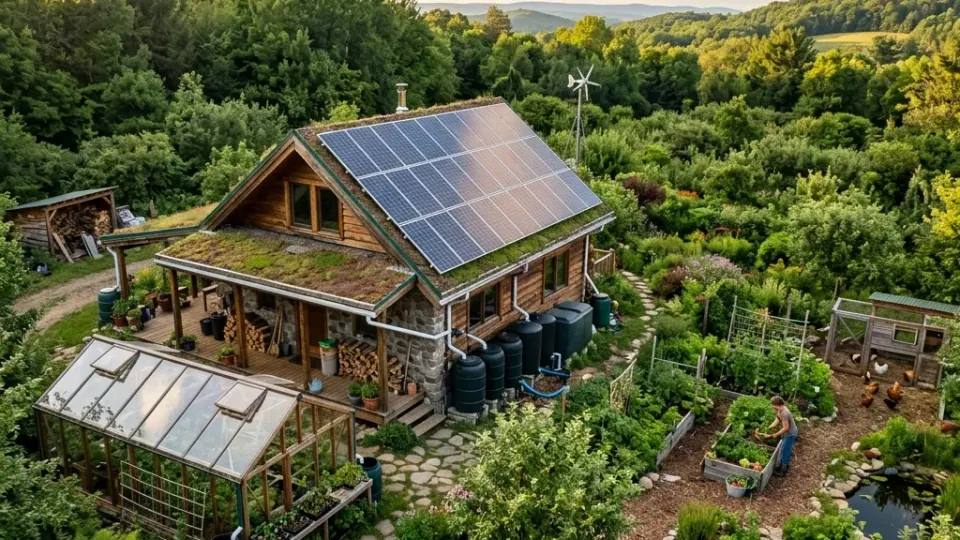
Crucial tips to survive in climate change apocalypse.
As centralized systems fracture under climate stress, we outline the exact biological, hydrological, and shelter practices required for self reliance.