Cutting Nanoplastics Out of Your Kitchen
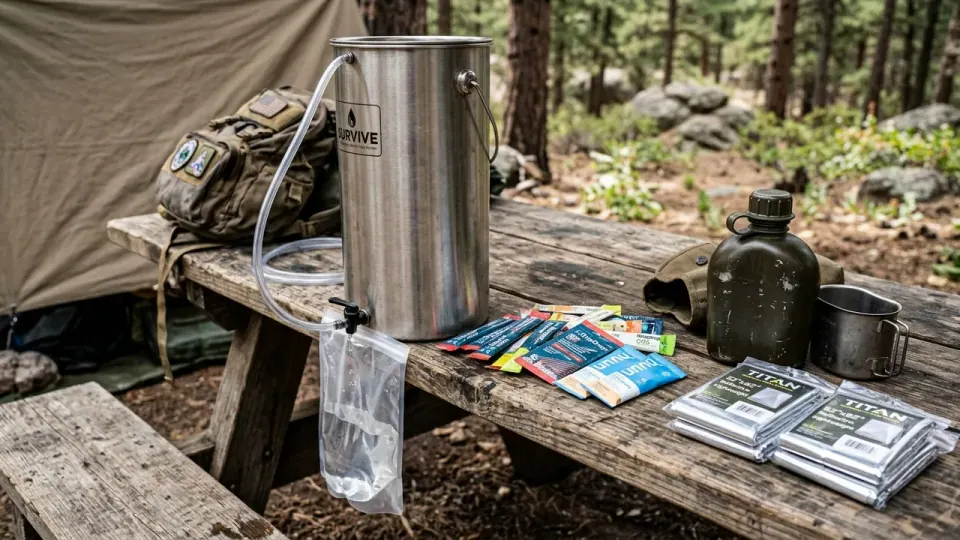
From the 5-minute hard-water boil-and-filter protocol that strips 90% of nanoplastics to reverse osmosis, non-plastic cookware, and indoor dust control—practical countermeasures that work today.
When alarming toxicology headlines hit the news, most blogs either shrug helplessly—"everything has microplastics now, nothing you can do"—or try to sell you an overpriced supplement bottle. Both reactions miss the mark. You cannot escape synthetic polymers completely in an industrialized world shaped by stalled global plastics treaties and petrochemical lock-in, yet you can cut your daily ingestion and inhalation dose by eighty to ninety-five percent using cheap kitchen physics, hardware swaps, and zero-nonsense water treatment.
Exposure follows a sharp power law. A handful of daily habits—drinking bottled water, steeping synthetic tea bags, microwaving takeout tubs, slicing meat on scarred polyethylene boards, and breathing carpet dust—drive the vast majority of the particles showing up in human blood and brain tissue studies. Fix those high-leverage choke points first, and your biological load drops dramatically.
1. Water Decontamination: The Boil-and-Filter Physics Trick
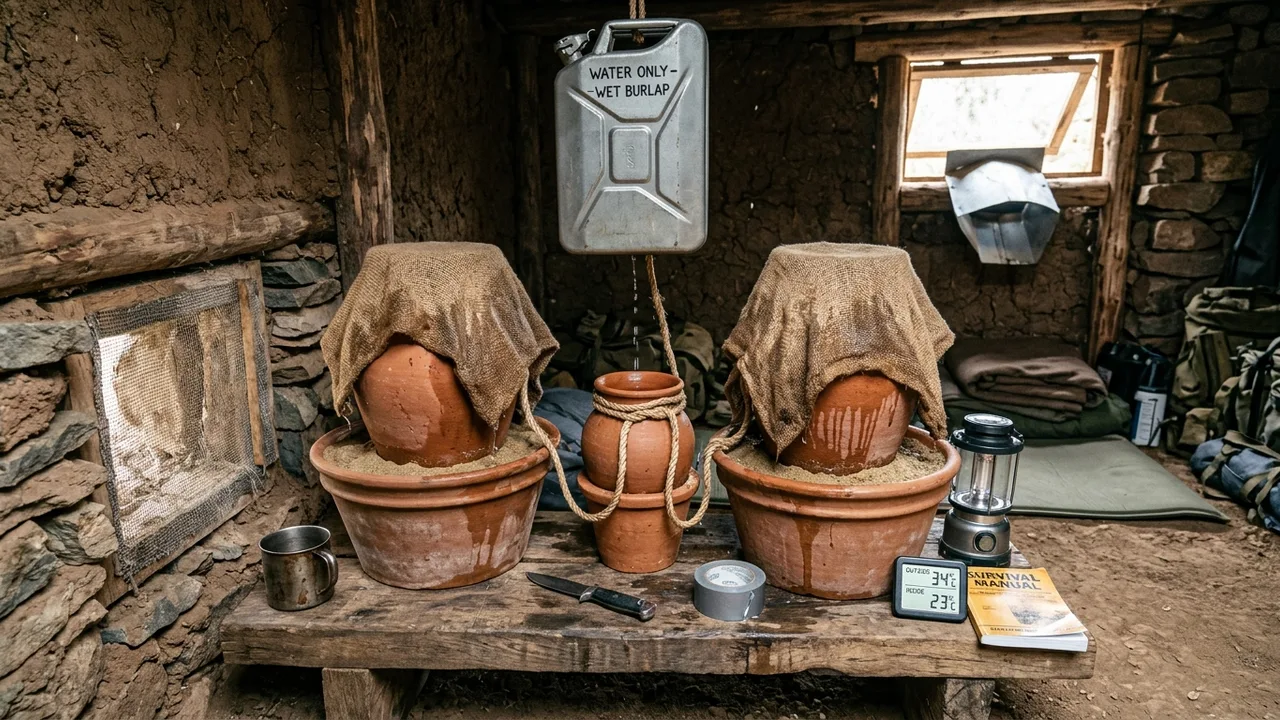
Water is the easiest vector to clean, whether your municipal grid is running normally or you are operating off a rain cistern during a crisis—a baseline discipline covered in CDC emergency drinking-water guidance and WHO Guidelines for Drinking-water Quality. Two proven methods dominate: hard-water calcium co-precipitation (which costs pennies and works off-grid) and Reverse Osmosis (the gold-standard home barrier).
In 2024, researchers publishing in Environmental Science & Technology Letters tested what happens when you boil ordinary tap water spiked with polystyrene, polyethylene, and polypropylene micro- and nanoplastics, complementing ongoing EPA microplastics water research. Boiling alone does not destroy plastic—polyethylene melts above 115°C and resists brief 100°C heat—yet something remarkable happened as the kettle cooled.
In mineral-rich hard water (above 120–300 mg/L calcium carbonate), heat drives dissolved calcium bicarbonate out of solution, forming solid calcium carbonate (limescale) crystals. As those chalky crystals precipitate, they physically wrap around and trap floating micro- and nanoplastics into heavier flakes. Pour that water through a simple paper coffee filter or fine stainless-steel mesh, and you trap up to 80 to 90 percent of the nanoplastics inside the mineral crust.
There is one crucial catch every field manual needs to highlight: this trick depends on water hardness. In soft water (below 60 mg/L CaCO3)—or water run through a salt-based home water softener—removal drops to roughly 25 percent because there isn't enough dissolved calcium to build an encapsulating crystal lattice. For off-grid survivalists boiling rainwater or soft creek water, adding a pinch of food-grade calcium carbonate or mineral drops before boiling restores the flocculation effect.
| Filtration / Treatment Method | Microplastics (>1 micron) | Nanoplastics (<1 micron) | Power Required? |
|---|---|---|---|
| Reverse Osmosis (0.0001 um) | ~99.9% | ~99.9% | Line / Hand Pump |
| Hard-Water Boil + Coffee Filter | 80% - 90% | 80% - 90% | Stove / Fire |
| Steam Distillation (Glass/SS) | ~99%+ | ~99%+ | High Heat |
| Ceramic Gravity Filter (0.2 um) | ~99% | ~40% - 70% | None (Gravity) |
| Standard Carbon Pitcher (5-20um) | 50% - 80% | <25% | None (Gravity) |
If you are setting up a permanent home system, skip the basic activated-carbon pitcher—its 5-to-20-micron pores let sub-micron nanoplastics glide right through—and install an under-sink Reverse Osmosis (RO) unit rated to 0.0001 microns, paired with a stainless-steel storage faucet and a mineral remineralization cartridge, as compared in our ranked guide to water purification methods. For grid-down backup, keep a non-electric gravity ceramic filter (rated 0.2 microns) upstream of a stainless kettle + unbleached paper coffee filters, or keep a manual hand-pumped survival RO unit in your cache.
2. Ditch Bottled Water and Heated Plastics First
Independent Columbia University laser-spectroscopy testing in 2024 found an average of 240,000 plastic fragments per liter of standard bottled water—and ninety percent of them were nanoplastics tiny enough to cross cellular membranes, shed mostly from the PET bottle walls and twisting the HDPE screw cap. Switching from single-use bottled water to filtered tap water stored in borosilicate glass or 304/316 stainless steel eliminates tens of millions of particles per year in a single afternoon.
Right behind bottled water sits heat plus polymer contact. Heat breaks polymer chains and multiplies shedding by orders of magnitude:
- Never microwave food in plastic: Lab tests show microwaving polypropylene containers for just three minutes can release millions of microplastics and billions of nanoplastics per square centimeter directly into hot broth or fatty meals. Transfer leftovers to glass or ceramic before reheating.
- Ban plastic pyramid tea bags: Silky nylon or PET pyramid tea bags steeped at 95°C shed billions of micro- and nanoplastics into a single mug. Switch strictly to loose-leaf tea in a stainless mesh infuser, or unbleached paper bags verified free of heat-seal polypropylene glue.
- Skip disposable coffee cups: Almost every paper takeaway cup is lined inside with a thin film of polyethylene or PLA. Pouring near-boiling coffee into one sheds trillions of nanoparticles before your first sip. Carry an insulated stainless steel tumbler.
- Watch dishwasher heat: High-temperature drying cycles inside dishwashers craze and chalk plastic spatulas, cutting boards, and food tubs, priming them to shed flakes onto your next meal.

3. Hard Swaps for Cutting Boards, Utensils, and Cookware
Walk through your kitchen with a trash bag and look at every surface that experiences friction or heat. Friction turns solid polymer into edible dust.
- 01.Throw out plastic cutting boards: Every time a sharp chef's knife bites into a white polyethylene or polypropylene board, it carves microscopic plastic curls straight into your diced onions and meat. Researchers estimate a single person using plastic boards regularly swallows tens of millions of microplastic particles per year from boards alone. Replace them with solid hardwood (end-grain maple, walnut, or beech) oiled with food-grade mineral oil or beeswax, or tempered glass / titanium / stainless prep boards for raw meat sanitation.
- 02.Retire black nylon spatulas and non-stick PTFE pans: Black nylon cooking utensils scraped against hot skillets shed both microplastics and recycled flame retardants. Replace them with solid wood, bamboo, or stainless steel utensils, and move from degraded Teflon/PTFE coatings to seasoned cast iron, carbon steel, and tri-ply stainless steel—hardware that also lasts indefinitely in a grid-down household.
- 03.Store dry staples in glass or Mylar-lined steel: Bulk rice, oats, salt, and beans sitting in cheap recycled HDPE buckets can shed abrasion dust every time you scoop. Use wide-mouth glass Mason jars for daily pantry rotation, or heavy-duty 5-mil food-grade Mylar pouches inside sealed containers for multi-decade bunker storage.
4. Cleaning the Air You Breathe: Tire Dust and Synthetic Fibers
Ingestion gets all the headlines, yet inhalation delivers nanoplastics directly past the lung's thin alveolar-capillary barrier without ever facing stomach acid. Two sources dominate indoor air: synthetic textiles (polyester fleece, microfiber blankets, nylon carpets, acrylic curtains) and outdoor road/tire dust drifting through windows and tracked in on boots.
Tighten up your air discipline with four low-cost rules aligned with EPA indoor air quality standards:
- Run True HEPA filtration (H13/H14): A basic box fan + MERV-13 Corsi-Rosenthal cube or commercial True HEPA purifier traps airborne synthetic fibers and sub-micron tire dust down to 0.3 microns before your lungs filter them for free. Run one continuously in bedrooms.
- Vacuum with sealed HEPA bags—never dry-sweep: Sweeping kicks settled microfibers back into breathing height for hours. Use a sealed HEPA vacuum weekly and wet-mop hard floors.
- Keep shoes at the door: Urban street dust is packed with 6PPD tire-wear particles, brake dust, and heavy metals—hazards we examine further in our guide to surviving industrial contamination and pollution. A strict no-shoes-indoors rule cuts indoor tracked plastic dust sharply.
- Favor natural fibers next to skin and in the dryer: Whenever you replace bedding, base layers, or towels, choose cotton, merino wool, linen, or hemp. If you wash synthetic fleece or technical shells, wash cold on gentle cycles, use a microfiber-catching laundry bag (like Guppyfriend) or external inline lint trap, and air-dry instead of blasting clothes in a hot tumble dryer that vents microfibers straight into your yard and lungs.
5. Supporting Natural Clearance Without Falling for Gimmicks
No pill dissolves polyethylene inside human tissue—be deeply skeptical of anyone selling "microplastic detox drops." What you can do physiologically is keep your body's natural barriers and clearance pathways sharp while lowering incoming exposure:
- High dietary fiber & fermented foods: Soluble fiber (oats, psyllium, flax, legumes) binds bile acids and gut particulates, speeding fecal transit so ingested microplastics spend less time abrading intestinal tight junctions.
- Sauna & sweating hygiene: Regular heat sweating helps excrete certain fat-soluble plastic additives like phthalates and bisphenols, though solid polymer particles themselves remain trapped unless cleared via mucosal or biliary turnover.
- Protect your gut lining: Avoiding ultra-processed foods wrapped in heated industrial plastics simultaneously cuts phthalate intake—chemical additives tracked by the National Institute of Environmental Health Sciences on endocrine disruptors—and reduces intestinal permeability ("leaky gut"), tightening the very biological gatekeepers that nanoplastics exploit.
Every step in this protocol doubles as durable resilience. Switching to cast iron, hardwood, glass jars, stainless steel, wool clothing, and gravity/RO water filtration removes fragile plastic clutter from your home while cutting toxic exposure today—before you ever need a backup plan. For additional water-testing and environmental safety tools, explore our useful survival websites directory.
Key Takeaways
- Boil Hard Water + Filter: Boiling mineral-rich hard water for 5 minutes and pouring it through a paper coffee filter traps 80–90% of micro- and nanoplastics inside calcium-carbonate limescale crystals (drops to ~25% in soft water).
- Reverse Osmosis Is King: Under-sink 0.0001-micron RO systems remove ~99.9% of nanoplastics regardless of hardness; standard carbon pitchers miss sub-micron particles.
- Eliminate Heat + Friction Vectors: Swap bottled water for glass/stainless (~240k particles/L avoided), ditch nylon/PET tea bags, never microwave plastic, and replace poly cutting boards with hardwood.
- Guard Your Air: True HEPA filtration, no-shoes-indoors rules, wet mopping, and cold-washing synthetics sharply cut inhaled microfiber and tire-wear dust.
- Built-In Preparedness: Glass, cast iron, stainless steel, and natural wool/linen outlast synthetic kitchen gear by decades while keeping endocrine disruptors out of your food.
Real-time geospatial feed aggregating USGS M5.0+ earthquakes, NASA EONET wildfires, volcanoes, severe storms, UN/EC GDACS alerts, and NOAA geomagnetic status.
Related Reports & In-Depth Intel

The Ultimate 72 Hour Emergency Kit Checklist
A technical and detailed checklist for assembling a three day emergency survival kit, covering water, nutrition, first aid, shelter, and tools.

The Looming Water Crisis
Municipal taps depend on continuous grid electricity, intact chemical supply chains, and overdrawn aquifers. How water infrastructure fails during crises and how to build reliable home storage and multi-stage purification.

The Beginners Guide to Prepping Without Going Extreme
A pragmatic guide to emergency preparedness focusing on high probability events, pantry rotation, financial resilience, and basic household skills.
Off-Grid Fuel Sovereignty
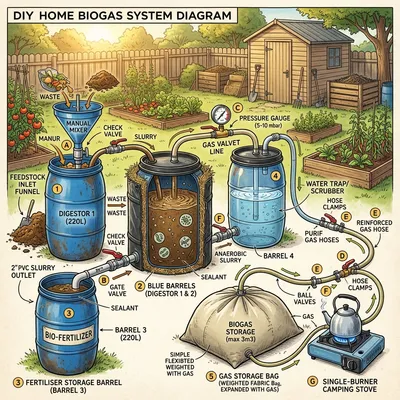
When propane and natural gas lines fail, a home-scale biogas digester can convert food scraps and animal manure into clean, cooking-grade methane. Here is the complete step-by-step engineering plan.