Seven Grams of Plastic Inside Your Skull
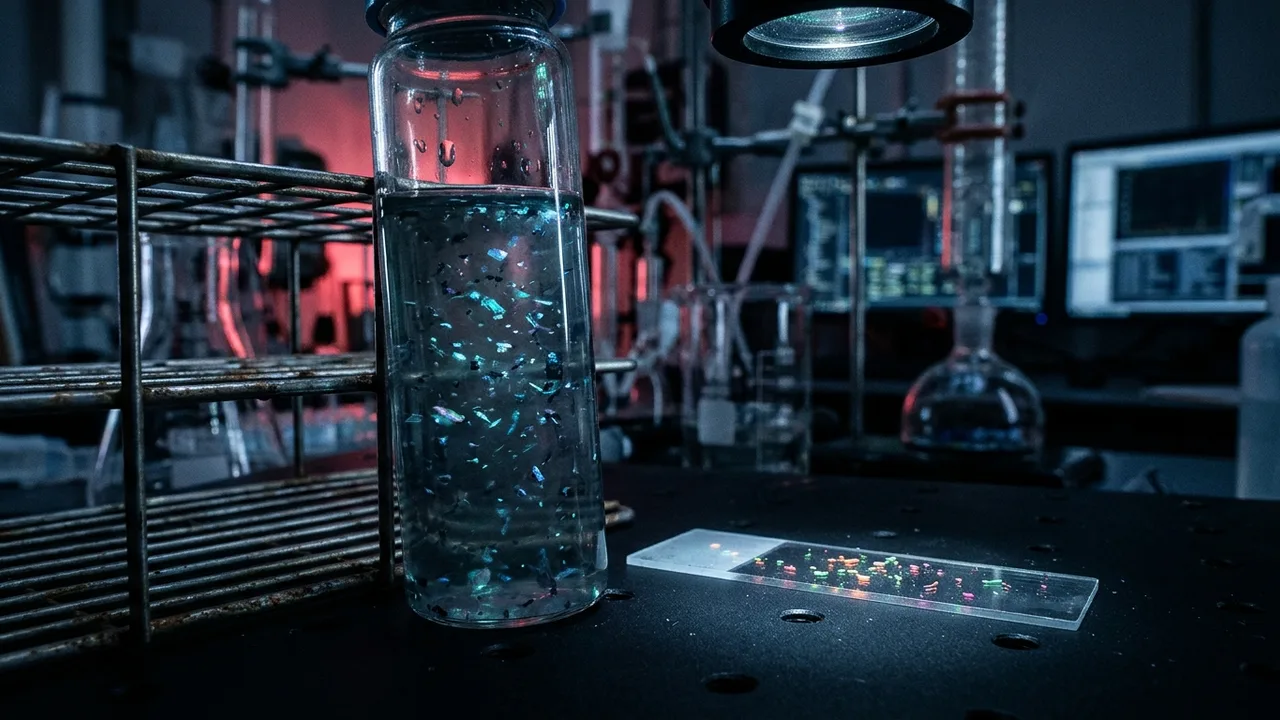
University of New Mexico autopsies found roughly a plastic spoon's weight of nanoplastics in normal human frontal cortexes—and up to five times more in dementia patients.
If someone had told me back in 1986, when I first started covering industrial toxicology, that human brains would eventually carry a disposable spoon's worth of polyethylene shards, I would have assumed they were pitching a bad science-fiction screenplay. Nobody laughed when the University of New Mexico Health Sciences team published their post-mortem tissue data in *Nature Medicine* in early 2025. They weighed, dissolved, and mass-spectrometer-checked human liver, kidney, and frontal cortex samples across decades of autopsies. What came back on the readout turned thirty years of reassuring regulatory press releases into scrap paper.
Normal human brain tissue averaged roughly 4,917 micrograms of plastic per gram of tissue in 2024 samples—nearly half a percent of brain weight, or about seven grams of synthetic polymer sitting inside a living skull. Compare that with 2016 autopsies from the exact same tissue bank, which averaged 3,345 micrograms per gram. That is a fifty percent jump in just eight years. Worse still, brains taken from patients diagnosed with dementia carried three to five times that load, with jagged nanoscale shards wedged directly along cerebrovascular walls and immune cells.
We have crossed from an external litter problem into internal cellular colonization. Microplastics—fragments under five millimeters—were bad enough when they turned up in Pacific sardines and table salt. Nanoplastics, broken down below one micrometer, behave like biological Trojan horses. They slip past the intestinal mucosa, ride lipoproteins through the bloodstream, cross the blood-brain barrier, and lodge inside organs that never evolved an enzyme capable of digesting a single carbon-carbon polymer chain.
What Happens When Polymers Enter the Bloodstream
For twenty years, chemical trade associations leaned on a comfortable talking point: "Plastic is chemically inert. You swallow a speck, it passes right through." That claim died in March 2024 in the *New England Journal of Medicine*.
A team led by Raffaele Marfella examined surgically removed carotid artery plaque from 257 patients undergoing endarterectomy in Italy, then tracked those patients for nearly three years. Using pyrolysis-gas chromatography-mass spectrometry and electron microscopy, they found polyethylene in 58.4 percent of the arterial plaques—averaging 21.7 micrograms per milligram of plaque—and polyvinyl chloride (PVC) in 12.1 percent.
Then came the clinical numbers that rattled cardiologists from Milan to Boston: patients whose arterial plaque contained micro- and nanoplastics suffered a 4.53-times higher hazard ratio for heart attack, stroke, or death from any cause compared with patients whose plaques were plastic-free. Their plaque tissue also lit up with elevated inflammatory cytokines—interleukin-18, interleukin-1 beta, interleukin-6, and tumor necrosis factor-alpha. Even if you strip out age, cholesterol, smoking, and diabetes, jagged polymer particles sitting inside a blood vessel wall act like permanent microscopic splinters that never dissolve and never stop irritating macrophages.
| Tissue / Compartment | Measured Polymer Burden | Observed Clinical Signal |
|---|---|---|
| Human Frontal Cortex (2024) | ~4,917 ug/g (~7g total) | +50% vs 2016; 3-5x dementia |
| Carotid Arterial Plaque (NEJM) | 21.7 ug/mg (58.4% PE) | 4.53x heart attack/stroke/death |
| Human Placenta (Multiple Sites) | 6.5 - 685 ug/g | 100% prevalence in tested cohort |
| Human Testes & Semen | ~328 ug/g (PE & PVC) | Inverse sperm count linkage |
| Bottled Drinking Water (1L) | ~240,000 particles/L | 90% nanoscale (<1 micron) |
The same story repeated wherever analytical chemists pointed Raman lasers and pyrolysis spectrometers. A 2024 study testing human placentas found microplastics in every single sample, ranging from 6.5 to 685 micrograms per gram, dominated by polyethylene, PVC, and nylon. Weeks later, another team found microplastics in 100 percent of tested human and canine testes, averaging 328 micrograms per gram in men—roughly three times the canine concentration—with higher PVC loads correlating with lower sperm counts.
If an industrial solvent showed up inside every placenta, every brain, and nearly sixty percent of clogged arteries at rising year-over-year concentrations, emergency recalls would shut down factories overnight. Because the culprit is woven into clothing, car tires, food wrappers, municipal pipes, and medical IV bags, we mostly just argue about paper straws.
Tires, Biosolids, and the Silent Poisoning of Farmland
Ask ten people on the street where ocean and blood-borne microplastics come from, and nine of them will say shopping bags and soda bottles. Both matter, yet neither sits at the top of the exposure pyramid for industrialized populations.
Two quieter industrial streams pump far more synthetic dust into lungs, rivers, and topsoil:
- 01.Tire-Wear Abrasion Particles: Every heavy electric SUV, delivery van, and semi-truck grinds synthetic rubber, polycyclic aromatic hydrocarbons, and chemical stabilizers like 6PPD off its treads onto asphalt. Rain washes that black dust—containing 6PPD-quinone, a compound acutely lethal to coho salmon at parts-per-billion levels—into watersheds. Dry wind lifts the smallest tire-wear particles straight into urban air, where commuters inhale them deep into alveolar sacs.
- 02.Municipal Sewage Sludge (Biosolids): Wastewater treatment plants catch up to ninety-nine percent of synthetic washing-machine fibers (polyester, acrylic, nylon) before effluent hits rivers. Great news for the river—except those captured microfibers concentrate inside sewage sludge. Across North America and Europe, millions of tons of treated biosolids get spread back onto agricultural fields as cheap "organic" fertilizer.
Once embedded in farmland, plastic mulching films ("plasticulture") and biosolid fibers break down under ultraviolet sunlight and disc plows into nanoscale particles. Soil scientists once assumed plant roots blocked solid polymers at the Casparian strip. Laboratory tracking with fluorescent nanoplastics proved otherwise: lettuce, wheat, carrots, and apples pull sub-micron plastic particles right through lateral root cracks and transport them into edible leaves and stems.
Meanwhile, those soil-bound particles alter moisture retention, suffocate beneficial mycorrhizal fungi, and act as chemical sponges. Hydrophobic persistent organic pollutants, heavy metals, and residual pesticides cling to polymer surfaces at concentrations orders of magnitude higher than surrounding soil water. When an earthworm or crop root ingests that particle, it gets both the physical shard and a concentrated chemical hitchhiker.

The Ocean Sink and the Collapse of Baseline Nutrition
Out beyond the continental shelves, the pelagic food web is running into a silent calorie dilution problem. Satellite remote sensing tracks giant garbage patches on the surface, which represent barely one percent of total marine plastic mass. The rest sinks—colonized by biofilms, compressed into marine snow, and carried down to abyssal trenches and continental fisheries.
When copepods, krill, and larval anchovies swallow microplastic spheres mistaken for phytoplankton, two compounding failures hit at once:
- False Satiation: Their tiny guts fill with indigestible polymer beads, suppressing feeding drive while delivering zero lipid or protein energy. Larval survival drops, stunting recruitment in commercial forage fish.
- Additive Leaching: Plastics are never pure polymer. They are engineered cocktails containing phthalates, bisphenols, brominated flame retardants, UV-328 stabilizers, and heavy-metal catalysts—over **16,000 documented plastic chemicals**, more than 4,200 of which are classified as persistent, bioaccumulative, or toxic. Inside digestive acid, those additives leach straight into fish liver and muscle fat.
At the top of that chain sits human protein security. Roughly three billion people rely on seafood for at least twenty percent of their animal protein. Every trophic step from krill to mackerel to tuna concentrates fat-soluble plasticizers upward while shrinking total biomass yield.
Why Peak Exposure Still Lies Ahead
Here is the math that keeps environmental chemists awake at 3 a.m.: even if humanity stopped manufacturing every gram of virgin plastic tomorrow morning, human microplastic blood and brain levels would still climb for decades.
Why? Because over eight billion metric tons of legacy plastic already sit in landfills, coastal sediments, road dust, synthetic carpets, and agricultural soils. Macroplastics fragment exponentially as UV radiation, wave action, freeze-thaw cycles, and microbial biofilms embrittle them. One degraded plastic mulch sheet or abandoned fishing net does not vanish; it fractures into ten million microplastics, which then fracture into ten billion nanoplastics. That fragmentation curve has a multi-decade lag.
Add on top of that reality the fact that virgin polymer output is not stopping—it is accelerating toward 460 million metric tons a year and climbing, a trajectory tracked across long-term environmental indicators. We are watching a permanent geological layer—the Plasticene—lock itself not just into sedimentary rock, but into human myelin, arterial walls, and food crops. You cannot recall a molecule that has already crossed the blood-brain barrier of an entire generation.
Key Takeaways
- Brain Accumulation Is Accelerating: Nature Medicine (2025) autopsy data showed human frontal cortex micro/nanoplastic concentrations jumped ~50% between 2016 and 2024 (~4,917 µg/g), with dementia cases carrying 3–5× higher burdens.
- Cardiovascular Risk Is Quantified: The 2024 NEJM carotid plaque cohort linked detectable polyethylene/PVC inside arterial plaques to a 4.53× higher risk of heart attack, stroke, or death.
- Every Major Barrier Has Been Breached: Nanoplastics below 1 µm routinely cross the gut wall, blood-brain barrier, and human placenta, driven heavily by tire-wear dust, synthetic textiles, heated food packaging, and bottled water, reinforcing global health agency reviews calling for tighter human-exposure safeguards.
- Agricultural & Marine Feedback Loops: Sewage-sludge biosolids and plastic mulch saturate farmland, enabling crop root uptake while marine microplastics starve larval fisheries and leach endocrine disruptors upward.
- Legacy Fragmentation Lag: Over 8 billion tons of existing plastic will continue fracturing into nanoscale particles for decades regardless of near-term recycling campaigns.
Real-time geospatial feed aggregating USGS M5.0+ earthquakes, NASA EONET wildfires, volcanoes, severe storms, UN/EC GDACS alerts, and NOAA geomagnetic status.
Related Reports & In-Depth Intel

El Niño Pushes Global Warming Past 2.2°C
When a strong El Niño stacks on top of record ocean heat, brief planetary spikes past 2.2°C above the pre-industrial baseline stop being distant computer projections and start breaking grids, crops, and coastal defenses.

The Amazon Hydrological Tipping Point
The unprecedented convergence of record-breaking Super El Niño oceanic heat anomalies with human-induced deforestation has triggered the collapse of the Amazon hydrological cycle, paralyzing major South American river systems and continental hydroelectric power generation.

What Would Happen if the Power Grid Went
An analytical assessment of the infrastructural, medical, and social consequences of a month long national power grid failure.

The Looming Collapse of Soil Health
Industrial monoculture, heavy tillage, and fossil-fuel fertilizer dependency are stripping living topsoil faster than nature can rebuild it. How soil degradation threatens food security and what restoration demands.