The Amazon Hydrological Tipping Point
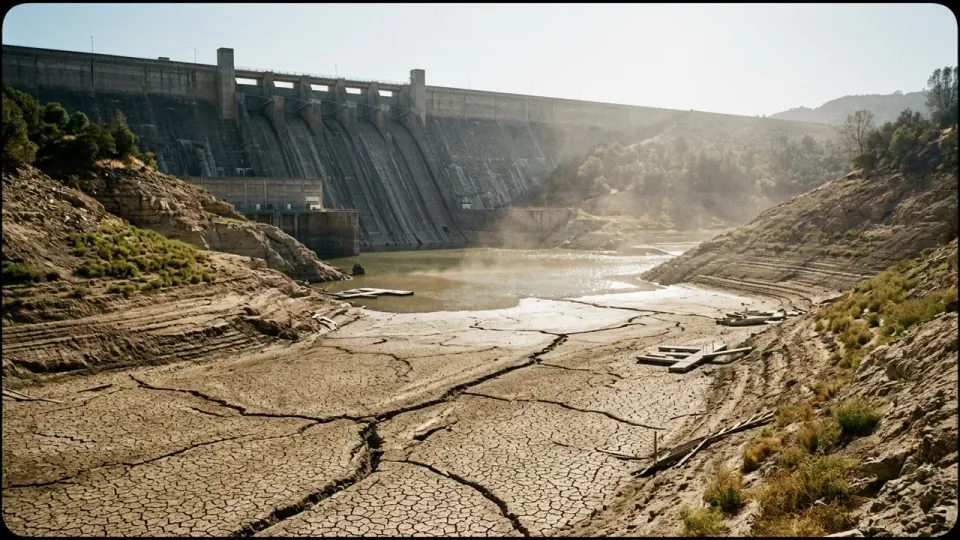
The unprecedented convergence of record-breaking Super El Niño oceanic heat anomalies with human-induced deforestation has triggered the collapse of the Amazon hydrological cycle, paralyzing major South American river systems and continental hydroelectric power generation.
The hydrological engine that regulates the climate of the Southern Hemisphere and generates the atmospheric "flying rivers" of the South American continent has crossed its catastrophic tipping point. Following twenty-six consecutive months of record-shattering ocean temperature anomalies across the equatorial Pacific and the tropical North Atlantic—tracked continuously across global climate telemetry—the Amazon River basin has entered a state of terminal hydrological collapse. Hydrological gauging stations at the Port of Manaus, where the Rio Negro converges with the Amazon River, registered water levels plummeting below nine meters—the lowest stage in more than 124 years of continuous scientific recordkeeping.
What is unfolding across Brazil, Colombia, Peru, and Bolivia is not an isolated seasonal drought; it is the structural disintegration of a biome. Vast expanses of the world’s largest freshwater arterial system have turned into baked mudflats, stranding thousands of riverine communities without food, drinking water, or medical access. Millions of decomposing freshwater fish and endangered river dolphins are blanketing the shores of dried lagoons, releasing toxic clouds of hydrogen sulfide and creating catastrophic public health emergencies across interior municipalities.
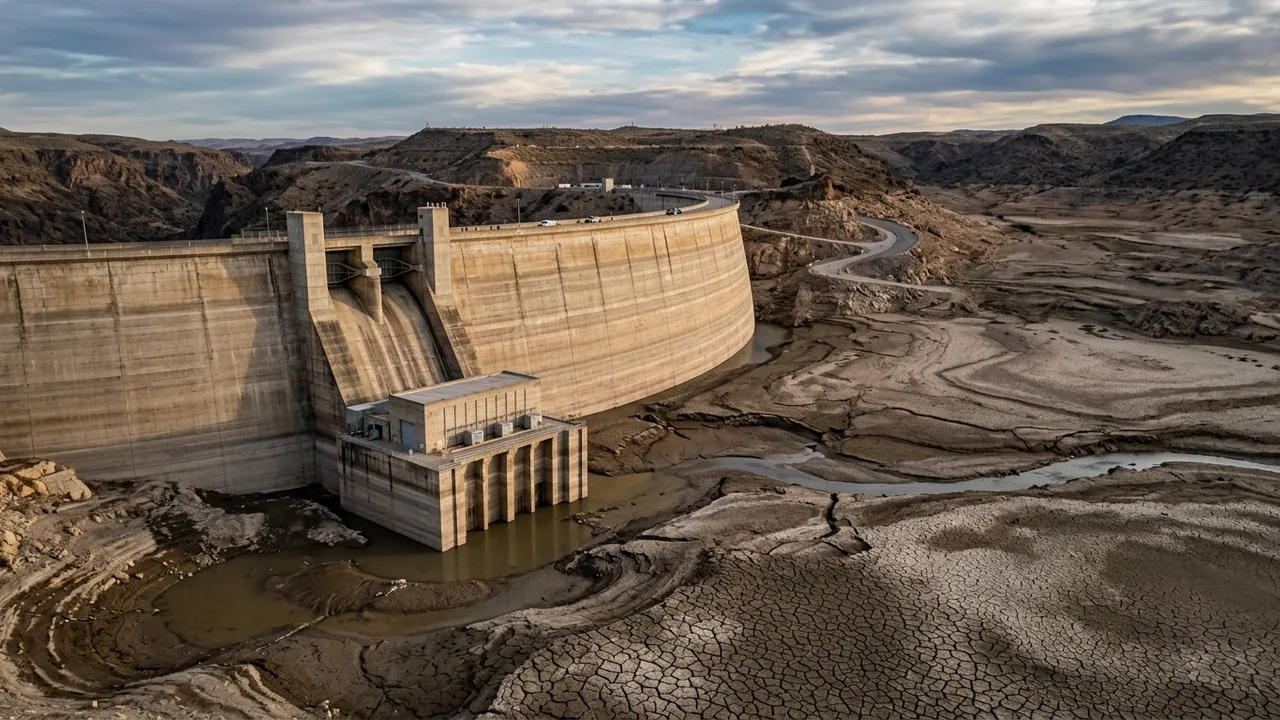
More critically for the industrialized heartlands of South America, the desiccation of the Amazon has precipitated an existential energy crisis. Brazil, which relies on hydroelectric generation for over sixty-two percent of its total national electricity supply, has been forced to shut down power generation at several of the world's largest dams as reservoir head levels drop below minimum operational penstock thresholds.
The Mechanism of the Hydrological Dieback
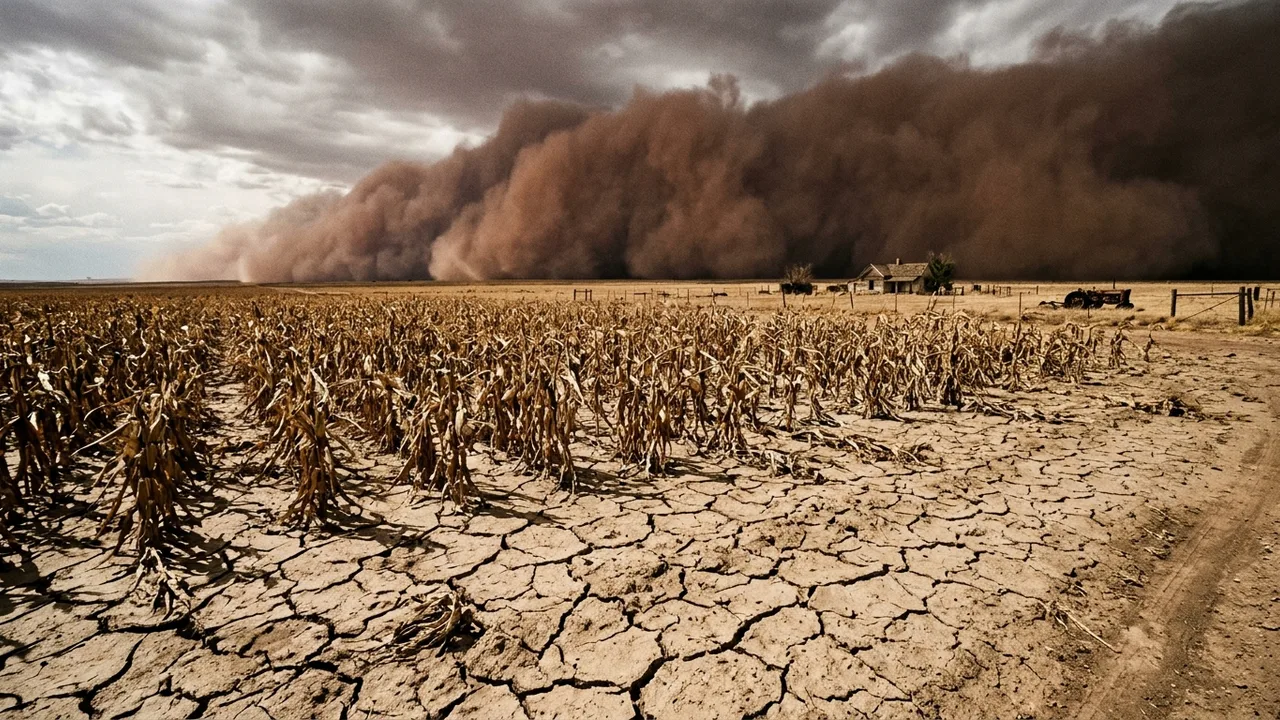
To comprehend the speed and severity of this environmental collapse, one must examine the delicate feedback loops governing the Amazonian climate. Historically, the Amazon rainforest functioned as an immense bio-thermodynamic vapor pump. A single mature tropical tree transpires up to one thousand liters of water vapor daily into the atmosphere. This massive collective transpiration creates airborne conduits of moisture—known as "flying rivers" (rios voadores)—that carry billions of cubic meters of water vapor southwest toward the Andes mountain range before deflecting southward to irrigate the agricultural breadbaskets of central Brazil, Paraguay, and northern Argentina.
This planetary cooling mechanism has broken down due to the compound convergence of three distinct drivers:
- 01.The Super El Niño Heat Dome: Prolonged sea surface temperature anomalies exceeding +2.8°C in the Nino 3.4 region altered the Walker circulation cell, suppressing the convective tropical rainfall patterns that historically replenished the western Amazon headwaters in Peru and Ecuador.
- 02.Deforestation and Fragmentation Thresholds: Decades of commercial cattle ranching, illegal timber logging, and soy expansion stripped more than twenty-two percent of the native rainforest cover. Without continuous canopy closure, solar radiation penetrates directly to the forest floor, drying out the thick leaf-litter layer and transforming humid rainforest soils into flammable tinder.
- 03.The Atlantic Dipole Inversion: Extreme warm waters in the northern tropical Atlantic displaced the Intertropical Convergence Zone (ITCZ) northward, depriving the eastern basin of its critical wet-season trade winds and locking the entire continent into an unyielding, high-pressure atmospheric blocking ridge.
| Facility Name | River Basin | Nameplate Capacity | Current Operational Output |
|---|---|---|---|
| Belo Monte | Xingu River | 11,233 MW | 840 MW (7.5% - Near Dead) |
| Jirau | Madeira River | 3,750 MW | 490 MW (13.1% Derated) |
| Santo Antônio | Madeira River | 3,568 MW | 0 MW (Full Shutdown) |
| Itaipu (Binational) | Paraná River | 14,000 MW | 6,200 MW (44.3% Output) |
| Guri (Venezuela) | Caroní River | 10,235 MW | 3,450 MW (Severe Outages) |
As detailed in the data table above, the loss of generation capacity is staggering. The Santo Antônio dam on the Madeira River—a multi-billion-dollar engineering marvel—was forced into a complete operational shutdown when river discharge plummeted to less than fifteen percent of historical seasonal minimums. Belo Monte, despite being the fourth-largest hydroelectric dam on Earth, has seen its output collapse to fewer than nine hundred megawatts, turning an 11-gigawatt power plant into an idle concrete barrier stranded amidst dry rock shelves.
Wildfire Encirclement and the Smoke Apocalypse
As humidity evaporated from the canopy, an unprecedented wildfire season ignited across millions of square kilometers of stressed vegetation tracked on orbital thermal-anomaly feeds. Unlike temperate boreal forests adapted to periodic natural wildfire cycles, primary tropical rainforest ecosystems possess zero evolutionary defense against ground fires. Thin-barked tropical hardwoods perish within hours of low-intensity fire contact, causing widespread tree mortality and triggering catastrophic secondary combustion events.
The resulting atmospheric smoke plume (the "queimada") has carpeted the continent in dense, suffocating smog:
- Cities located thousands of kilometers away, including São Paulo, Curitiba, and Buenos Aires, experienced apocalyptic daytime darkness as soot-blackened skies turned mid-afternoon into twilight.
- Particulate matter (PM2.5) concentrations in interior urban centers such as Porto Velho and Rio Branco spiked past 950 micrograms per cubic meter—more than sixty times above World Health Organization safety guidelines—overwhelming local medical clinics with acute respiratory failures.
- Commercial air travel across South America was crippled for weeks as zero-visibility conditions shuttered international hubs, grounding both passenger aviation and critical agricultural cargo flights.
Continental Economic Shock and Grid De-Stabilization
The downstream economic consequences of this environmental catastrophe are reverberating across global supply chains. Brazil is the planet’s foremost exporter of soybeans, sugar, poultry, corn, and iron ore. With the Madeira and Tapajós rivers dry, commercial barge convoys that transport forty percent of Brazil’s interior grain harvest to northern deepwater ports are entirely paralyzed. Millions of metric tons of agricultural commodities remain stranded in inland silos, while Panamax ships idle expensively in the Atlantic without cargo.
To avert a nationwide total blackout (colapso energético), the Brazilian National Electric System Operator (ONS) enacted mandatory rolling blackouts, curtailing industrial manufacturing in São Paulo and Rio de Janeiro by up to forty percent. The government was forced into emergency tenders for imported liquefied natural gas (LNG) at spot-market premiums, burning through billions of dollars in foreign exchange reserves and driving domestic consumer electricity tariffs upward by over eighty percent in less than three months.
The agricultural drought is simultaneously scorching the coffee belt in Minas Gerais and the sugar cane fields of São Paulo state, ensuring that global commodity inflation for food, stimulants, and animal feed will remain entrenched throughout the decade.
The Irreversible Transition: From Forest to Degradational Savannah
What the world is witnessing is the definitive operational onset of the catastrophic "savannization" of the Amazon—a climatic tipping point originally modeled by climate scientist Carlos Nobre decades ago. The self-sustaining moisture recycling loop of the rainforest has fractured. Without the continuous generation of airborne flying rivers, the regional precipitation regime cannot recover even if global ocean temperatures normalize in subsequent years.
The Amazon is transitioning from an immense planetary carbon sink into one of the largest active sources of terrestrial greenhouse gas emissions on Earth, releasing gigatons of stored carbon through combustion and dead-tree decay. For humanity, this represents the loss of our primary climate buffer. As visual field archives show, the ecological collapse of South America is no longer an alarming theoretical projection for the year 2050; it is a live, kinetic reality consuming continental infrastructure, energy grids, and human settlements in real time.
Real-time geospatial feed aggregating USGS M5.0+ earthquakes, NASA EONET wildfires, volcanoes, severe storms, UN/EC GDACS alerts, and NOAA geomagnetic status.
Related Reports & In-Depth Intel

What Would Happen if the Power Grid Went
An analytical assessment of the infrastructural, medical, and social consequences of a month long national power grid failure.
The Looming Collapse of Soil Health
Industrial monoculture, heavy tillage, and fossil-fuel fertilizer dependency are stripping living topsoil faster than nature can rebuild it. How soil degradation threatens food security and what restoration demands.

El Niño Pushes Global Warming Past 2.2°C
When a strong El Niño stacks on top of record ocean heat, brief planetary spikes past 2.2°C above the pre-industrial baseline stop being distant computer projections and start breaking grids, crops, and coastal defenses.

Seven Grams of Plastic Inside Your Skull
University of New Mexico autopsies found roughly a plastic spoon's weight of nanoplastics in normal human frontal cortexes—and up to five times more in dementia patients.