The Looming Collapse of Soil Health
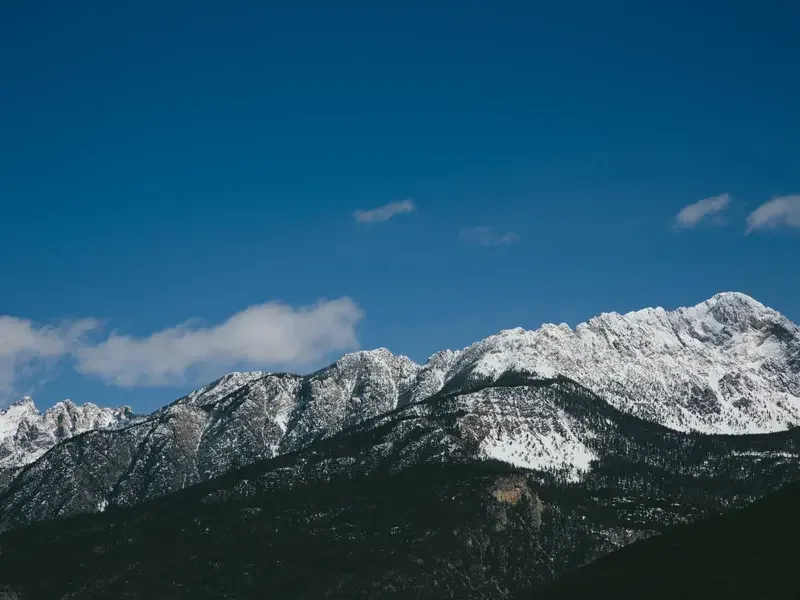
Industrial monoculture, heavy tillage, and fossil-fuel fertilizer dependency are stripping living topsoil faster than nature can rebuild it. How soil degradation threatens food security and what restoration demands.
More Than Dirt: The Living Engine Beneath Our Crops
Stand beside a freshly plowed field after a heavy spring thunderstorm and watch brown water pour off the furrows into the roadside ditch. Most drivers glance past it as harmless mud. Agronomists see something far grimmer: centuries of irreplaceable biological capital washing toward the sea in an afternoon.
Roughly 95 percent of global calories originate directly or indirectly in the top few inches of terrestrial soil, a planetary asset monitored by the FAO Global Soil Partnership. Yet industrial agriculture largely treats that layer not as a fragile living ecosystem, but as an inert chemical sponge—something to hold plant roots upright while synthetic nutrients and irrigation water are pumped through it on schedule. In healthy undisturbed ground, a single teaspoon of topsoil teems with billions of bacteria, miles of mycorrhizal fungal filaments, protozoa, and arthropods binding mineral silt and decaying organic matter into porous crumbs called aggregates. Those crumbs act like microscopic coral reefs: they hold air, store rainwater, buffer pH, and trade trace minerals to plant roots in exchange for liquid sugars.
When repeated plowing, bare winter fallow, and heavy chemical regimes strip away that biology, soil collapses physically. Aggregates shatter into fine dust. Rain seals the surface into an impenetrable crust, shedding water as flash runoff rather than absorbing it into root zones. Under prolonged drought, the same pulverized ground turns airborne.
The Physics of Erosion and Compaction
Natural soil formation proceeds at a geological crawl—often a fraction of a millimeter per year, taking centuries to build a single inch of fertile A-horizon topsoil through rock weathering and root decay. Industrial tillage and exposed monocultures erode soil orders of magnitude faster.
The problem feeds on itself. Once organic carbon drops below critical thresholds, ground loses its sponge capacity. Soil scientists with the USDA Natural Resources Conservation Service (NRCS) note that every 1 percent increase in soil organic matter allows an acre of cropland to hold roughly 20,000 gallons of additional plant-available water. Run that equation in reverse and you see why modern harvests swing so violently between flood and drought: depleted fields waterlog after moderate storms because water cannot infiltrate compacted hardpan below the plow layer, then bake brick-hard ten days into a dry spell.
Off-site damage compounds the loss. Eroded sediment chokes irrigation canals and fills hydroelectric reservoirs monitored across USGS National Water Watch, cutting both water storage and power output. Excess nitrogen and phosphorus bound to washing topsoil flush down river basins—fueling massive seasonal algal blooms and oxygen-starved hypoxic dead zones across estuaries and coastal fisheries.
Ghosts of Black Sunday: Lessons From the 1930s
History already ran a full-scale stress test on soil arrogance. In the early twentieth century, high wheat prices and new gasoline tractors pushed homesteaders to plow under millions of acres of deep-rooted native prairie across the American Great Plains. Those perennial grasses had evolved over millennia with root systems plunging six to twelve feet deep, anchoring loose loess soils through brutal multi-year droughts.
When a severe dry cycle hit the Plains in the 1930s, bare plowed fields had nothing left holding them down. On April 14, 1935—"Black Sunday"—a towering wall of pulverized topsoil swept south across Oklahoma and the Texas Panhandle, blotting out noon daylight and burying farm equipment, fences, and livestock under drifts of dust. Hundreds of thousands of families abandoned ruined homesteads.
We tell ourselves modern technology outgrew the Dust Bowl. Yet the underlying vulnerabilities—massive contiguous monocultures, bare post-harvest fields, heavy soil compaction, and over-pumped groundwater aquifers like the Ogallala—remain intact across major breadbaskets from North America to Eastern Europe and Central Asia. Worse, rising atmospheric heat tracked on our planetary hazard and climate telemetry radar amplifies evaporation rates, turning ordinary dry spells into "flash droughts" monitored by the National Drought Mitigation Center that dry out exposed topsoil in weeks rather than seasons.
The Fossil-Fuel and Fertilizer Trap
Degraded soil does not just erode faster; it traps global food production inside a brittle energy dependency—creating acute vulnerability to El Niño cycles and fertilizer supply shocks reflected in USDA Economic Research Service farm input data.
When soil biology collapses, plants lose their natural microbial partners that unlock bound phosphorus and cycle nitrogen from decomposing residue. To keep yields high on biologically exhausted acreage, farms rely heavily on synthetic fertilizers. Nitrogen fertilizer produced through the Haber-Bosch process pulls nitrogen from the air under extreme heat and pressure using natural gas both as fuel and chemical feedstock. Phosphate rock and potash, meanwhile, are mined from finite geological deposits concentrated in a handful of exporting nations.
That coupling binds dinner plates directly to natural gas pipelines, ocean shipping lanes, and geopolitical chokepoints. Whenever natural gas prices spike, sanctions hit fertilizer exporters, or refinery capacity tightens, farmers cut application rates—and stripped soils lacking organic reserves suffer immediate yield drops. Healthy, biologically active soil buffers against those price shocks by recycling nutrients locally, a transition detailed in our closed-loop soil fertility survival manual and our guide to biochar soil buffering and rapid root propagation; dead dirt demands continuous chemical life support or goes barren.
Even when yields stay superficially high on paper, nutrient density often slips. Crops pushed quickly with soluble nitrogen and water can bulk up carbohydrate starch while pulling fewer trace minerals—zinc, iron, magnesium—when mycorrhizal fungal networks are missing from the rhizosphere.
Rebuilding the Sponge Before Crisis Hits
Recovering soil health is neither mysterious nor dependent on exotic inventions, though it demands trading short-term extraction for biological patience. Across working farms and small homesteads alike, five core practices stop the bleed:
- 01.Minimize Soil Disturbance: Replacing aggressive moldboard plowing with no-till drills, broadforks, or shallow mulch layering preserves fungal networks and organic carbon locked in soil aggregates.
- 02.Keep Armor on the Ground: Bare earth is injured earth. Crop residues, straw, woodchips, or living cover protect topsoil from UV baking, wind stripping, and heavy raindrop impact.
- 03.Plant Multispecies Cover Crops: Off-season mixes—winter rye for biomass, crimson clover or hairy vetch for nitrogen fixation, and deep taproots like daikon radish to fracture compacted subsoil—feed microbes year-round instead of starving them for six months between cash crops.
- 04.Restore Diversity: Rotating plant families breaks pest and fungal disease cycles that thrive in continuous corn-soybean rotations.
- 05.Reintegrate Livestock: Managed rotational grazing mimics wild herd movement, trampling old residue into protective litter and returning rich biological manure without concentrating toxic waste lagoons.
For individuals without farmland, the leverage lies closer to home: composting kitchen and yard waste rather than landfilling organic matter, supporting regional growers who practice no-till and cover cropping, and turning residential turf into deep-mulched beds using small-space permaculture principles. Civilizations rarely collapse from a single bad harvest; they hollow out slowly when the living crust beneath their fields washes downstream. Protecting soil is not an environmental side project—it is maintaining the foundation of everything else.
Authoritative Sources & Further Reading
Real-time geospatial feed aggregating USGS M5.0+ earthquakes, NASA EONET wildfires, volcanoes, severe storms, UN/EC GDACS alerts, and NOAA geomagnetic status.
Related Reports & In-Depth Intel
The Amazon Hydrological Tipping Point
The unprecedented convergence of record-breaking Super El Niño oceanic heat anomalies with human-induced deforestation has triggered the collapse of the Amazon hydrological cycle, paralyzing major South American river systems and continental hydroelectric power generation.
What Would Happen if the Power Grid Went
An analytical assessment of the infrastructural, medical, and social consequences of a month long national power grid failure.
El Niño Pushes Global Warming Past 2.2°C
When a strong El Niño stacks on top of record ocean heat, brief planetary spikes past 2.2°C above the pre-industrial baseline stop being distant computer projections and start breaking grids, crops, and coastal defenses.

Seven Grams of Plastic Inside Your Skull
University of New Mexico autopsies found roughly a plastic spoon's weight of nanoplastics in normal human frontal cortexes—and up to five times more in dementia patients.