Permaculture Basics for Small Spaces

Suburban lawns and concrete balconies produce zero calories while grocery shelves hold roughly three days of fresh inventory. How small-space permaculture maximizes yield, soil fertility, and water retention without industrial inputs.
The Arithmetic of Urban Vulnerability
Look out over most residential neighborhoods and you see immaculate green lawns, ornamental shrubs, and bare concrete patios—land that consumes municipal water, synthetic fertilizer, and fuel while producing not a single edible calorie. That aesthetic luxury works only while diesel trucks keep restocking supermarket produce aisles every forty-eight hours—a vulnerability examined in our analysis of just-in-time supply chain fragility. When supply chains snag, fuel prices spike, or severe weather closes regional highways, households holding zero local food capacity feel the pinch within days.
Permaculture is often dismissed by skeptics as slow-moving hobby gardening for rural homesteaders with ten acres and a pond. In reality, its core design logic—cycling waste into fertility, capturing water where it falls, stacking crops vertically, and matching plants to microclimates, principles documented in USDA Urban Agriculture and Innovative Production resources and the FAO Agroecology Knowledge Hub—pays its highest dividends when space is tight and external supplies are unreliable. You do not need a farm to cut grocery dependence meaningfully, provided you stay honest about caloric math and build systems that run without weekly trips to a garden center.
Caloric Realism on a Balcony or Quarter-Acre Lot
Any honest guide to small-space growing starts with what cannot be done. You will not feed a family of four on homegrown wheat or dry corn from a townhouse courtyard; cereal grains require broad acreage and heavy processing. Trying to mimic industrial row crops on two hundred square feet guarantees frustration and meager harvests.
Instead, productive micro-sites specialize in two categories: high-nutrition protective crops that perish fastest in broken supply chains, and dense, high-yielding staples suited to deep beds.
On apartments balconies, fire escapes, and sun-lit windowsills, focus on rapid turnover and nutrient density:
- Microgreens and Sprouting Jars: Mung beans, lentils, radish, and broccoli seeds go from dry storage to harvestable fresh greens in five to ten days using only water, glass jars, or shallow trays—supplying vitamin C and enzymes year-round even during winter blackouts.
- Cut-and-Come-Again Greens: Kale, Swiss chard, mustard greens, and loose-leaf lettuce produce continuously for months when outer leaves are harvested carefully instead of pulling whole heads.
- Culinary and Medicinal Herbs: Rosemary, thyme, oregano, garlic chives, and mint thrive in small terracotta pots, dry cleanly for storage, and make bland survival staples like rice and beans palatable over long stretches.
Where even a modest backyard or community plot exists, shift half the footprint toward true calories—combining techniques from our emergency calorie security and root propagation guide with our household food storage playbook: potatoes grown in deep mulch beds or fabric grow bags, sweet potatoes (whose leaves are also edible greens), bush beans for storable dry protein, and winter squash like butternut or kabocha trained up sturdy cattle-panel trellises so heavy vines occupy airspace instead of precious soil.
Reading Microclimates and Stacking Functions
Permaculture begins with observation before digging a single trench. Even a narrow city lot holds distinct microclimates shaped by sun angles, brick walls, wind tunnels, and roof runoff.
South-facing masonry walls (in the Northern Hemisphere) absorb solar radiation all afternoon and bleed warmth back into adjacent beds overnight, often creating a hardiness zone buffer of half a zone or more. Placing tender crops like peppers or dwarf fig trees against sunny brick extends your growing season weeks into autumn without burning electricity. Conversely, shaded north-facing strips stay cool and damp—ideal for cilantro, spinach, and lettuces that bolt prematurely in blazing afternoon sun.
Design layout around human frequency, a principle permaculturists call zoning. Place herbs, salad greens, and daily harvest containers steps from the kitchen door (Zone 1). Beds watered and harvested less frequently—winter squash, potatoes, compost bays—belong farther out along fences and property lines. If crops sit out of sight behind a shed, they get neglected during stressful weeks.
Stacking functions means every square foot performs multiple jobs simultaneously. Classic companion guilds like the Three Sisters—corn or sunflowers providing living stalks for pole beans, which fix atmospheric nitrogen while sprawling squash leaves shade out weeds and lock moisture into the soil—scale cleanly down to four-by-four raised beds.
Building Living Soil Without Bagged Inputs
If grocery chains tighten, garden centers selling bagged potting mix and synthetic liquid nutrients will empty just as fast. Long-term resilience—especially given the broader decline in industrial soil health—means turning household organic waste into dark, crumbly humus on site using closed-loop soil fertility methods and USDA NRCS soil health principles.
For backyard plots, sheet mulching turns dead turfgrass into rich planting beds without backbreaking double-digging. Mow grass flat, lay down overlapping sheets of plain brown cardboard (tape removed) to smother weeds, wet thoroughly, and layer three inches of aged compost or kitchen scraps topped with four inches of coarse arborist woodchips. Over one season, earthworms and soil fungi digest the carbon-nitrogen layers into fertile topsoil.
Apartment dwellers can run odorless vermicomposting bins under a sink or on a shaded balcony. Red wiggler worms (Eisenia fetida) convert vegetable trimmings, coffee grounds, and shredded paper into worm castings—one of the richest biological soil amendments available—without the heat, smell, or space required by outdoor compost piles.
Capturing Water and Sub-Irrigation
Plants die faster from missed waterings in hot containers than from almost any pest. When municipal pressure fluctuates or watering bans take effect, survival gardens sink or swim on water discipline aligned with EPA water quality and runoff conservation guidance and NCAT ATTRA sustainable farming guides.
Start by slowing water down where it lands. A modest thousand-square-foot roof sheds over six hundred gallons of water during a single one-inch rainstorm. Routing one downspout through a simple leaf screen and first-flush diverter into food-grade barrels provides chlorine-free irrigation right beside your beds. Keep barrels elevated on concrete blocks so gravity feeds hoses without electric pumps, and fit tight mesh screens over every opening to block mosquitoes.
For containers and raised beds, wicking beds cut water consumption by 50 percent or more compared to overhead sprinklers. By sealing a water reservoir lined with gravel or perforated pipe beneath twelve inches of potting mix, capillary action draws moisture upward directly to root zones as plants transpire. Surface soil stays dry, drastically reducing evaporation and fungal disease while stretching days between refills.
In drought emergencies, household graywater from hand-washing dishes with biodegradable, low-sodium soaps can keep fruit trees and perennial shrubs alive when routed to mulch basins—though never splash graywater directly onto leafy greens or root crops eaten raw.
Open-Pollinated Seeds and Continuity
Finally, check your seed drawer. Many flashy commercial packets contain F1 hybrids bred for uniform supermarket shipping; if you save seed from an F1 tomato or squash, the next generation reverts into unpredictable, often sterile or low-yielding crosses. Stock open-pollinated heirloom varieties suited to your local frost dates—bush beans, peas, tomatoes, peppers, and lettuces are largely self-pollinating and easy for beginners to save cleanly from year to year.
Small-space permaculture will not insulate anyone completely from a severe regional famine. What it does—reliably, quietly, and with zero monthly subscription—is turn dead square footage into living calories, retain rainwater on your property, and build daily biological literacy long before empty shelves force you to learn from scratch.
Authoritative Sources & Further Reading
Real-time geospatial feed aggregating USGS M5.0+ earthquakes, NASA EONET wildfires, volcanoes, severe storms, UN/EC GDACS alerts, and NOAA geomagnetic status.
Related Reports & In-Depth Intel
Off-Grid Fuel Sovereignty
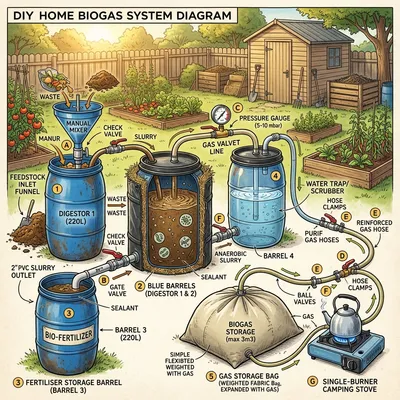
When propane and natural gas lines fail, a home-scale biogas digester can convert food scraps and animal manure into clean, cooking-grade methane. Here is the complete step-by-step engineering plan.

The Ultimate Bug-Out Vehicle: Pragmatism Over Tacticool
Armored rigs covered in tactical accessories fail in real evacuations. A dependable survival vehicle prioritizes mechanical simplicity, fuel range, payload capacity, and the ability to blend into ordinary traffic.

Mastering Mechanics for Survival
Modern households rent uptime from dealerships and overnight parts delivery. When grid power, fuel distribution, or supply chains break down, basic mechanical troubleshooting, electrical diagnostics, and field repair keep generators, pumps, and vehicles running.

Grid Down: The First 72 Hours
The first 72 hours of a major grid failure are a race against falling water pressure, dead cell towers, food spoilage, and carbon monoxide hazards. Here is a practical hour-by-hour response checklist for households.