Mastering Mechanics for Survival

Modern households rent uptime from dealerships and overnight parts delivery. When grid power, fuel distribution, or supply chains break down, basic mechanical troubleshooting, electrical diagnostics, and field repair keep generators, pumps, and vehicles running.
Why Most Ownership Is Just Rented Uptime
Modern consumers rarely own machines in the practical sense; they rent uptime from service centers, proprietary diagnostic scanners, and two-day parts shipping. As long as repair shops stay open and cargo vans keep running, nobody notices how fragile that arrangement is. The moment a regional ice storm knocks out power for ten days—or a prolonged supply disruption halts small-engine imports—a two-dollar cracked fuel line or a varnished carburetor jet turns a three-thousand-dollar backup generator into dead iron on the garage floor, underscoring Ready.gov power outage and generator readiness guidance.
Mechanical literacy is not about rebuilding a V8 transmission in the dark by candlelight. It is about mastering the predictable physics of small engines, pumps, DC electrical circuits, fasteners, and seals so minor failures do not cascade into life-threatening emergencies. When municipal water pressure drops, heating fuel stops flowing, or an evacuation vehicle stalls on a rural shoulder, the person holding a socket set and a clear diagnostic method holds options everyone else has lost.
The Core Small-Engine Diagnostic Loop
Nearly every critical piece of homestead and disaster hardware—portable generators, trash pumps, chainsaws, lawn tractors, ATVs—relies on a simple four-stroke or two-stroke internal combustion engine. When one refuses to start during an emergency, panic leads amateurs to yank the starter cord until the rope snaps. Veteran mechanics run a strict four-point elimination loop: spark, fuel, air, and compression.
Fuel degradation—examined alongside broader storage protocols in our fuel hygiene and blackout microgrid manual—causes roughly eight out of ten small-engine failures after long storage. Modern pump gasoline blended with ethanol absorbs atmospheric moisture, separates in the tank, corrodes aluminum float bowls, and leaves behind a gummy varnish that plugs microscopic brass pilot jets inside the carburetor, a fuel chemistry constraint noted across U.S. Department of Energy vehicle and fuel fact sheets.
Learning to pull a carburetor bowl, clear tiny brass orifices with copper wire strands (never steel drill bits that enlarge calibrated holes), inspect float needles, and replace brittle fuel lines takes under an hour with basic hand tools—and restores ninety percent of "dead" storm generators sitting idle in neighborhood sheds. Prevention is even simpler: run fuel stabilizers, store gasoline safely under OSHA flammable liquid storage standards, drain carburetor bowls before seasonal storage, or choose dual-fuel generators capable of running clean propane that never gums up internal passages.
Spark and air checks come next. Pulling a spark plug, grounding its threaded body against bare engine metal, and cranking reveals immediately whether the ignition coil is firing a crisp blue arc. Weak orange sparks or wet, fuel-fouled electrodes point straight to gap issues, fouled plugs, or failing low-oil shutdown sensors—a notorious false failure when a generator sits slightly off-level on uneven ground.
DC Electrical Literacy and Battery Discipline
Even mechanical engines usually depend on electrical systems to crank, charge, or deliver spark. A compact digital multimeter—and knowing how to use two settings, DC volts and continuity/resistance—is worth more than half the novelty gear sold in preparedness catalogs.
Lead-acid and AGM starter batteries die quietly during long outages if left discharged; sulfation permanently ruins battery plates within weeks, a failure mechanism detailed in our off-grid battery storage guide. Knowing how to read resting voltage (12.6 volts for a healthy fully charged 12V battery, dropping toward 11.8 volts when depleted), clean corroded terminal clamps with baking soda and wire brushes, test alternator charging output (13.8 to 14.4 volts while running), and trace a blown inline fuse or stuck starter solenoid prevents stranded vehicles and dark cabins.
Pay special attention to wire gauge, crimp integrity, and circuit protection when rigging solar arrays, 12V water pumps, or inverter banks. Undersized wire running high DC amperage heats up fast, melts insulation, and burns down garages. Keep an assortment of heat-shrink butt connectors, heavy ring terminals, blade and MIDI fuses, a quality ratcheting crimper, and jumper cables thick enough (4-gauge or heavier) to carry real cranking amps without melting.
Wear Items: Seals, Belts, Bearings, and Fasteners
Engines grab all the attention, yet mundane wear parts sideline critical equipment far more often. Water pumps fail when a brittle ceramic mechanical shaft seal cracks and dumps prime. Vehicle alternators stop charging when a twenty-dollar serpentine belt frays or a glazed tensioner pulley seizes. Wheelbarrows, utility trailers, and grain mills grind to a halt over dry wheel bearings or sheared cotter pins.
Prepare by auditing the actual machinery you depend on and stocking high-mortality spares before a disruption closes hardware aisles:
- Ignition and filtration: Two spare spark plugs, air filters, oil filters, and inline fuel filters per engine, plus enough motor oil for three full oil changes.
- Fluid and seal kits: Bulk ethanol-resistant fuel line in common quarter-inch and three-sixteenths sizes, stainless hose clamps, nitrile O-ring assortments, gasket material sheets, and thread-sealing PTFE tape.
- Fastener discipline: Metric and SAE Grade 8 bolt, nut, lock-washer, and cotter-pin organizers, alongside a basic tap-and-die set to rescue stripped threads rather than scrapping whole housings.
- Emergency patches: Two-part metal epoxy, self-fusing silicone rescue tape (which seals pressurized hoses without adhesive), JB Weld, and spare valve stems with a manual tire plug kit and 12V compressor.
Hand Tools, Metalworking, and Offline Fabrication
When grid electricity disappears, cordless drills and angle grinders last exactly until their lithium packs run dry. Every mechanical kit—paired with the preventive protocols in our field maintenance and scarcity survival manual—needs muscle-powered redundancy following OSHA hand and power tool safety standards: a solid hacksaw with high-speed bi-metal blades, flat and round bastard files, cold chisels, a heavy ball-peen hammer, locking pliers, a manual brace or eggbeater hand drill, and a heavy bench vise bolted to a timber post.
Basic cold metalworking stretches broken equipment indefinitely. Drilling out a snapped bolt with an easy-out extractor, bending flat bar stock into a replacement bracket, or riveting torn sheet metal restores function without a machine shop. If you maintain a rural shop with heavy generator capacity or oxy-acetylene cylinders, basic stick welding and brazing transform salvage scrap—bed frames, angle iron, old leaf springs—into hinges, plow brackets, and structural repairs. Always pair fabrication with real personal protective equipment aligned with NIOSH workplace eye and protective equipment standards: leather gloves, safety glasses, and a welding helmet. An eye injury or infected metal splinter turns a routine repair into a medical crisis when clinics are overwhelmed.
Smart Salvage and Respecting Stored Energy
In prolonged scarcity, abandoned equipment and scrapyards become parts warehouses—provided you understand what is safe to harvest and what kills careless scavengers.
Retired commercial HVAC units yield heavy-gauge copper wiring, contactors, and sturdy squirrel-cage fans. Wrecked vehicles supply 12V alternators (adaptable for pedal or hydro charging rigs), starter motors, high-amperage relays, fuses, radiator hoses, and spring steel prized by blacksmiths. Dead microwave ovens contain heavy step-up transformers, while old treadmills hold permanent-magnet DC motors useful for small-scale wind or water generation.
Know the invisible hazards before cutting into anything. High-voltage capacitors inside microwaves, inverters, and air conditioners hold lethal charges long after power is cut. Airbag inflators contain pyrotechnic charges, hydraulic lines stay pressurized above 2,000 PSI, and punctured lithium packs erupt in self-oxidizing fires water cannot put out.
Mechanical competence removes helplessness. You only need to understand the machines already in your driveway, keep their weak links in a labeled ammo can, and turn wrenches while the lights are still on.
Authoritative Sources & Further Reading
Real-time geospatial feed aggregating USGS M5.0+ earthquakes, NASA EONET wildfires, volcanoes, severe storms, UN/EC GDACS alerts, and NOAA geomagnetic status.
Related Reports & In-Depth Intel
Off-Grid Fuel Sovereignty
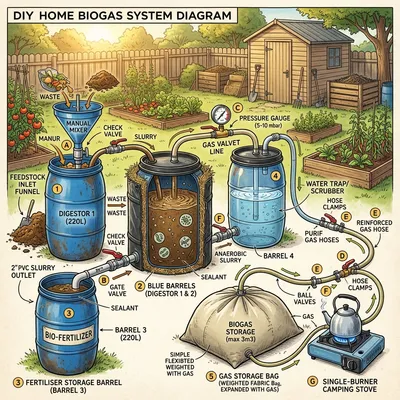
When propane and natural gas lines fail, a home-scale biogas digester can convert food scraps and animal manure into clean, cooking-grade methane. Here is the complete step-by-step engineering plan.

The Ultimate Bug-Out Vehicle: Pragmatism Over Tacticool
Armored rigs covered in tactical accessories fail in real evacuations. A dependable survival vehicle prioritizes mechanical simplicity, fuel range, payload capacity, and the ability to blend into ordinary traffic.

Permaculture Basics for Small Spaces
Suburban lawns and concrete balconies produce zero calories while grocery shelves hold roughly three days of fresh inventory. How small-space permaculture maximizes yield, soil fertility, and water retention without industrial inputs.

Grid Down: The First 72 Hours
The first 72 hours of a major grid failure are a race against falling water pressure, dead cell towers, food spoilage, and carbon monoxide hazards. Here is a practical hour-by-hour response checklist for households.