Component Scarcity and Tool Longevity

When replacement parts, specialized alloys, and consumer electronics disappear from shelves, survival hinges on mechanical preservation. We detail the definitive manual for tool maintenance, rust passivation, contact restoration, and parts scavenging.
# Component Scarcity and Tool Longevity: Field Maintenance, Metallurgy, and Hardware Resilience in an Era of Shortages
In an affluent consumer society, broken tools and failing equipment are simply discarded. A stripped gear, a seized bearing, or a burnt contactor is discarded in favor of two-day online shipping. But as global trade corridors fracture—exposing the fragility of just-in-time supply chains and prompting households to build embargo-proof spare-parts caches—the era of disposable hardware has come to an abrupt, unforgiving end.
When replacement items can no longer be purchased at any price, the lifespan of your mechanical, electrical, and cutting tools defines the perimeter of your survival. Every piece of equipment you own must be treated as an irreplaceable heirloom asset. Mastering the physical arts of preventative metallurgy—grounded in NIST materials science and engineering standards—sacrificial protection, and field rehabilitation is the difference between operational sovereignty and catastrophic failure, a reality explored across our survival mechanics training guide.
1. Rust Passivation and Sacrificial Metallurgy
Corrosion is the constant entropic predator of metal assets. High-carbon steels (1095, 5160, O1), commonly found in high-performance axes, machetes, hand saws, and knives, provide exceptional edge retention and shock resistance, but rust aggressively when exposed to humidity or atmospheric salt.

- Chemical Rust Conversion: Never grind away pitted metal with aggressive power sanders; you remove irreplaceable structural thickness and risk eye or respiratory hazards covered under OSHA hand and power tool safety rules. Instead, treat surface rust chemically using mild organic acids while observing CDC NIOSH chemical handling precautions. A phosphoric or tannic acid wash converts iron oxide (red rust) into ferric phosphate or iron tannate—a stable, black, corrosion-resistant crust.
- Cold-Blue and Forced Patina: Protect polished carbon blades and steel hand tools by intentionally forcing a stable ferric oxide patina. Soaking clean degreased steel in warm vinegar, mustard, or boiled apple cider vinegar creates an inert microscopic surface barrier that inhibits oxidation.
- Sacrificial Anode Grounding: When storing metal toolboxes or battery enclosures in damp subterranean bunkers or root cellars, bolt a scrap sacrificial zinc or magnesium plate directly to the steel frame. Atmospheric electrochemical currents will corrode the sacrificial zinc block first, preserving your structural tool steel.
2. Electrical Contact Rehabilitation and Relay Preservation
Electronic switches, generator brushes, and inverter disconnects fail not from silicon chip degradation, but from galvanic corrosion, dust contamination, and contact oxidation—vulnerabilities underscored in U.S. Department of Energy electrical reliability guidance and our manual on analog electromechanical failsafes. When solid-state replacement relays are unobtainable, mechanical switches can be refurbished indefinitely:
- De-oxidation and Micro-Burnishing: Never use coarse emery paper or files on gold-plated or silver-cadmium electrical contact pads; you strip the thin conductive plating. Clean oxidized contacts using high-purity isopropyl alcohol and 1000-grit micro-abrasive polishing film or a clean piece of heavy cardboard impregnated with contact cleaner.
- Dielectric Grease Barriers: Once contacts, wire terminal lugs, and battery posts are cleaned of oxidation, coat all exterior interfaces in pure synthetic dielectric grease (silicone base). The grease seals out atmospheric oxygen and moisture without impeding electrical current across mating surfaces.
- Low-Tech Soldering and Splicing: Master the Western Union splice (Lineman's splice) for high-vibration off-grid electrical connections. When soldered with 60/40 rosin-core lead-tin solder and heat-shrinked with adhesive lining, the joint is mechanically stronger and more weather-resistant than the original continuous copper wire.
3. Bearing and Friction Management in Scarcity Conditions
Rotational equipment—small wind turbine alternators, water pumps, bicycle hubs, and chain saws—will inevitably seize without proper tribological maintenance. Modern sealed bearings fail when factory grease dries out or emulsifies with water.
- Bearing Salvage Protocol: Carefully pick the rubber dust seal (2RS) of failing cartridge bearings using a fine dental pick or needle. Flush hardened, contaminated grease with mineral spirits or kerosene. Inspect ball races for pitting. Repack the bearing race with high-viscosity synthetic lithium-complex or calcium-sulfonate grease to exactly 30% to 50% cavity volume (over-packing causes overheating). Press the rubber seal back into its groove.
- Improvised Emergency Lubricants: In total commercial collapse, synthetic engine oils can be thinned with clean kerosene to create penetrants equivalent to commercial water-displacement sprays. Rendered tallow mixed with 10% beeswax creates a waterproof, non-toxic lubricant for food-processing hand mills, wooden friction ways, and leather drive belts.
4. The Hardware Cannibalization Hierarchy
When equipment breaks beyond field repair, it must be systematically stripped into modular standardized raw materials. Maintain categorized salvage bins:
| Category | Salvage Source | High-Value Utility in Scarcity |
|---|---|---|
| High-Tensile Fasteners | Automotive chassis, suspension bolts | Grade 8 / 10.9 steel bolts, hardened lock nuts |
| Electromechanical Coils | Alternators, washing machine motors | Heavy-gauge copper magnet wire for rewinding stators |
| Spring Steel | Vehicle leaf springs, garage door torsion springs | Knife blanks, pry bars, custom mechanical leaf springs |
| Linear Rods & Bushings | Printer rails, hydraulic piston shafts | Precision-ground stainless shafts, bronze flanged bushings |
By treating every metal asset with meticulous preventative care and understanding the physical mechanics of wear—reinforcing the supply-chain preparedness frameworks promoted by FEMA alongside durable field kits cataloged in our Survival Gear section—you break free from the fragile umbilical cord of industrial supply chains and secure lasting mechanical independence.
Real-time geospatial feed aggregating USGS M5.0+ earthquakes, NASA EONET wildfires, volcanoes, severe storms, UN/EC GDACS alerts, and NOAA geomagnetic status.
Related Reports & In-Depth Intel

The Analog Firewall Manual
In the wake of FBI warning FLASH-20261113-001 (ARTEX), European cold-chain controller hacks, and $2.58 TCP/IP zero-days, physical resilience demands isolating critical inverters, wells, and refrigeration equipment onto offline LANs backed by hard electromechanical failsafes.
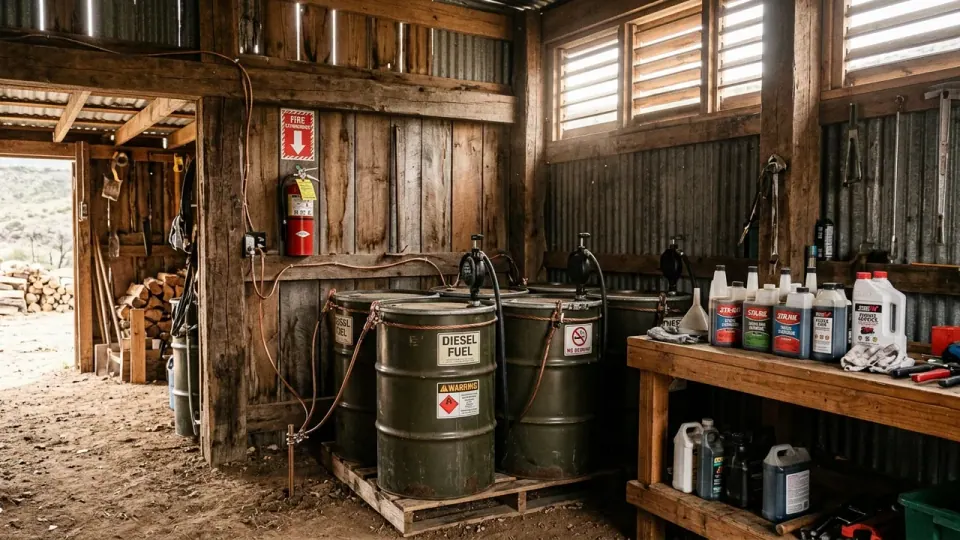
Refinery-Down Survival: Winter Diesel Stabilization, Biocide Fuel Polishing
As kinetic refinery attrition removes over half of regional refining output and grid strikes trigger sub-zero power rationing, off-grid survivability requires disciplined diesel stabilization, water-separator fuel polishing, cold-flow anti-gel chemistry, and LiFePO4 generator cycle efficiency.

Stranded When Planes and Banks Freeze
When FAA telecom outages ground flights and cloud failures freeze card terminals, carrying cash, paper maps, offline routing, and multi-carrier comms turns chaos into a routine detour.

Stockpiling Spares Before the Strait Closes
With Chinese carrier and coast guard drills rehearsing a shipping quarantine around Taiwan, households and small workshops should build a targeted two-year spare-parts cache before East Asian electronics and tool imports stall.