Burning Out of Control

Megafires have evolved from seasonal forest events into year-round threats to power grids, municipal water, and continental air quality. Here is why fire behavior is changing and how to harden homes and lungs against it.
In June 2023, office workers in New York and Philadelphia stepped outside at noon into an eerie amber twilight, breathing air thick with woodsmoke carried more than five hundred miles south from burning boreal forests in Quebec—thermal hotspots visible across the continent on NASA's FIRMS active fire map. That single week punctured an old assumption: that wildfire is a local problem confined to dry western canyons and Australian bushland.
Across the Northern Hemisphere, fire seasons—monitored continuously alongside broader climate extremes on our planetary hazard and climate radar—have stretched by weeks or months, overnight cooling no longer reliably slows flame fronts, and catastrophic blazes now overrun suburban neighborhoods from Maui to Los Angeles and Athens. Understanding why wildfires have grown more destructive—and why smoke and grid failures turn distant burns into regional emergencies—is essential for anyone assessing modern infrastructure resilience.
Fuel Debt, Drought, and Extreme Fire Behavior
Wildfire needs three ingredients: fuel, oxygen, and heat. For more than a century, forest policy across North America—whose annual acreage and suppression totals are compiled by the National Interagency Fire Center (NIFC)—focused almost exclusively on aggressive total suppression. Every spark was extinguished as fast as crews could reach it. While that approach protected timber stands in the short term, it quietly accumulated a massive ecological debt.
Healthy dry-forest ecosystems evolved with frequent, low-intensity surface fires that cleared dead pine needles, brush, and saplings every five to fifteen years while leaving mature, thick-barked trees standing. Deprived of regular clearing, forests grew dense with "ladder fuels"—choked understories capable of carrying ground flames straight into the canopy.
Add rising baseline temperatures and sharper swings between wet winters and scorching summers, and the physics changes rapidly. Wet seasons grow lush grass and brush; prolonged summer heat spikes atmospheric vapor-pressure deficit, pulling moisture out of living and dead vegetation until timber burns with explosive speed. Under these conditions, fires generate their own weather—pyrocumulonimbus clouds, erratic downdrafts, and ember showers blown more than a mile ahead of the main flame front.
The Wildland-Urban Interface and Grid Fragility
At the same time, millions of homes have been built directly inside the Wildland-Urban Interface (WUI), where subdivisions meet flammable chaparral, pine forest, or dry grassland. When fire enters a WUI neighborhood, it stops behaving like a forest fire and becomes an urban conflagration fueled by vinyl siding, asphalt roofs, propane tanks, and parked cars.
Modern electrical infrastructure sits squarely at the center of this hazard—both as victim and occasional ignition source, underscoring the systemic fragility of the power grid. Aging overhead distribution lines running through wind-prone corridors can arc or slap together during dry gales, sparking fast-moving blazes before firefighters can even mobilize. In response, utilities across California, Oregon, and other high-risk states increasingly deploy Public Safety Power Shutoffs (PSPS), preemptively cutting electricity to tens of thousands of customers during extreme wind warnings.
Those shutoffs reduce ignition risk, yet they introduce cascading hazards of their own:
- Water pressure loss: Municipal and private well pumps go offline just as homeowners need water for perimeter wetting or firefighting.
- Communications blackouts: Cell towers exhaust backup batteries within hours if outages stretch into multi-day events.
- Medical vulnerability: Residents relying on home oxygen, refrigerated insulin, or powered air filtration are suddenly stranded without grid power.
The Silent Casualty: PM2.5 and Chemical Smoke
Flames destroy buildings and claim lives on the fireline, yet public health data compiled in U.S. EPA wildfire smoke guidance makes clear that smoke kills far more people over far wider geographies. Wildfire smoke is packed with fine particulate matter (PM2.5)—microscopic particles roughly thirty times smaller than the width of a human hair. Unlike coarse dust trapped in the nose and upper airway, PM2.5 penetrates deep into lung alveoli and crosses directly into the bloodstream.
Epidemiological studies link prolonged wildfire smoke spikes to surges in asthma hospitalizations, acute coronary events, strokes, and preterm births, often hundreds or thousands of miles downwind from the flames. Worse still, when megafires consume suburban towns, the smoke is no longer just wood carbon. Burning electronics, treated lumber, vehicle batteries, and plastics release hydrogen cyanide, benzene, heavy metals, and volatile organic compounds into plumes that settle over entire metropolitan basins—creating secondary industrial contamination and watershed pollution once winter rains arrive.
Hardening Homes, Air, and Evacuation Plans
Surviving a wildfire emergency starts long before a red-flag warning appears on a NOAA National Weather Service wildfire safety forecast map. Most homes in WUI fires do not burn from a wall of flame sweeping over the roof; they ignite from wind-driven embers landing in dry gutters, wooden decks, or attic vents, a vulnerability addressed by IBHS Wildfire Prepared Home building standards.
Practical home hardening focuses on the immediate five-foot perimeter—known as Zone 0:
- Eliminate combustible mulch and shrubs directly against exterior walls; replace with gravel, pavers, or bare mineral soil.
- Install 1/8-inch metal mesh screening over gable, soffit, and crawlspace vents to block glowing embers from entering the attic.
- Keep roofs and gutters clear of pine needles and dry leaves throughout summer and autumn.
- Stage independent water and power where practical, including battery backup for critical medical gear and communication radios.
Inside the home, preparing for smoke events is just as urgent as preparing for evacuation. Standard central HVAC filters rarely trap fine smoke effectively. Upgrading compatible systems to MERV-13 filters—or building low-cost Corsi-Rosenthal box fans from four MERV-13 filters and a box fan—dramatically drops indoor PM2.5 levels. Keep a supply of NIOSH-approved N95 or P100 respirators for every family member; cloth masks and surgical loops offer negligible protection against fine smoke.
Finally, treat evacuation as a practiced drill rather than an improvised scramble. When smoke drops visibility to fifty feet and police order immediate departure, you may have ten minutes. Maintain two distinct exit routes out of your neighborhood, keep a pragmatic bug-out vehicle fueled above half full during fire season, and stage go-bags with prescriptions, hard copies of insurance records, headlamps, and pet carriers near the door.
Living With a Longer Fire Calendar
Wildfire risk cannot be solved by suppression budgets alone. Prescribed burns, mechanical thinning around towns, undergrounding high-risk power lines, and stricter WUI building codes all bend the curve—but those structural fixes take decades to implement at scale. Until then, resilient households treat fire and smoke as predictable seasonal infrastructure tests—reviewing real-world disaster documentation in our Intel Archives video gallery—hardening their perimeters, filtering their air, and refusing to wait for the horizon to turn orange before acting.
Real-time geospatial feed aggregating USGS M5.0+ earthquakes, NASA EONET wildfires, volcanoes, severe storms, UN/EC GDACS alerts, and NOAA geomagnetic status.
Related Reports & In-Depth Intel
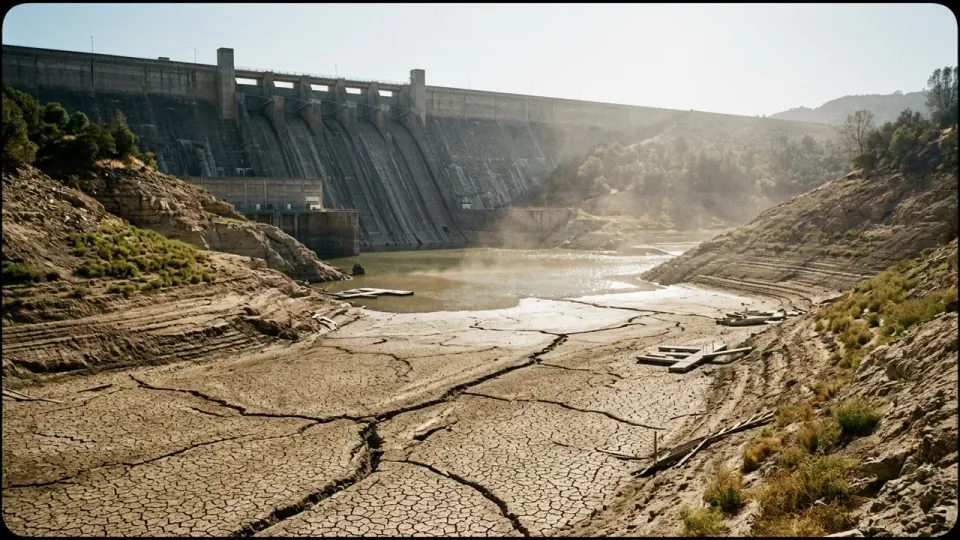
The Amazon Hydrological Tipping Point
The unprecedented convergence of record-breaking Super El Niño oceanic heat anomalies with human-induced deforestation has triggered the collapse of the Amazon hydrological cycle, paralyzing major South American river systems and continental hydroelectric power generation.
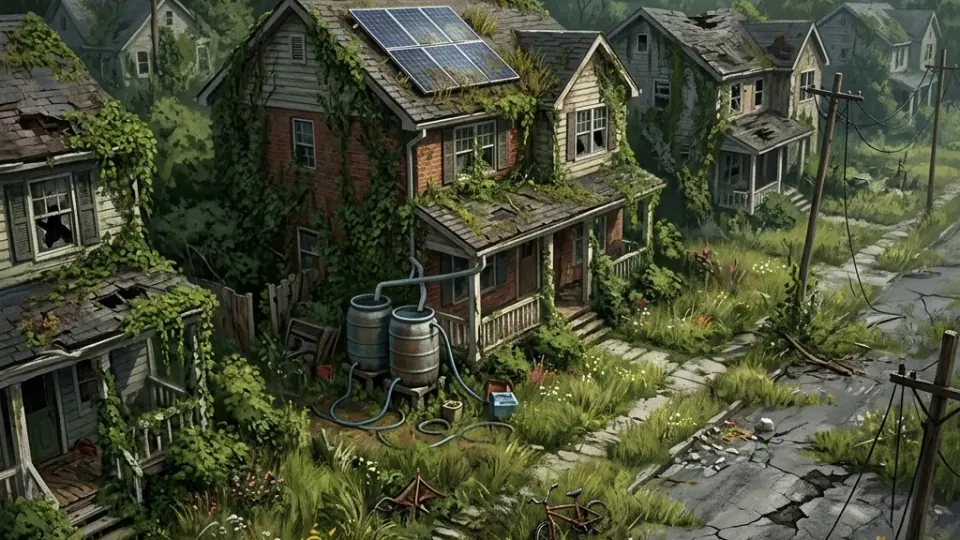
What Would Happen if the Power Grid Went
An analytical assessment of the infrastructural, medical, and social consequences of a month long national power grid failure.
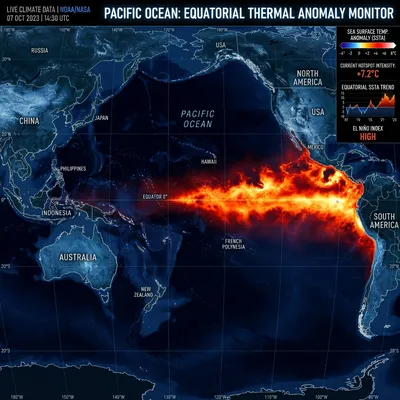
The Godzilla El Niño
With subsurface thermal anomalies in the tropical Pacific reaching record heights, we analyze the likelihood of a historic 'super El Niño' in late 2026 and its cascading impacts on global ecosystems, food supplies, and power grids.
Runaway Global Warming Analysis with 200 Year Projection
Trajectories of the Earth System: A Global Analysis of Runaway Warming and the 200-Year Climate Horizon.