The Godzilla El Niño: Rising Probabilities of the Strongest ENSO Event in Modern History
With subsurface thermal anomalies in the tropical Pacific reaching record heights, we analyze the likelihood of a historic 'super El Niño' in late 2026 and its cascading impacts on global ecosystems, food supplies, and power grids.
The Onset of the Great Thermal Inversion
The global climate system in mid-2026 is rapidly approaching a critical bifurcation point. Over the past several decades, the industrial world has operated under the assumption that climate changes would manifest as gradual, linear shifts, allowing ample time for technological adaptation. However, oceanographic data from the second quarter of 2026 reveals a far more volatile and non-linear reality. The tropical Pacific, the primary thermodynamic engine of the global atmosphere, is undergoing a rapid, high-amplitude state transition. Climatologists and planetary scientists are witnessing the early stages of what is projected to be a "Godzilla" El Niño—a super-ENSO (El Niño-Southern Oscillation) event that could surpass the historical benchmarks of 1997-1998 and 2015-2016.
This is not a routine cyclical fluctuation. In a world characterized by unprecedented greenhouse gas concentrations, record-high oceanic heat content, and declining atmospheric aerosol levels, this upcoming El Niño is poised to act as a powerful force multiplier. By releasing massive amounts of stored ocean heat into the troposphere, the event is highly likely to trigger severe weather anomalies across every continent. The consequences will extend far beyond typical meteorological interest; they represent a direct threat to global grain yields, water security, energy grids, and the fragile geopolitical networks that sustain modern civilization. This diagnostic report explores the physical mechanisms driving this emerging super-event, details its continental teleconnections, and outlines the systemic cascading failures that could define the next two years.
---
The Oceanographic Engine: Subsurface Heat and Kelvin Wave Propagation
To appreciate the scale of the impending event, we must look below the surface of the equatorial Pacific. Throughout the early months of 2026, NOAA and international meteorological agencies tracked the rapid decay of a weak La Niña phase. What began as a transition to ENSO-neutral conditions has quickly accelerated into a significant warming trend. The primary driver of this shift is the accumulation of an immense subsurface warm water pool in the western Pacific, which is now moving eastward.
Under normal conditions, strong easterly trade winds push warm surface water toward the western Pacific (the Maritime Continent), leaving the eastern Pacific cool via upwelling. This creates a steep thermal gradient across the ocean, known as the Walker Circulation. However, when these trade winds weaken, the piled-up warm water begins to slide back eastward in the form of downwelling Kelvin waves.

These Kelvin waves are oceanic disturbances that depress the thermocline—the boundary layer separating warm surface water from the cold, deep ocean. Currently, data from autonomous Argo floats and satellite altimetry indicate that the thermocline in the central and eastern Pacific has deepened by over 50 meters. This suppresses the upwelling of cold, nutrient-rich water off the coast of South America, allowing sea surface temperatures (SSTs) to rise rapidly.
The speed and magnitude of this transition are what concern scientists. Subsurface temperature anomalies in the Niño-3.4 region (the critical index area) have breached +3.5°C at depth. As this subsurface reservoir reaches the surface, atmospheric coupling is expected to solidify. This triggers the Bjerknes feedback loop: the warming eastern ocean reduces the temperature gradient across the Pacific, further weakening the trade winds, which in turn allows more warm water to flow eastward. This self-reinforcing cycle is the classic engine of a super-El Niño. Probabilistic models now assign a 75% chance that this event will qualify as a "strong" El Niño (Niño-3.4 SST anomalies exceeding +1.5°C) and a concerning 35% chance of it becoming a historic "super" event, with anomalies peaking above +2.5°C by December 2026.
---
Continental Teleconnections: A Reshuffling of Global Weather Patterns
Once the ocean and atmosphere couple, the global jet streams will be pushed out of their normal patterns, driving extreme weather across the globe.teleconnections will dictate the distribution of heat and moisture, leading to severe disruptions in key agricultural regions.
South America: Coastal Deluges and Amazonian Dieback
In South America, the impacts of a super-El Niño are historically immediate and severe. Along the coasts of Peru and Ecuador, the suppression of the cold Humboldt Current alters the local atmosphere. The warm coastal waters fuel intense convection, leading to torrential rainfall and flash flooding in arid coastal zones. The economic fallout for local fisheries is severe; the lack of nutrient upwelling drives away anchovy populations, collapsing the base of the regional maritime economy.
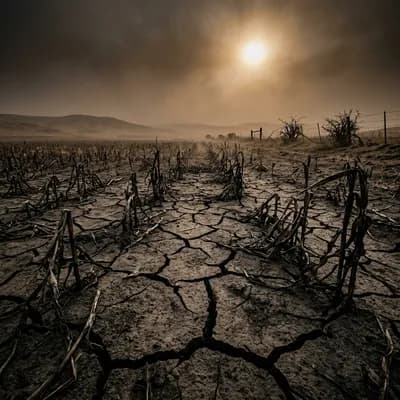
In contrast, the interior of the continent faces the opposite threat. The Walker Circulation's descending branch shifts over the Amazon basin, suppressing rainfall. The resulting drought in the Amazon rainforest accelerates tree mortality and increases the risk of forest fires. Under a super-El Niño in late 2026, the Amazon—already stressed by deforestation—could transition from a vital global carbon sink into a massive source of carbon emissions, further accelerating global warming.
Southeast Asia and Australia: The Threat of Fire and Drought
In the western Pacific, the shifting atmospheric cells bring dry air over Southeast Asia and northern Australia. Historically, strong El Niño events lead to a failure of the monsoon rains in India and severe droughts across Indonesia, Malaysia, and the Philippines. This dry spell creates prime conditions for widespread forest and peatland fires, particularly in Sumatra and Kalimantan. These fires release thick plumes of toxic smoke (known as the Southeast Asian haze), causing severe public health crises and shutting down transportation networks.
Australia faces a similarly dangerous outlook. The southern and eastern parts of the continent are prone to extreme heatwaves and severe bushfires during El Niño years. Agricultural yields for winter wheat in the Murray-Darling basin are projected to drop by 30-40% if the drought persists into the growing season. The Great Barrier Reef also faces severe thermal stress, with marine heatwaves likely to trigger widespread coral bleaching.
| Continent | Projected Meteorological Anomaly | Primary Systemic Risk | | :--- | :--- | :--- | | South America (West Coast) | Torrential rains, coastal flooding | Fishery collapse, infrastructure destruction | | South America (Amazon Basin) | Severe drought, high temperatures | Forest fires, carbon sink collapse | | Southeast Asia | Monsoonal failure, extreme dryness | Peat fires, regional food supply shortfalls | | Australia | Extreme heatwaves, dry conditions | Bushfires, wheat harvest failure | | North America (South/West) | Enhanced jet stream, atmospheric rivers | Landslides, flooding, reservoir overflow | | Africa (Southern Region) | Severe drought, delayed rains | Corn crop failure, widespread food insecurity |
---
The Systemic Domino Effect: Food, Energy, and Geopolitical Fragility
While the physical effects of El Niño are formidable, the secondary and tertiary impacts on human systems present the greatest risk of societal disruption. In our highly integrated, just-in-time global economy, a shock in one sector quickly cascades through others.
The Food Security Crisis
The global food system is already vulnerable due to soil depletion, energy costs, and trade disruptions. A super-El Niño in late 2026 could push this system to its limits. The simultaneous occurrence of droughts in Southern Africa, Southeast Asia, and Australia, combined with flooding in South America, threatens major global breadbaskets.
Southern Africa is particularly vulnerable. The regional corn crop is highly sensitive to rainfall timing; a severe drought could lead to widespread crop failures, leaving millions in need of international food assistance. India, facing a weak monsoon, may expand its export bans on rice and wheat to protect domestic supplies, driving up food prices globally. For developing nations reliant on food imports, this combination of crop failures and export restrictions could trigger severe food crises and social unrest.
Energy Grid Strain and Water Scarcity
The shifting weather patterns will also strain energy infrastructure. In regions dependent on hydroelectric power, such as Brazil, Colombia, and parts of Southeast Asia, prolonged droughts will lower reservoir levels, reducing power generation capacity. This forces governments to rely on expensive fossil fuels or implement rolling blackouts, disrupting industrial production.
In temperate zones, the extreme heatwaves driven by El Niño will push electricity demand for air conditioning to record highs, testing the limits of aging electrical grids. Simultaneously, water scarcity will affect thermoelectric and nuclear power plants, which require large volumes of water for cooling. The convergence of rising demand and reduced capacity could lead to widespread grid failures during the hottest months of 2026 and 2027.
---
Preparing for the Great Thermal Shift: Strategic Adaptation
As the probability of a historic super-El Niño rises, waiting for governmental response is a high-risk strategy. Individuals, homesteaders, and local communities must take proactive steps to build resilience against the impending weather anomalies and supply chain disruptions.
1. Water Harvest and Retention
Water security is the first line of defense. Whether facing drought or flooding, managing water on your property is critical:
- Storage Capacity: Maximize rainwater harvesting systems. Install additional food-grade IBC totes or cisterns to store runoff from roofs.
- Earthworks: Implement permaculture techniques such as swales, rain gardens, and keyline designs to slow, spread, and sink water into the soil. During heavy rains, these features prevent erosion; during dry spells, they keep the soil hydrated.
- Greywater Systems: Route greywater from washing machines and showers to irrigate non-edible plants and fruit trees, reducing demand on potable water sources.
2. Micro-Agricultural Hardening
To secure local food production during extreme weather:
- Soil Organic Matter: Increase soil carbon by adding high-quality compost, biochar, and organic mulch. Soils rich in organic matter retain water far better than depleted soils.
- Shade Infrastructure: Install shade cloths (30-50% block) over sensitive crops to protect them from extreme heatwaves and intense UV radiation.
- Drought-Tolerant Varieties: Shift planting schedules toward resilient crops, such as sweet potatoes, cowpeas, amaranth, and deep-rooted native species.
3. Energy Resilience
With power grids facing increased strain:
- Off-Grid Backup: Install solar power systems with battery storage (LiFePO4 batteries are recommended for safety and longevity) to keep critical appliances, like refrigerators, water pumps, and communication devices, running during blackouts.
- Passive Cooling: Optimize passive cooling in your home by using reflective window films, thermal curtains, and strategic ventilation.
- Fuel Storage: If relying on generators, maintain a clean, stabilized fuel supply (gasoline or diesel) in approved containers, rotating it every six months.
The emerging 2026-2027 El Niño is a major test for global resilience. By understanding the oceanographic forces at play and preparing for the local impacts, you can protect your household and community from the worst of the coming climate shocks. Hard-code your water, food, and energy systems now, before the tropical Pacific reaches its thermal peak.