Crucial tips to survive in climate change apocalypse.
As centralized systems fracture under climate stress, we outline the exact biological, hydrological, and shelter practices required for self reliance.
The Reality of Climate Disruption
The global climate equilibrium has broken down. The weather patterns that supported human civilization for thousands of years are shifting rapidly. Extreme storms, extended droughts, and heatwaves are no longer rare occurrences. They have become regular features of the seasonal cycle. Centralized systems for food distribution, water treatment, and electrical power are experiencing severe stress. These systems are highly interconnected, meaning a failure in one sector quickly spreads to others. To survive this period of instability, individuals and communities must build self sufficient systems that do not rely on centralized infrastructure.
This guide outlines the practical steps required to secure basic human needs: water, food, shelter, and energy. The goal is to transition from consumption to production. Most modern households are entirely dependent on external inputs. They purchase food from global grocery networks, receive water from municipal pipes, and draw electricity from regional grids. When these grids fail due to weather extremes or resource scarcity, dependent households face immediate danger. By establishing localized systems, you build a buffer against these failures, ensuring your household can survive independent of external support.
The transition requires a change in mindset. Survival is not about hoarding consumer goods or weapons. It is about understanding the natural biological and physical processes of your local environment. It is about learning to manage water cycles, soil biology, and thermal energy. The skills and systems described here are not theoretical. They are practical, field tested methods that can be implemented using simple tools and local materials. The time to build these systems is before the centralized grids experience permanent failure.
- Centralized systems are vulnerable to systemic cascade failures.
- Self reliance requires a transition from consumption to localized production.
- True survival capacity is built on practical skills and ecological understanding.
Securing a Reliable Water Supply
Water is the most urgent survival priority. Without a clean, consistent water supply, a household cannot function for more than a few days. Extreme climate conditions make water security challenging. Droughts dry up shallow wells and creeks, while intense storms contaminate surface water with sediment and pollutants. A resilient system must incorporate multiple water sources, storage capacity, and passive purification methods.
The first step is rainwater harvesting. Roof surfaces are highly efficient water collectors. A metal roof is ideal because it does not leach chemicals into the water. Asphalt shingles can be used, but the water requires more intensive filtration to remove petroleum residues. Gutters should be fitted with leaf screens and first flush diverters. First flush diverters redirect the initial runoff from a rainstorm, which contains dust, bird droppings, and debris, away from the storage tanks. Once the roof is clean, the water flows into storage barrels or underground cisterns.
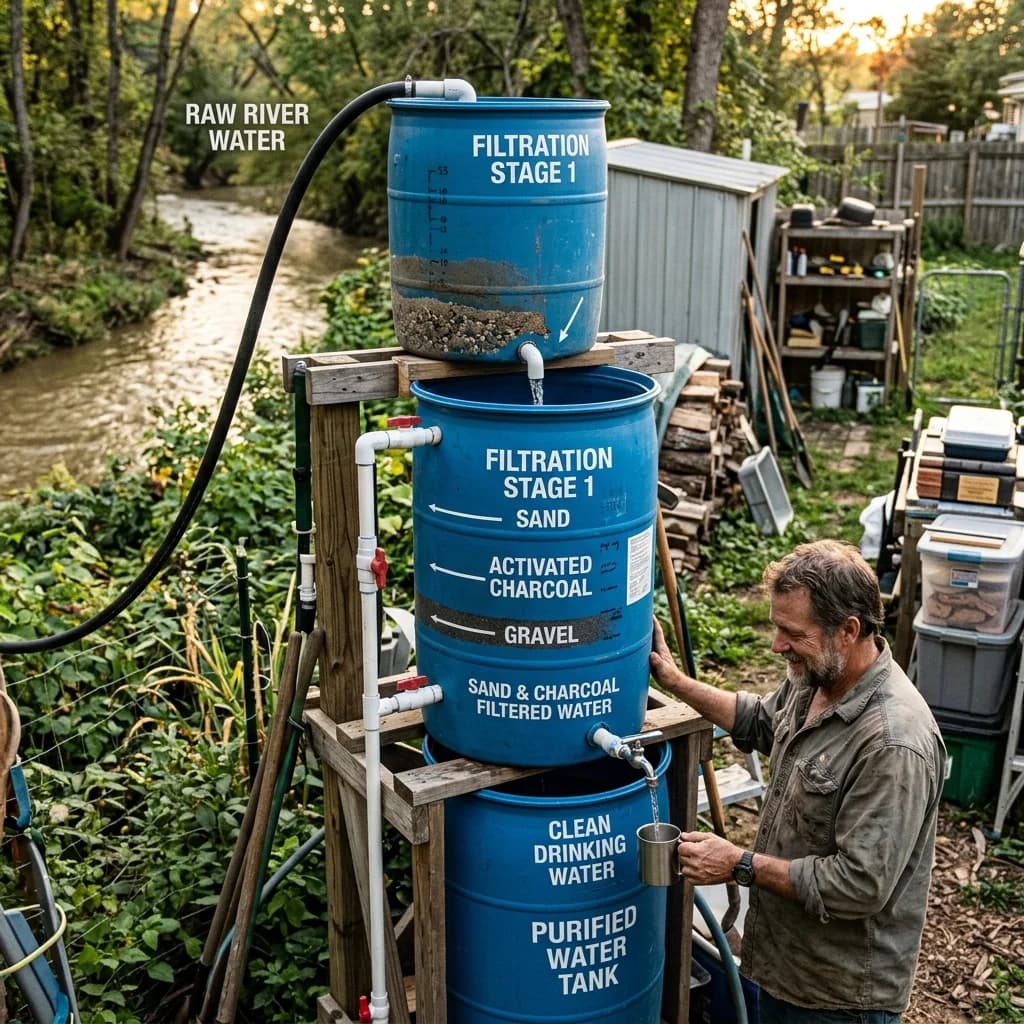
Storage capacity is critical to survive extended dry periods. You should calculate your household minimum water consumption and store enough to last at least ninety days. Tanks should be kept in dark, cool locations to prevent algae growth. Concrete or food grade polyethylene tanks are suitable. To purify the stored water without electricity or chemicals, you can construct a slow sand gravity filter. This system uses layers of gravel, sand, and active charcoal to filter out pathogens and sediment. The water passes slowly through these layers, producing clean, drinkable water.
- Rainwater harvesting provides a direct, high quality water source.
- First flush diverters prevent surface contamination from entering storage tanks.
- Slow sand gravity filters purify water without relying on electricity or chemicals.
Establishing Local Food Production
Our modern food supply is highly vulnerable to climate disruptions. Droughts, flooding, and shifting seasons are reducing crop yields in major agricultural zones. The transport of food relies on fossil fuels, making it subject to supply chain shocks. To secure your nutrition, you must establish local food production. The traditional model of chemical dependent gardening must be replaced with biological, regenerative agriculture.
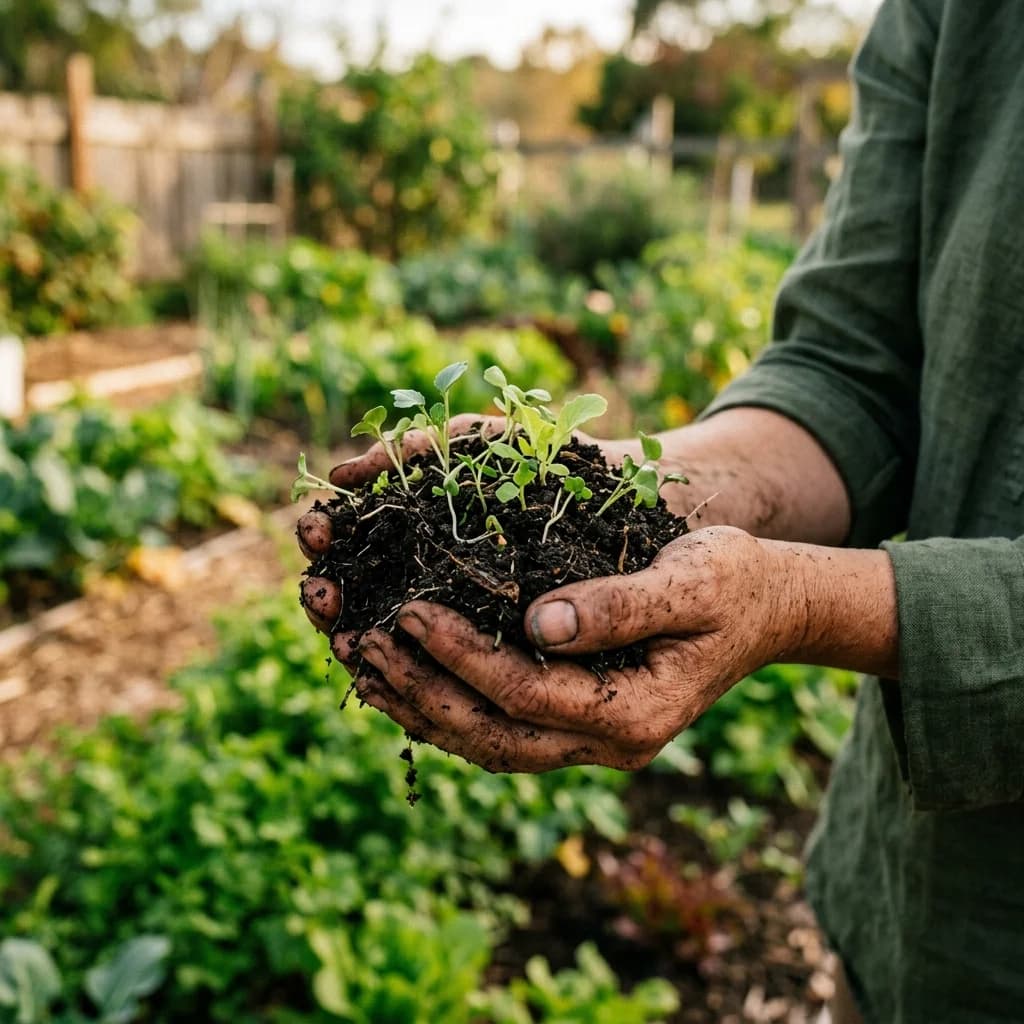
The foundation of food production is soil health. Industrial farming uses synthetic fertilizers that kill earthworms and beneficial microbes. This process leaves the soil lifeless and unable to hold water. To rebuild soil biology, you must apply active organic compost and biochar. Compost introduces beneficial bacteria and fungi that cycle nutrients and make them available to plants. Biochar, which is charcoal produced through oxygen free heating, acts as a permanent sponge. It holds water and nutrients in the root zone, preventing them from washing away during heavy rains.
Crop selection is another key factor. You should focus on high calorie, nutrient dense crops that are adapted to your local climate. Sweet potatoes, cowpeas, and sunchokes are highly resilient to heat and drought. Perennial crops, such as fruit trees and berry bushes, should be integrated into the design. Perennials have deep root systems that can access subsoil moisture during dry spells. They require less labor and inputs than annual crops. By creating a diverse food forest, you establish a self regulating ecosystem that produces food year after year with minimal intervention.
Building Thermal Passive Shelters
Surviving extreme temperatures requires shelter that maintains a stable internal environment without grid electricity. Standard modern housing relies on mechanical heating and air conditioning. When the electrical grid fails during a heatwave or winter storm, these homes quickly become uninhabitable. Passive thermal design uses the physical properties of materials and natural airflow to regulate temperature.
Thermal mass is a key component. Materials with high thermal mass, such as concrete, brick, stone, and rammed earth, absorb and store heat. In hot weather, these materials absorb heat from the air during the day, keeping the interior cool. At night, as the air cools, the thermal mass slowly releases the stored heat, warming the building. In cold weather, thermal mass can store heat from a wood stove or solar radiation, releasing it over several hours.
Orientation and ventilation are also critical. A passive solar building should have its longest side facing the sun to maximize winter solar heat gain. Large windows on the sunny side allow solar radiation to enter and heat the thermal mass inside. In summer, overhangs or deciduous trees should shade these windows to prevent overheating. Ventilation can be managed using the stack effect. Warm air naturally rises. By placing vents near the ceiling and cooler air intakes near the floor, you create a natural airflow that cools the house without mechanical fans.
- High thermal mass materials regulate temperature by storing and releasing heat.
- Solar orientation maximizes winter heat gain and minimizes summer sun exposure.
- Passive ventilation uses the natural rise of warm air to cool living spaces.
Mechanical and Hand Tool Skills
As modern machinery becomes difficult to maintain due to spare parts shortages and fuel costs, low technology skills become essential. A self sufficient community must have the capability to repair and construct infrastructure using manual tools. Hand saws, braces, hand drills, planes, and axes are durable tools that do not require electricity, batteries, or fuel.
Mastering these tools is a matter of practice. You should acquire high quality carbon steel hand tools and learn how to sharpen and maintain them. A blunt tool requires twice the energy to use and is more likely to cause injury. You should also learn basic woodworking and metalworking techniques. Being able to construct a timber frame structure, repair a water pump, or forge a simple tool from scrap metal is highly valuable.
Furthermore, basic mechanical knowledge is important. You should understand how simple machines, such as levers, pulleys, and gears, operate. These tools allow a single person to lift heavy loads and move materials without engines. By developing these physical skills, you reduce your dependence on complex, fragile technologies and ensure you can maintain your local infrastructure indefinitely.
Community Organization and Mutual Defense
The myth of the lone survivalist is unrealistic. A single person or family cannot perform all the tasks necessary for long term survival. Food production, water purification, shelter maintenance, security, and medical care require more labor than one household can provide. True resilience is built through community cooperation and mutual support networks.
Developing relationships with neighbors is the first step. You should identify individuals with specialized skills, such as doctors, mechanics, builders, and farmers. Establishing a local barter system allows community members to exchange goods and services without relying on unstable currencies. Shared resources, such as community seed banks, shared tool sheds, and collective water storage, increase the overall security of the group.
Mutual defense is also a community responsibility. During times of systemic collapse, civil unrest and resource conflicts are common risks. A community must organize to monitor and secure its territory. This organization does not require military hardware. It requires clear communication networks, search protocols, and defined roles for all members. By working together, a community can deter threats and manage emergencies, ensuring the safety of all members.