Harnessing the Power of the Sun

Most grid-tied rooftop solar arrays shut down automatically during a blackout. Building genuine energy independence requires off-grid battery storage, honest watt-hour math, winter derating, and low-tech solar thermal tools.
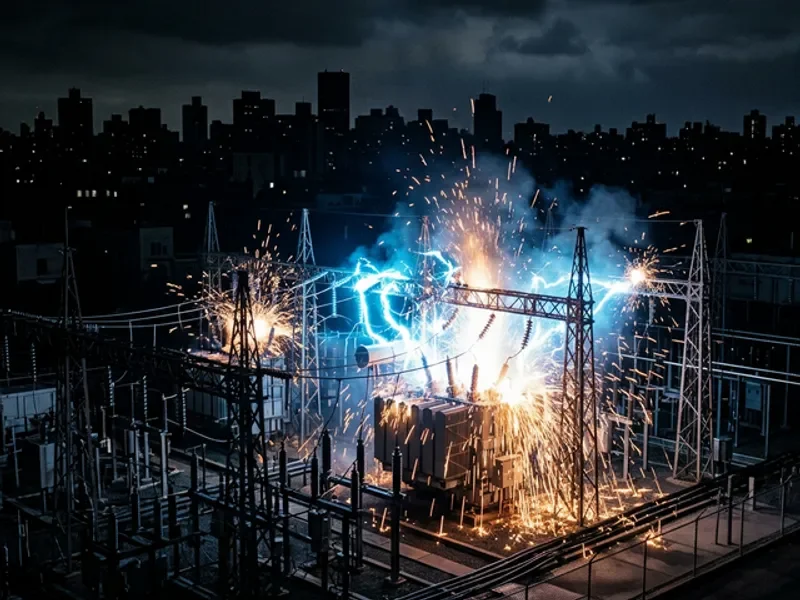
Walk through any modern suburb and you will see thousands of homes topped with sleek black solar panels. Most owners assume those arrays insulate them from blackouts. Then a winter ice storm knocks down transmission lines down the road—and their lights go out along with everyone else's. Standard grid-tied rooftop systems include mandatory anti-islanding relays that instantly disconnect the panels the moment utility voltage drops, protecting linemen from electrocution on downed wires. Without dedicated battery storage and an off-grid transfer architecture, rooftop solar becomes decorative glass the exact second the grid fails.
True off-grid solar energy is transformative in a prolonged outage or post-collapse scenario because sunlight arrives silently, requires no fuel convoy, and leaves no exhaust trail—trends reflected in global generation shifts tracked by U.S. EIA renewable energy statistics and the IEA World Energy Outlook. Yet marketing claims around portable "solar generators" routinely mislead buyers about what a modest array can actually run. Reliable solar independence demands solid component selection, disciplined watt-hour budgeting, and practical non-electric thermal backups.
Anatomy of a Dependable Off-Grid System
An off-grid photovoltaic (PV) system stands on four core components, and cutting corners on any single link cripples the whole chain:
- Monocrystalline Solar Panels: Choose rigid tempered-glass aluminum-framed monocrystalline panels (
20–23%conversion efficiency) for stationary homestead arrays, reserving lighter folding ETFE panels for mobile packs. Cheap flexible plastic panels glued directly onto hot roofs or vehicle hoods frequently delaminate and lose output within two to three summers.
- MPPT Charge Controllers: Skip bargain Pulse Width Modulation (PWM) controllers. A Maximum Power Point Tracking (MPPT) controller dynamically tracks panel voltage and converts excess voltage into usable charging amperage, harvesting 20 to 30 percent more energy on cold, overcast mornings when power is scarcest.
- LiFePO4 Battery Storage: Lithium Iron Phosphate (
LiFePO4) chemistry—covered in depth in our off-grid energy storage guide—has largely replaced heavy flooded lead-acid banks for critical off-grid storage. LiFePO4 cells tolerate3,000 to 6,000+deep charge cycles without sulfation, weigh less than half as much per kilowatt-hour, emit no corrosive hydrogen gas indoors, and resist thermal runaway fire hazards far better than consumer NMC lithium-ion packs. Their one critical rule: never charge LiFePO4 cells below 32°F (0°C) unless the battery includes internal heating pads and low-temperature BMS cutoff, or permanent lithium plating will ruin the cells.
- Pure Sine Wave Inverters: Modified sine wave inverters produce choppy stepped voltage that buzzes through audio gear, overheats brushless power-tool chargers, and shortens the life of refrigerator compressors and medical CPAP machines. Insist on pure sine wave output, and size the inverter cleanly to your real surge loads rather than overspending on a massive 5,000W unit whose idle self-consumption drains batteries overnight just staying switched on.
Watt-Hour Math and the Winter Reality Check
The fastest way to burn through an emergency battery bank is trying to heat or cook with electricity. A standard space heater or electric hot plate pulls 1,500 watts continuously—draining a pricey 2,000 Wh portable power station flat in roughly seventy-five minutes. Heating, cooking, and boiling water belong to wood, propane, or direct solar thermal setups.
Reserve photovoltaic electricity for high-value tasks that cannot easily be replaced by fire:
- Refrigeration and Medical Storage: A well-insulated 12V/24V DC compressor chest fridge or freezer averages just
300 to 500 Wh/day—keeping insulin, vaccines, and perishable meat cold on minimal solar input.
- Communications and Computing: Charging VHF/HF amateur radios, NOAA receivers, LED lanterns, smartphones, and low-wattage offline archive laptops draws under
150 Wh/day.
- Water Pumping: Shallow-well 12V diaphragm or variable-speed solar submersible pumps lift hundreds of gallons daily straight into elevated gravity storage tanks during peak noon sun, eliminating battery drain overnight.
Never size panels based on optimistic summer brochure ratings. As National Renewable Energy Laboratory (NREL) PV performance research and NASA POWER solar irradiance datasets confirm, a "400-watt" panel rarely outputs 400 watts in real life; heat derating, dust, and sub-optimal angles typically trim peak output to 280–330 watts at midday. Worse, December brings short days, low solar elevation, and stretches of three to five consecutive gray, rainy days. A resilient off-grid homestead builds three to four days of battery autonomy paired with enough array wattage to recharge completely during a single clear afternoon—plus a small, fuel-efficient backup inverter generator to top off batteries cleanly during week-long winter storms, while benchmarking regional solar and grid indicators in our collapse data center.
Non-Electric Solar: Thermal Tools That Never Burn Out a Circuit
Photovoltaic silicon is only half the solar toolkit. Direct solar thermal devices—complementing distillation methods in our solar pyrolysis still field guide—turn sunlight straight into heat with zero wiring, zero batteries, and zero susceptibility to electromagnetic pulses:
- Solar Water Pasteurization: Boiling water requires 212°F (100°C), yet pathogens—bacteria, protozoa, and viruses—die rapidly at 149°F (65°C) held briefly, a thermal inactivation benchmark documented in WHO Guidelines for Drinking-water Quality. A simple insulated dark-painted box or parabolic reflector paired with a reusable Water Pasteurization Indicator (WAPI) wax vial reliably sterilizes liters of water daily without spending a single stick of firewood.
- Solar Box Cookers and Evacuated Tube Ovens: Using reflective aluminum wings and double-glazed glass, a well-built solar oven reaches
250°F to 350°Fin clear sun, quietly slow-cooking dried beans, rice, stews, and bread across an afternoon with zero smoke signature and zero indoor heat buildup in summer.
- Solar Food Dehydrators: Glass-topped convection dryers channel solar-heated air upward through stacked mesh trays, preserving surplus tomatoes, apples, herbs, and jerky strips without grid electricity.
Hardening, Stealth, and Maintenance
In an extended grid failure, visible technology draws scrutiny. Roof-mounted arrays gleam visibly from distant roads, and bright outdoor security floodlights run off solar banks advertise working power for miles across a dark landscape. Where property layout allows, low-profile ground mounts tucked behind tree lines or south-facing fencerows offer two major advantages: nobody sees them from the main road, and you can sweep snow off glass panels in two minutes without climbing an icy ladder.
Finally, protect the vulnerable silicon brain of your setup. Store at least one spare MPPT charge controller, spare MC4 connectors, inline DC fuses, and a backup inverter wrapped safely inside a tested steel Faraday cage alongside spare wiring diagrams. Panels themselves are remarkably durable glass-and-silicon laminates capable of lasting 25 to 30 years; it is almost always the charge controller or battery management board that fails first. Keep spare electronics protected, match loads honestly to winter sun hours, and sunlight becomes the quietest long-term engine on your property.
Real-time geospatial feed aggregating USGS M5.0+ earthquakes, NASA EONET wildfires, volcanoes, severe storms, UN/EC GDACS alerts, and NOAA geomagnetic status.
Related Reports & In-Depth Intel
Collapse of the Rule of Law
When legal systems fracture, order does not vanish evenly—states tighten emergency control over strategic zones while abandoning outer neighborhoods to predatory crime. Here is how institutional breakdown unfolds and how to survive it.

Disaster Preparedness in a Collapsing World
Natural disasters do not happen in a vacuum—they strike aging bridges, stretched emergency budgets, and fragile supply chains. Here is how floods, earthquakes, and compounding infrastructure failures unfold, and how to build two-week household readiness.
Community vs. Lone Wolf: The Survival Debate
The solitary woodsman is a compelling piece of survival fiction—and a terrible actuarial bet. An unvarnished analysis of sleep math, injury risk, labor specialization, and why tight, vetted mutual-aid networks outperform both lone wolves and sprawling compounds.

Stoicism in the Face of Catastrophe
Ancient Stoicism was built not for social-media slogans, but for plagues, exile, and prison camps. How Stoic discipline—separating control from chaos and rehearsing adversity—keeps crisis decision-making intact when panic spreads.