The Black Sky Protocol: Surviving an Indefinite Electrical Grid and Communications Blackout
When regional transmission networks collapse and cellular backbones go dark, survival becomes an exercise in strict physics and analog discipline. We provide the definitive manual for water filtration, off-grid power, and secure local communications.
# The Black Sky Protocol: Surviving an Indefinite Electrical Grid and Communications Blackout
A "Black Sky" event is defined by the federal disaster response community as a catastrophic, long-duration outage of interconnected critical infrastructures—electricity, telecommunications, water, and fuel transport—spanning multiple states or nations for weeks to months. Unlike routine weather-related power outages, where repair crews converge from neighboring jurisdictions, a systemic Black Sky disruption means no external cavalry is arriving.
When the bulk electric grid fails along with cellular base station backhauls, modern suburban life collapses into an immediate survival emergency within seventy-two hours. To survive months of structural isolation, households must abandon consumer convenience and transition to a disciplined, closed-loop survival architecture based on four non-negotiable physical pillars.
1. Zero-Pressure Water Sourcing and Dual-Stage Sterilization
Municipal tap pressure disappears within twelve to thirty-six hours of substation collapse as distribution booster pumps exhaust emergency diesel reservoirs. When municipal supply fails, you must immediately secure secondary water sources without relying on electric well pumps.
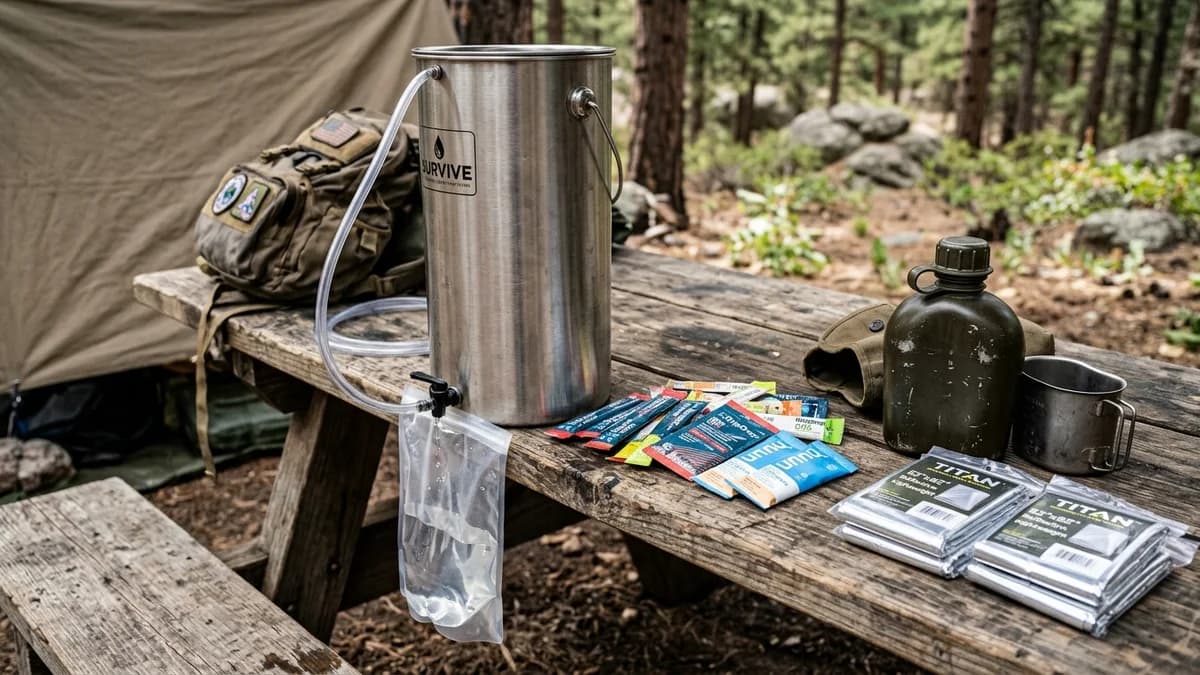
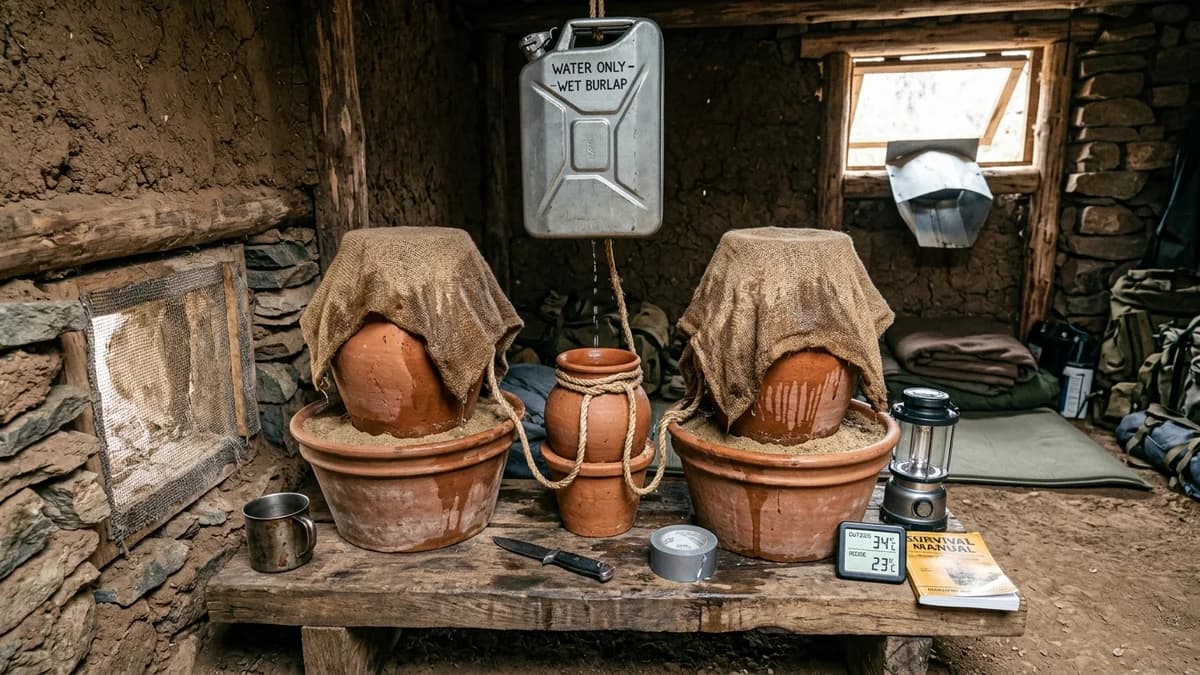
- Physical Sediment Staging: Never run murky pond or rainwater directly through micro-pore filters; suspended silt will blind microscopic pores within dozens of gallons. Utilize a three-bucket settling stack with cloth or sand pre-filtration before processing through micro-porous filtration.
- Dual-Barrier Decontamination: Micro-porous ceramic or hollow-fiber membranes (0.1 to 0.2 microns) reliably remove bacteria (E. coli, cholera) and protozoan cysts (Giardia, Cryptosporidium), but cannot neutralize chemical run-off or microscopic viral pathogens. Treat filtered water with either a rolling boil (minimum one minute) or exact chemical dosing using unscented sodium hypochlorite bleach (two drops per quart of clear water, allowing thirty minutes of contact time).
- Gravity Flow Architecture: Standardize on unpowered gravity filtration systems (such as twin-cylinder stainless steel units or converted food-grade five-gallon buckets) that operate silently without drawing from your battery reserves.
2. Off-Grid Electrical Sovereignty and Thermal Management
Attempting to power an entire modern home via a portable gasoline generator during an indefinite blackout is a fatal operational error. Generators are noisy, produce distinct thermal signatures, and consume finite fuel supplies that cannot be replenished once fuel station pumps lose power.
- Split-Phase Low-Voltage Power: Designate a small 12V or 24V direct-current (DC) power bank utilizing Lithium Iron Phosphate (LiFePO4) chemistry. LiFePO4 cells support over 3,000 charge cycles at 80% depth of discharge without the thermal runaway risks inherent to legacy cobalt lithium-ion chemistries.
- Solar Harvesting Discipline: Pair your battery bank with portable 100W–200W monocrystalline folding solar arrays equipped with MPPT (Maximum Power Point Tracking) charge controllers. Deploy panels only during direct daylight windows and store panels inside at night to prevent opportunistic theft.
- Cold-Chain Redundancy: Rather than powering full-sized compressor refrigerators, shift your food preservation strategy immediately to salt curing, vacuum-sealed dry goods, and small 12V portable DC thermoelectric coolers dedicated exclusively to temperature-sensitive medications like insulin.
3. Analog Communications and Information Blackouts
When commercial cellular networks lose power, cell towers degrade into dead weight within forty-eight hours as battery cabinets deplete. Maintaining local and regional situational awareness requires tactical analog radio protocols.
- VHF/UHF Tactical Simplex: Handheld transceivers (such as Baofeng, Yaesu, or AnyTone units) operating on MURS (Multi-Use Radio Service), FRS, or 2-meter amateur bands allow direct line-of-sight voice communications with family members and neighborhood defense watches up to three to five miles without repeaters.
- Shortwave and Emergency HF Monitoring: Maintain a dedicated battery- or hand-crank powered receiver capable of monitoring NOAA weather frequencies, AM emergency broadcast frequencies, and shortwave bands (3 MHz to 30 MHz). When regional communications collapse, international shortwave broadcasts remain the only reliable source of unvarnished geopolitical information.
- Strict Radio Silence Protocols: In a destabilized urban environment, RF transmission signals can be intercepted and triangulated by hostile groups with basic directional antennas. Transmit only on pre-scheduled five-minute windows using minimal power wattage, clear callsigns, and brevity codes.
4. Collective Neighborhood Resilience and Perimeter Security
No single individual, regardless of tactical gear or stockpiled ammunition, can maintain uninterrupted 360-degree security while sleeping, foraging, and purifying water. Surviving an extended Black Sky event requires organizing a tight-knit neighborhood security pact:
| Priority Stage | Operational Window | Primary Tactical Objective |
|---|---|---|
| Stage 1: Containment | Hours 0 to 48 | Fill all available vessels (bathtubs, jugs, water bladders); inventory medical supplies; establish black-out window covers. |
| Stage 2: Coordination | Days 3 to 7 | Establish neighborhood access gates; schedule rotating 4-hour perimeter watch shifts; inventory communal skilled assets (medical, mechanical, agricultural). |
| Stage 3: Stabilization | Weeks 2 to 8 | Establish gravity-fed communal water distribution; initiate collective waste disposal trenches to prevent dysentery outbreaks; enforce strict nighttime light discipline. |
By standardizing your preparedness around physical realities—gravity water, modular DC solar, line-of-sight VHF, and community defense—you transition from a vulnerable consumer dependent on delicate civil systems to a resilient sovereign unit capable of weathering indefinite grid collapse.