Building Your Survival Bunker: Practical Steps for the Underground
Forget the billionaire luxury complexes. Here are the practical, gritty realities and step-by-step considerations for constructing a functioning, life-saving doomsday bunker.
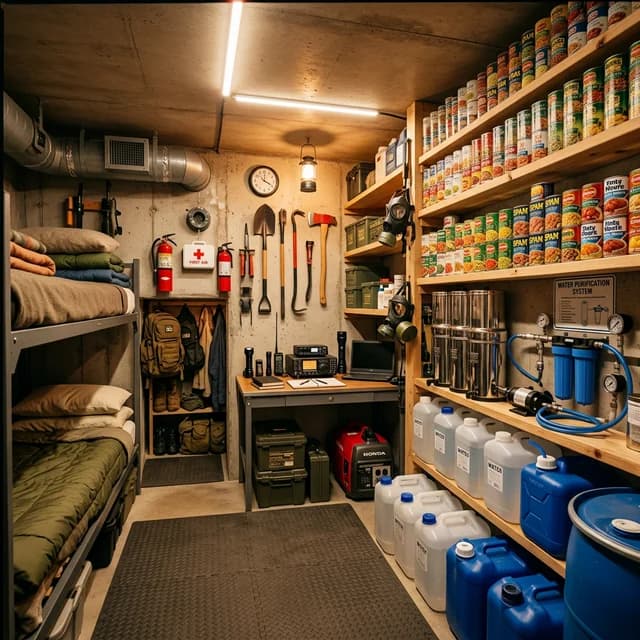
When disaster strikes and your location is compromised, evacuation isn't always an option. Sometimes, the only safe direction to go is down. Building a survival bunker isn't about luxury; it's about establishing a secure, off-grid command center capable of keeping you and your family alive through the worst scenarios imaginable.
Choosing the Right Location and Materials
A successful survival bunker starts with geographic discretion. You want a location with a low water table to prevent catastrophic flooding and constant moisture ingress. Drainage is a constant battle underground; a perimeter French drain system and multiple redundant sump pumps (ideally running on differing power sources, like solar-backed DC batteries and manual hand-cranks) are absolutely mandatory.
Do not use shipping containers. The internet is full of people claiming a buried container makes a great cheap bunker. The reality is that shipping containers are built to handle weight on their four reinforced corners, not pressing against their sides. The dirt will inevitably crush the thin steel walls. Stick to heavily reinforced concrete or specifically engineered corrugated steel culvert pipes treated to resist rust.
The Holy Trinity of Bunker Life: Air, Water, and Power
- 01.Air: You need a positive pressure system. By drawing heavily filtered air into the bunker, you create a slightly higher atmospheric pressure inside than outside. This ensures that any cracks or imperfect seals push air *out*, preventing biological or chemical contaminants from creeping *in*. A manual crank backup for your air scrubber is non-negotiable.
- 02.Water: Storing water takes up a massive amount of volume. While you should store as much potable water as your space allows, you also need integration with a robust gravity-fed filtration system (like a Berkey or a heavily customized RO system). Drilling a deep well that can be accessed internally via a manual hand pump is the ultimate solution.
- 03.Power: Forget relying entirely on gas generators; they require massive fuel storage, produce lethal carbon monoxide, and create significant heat and noise, both of which give away your position. Focus on a heavy battery bank (lifepo4 chemistry) charged by concealed surface solar panels.
Stocking the Essentials
Deep storage requires managing humidity. Even the best bunkers deal with condensation. Your long-term food (mylar-bagged rice and beans, freeze-dried buckets) must be kept away from direct contact with the concrete walls to prevent temperature-fluctuation condensation. Use heavy-duty plastic shelving.
Beyond calories, stockpile copious amounts of medical supplies, sanitation gear (composting toilets and heavily sealed waste buckets), and reference materials. A kindle loaded with offline survival libraries and schematics, housed in a Faraday bag, is worth its weight in gold.
Recommended Reading and Resources
Start building your knowledge base before breaking ground:
- The Underground House Book by Stu Campbell - A realistic look at earth-sheltered living and the engineering required to keep water out.
- *Where There Is No Doctor* by David Werner - The most widely used health care manual in the world, essential when hospitals are gone.
- EPA Guide on Indoor Air Quality and Ventilation - Vital reading to understand the mechanics of air exchange and contaminant buildup in sealed spaces.