The Great Rare Earth and Antimony Embargo: Choking the Western Industrial Defense Base
As Beijing tightens sovereign export controls on antimony, gallium, germanium, and heavy rare earths, Western defense assembly lines and electric turbine manufacturing face acute physical shortages. We examine the abrupt halt of advanced manufacturing.
# The Great Rare Earth and Antimony Embargo: Choking the Western Industrial Defense Base
For thirty years, Western policymakers celebrated the economic efficiency of globalization, content to offshore dirty, energy-intensive mineral refining to Asia while retaining high-margin software code and final system assembly. In late 2026, the strategic bill for that complacency came due with devastating finality. Following a series of escalating trade restrictions, the People's Republic of China enacted strict sovereign export controls on antimony, gallium, germanium, and heavy rare earth elements (HREEs), abruptly throttling the foundational physical inputs of the modern industrial world.
Unlike software code or semiconductor designs that can theoretically be replicated or patched, metallurgical refining obeys the rigid laws of chemistry and capital expenditure. Building a commercial-scale rare-earth separation facility requires seven to twelve years of environmental permitting, complex solvent extraction circuits, and toxic tailings containment. The West finds itself facing a sudden, inescapable supply-side embargo.
The Metallurgical Chokehold: Antimony, Gallium, and Germanium
While mainstream media focus has historically centered on consumer battery lithium, the true strategic vulnerability lies in specialized critical metalloids. Antimony is irreplaceable in the production of military-grade armor-piercing munitions, infrared night-vision optics, lead-acid military battery grids, and flame-retardant circuit board substrates. China currently controls approximately sixty percent of global antimony mine production and over eighty percent of refined antimony processing.

Simultaneously, quotas on gallium and germanium have directly impacted gallium-arsenide (GaAs) and gallium-nitride (GaN) semiconductor manufacturing. These wide-bandgap compounds are indispensable for active electronically scanned array (AESA) radars, 5G/6G base station power amplifiers, and satellite optical cross-links. With secondary market stockpiles exhausted throughout the summer of 2026, procurement officers across major defense contractors are confronting depleted delivery schedules.
Factory Floors Idle Across North America and Europe
The consequence of a targeted mineral embargo is non-linear: a missing three-dollar magnet or five-gram antimony dopant halts the assembly of a four-million-dollar precision missile or a half-million-dollar electric turbine generator.
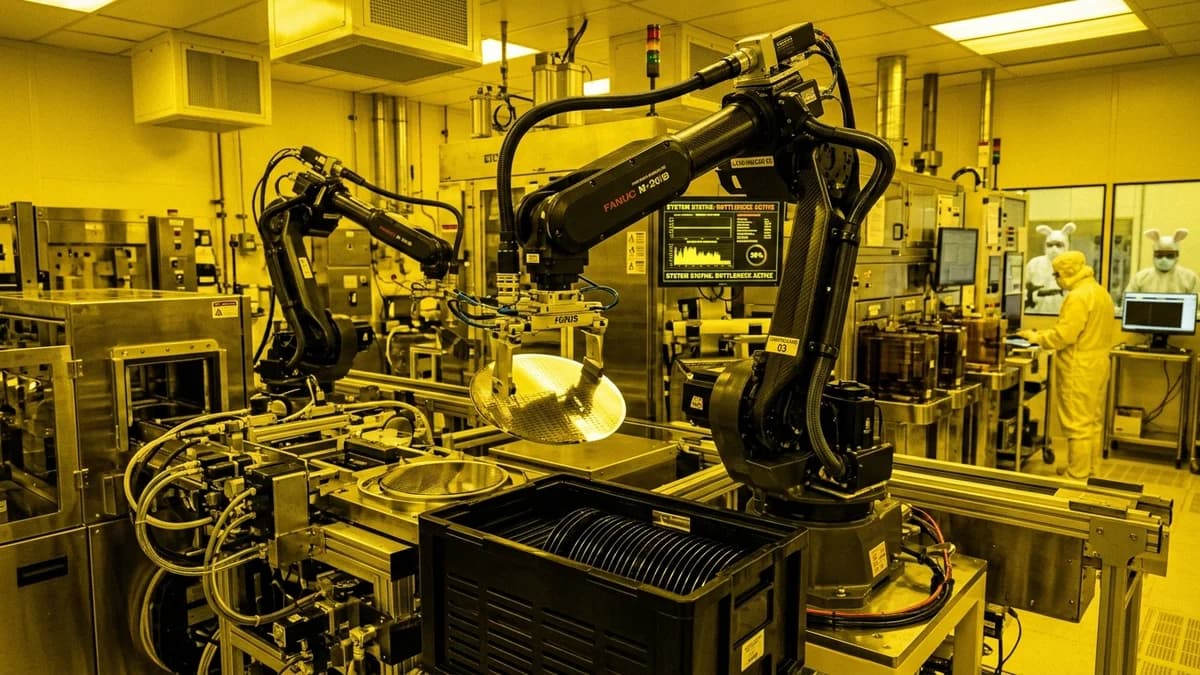
The cascading disruptions observed across industrial manufacturing hubs include:
- 01.Defense Munitions Idling: Small arms, artillery shell fuses, and missile guidance fins require hardened antimony alloys. Without consistent refined antimony imports, domestic arsenals are rationing current production to prioritize strategic deterrence reserves.
- 02.High-Power Transformer Shortages: Neodymium-iron-boron (NdFeB) permanent magnets enriched with dysprosium and terbium are critical for wind turbine generators, industrial robotics, and high-voltage transmission switchgear actuators. Lead times for commercial industrial motors have ballooned from twelve weeks to twenty-six months.
- 03.Automotive and Electronics Curtailments: Assembly lines across Bavaria, Michigan, and Japan have begun selective work-week shutdowns, unable to secure uncertified secondary-market components that pass aerospace thermal stress tolerance benchmarks.
The Myth of Rapid Re-Shoring
Political rhetoric promising immediate domestic extraction ignores physical reality. While raw ores exist in North America, Australia, and parts of Africa, the Western world dismantled its chemical separation and metallurgy workforces decades ago. Refining rare earths requires handling thousands of gallons of radioactive thorium and uranium by-products—a process that faces insurmountable environmental litigation and regulatory stalemates in Western jurisdictions.
As the physical foundation of the high-tech economy cracks, the globalized illusion of endless, friction-free material abundance has officially collapsed.