Geoeconomic Analysis: Super El Niño's Multibillion-Dollar Toll on Global Agriculture and Power Grids
A forensic economic assessment of the ongoing ENSO anomaly. From Southeast Asian hydropower blackouts to South American grain harvest deficits, we trace the transmission channels driving structural inflation across world commodities.
# Geoeconomic Analysis: Super El Niño's Multibillion-Dollar Toll on Global Agriculture and Power Grids
The Macroeconomic Transmission of Thermal Shocks
Historically, financial analysts have treated climate events as exogenous, transitory disruptions that central banks can "look through" when setting benchmark interest rates. The 2026 super El Niño has permanently shattered this assumption. By altering oceanic evaporation rates, planetary cloud cover, and hydrological cycles across four continents, this single meteorological event is generating sustained, cost-push stagflation that monetary policy is powerless to offset.
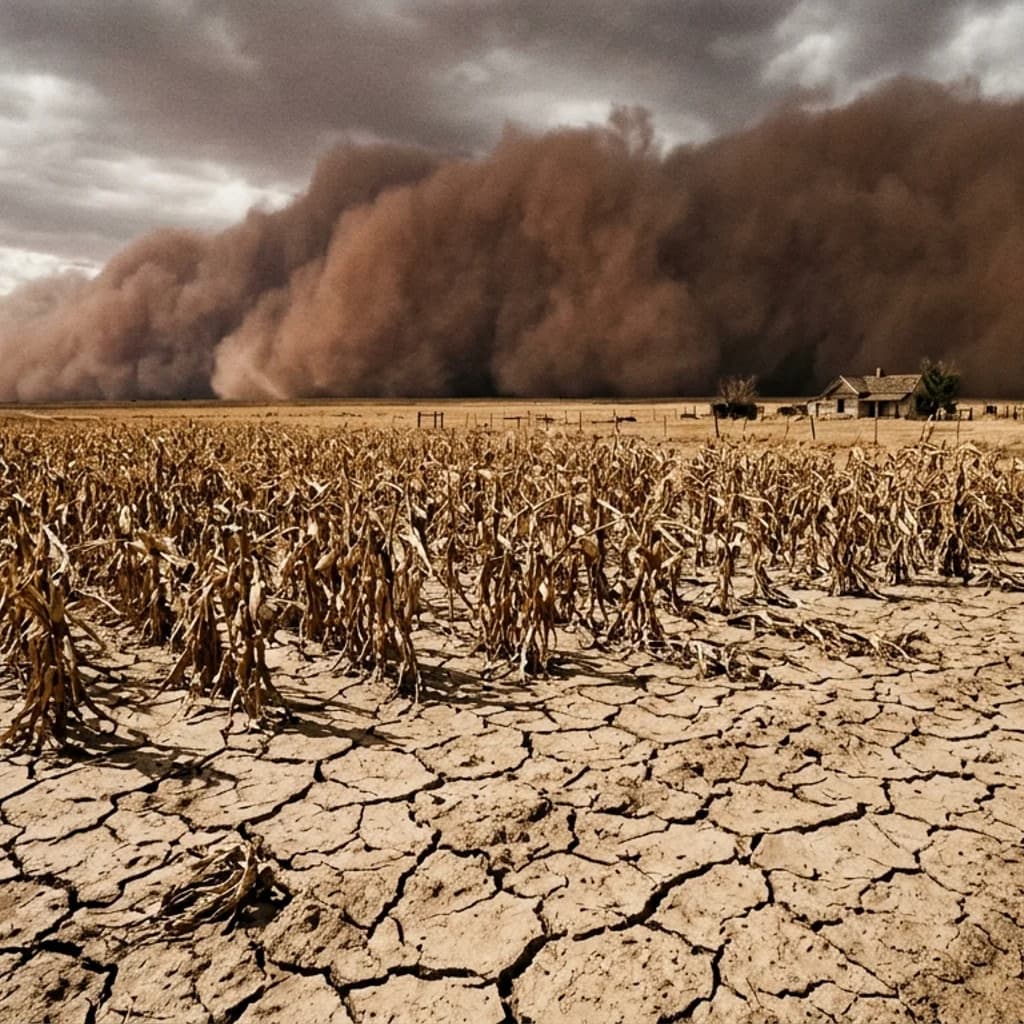
Direct physical damages—combining crop losses, port disruptions, infrastructure destruction from catastrophic flooding, and industrial slowdowns caused by power shortages—are projected by Munich Re and the Bank for International Settlements (BIS) to surpass $1.4 trillion over the next twelve months. Crucially, the economic pain is not distributed evenly; it concentrates with brutal precision along critical raw material supply chains.
The Dual Crisis of Hydropower and Manufacturing
A primary vulnerability exposed by the current drought is the global South's dependence on hydroelectric generation. As rainfall deficits drain major river catchments:
- Southeast Asian Semiconductor Disruption: In Vietnam, Malaysia, and southern China, reservoir levels at major hydroelectric installations have fallen below turbine intakes. Industrial zones hosting chip packaging, electronic assembly, and lithium-ion battery manufacturing have endured rolling power shutdowns of up to twelve hours daily.
- Panama Canal Transits Throttled: Lake Gatun's water levels have dropped to an all-time recorded low of 78.4 feet. The Panama Canal Authority has reduced daily vessel slots from thirty-six to eighteen, stranding container ships and adding an estimated $22 billion in maritime rerouting costs via Cape Horn.
- Mining Extraction Bottlenecks: Major copper and lithium extraction operations in the Chilean Atacama and Peruvian Andes require thousands of cubic meters of fresh water per day. Processing output has contracted by 14%, triggering acute deficits in battery metals.

Structural Food Inflation: The "Agflation" Spiral
Unlike manufactured durable goods, agricultural calories cannot be synthesized on demand. The global stock-to-use ratios for wheat, maize, and rice have plunged to levels not witnessed since the 2008 food riots. In developing nations where households spend upwards of 45% of income on food staples, soaring grain prices are rapidly converting ecological stress into civil unrest and political instability.
Central banks facing sovereign bond yield spikes and currency depreciation are trapped in a policy straitjacket: raising rates exacerbates government debt servicing costs without bringing a single extra bushel of wheat to market. The 2026 El Niño illustrates that physical nature, not financial liquidity, sets the ultimate ceiling on economic growth.