Geopolitical Analysis of the 2026 Iran Conflict
Geopolitical and Strategic Analysis of the 2026 Iran Conflict: Operational Dynamics, Leadership Succession, and Global Consequences.
Introduction
The commencement of coordinated military offensives against the Islamic Republic of Iran on February 28, 2026, represents a profound watershed moment in the modern geopolitical architecture of the Middle East.1 Designated as "Operation Epic Fury" by the United States and executed in parallel with Israel's "Operation Roaring Lion," the campaign signifies a definitive and violent departure from decades of diplomatic containment strategies, economic sanctions, and limited kinetic engagements.1 Unlike the targeted strikes on Iranian nuclear facilities in June 2025—which aimed primarily at degrading uranium enrichment capabilities at sites such as Esfahan, Natanz, and Fordow—the February 2026 offensive was engineered as a comprehensive decapitation and demilitarization effort designed to neutralize the regime's existential threat matrix.3 The immediate consequence of the opening salvos, most notably the targeted assassination of Supreme Leader Ayatollah Ali Khamenei alongside the decimation of the upper echelons of the Islamic Revolutionary Guard Corps (IRGC) and regular armed forces, has precipitated a catastrophic power vacuum within Tehran.1
The ramifications of this conflict extend expansively beyond the sovereign borders of the Islamic Republic, generating systemic shockwaves that threaten the foundational stability of the global order. As the combined United States and Israeli forces systematically dismantle Iran’s retaliatory infrastructure, integrated air defense networks, and proxy command centers, the theater of war has rapidly expanded to engulf the broader Persian Gulf region, the Levant, and vital global maritime chokepoints.2 The subsequent closure of the Strait of Hormuz has triggered cascading supply chain disruptions, threatening global energy markets and paralyzing the intricate logistics networks that underpin the international technology and manufacturing sectors.10 Concurrently, the conflict has exposed the structural limitations of emergent multipolar alliances, specifically the Shanghai Cooperation Organization (SCO) and the BRICS bloc, while forcing regional powers such as the Gulf Cooperation Council (GCC) states and Turkey to fundamentally, and urgently, reassess their national security postures.12
This exhaustive report provides a comprehensive geopolitical and strategic analysis of the 2026 Iran conflict. By synthesizing military developments, domestic succession dynamics, macroeconomic shocks, and shifts in the global balance of power, the analysis delineates the second and third-order consequences of the war. The core objective is to map the highly probable future scenarios facing the Iranian state, to evaluate the enduring impacts on international security, and to forecast the long-term trajectory of global economic and diplomatic stability in the wake of the regime's decapitation.
Genesis of the 2026 Conflict
: Domestic Collapse and the January Massacre
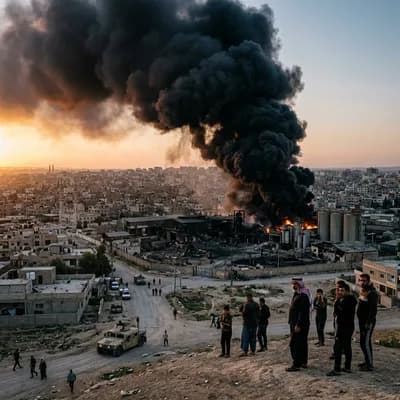
The strategic calculus that precipitated Operation Epic Fury cannot be accurately evaluated in isolation from the catastrophic domestic collapse of the Iranian state in the months immediately preceding the military intervention. The foundation for the US-Israeli kinetic campaign was laid by an unprecedented, nationwide uprising that began on December 28, 2025.15 Triggered initially by an engineered dollar shortage orchestrated by Washington—a deliberate macroeconomic pressure tactic designed to send the Iranian rial into freefall—the ensuing economic crisis rapidly metamorphosed into a systemic political rebellion demanding the total eradication of the clerical dictatorship.15
By early January 2026, the protests had achieved a scale and geographic dispersion that dwarfed all prior anti-regime mobilizations, including the significant unrest of 2022. Following a high-profile call for unified action by opposition figures, including Reza Pahlavi, the son of Iran’s last shah, an estimated 1.5 million demonstrators mobilized in Tehran alone on January 8.16 Within days, nationwide participation ballooned to approximately 5 million active protesters spread across 675 distinct locations in all 31 provinces.16 The demographics of the uprising bridged historical and socioeconomic divides, uniting the traditional merchant class (_bazaaris_), university students, labor unions, retirees, and marginalized ethnic minorities into a cohesive anti-regime bloc.15
The regime’s response to this existential domestic threat was characterized by extreme, systemic violence, resulting in what international observers and human rights organizations have termed the "January Massacre." Intelligence assessments confirm that direct, uncompromising directives from Supreme Leader Ali Khamenei and senior security officials authorized the widespread deployment of live ammunition against unarmed civilians.16 This brutality extended beyond the streets into the systematic targeting of medical facilities; security forces routinely overwhelmed hospitals in Tehran and Shiraz, executing wounded protesters directly within medical wards to prevent them from returning to the demonstrations.16
To supplement a domestic security apparatus that was rapidly becoming exhausted and increasingly fractured by internal defections, the IRGC orchestrated the importation of foreign proxy fighters. By January 15, nearly 5,000 Iraqi Shiite militiamen had been transported across the border to assist in the suppression of the Iranian populace.16 These foreign mercenaries, reportedly compensated with $600 bounties, were documented engaging in extreme abuses, including taking photographs with the bodies of victims in cities like Karaj.16
The lethality of the January crackdown was staggering and unprecedented in modern Iranian history. While initial conservative estimates from human rights organizations confirmed at least 7,000 fatalities, robust analytical models and leaked internal data suggest the actual death toll likely approached 32,000.16 This massive loss of life was compounded by the regime's systematic efforts to conceal the scale of the massacre through mass secret burials in remote locations and the abhorrent practice of extorting "bullet fees" from grieving families seeking the return of their relatives' remains.16 To obscure the ongoing atrocities from the international community, the state imposed a near-total nationwide digital and telecommunications blackout.16
However, rather than stabilizing the regime, the severity of the domestic crisis fundamentally altered the international threat perception. The regime's willingness to import foreign militias to slaughter its own citizens, combined with its total loss of domestic legitimacy and control, signaled to policymakers in Washington and Jerusalem that the Iranian leadership was both highly vulnerable and dangerously unpredictable.3 Recognizing that a desperate regime might accelerate its nuclear weaponization program or launch preemptive regional strikes to manufacture external distraction, the United States initiated a massive military buildup in the Persian Gulf, transitioning its strategic posture from containment to preemptive decapitation.16
The Failure of Diplomacy and the Nuclear Threshold
In the weeks preceding the military strikes, diplomatic efforts to avert a regional conflagration collapsed under the weight of irreconcilable strategic objectives. The United States and Iran engaged in mediated discussions in Oman on February 6, 2026, and subsequent rounds in Geneva on February 17 and 26.17 These negotiations, mediated by Omani Foreign Affairs Minister Badr Albusaidi, highlighted a fundamental disconnect. While Iranian diplomats, led by Foreign Minister Abbas Araghchi, indicated a conditional willingness to transfer Iran's 400-kilogram stockpile of highly enriched uranium to a third country in exchange for comprehensive sanctions relief, they categorically refused to discuss limitations on their ballistic missile programs or their support for the regional "Axis of Resistance".18
The United States, operating under the Trump administration's maximalist framework, presented demands that Tehran viewed as tantamount to sovereign surrender. US negotiators insisted on the total dismantlement of the Fordow, Natanz, and Esfahan nuclear facilities, the delivery of all enriched uranium to the United States, and a permanent, zero-enrichment treaty lacking any sunset clauses, while offering only minimal sanctions relief.17 The uncompromising nature of these demands, coupled with explicit US threats of military force if a deal was not reached, effectively killed the diplomatic off-ramp.17
Simultaneously, the International Atomic Energy Agency (IAEA) reported an alarming loss of continuity of knowledge regarding the Iranian nuclear program. In a confidential report circulated on February 27, the IAEA admitted it could not verify whether Iran had suspended enrichment activities following the June 2025 strikes, nor could it confirm the location, size, or composition of Iran's uranium stockpile, which included an estimated 440.9 kilograms of uranium enriched to 60 percent purity—a technical fraction away from weapons-grade.4 The IAEA noted suspicious activity, including the covering of tunnel entrances at Esfahan with soil and the erection of anti-drone cages at Natanz, suggesting covert reconstitution efforts.4 With intelligence indicating Iran could theoretically achieve 90 percent enrichment within two weeks, the diplomatic failure provided the final operational justification for Operation Epic Fury.20
Military Execution: Operations Epic Fury and Roaring Lion
The military execution of Operation Epic Fury, coupled with the Israeli Operation Roaring Lion, demonstrates a profound paradigm shift in allied force projection and joint multi-domain operations. Launched at 01:15 EST (09:45 Tehran time) on February 28, 2026, the campaign utilized the largest concentration of American airpower in the Middle East since the 2003 invasion of Iraq.1 The tactical design of the offensive mirrored the operational doctrines of Desert Storm, prioritizing the immediate decapitation of political leadership, the blinding of integrated air defense systems (IADS), and the systematic destruction of ballistic missile capabilities.1
Decapitation Strikes and the Establishment of Air Superiority
The opening salvos relied heavily on standoff munitions designed to penetrate heavily fortified airspace without risking allied pilots. This included US Tomahawk Land Attack Missiles (TLAMs) launched from naval assets such as the USS Spruance, and Israeli air-launched ballistic missiles.6 These initial strikes achieved their primary strategic objective within hours: a direct, catastrophic hit on a leadership compound in Tehran resulted in the deaths of Supreme Leader Ali Khamenei, Defense Minister Aziz Nasirzadeh, the Chief of Staff of the Armed Forces, and IRGC Commander General Mohammad Pakpour.6 This decapitation severely disrupted the central nervous system of the Iranian state, compounding the shock to a system already fractured by the domestic revolt.23
Simultaneously, a massive armada of over 200 Israeli Air Force fighter jets systematically dismantled early warning radars and air defense batteries in western Iran, effectively neutralizing the regime's surface-to-air missile (SAM) umbrella.6 By March 2, US Joint Chiefs of Staff Chairman General Dan Caine confirmed that the combined forces had achieved "local air superiority" over Iranian airspace, particularly over the capital.8 The attainment of air supremacy allowed Israeli and American aircraft to transition from expensive standoff weapons to "stand-in" munitions—direct gravity bombing runs utilizing bunker-busters—drastically increasing the lethality, sustainability, and precision of the campaign.8
Systematic Degradation of Military and Internal Security Infrastructure
The target matrix expanded rapidly to encompass the totality of Iran's military-industrial complex, with the combined US-Israeli force striking over 2,000 targets in the opening days of the war.24 Key installations destroyed included the Bid Ganeh ballistic missile facility in Tehran Province, the Malek Ashtar University Aerospace Complex (responsible for advanced IRGC aircraft design), and numerous defense industrial sites located in the densely populated Pasdaran area of Tehran.8 The campaign also prioritized the absolute annihilation of the Iranian Navy to secure global maritime corridors. Within 48 hours, US Central Command reported that the Iranian naval presence in the Gulf of Oman had been reduced to zero, following the sinking of prominent vessels such as the _IRIS Kurdistan_ and an Alvand-class frigate in Bandar Abbas.8
The operational design also explicitly targeted the apparatus of domestic repression. The combined forces executed precision strikes against the Fifth and Fifteenth Tehran Municipality Quds Basij Resistance Regional Bases, Law Enforcement Command (LEC) sites, and ten Intelligence Ministry command centers.8 By systematically degrading the regime's internal security architecture, the military campaign sought to synergize with the ongoing domestic uprising, aiming to precipitate a total collapse of state control and facilitate a regime change from within.3
Furthermore, the physical strikes were heavily augmented by sophisticated offensive cyber operations. A notable example was the compromise of BadeSaba, a widely used religious calendar application with over 5 million Iranian users. Allied cyber operators utilized the app to deliver targeted psychological messaging directly to the populace, warning that the regime would pay for its cruelty and explicitly urging civilians to rise up.25 Additional cyberattacks defaced state-run media sites like the IRNA news agency, neutralizing the regime's propaganda channels and sowing widespread confusion at the exact moment the air campaign commenced.8
The Limits of Conventional Strikes on Nuclear Infrastructure
Despite the overwhelming success of the conventional air campaign, the operation highlighted the enduring limitations of kinetic strikes against deeply buried nuclear facilities. While IDF claims suggested a systematic dismantling of nuclear infrastructure, the IAEA reported on March 2 that there was no indication of radiological consequences or significant structural damage to core installations like the Bushehr plant or the Tehran Research Reactor.8 Military briefings revealed a critical vulnerability: Chairman of the Joint Chiefs of Staff General Dan Caine noted that the underground storage and enrichment areas at Esfahan are buried too deeply for even the Massive Ordnance Penetrator (MOP) to destroy.26 Consequently, allied forces were forced to target the tunnel entrances and ventilation shafts, attempting to entomb the centrifuges rather than annihilate them.26 This physical reality underscores that while the military campaign can severely delay the nuclear program, it cannot definitively erase the technical knowledge or the deeply buried fissile material.
The Iranian Retaliation: Asymmetric Warfare and Capability Degradation
The Iranian response to the decapitation strikes revealed both the extensive pre-planning of the IRGC and the rapid degradation of its capabilities under sustained allied bombardment. The timely launch of hundreds of ballistic missiles and uninhabited aerial vehicles (UAVs) in the immediate aftermath of Khamenei's death indicates that strike authorities had been pre-delegated to regional commanders.6 This critical decentralization allowed the IRGC Aerospace Force to bypass the shattered central command in Tehran and execute pre-planned contingency operations.23
The Initial Barrages and Regional Impact
The initial retaliatory barrages on February 28 were massive in scale and designed to overwhelm regional integrated air and missile defense systems. Iran launched an estimated 150 to 200 ballistic missiles at Israel, roughly 140 at the United Arab Emirates, and 63 targeting Qatar.6 These strikes aimed to inflict severe casualties on US military personnel and disrupt civilian and energy infrastructure across the Gulf.8 Drones successfully penetrated the airspace of Saudi Arabia, striking the US Embassy in Riyadh, and executed direct hits in the heart of Dubai, shattering the long-standing illusion of Gulf invulnerability.8
The human cost of this multi-theater retaliation was significant. By early March, the United States reported six military personnel killed and 18 seriously wounded, primarily from a drone strike on Camp Arifjan in Kuwait.8 Furthermore, the intense airspace congestion and the deployment of diverse air defense systems led to tragic friendly fire incidents; US Central Command announced that Kuwaiti air defenses mistakenly shot down three US F-15E fighter jets over Kuwait on March 1, though all crew members were safely recovered.8 Across the region, civilian casualties mounted, with Israel reporting 12 dead, the UAE three, Kuwait two, and Oman one, alongside numerous injuries.27
The Degradation of the Retaliatory Infrastructure
However, the endurance of the Iranian retaliatory campaign proved highly limited. A primary strategic objective of the US-Israeli air campaign was the rapid destruction of Iranian ballistic missile launchers before the coalition depleted its own finite stockpiles of expensive interceptors.8 By March 3, the IDF assessed that approximately 300 Iranian launchers had been systematically destroyed.8
Consequently, the volume and coordination of Iranian attacks plummeted precipitously. The number of daily ballistic missile barrages against Israel dropped from twenty on February 28 to merely six by March 3, representing a staggering 70 percent decrease in offensive output.8 The inconsistency of the subsequent attacks suggests that surviving IRGC units, stripped of their leadership and facing degraded communication networks, were struggling to coordinate large-scale multi-domain operations.24 Instead of synchronized waves designed to saturate defenses, the retaliation devolved into sporadic, decentralized harassment strikes, indicating a severe erosion of Iran's strategic deterrent capabilities.24
The Post-Khamenei Succession Crisis and Future Regime Scenarios
The assassination of Ayatollah Ali Khamenei has plunged the Islamic Republic into the most severe constitutional and political crisis since its inception following the 1979 revolution. For nearly four decades, Khamenei meticulously centralized politico-religious authority, engineering a complex system of overlapping institutions designed to absorb shocks and ensure regime survival.23 However, the unprecedented decapitation of the supreme leader, alongside the simultaneous elimination of top military commanders and the ongoing physical destruction of state infrastructure, has forced a chaotic, wartime succession process.
The Paralyzed Assembly and the Rise of Mojtaba Khamenei
In the immediate vacuum created by the airstrikes, the Assembly of Experts—the 88-member clerical body constitutionally mandated to appoint, supervise, and dismiss the supreme leader—attempted to convene in the holy city of Qom.8 However, their deliberations were severely disrupted, and in some instances paralyzed, by kinetic strikes targeting government buildings and command centers in Tehran, preventing a normalized transition of power.8
Intelligence analysis indicates that the IRGC rapidly moved to dictate the outcome of the succession, heavily pressuring the Assembly to appoint Khamenei's son, Mojtaba Khamenei, as the next Supreme Leader.33 The elevation of Mojtaba Khamenei represents a profound indicator of the shifting power dynamics within the Iranian state. While lacking the traditional, rigorous religious credentials historically required for the supreme leadership, Mojtaba possesses unmatched administrative and security influence. For over two decades, he has managed the "Beit" (the Supreme Leader's Office), effectively controlling the financial, political, and coercive levers of the state, rendering the elected government a mere façade.33 Furthermore, his deep, enduring ties to the upper echelons of the IRGC command network make him the ideal, trusted candidate for the security apparatus.33
The Consolidation of the "Security Junta"
The IRGC's aggressive backing of Mojtaba signifies the crystallization of a "Security Junta." In this scenario, the theological and republican façades of the Islamic Republic are entirely subsumed by a militarized praetorian guard.23 By pushing for Mojtaba, the IRGC seeks to project an image of continuity, maintain the strict chain of command necessary for wartime survival, and prevent a fratricidal scramble for power among competing clerical and political factions.33
Mojtaba Khamenei faces a critical, existential strategic bifurcation. He can either leverage his unique religious and political authority as the "next of kin" (_vali-e dam_) to negotiate a regime-saving surrender—dismantling his father's 37-year legacy by accepting deep concessions on nuclear enrichment, missile ranges, and proxy networks to halt the bombardment—or he can double down on apocalyptic defiance, utilizing surviving asymmetric warfare capabilities to bleed the US-Israeli coalition in a protracted conflict.33
Predictive Risk Modeling: Scenarios for the Iranian State
The trajectory of the Iranian state over the coming months remains highly volatile. Based on Bayesian inference and advanced geopolitical risk modeling, three primary scenarios emerge regarding the future of the Iranian governance structure.34
Scenario Designation
Probability
Primary Strategic Driver
Second-Order Macroeconomic and Geopolitical Effects
The Security Junta
45%
The IRGC seizes formal, absolute power post-Khamenei, utilizing Mojtaba Khamenei as a continuous figurehead.
Increased regional friction; prolonged asymmetric warfare via proxy networks; total militarization of the domestic economy; persistent strikes on regional energy nodes.34
The Institutional Rebalance
35%
An elite consensus, driven by self-preservation, shifts executive power toward the elected President and the Majlis to appease the population and the West.
Softening of foreign intelligence restrictions; potential for a negotiated surrender or JCPOA 3.0; temporary stabilization of global oil markets and shipping routes.34
Systemic Fragmentation
20%
The succession process fails entirely, leading to localized civil conflict, mutinies within the armed forces, and total state collapse.
Massive refugee crisis impacting Turkey and Europe; collapse of OPEC stability; loss of command and control over nuclear and ballistic materials; rise of regional warlordism.34
The scenario of Systemic Fragmentation represents the gravest threat to global security.18 Should the central authority under Mojtaba Khamenei fail to consolidate control amidst the relentless US-Israeli bombardment and massive domestic uprisings, the state will not democratize peacefully; it will violently fracture. This balkanization would heavily resemble the civil wars in Syria or Libya, but on a vastly larger demographic and geographic scale.18 Competing IRGC factions, provincial warlords, and armed ethnic minority groups (such as Kurdish separatists in the northwest and Baloch insurgents in the southeast) would battle for territorial dominance.14
The most alarming consequence of this fragmentation would be the loss of central command and control over Iran's remaining ballistic missile stockpiles and its highly enriched uranium.18 The proliferation of 440 kilograms of 60 percent enriched uranium to rogue non-state actors, radicalized IRGC splinter groups, or transnational terrorist organizations would fundamentally and irreversibly alter the global terrorism landscape, creating a multi-generational security nightmare for the West.4
Global Macroeconomic Shockwaves
and Supply Chain Paralysis
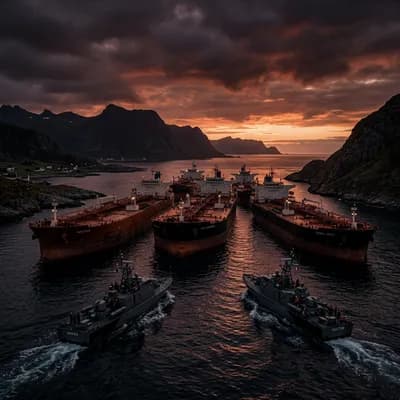
The rapid transformation of the US-Iran conflict into a widespread regional war has immediately triggered severe macroeconomic crises, primarily through Iran's weaponization of maritime geography. Within hours of the commencement of Operation Epic Fury, the IRGC executed its long-standing strategic contingency plan to close the Strait of Hormuz, universally recognized as the world's most critical energy chokepoint.10
The Energy Crisis and Asymmetrical Asian Vulnerability
The Strait of Hormuz handles approximately 20 million barrels of crude oil per day, representing roughly 20 percent of global petroleum liquids consumption and more than a quarter of total global seaborne oil trade.10 The Iranian blockade—initially enforced via the deployment of naval mines, anti-ship cruise missiles, and fast-attack craft before their eventual degradation by US naval forces—immediately stranded over 150 massive tankers carrying crude oil, liquified natural gas (LNG), and refined products in the open waters outside the strait.10 Recognizing the extreme kinetic risk to commercial vessels, major global container shipping conglomerates, including MSC, Maersk, and Hapag-Lloyd, universally suspended transits through the Persian Gulf.10
The initial market reaction was violent and immediate. Brent crude prices spiked by 10 to 13 percent in the opening hours of trading, surging from $67 to over $75 a barrel, with commodities analysts projecting a rapid escalation toward $100 per barrel should the blockade persist beyond a fortnight.10
The geographic distribution of this economic damage is starkly asymmetrical. The economies of South and East Asia, heavily reliant on the uninterrupted flow of Gulf hydrocarbons, face existential energy security threats. The structural dependency of these nations dictates that the Hormuz disruption acts not merely as a price shock, but as a fundamental physical transit shock, physically starving industrial bases of necessary fuel.40
Asian Economy
Dependency on Strait of Hormuz Energy Flows
Macroeconomic Vulnerability and Strategic Risk
Japan
Sources nearly 75% of its crude oil imports via the Strait.
High risk of industrial slowdown and severe inflation due to high reliance on imported LNG and crude; potential power grid instability.10
China
Receives approximately 33% of its total crude oil from Gulf states via the Strait; accounts for a massive share of total Hormuz flows.
Strategic reserve depletion; increased production costs affecting global export pricing; severe pressure on economic growth targets; exposure of 400,000 citizens in the UAE to physical danger.10
South Korea
Imports roughly 60% of its crude oil through the corridor.
High vulnerability in the petrochemical and heavy manufacturing sectors; export competitiveness threatened by rising input costs.10
India
Imports almost 50% of its crude oil and 60% of natural gas via the Strait.
Risk of hyper-inflation, currency depreciation, and secondary impacts on the export of rice and other vital agricultural commodities.10
Logistics and Technology Supply Chain Disruptions
Beyond the immediate energy crisis, the conflict has severely disrupted global supply chains that rely on the Middle East as a critical transcontinental transit hub. The closure of the Strait of Hormuz effectively halted ocean container traffic headed for vital regional ports such as Jebel Ali (Dubai), Khalifa (Abu Dhabi), and Dammam (Saudi Arabia).42 The forced rerouting of thousands of vessels—representing approximately 4 percent of global ship tonnage—around the Cape of Good Hope has introduced massive delays and significantly increased freight and insurance costs, exacerbating inflationary pressures globally.43 The shipping tracking firm Pole Star Global noted that Iranian-flagged vessel activity plummeted by 95.6 percent immediately following the strikes, indicating a total paralysis of normal maritime operations in the region.38
Furthermore, the militarization of Middle Eastern airspace has effectively grounded air cargo operations out of major hubs in Dubai and Doha.11 These airports serve as critical aggregators for the global electronics supply chain, particularly for high-value, low-volume goods such as semiconductors and smartphones.11 Technology giants like Samsung Electronics and SK Hynix, which utilize air freight for over 90 percent of their logistics, face impending bottlenecks as shipments bound for Europe and the Americas are stalled on the tarmac.11 The conflict underscores the extreme fragility of just-in-time manufacturing models; supply chain analysts note that even a brief seven-day military conflict generates a "lagged transmission" of cost pressures that can disrupt global manufacturing output and consumer pricing for several months.39
Shifts in the Global Balance of Power and Alliance Architectures
The 2026 Iran conflict serves as a brutal, real-world stress test for the emerging multipolar world order. The glaring inability of non-Western alliances to protect a core, strategic partner has exposed the deep structural limitations of revisionist powers, fundamentally altering the geopolitical calculations in Beijing, Moscow, and the capitals of the Global South.
China's "Impossible Bind" and the Failure of the Alternative Order
The initiation of hostilities has placed the People's Republic of China in an impossible strategic bind, transforming its highly touted proactive Middle Eastern diplomacy into a profound geopolitical vulnerability.12 Over the preceding decade, Beijing actively sought to establish its Global Security Initiative as a viable alternative to United States hegemony in the region. This strategy included proposing new security architectures in 2018, brokering the landmark 2023 Iran-Saudi rapprochement, elevating Iran to full membership in the SCO in 2023 and the BRICS bloc in 2024, and positioning itself as the largest trading partner and foreign investor across the broader MENA region.12
However, China’s deep integration into the region's economics has vastly outpaced its military power projection capabilities. When Operation Epic Fury commenced, Beijing found itself entirely incapable of defending Iran, which it viewed as its most reliable anti-Western bulwark and a vital source of heavily discounted crude oil.12 Compounding this strategic impotence is a bitter, inescapable geopolitical irony: the over 400,000 Chinese nationals residing in the UAE, alongside billions of dollars in Belt and Road Initiative infrastructure investments across the Gulf, are currently under direct threat from Iranian drones and missiles—weapons that are highly likely to have been manufactured utilizing electronic components and precursor chemicals sourced directly from Chinese markets.12
Beijing's public response has been remarkably limp and restrained, restricted to generic evacuation advisories for its citizens and formulaic, rhetorical condemnations of US and Israeli aggression.12 This crisis brutally exposes the hollow nature of security guarantees within the SCO and BRICS frameworks; neither organization possesses the hard power, logistical reach, or political cohesion to match, let alone deter, US-Israeli military dominance.45 The defining strategic question for Beijing moving forward is whether the potential collapse of the Iranian regime will force a pragmatic geopolitical pivot—abandoning its ideological commitment to propping up Tehran in favor of quietly supporting a stabilized, US-policed Gulf that guarantees the uninterrupted flow of the hydrocarbons upon which the Chinese economy desperately relies.12
Russia's Opportunism and the "Unreliable Ally" Paradigm
For the Russian Federation, the decapitation of the Iranian leadership and the systematic destruction of its military-industrial complex represents a severe blow to its anti-Western coalition, further cementing Moscow's growing international reputation as a highly unreliable ally.12 Preoccupied and severely depleted by its protracted, grinding war of aggression in Ukraine, the Kremlin demonstrated neither the political will nor the military bandwidth to intervene on Tehran's behalf.12 When the strikes commenced, President Vladimir Putin offered merely verbal sympathy and formal condolences regarding the death of Khamenei, echoing previous, glaring Russian failures to defend key partners in Syria (the fall of Assad in 2024), Venezuela (the apprehension of Maduro), and Armenia (during the Nagorno-Karabakh conflicts).12
Despite the long-term strategic loss of a vital partner that supplied critical UAV and ballistic missile technology for the Ukrainian theater, Moscow's immediate response is characterized by cynical strategic hedging.12 The Kremlin stands to reap significant short-term economic benefits from the conflict. The rapid spike in global oil prices directly replenishes Russia's heavily sanctioned and depleted war chest, while the massive conflagration in the Middle East effectively distracts Western media, diplomatic focus, and military resources away from Ukraine.12
For Kyiv, the war generates a paradoxical and highly anxious reaction. There is a deep, palpable sense of schadenfreude at witnessing the destruction of the Iranian factories producing the Shahed drones that have terrorized Ukrainian cities for years.12 However, this is heavily counterbalanced by acute anxiety that diverted US attention, and more importantly, the diversion of critically scarce global supplies of air-defense interceptors to the Middle East, will leave Ukraine highly vulnerable to renewed Russian offensives.12
European Division and Western Reactions
In Europe, the conflict has exposed a profound strategic vacuum and deep internal divisions within the European Union.12 The EU's historical approach to Iran, centered almost entirely on nuclear diplomacy and incremental containment, has been rendered instantly obsolete. The bloc is currently paralyzed by three competing strategic logics: a desire by some member states to uphold international law and condemn preemptive military strikes (fearing accusations of Western hypocrisy from the Global South); the stark necessity of maintaining transatlantic cohesion with the United States in an era of extreme geopolitical volatility; and the quiet, unofficial hope among many European capitals that the repressive Iranian regime will finally be dismantled, thereby neutralizing a major state sponsor of terror.12 Ultimately, the EU finds itself sidelined, reduced to managing the economic fallout of the Hormuz blockade and bracing for potential migratory pressures, possessing no unified military or diplomatic leverage to shape the outcome of the war.
Elsewhere in the West, reactions are mixed. The United Kingdom's Labour government, led by Prime Minister Keir Starmer, views the military action with deep skepticism, drawing heavy historical comparisons to the disastrous 2003 Iraq invasion and fearing prolonged regional destabilization without clear, achievable objectives.12 In contrast, Argentina's President Javier Milei has emerged as the most vocal supporter of the US-Israeli strikes in Latin America, driven both by his deep alignment with Washington and Argentina's own traumatic history of Iranian-linked terrorism, specifically the 1992 Israeli embassy bombing and the 1994 AMIA Jewish Community Center bombing in Buenos Aires, which killed 85 people.12 Spain's Prime Minister Pedro Sánchez actively defied the US by denying access to jointly operated Spanish airbases, a move largely driven by domestic political pressures to placate the left wing of his coalition, resulting in threats of economic retaliation from the Trump administration.12
The GCC and Regional Security Architectures: From Neutrality to Conflict
The strategic posture of the Gulf Arab states has undergone a violent and rapid evolution since the outbreak of hostilities. Initially, nations such as Saudi Arabia, Qatar, the UAE, and Oman positioned themselves as "de-escalation entrepreneurs".18 Driven by a pragmatic risk assessment that favored a weakened but predictable Iran over a fragmented and chaotic state, the GCC engaged in intense backchannel diplomacy.18 They repeatedly warned Washington of the uncontrollable second-order effects of military intervention, such as widespread infrastructure damage, cyberattacks, and massive refugee flows.18 Prior to the war, these states pursued a "zero-conflict" policy, navigating a delicate détente with Tehran following the devastating 2019 Iranian attacks on Saudi oil facilities.49
This carefully calibrated calculus was utterly shattered when Iran, utilizing its pre-delegated strike authorities, launched massive drone and missile salvos against GCC energy infrastructure and US military installations hosted on Gulf soil.18 The targeting of the UAE—including strikes that successfully breached the air defenses of Dubai—forced Abu Dhabi to abandon its "gentlemen's agreement" with Tehran.29 The sheer volume of incoming projectiles—with the UAE Ministry of Defense reporting over 174 ballistic missiles and 689 drones launched at their territory alone by early March—forced the Gulf states to abandon their neutrality and integrate into active, defensive combat operations alongside US forces.9
The illusion of Gulf neutrality has evaporated. The Gulf states now recognize that Iranian military doctrine views them as legitimate, high-value targets in any confrontation with the West. The outcome of the war will dictate the future security architecture of the Arabian peninsula. If the US successfully dismantles the Iranian threat, the GCC may emerge more secure, firmly integrated under a comprehensive US-Israeli defense umbrella. Conversely, if Iran fragments, the Gulf states face the terrifying prospect of endless asymmetric warfare from rogue IRGC factions and proxy militias operating without the restraint or predictable calculus of a central state apparatus.18
Turkey's Fear of Contagion and Border Security
For nations contiguous to the conflict zone, the primary concern is the socio-political contagion stemming from a collapsing Iranian state. Turkey, sharing a porous 534-kilometer border with Iran and already hosting over 3.5 million Syrian refugees, views the potential influx of millions of Iranian and Afghan migrants fleeing the bombardment as an existential threat to its domestic social stability.14
Furthermore, Ankara is deeply alarmed that the destruction of central authority in Tehran will embolden Kurdish separatist groups. Specifically, Turkish officials fear that a power vacuum will allow the Kurdistan Free Life Party (PJAK)—the Iranian wing of the PKK, which Turkey considers its primary national security threat—to establish safe havens and launch cross-border insurgencies.14 In response to this imminent threat, Turkish policymakers and military leaders have openly discussed the necessity of establishing military buffer zones deep within Iranian territory to contain the fallout and manage the humanitarian response externally.50
The Axis of Resistance and Asymmetric Reconstitution
The cornerstone of Iran's regional dominance over the past two decades has been the "Axis of Resistance"—a vast, heavily armed network of proxy militias strategically positioned across the Levant, Iraq, and the Arabian Peninsula. The decapitation of the Iranian leadership and the destruction of IRGC Quds Force command centers in Tehran serve as the ultimate stress test for the autonomy and resilience of this network. The long-held Western assumption that the elimination of Tehran's financial and logistical support would instantly neutralize these groups has proven fundamentally flawed; many of these organizations have evolved into sophisticated, deeply entrenched politico-military entities capable of highly lethal autonomous action.52
Hezbollah: The Calculus of Preemption
Lebanese Hezbollah represents the crown jewel and most capable entity within the Iranian proxy network. Following the crippling US-Israeli strikes on Iran, Hezbollah immediately violated the November 2024 Israel-Hezbollah ceasefire agreement, launching rockets and drones targeting the IDF Mishmar al Karmel missile defense site in Haifa, northern Israel.8 This rapid escalation is rooted in a grim strategic reality for the group. The recent collapse of the Assad regime in Syria in late 2024 permanently severed the physical "land bridge" that supplied Hezbollah with advanced weaponry from Tehran.54 Now, with its primary patron under existential attack and the IRGC leadership decimated, Hezbollah faces the prospect of fighting an isolated, unsupported war of attrition.
The group's decision to strike Israel indicates a strict doctrine of preemption. By initiating hostilities, Hezbollah aims to force Israel into a complex two-front war, seeking to relieve military pressure on Iran before the IDF can pivot its full, undivided military apparatus toward Lebanon.54 Israel's response has been devastating and swift, transitioning immediately from air defense to targeted decapitation strikes. On March 1 and 2, the IDF heavily bombed Beirut’s southern suburbs, assassinating key Hezbollah figures including Hussein Mekeld, the head of intelligence, and Mohammad Raad, a senior ideologue and parliamentary leader.2 Furthermore, the IDF initiated "forward defense maneuvers" into southern Lebanon, signaling active preparations for a comprehensive ground invasion designed to permanently neutralize the Hezbollah threat north of the Litani River.8 Despite massive leadership attrition dating back to the killing of Hassan Nasrallah in 2024, Hezbollah's decentralized command structure under Naim Qassem ensures it remains a lethal, independent threat capable of projecting power into the Mediterranean and inflicting heavy casualties on advancing ground forces.52
The Houthi Dilemma and the Iraqi Militias
In Yemen, the Houthi movement (Ansar Allah) confronts a highly complex strategic dilemma. While leader Abdel-Malik al-Houthi issued televised rhetorical statements affirming solidarity with Iran, the group's kinetic actions have been markedly restrained compared to Hezbollah.2 This hesitation stems from acute domestic vulnerability. The internationally recognized Yemeni government, sensing the disruption of Iranian support, is actively preparing a major ground offensive to retake the Houthi-controlled capital of Sanaa.54 Engaging the full weight of the US military to defend Iran would invite catastrophic retaliation that could end the Houthis' territorial control in Yemen. Consequently, the Houthis have sought to deflect the immediate burden of the war, though intelligence assessments warn they retain the capability to severely disrupt Red Sea shipping or target the vital US military installation at Camp Lemonnier in Djibouti, which hosts over 4,000 US personnel.9
Conversely, Iranian-backed Iraqi militias, such as Kataib Hezbollah and Saraya Awliya al-Dam, have seamlessly integrated into the retaliatory campaign, claiming multiple drone and rocket attacks against US forces stationed at the Baghdad Airport and threatening vital US installations in Jordan.2 These militias are deeply embedded within the Iraqi state security forces, rendering their eradication virtually impossible without triggering a broader, devastating civil war in Iraq.14 The persistent threat posed by these groups underscores a critical reality: the proxy network must be treated as a distributed, autonomous threat matrix that does not require central Iranian command to remain violently active against Western interests.53
Humanitarian Catastrophe and the Erosion of Civil Society
The strategic, macroeconomic, and military analysis of the 2026 conflict must not obscure the profound humanitarian catastrophe rapidly unfolding within Iran. The civilian population, already deeply traumatized by the brutal state repression of the January Massacre, is now bearing the catastrophic externalities of an unprecedented aerial bombardment.56
By early March, humanitarian organizations and the Iranian Red Crescent Society recorded over 787 confirmed civilian deaths directly attributable to the air campaign, with strikes affecting 153 cities and villages.57 While US and Israeli forces heavily utilize precision-guided munitions to target military and regime infrastructure, the deliberate, deep integration of IRGC bases and defense industrial sites within densely populated urban centers—such as the Pasdaran neighborhood in Tehran—has rendered severe collateral damage unavoidable.8 Devastating mass-casualty incidents, such as the destruction of a primary school in Minab in southern Iran, highlight the lethal proximity of civilian life to the theater of war and have drawn sharp condemnation from the UN High Commissioner for Human Rights.57 Similar tragedies have occurred regionally, such as the deaths of nine civilians in Beit Shemesh, Israel, from Iranian missile strikes, and the displacement of nearly 94,000 residents in Lebanon.57
The basic infrastructure of the Iranian state is fracturing under the incredible strain. Hospitals, already overwhelmed by the thousands of casualties from the January uprisings, lack the basic medical supplies, clean water, and stable power necessary to treat the victims of high-explosive ordnance.58 Essential services, including water purification, electricity generation, and telecommunications, are failing intermittently across major urban centers like Tehran, Isfahan, Shiraz, and Karaj.58 Airports and schools have been indefinitely shuttered, trapping populations in active war zones.58
The physical destruction of the country is compounded by sophisticated psychological warfare operations. Initiatives such as the hacking of the BadeSaba religious application deliver direct anti-regime messaging to millions of citizens, deliberately sowing confusion and amplifying domestic terror while air raid sirens sound overhead.25 For the Iranian populace, the conflict presents a horrific, inescapable paradox. The decapitation of the supreme leader and the systemic dismantling of the IRGC's coercive apparatus represent the sudden realization of the revolutionary goals articulated during the January protests.33 Yet, this longed-for liberation is being delivered via the total physical destruction of the national infrastructure, carrying the imminent, terrifying threat of state balkanization, civil war, and economic ruin.56 The psychological terrain of the Iranian public is currently defined by a simultaneous euphoria at the collapse of the clerical dictatorship and a paralyzing dread that the nation will inevitably disintegrate into the warlordism and bloody anarchy that consumed neighboring Iraq and Afghanistan.56
Conclusion
The initiation of Operation Epic Fury and the subsequent, rapid decapitation of the Iranian leadership have fundamentally and irreversibly altered the strategic architecture of the Middle East. The long-standing era of containment—characterized by cyclical, ultimately fruitless nuclear negotiations, incremental economic sanctions, and the uneasy tolerance of an ever-expanding Iranian proxy network—has been violently concluded. The 2026 conflict vividly demonstrates the terrifying efficacy of unrestrained US and Israeli airpower when deliberately decoupled from the pursuit of diplomatic accommodation, effectively dismantling in mere days a military-industrial complex that Tehran spent four decades meticulously constructing.
However, the rapid tactical successes of the coalition campaign mask profound, highly dangerous strategic ambiguities regarding the "day after." The removal of Ayatollah Ali Khamenei has not inherently guaranteed the pacification or democratization of the Iranian state. Instead, it has catalyzed a precarious, wartime succession crisis, highly likely to result in the ascension of a militarized Security Junta orchestrated by the IRGC under the nominal, continuous leadership of Mojtaba Khamenei. Should this junta manage to consolidate coercive control amidst the ruins of the state, it will undoubtedly pursue a hyper-nationalist, deeply adversarial foreign policy, utilizing its surviving asymmetric capabilities to inflict continuous economic and physical pain on global maritime trade and the Gulf Arab states. Conversely, if the regime fails to maintain internal cohesion, the resulting systemic fragmentation poses an even greater global threat, raising the specter of a massive refugee crisis impacting Europe and Turkey, unending civil war, and the catastrophic, uncontrolled proliferation of highly enriched uranium and ballistic missile technology to non-state actors.
The global consequences of this conflict are equally transformative and far-reaching. The extreme vulnerability of the Asian energy supply chain has been starkly illuminated, highlighting the fragility of a global economy reliant on a single maritime chokepoint at the Strait of Hormuz. Furthermore, the war has severely discredited the geopolitical pretensions of revisionist powers; China's inability to protect its strategic infrastructure investments or defend its primary anti-Western partner exposes the profound limitations of the SCO and BRICS as genuine security counterweights to American military hegemony.
Ultimately, the 2026 Iran conflict signals a definitive return to an era of overt, great-power military interventionism in the Middle East. While the destruction of the Iranian theocracy removes a primary, historical engine of regional instability, the resulting immense power vacuum guarantees that the Middle East will remain deeply volatile for a generation. The international community must now navigate a highly perilous transition, actively managing the immediate macroeconomic shocks of the Hormuz blockade while simultaneously preparing to contain the unpredictable, autonomous violence of an orphaned Axis of Resistance and the potential, catastrophic disintegration of the Iranian nation-state.
Works Cited
- 01.Weapons of ‘Epic Fury’: Fighters, Missiles, and ‘Special Capabilities’, accessed March 4, 2026, https://www.airandspaceforces.com/weapons-of-epic-fury-fighters-missiles-and-special-capabilities/
- 02.The Houthis Wait in the Wings - Sana'a Center For Strategic Studies, accessed March 4, 2026, https://sanaacenter.org/publications/analysis/26502
- 03.Gauging the Impact of Massive U.S.-Israeli Strikes on Iran | Council on Foreign Relations, accessed March 4, 2026, https://www.cfr.org/articles/gauging-the-impact-of-massive-u-s-israeli-strikes-on-iran
- 04.Iran Update, February 27, 2026, accessed March 4, 2026, https://understandingwar.org/research/middle-east/iran-update-february-27-2026/
- 05.UN nuclear watchdog says it's unable to verify whether Iran has suspended all uranium enrichment - PBS, accessed March 4, 2026, https://www.pbs.org/newshour/world/un-nuclear-watchdog-says-its-unable-to-verify-whether-iran-has-suspended-all-uranium-enrichment
- 06.The US-Israel campaign in Iran, accessed March 4, 2026, https://www.iiss.org/online-analysis/online-analysis/2026/02/the-us-israel-campaign-in-iran/
- 07.US-Israel strikes on Iran: February/March 2026 - The House of Commons Library, accessed March 4, 2026, https://commonslibrary.parliament.uk/research-briefings/cbp-10521/
- 08.Iran Update Morning Special Report, March 2, 2026 | ISW, accessed March 4, 2026, https://understandingwar.org/research/middle-east/iran-update-morning-special-report-march-2-2026/
- 09.Iran Update Evening Special Report, March 2, 2026, accessed March 4, 2026, https://understandingwar.org/research/middle-east/iran-update-evening-special-report-march-2-2026/
- 10.The Strait of Hormuz crisis and its devastating impact on Asia-Gulf trade, accessed March 4, 2026, https://www.seatrade-maritime.com/tankers/the-strait-of-hormuz-crisis-and-its-devastating-impact-on-asia-gulf-trade
- 11.Middle East Conflict Paralyzes Korean Tech Export Routes, accessed March 4, 2026, https://www.chosun.com/english/industry-en/2026/03/05/J7AJ4WSYEVEV3KYRWN27VOSLHY/
- 12.Experts react: How the world is responding to the US-Israeli war with ..., accessed March 4, 2026, https://www.atlanticcouncil.org/dispatches/experts-react-how-the-world-is-responding-to-the-us-israeli-war-with-iran/
- 13.Emirates Policy Center | Strategic Isolation: Reasons and ... - epc.ae, accessed March 4, 2026, https://www.epc.ae/details/featured/strategic-isolation-reasons-and-consequences-of-iran-s-absence-from-international-and-regional-tracks
- 14.Experts react: How the US war with Iran is playing out around the Middle East, accessed March 4, 2026, https://www.atlanticcouncil.org/dispatches/experts-react-how-the-us-war-with-iran-is-playing-out-around-the-middle-east/
- 15.NCRI-US Details Iranian Regime's Pre‑Planned Crackdown and IRGC Role in January Massacre | National Council of Resistance of Iran - US Representative Office, accessed March 4, 2026, https://www.ncrius.org/ncri-us-details-iranian-regimes-pre-planned-crackdown-and-irgc-role-in-january-massacre.html
- 16.2025–2026 Iranian protests - Wikipedia, accessed March 4, 2026, https://en.wikipedia.org/wiki/2025%E2%80%932026\_Iranian\_protests
- 17.Iran Update, February 26, 2026 | ISW, accessed March 4, 2026, https://understandingwar.org/research/middle-east/iran-update-february-26-2026/
- 18.Scenarios for Iran's Future and Implications for GCC Security ..., accessed March 4, 2026, https://www.stimson.org/2026/scenarios-for-irans-future-and-implications-for-gcc-security/
- 19.Why war may no longer be the worst outcome for Tehran | Iran International, accessed March 4, 2026, https://www.iranintl.com/en/202602191760
- 20.Live Updates: Hegseth says U.S. "just getting started" in Iran war as conflict intensifies and spreads, accessed March 4, 2026, https://www.cbsnews.com/live-updates/us-iran-war-israel-strikes-tehran-lebanon-day-5-al-udeid-targeted/
- 21.Operation Epic Fury | U.S. Department of War - War.gov, accessed March 4, 2026, https://www.war.gov/Spotlights/Operation-Epic-Fury/
- 22.‘Hardest Hits Are Yet to Come’: B-1s Bomb Iran as Fighters Keep Flowing into Theater, accessed March 4, 2026, https://www.airandspaceforces.com/b-1-bomb-iran-fighters-hardest-hits/
- 23.The Next 72 Hours in Iran: The Post-Khamenei Order, Command Continuity, and Targeting Strategy, accessed March 4, 2026, https://www.hudson.org/missile-defense/next-72-hours-iran-post-khamenei-order-command-continuity-targeting-strategy-can-kasapoglu
- 24.Iran Update Evening Special Report, March 1, 2026 | ISW, accessed March 4, 2026, https://understandingwar.org/research/middle-east/iran-update-evening-special-report-march-1-2026/
- 25.How Will Cyber Warfare Shape the U.S.-Israel Conflict with Iran?, accessed March 4, 2026, https://www.csis.org/analysis/how-will-cyber-warfare-shape-us-israel-conflict-iran
- 26.Did Iran's Nuclear and Missile Programs Pose an Imminent Threat? No., accessed March 4, 2026, https://www.armscontrol.org/issue-briefs/2026-03/did-irans-nuclear-and-missile-programs-pose-imminent-threat-no
- 27.2026 Iran conflict - Wikipedia, accessed March 4, 2026, https://en.wikipedia.org/wiki/2026\_Iran\_conflict
- 28.U.S. death toll in Iran war rises to 6 as Trump says campaign could last 5 weeks, accessed March 4, 2026, https://www.cbsnews.com/live-updates/iran-us-war-day-3-american-deaths-israel-gulf-allies-hit-missile-strikes/
- 29.The Gulf that emerges from the Iran war will be very different - Atlantic Council, accessed March 4, 2026, https://www.atlanticcouncil.org/dispatches/the-gulf-that-emerges-from-the-iran-war-will-be-very-different/
- 30.OPINION - How will Khamenei's death impact the balance of power in Iran?, accessed March 4, 2026, https://www.aa.com.tr/en/middle-east/opinion-how-will-khameneis-death-impact-the-balance-of-power-in-iran/3849914
- 31.After Khamenei: What Iran, and the World, Face Next, accessed March 4, 2026, https://time.com/7381954/iran-ayatollah-khamenei-trump-israel/
- 32.Post-Khamenei Iran: Succession race widens as decentralized system sustains war, accessed March 4, 2026, https://www.iranintl.com/en/202603020285
- 33.A wartime succession in Iran: why the IRGC backed Mojtaba ..., accessed March 4, 2026, https://www.iranintl.com/en/202603048311
- 34.The Iranian Succession Crisis - Sovereign Security & Financial Forensics 2026, accessed March 4, 2026, https://debuglies.com/2026/01/31/the-iranian-succession-crisis-sovereign-security-financial-forensics-2026/
- 35.The Blogs: Iran's Islamic Regime Must Surrender to Avoid Total Obliteration | Neil Drao, accessed March 4, 2026, https://blogs.timesofisrael.com/irans-islamic-regime-must-surrender-to-avoid-total-obliteration/
- 36.What is the strait of Hormuz and why is it crucial for oil supplies?, accessed March 4, 2026, https://www.theguardian.com/business/2026/mar/01/us-israel-strikes-iran-oil-price
- 37.US-Iran war sends shockwaves! Most crude via Strait of Hormuz heads to China, India - how vulnerable are they after closure?, accessed March 4, 2026, https://timesofindia.indiatimes.com/business/india-business/us-iran-war-sends-shockwaves-most-crude-via-strait-of-hormuz-heads-to-china-india-how-vulnerable-are-they-after-closure/articleshow/129020947.cms
- 38.How US-Iran Conflict is Reshaping Global Supply Chains, accessed March 4, 2026, https://supplychaindigital.com/news/us-iran-reshaping-global-supply-chains
- 39.Supply Chain Scenario Analysis: Global Manufacturing Impacts of a Short vs. Prolonged U.S. - Iran Conflict, accessed March 4, 2026, https://logisticsviewpoints.com/2026/03/04/supply-chain-scenario-analysis-global-manufacturing-impacts-of-a-short-vs-prolonged-u-s-iran-conflict/
- 40.Strait of Hormuz shutdown: Is India staring at an energy crisis?, accessed March 4, 2026, https://www.indiatoday.in/business/story/strait-of-hormuz-closure-is-indias-energy-lifeline-at-risk-explained-2877313-2026-03-04
- 41.'Will set on fire any ship that passes through': Iran shuts down Strait of Hormuz - Why it matters, accessed March 4, 2026, https://timesofindia.indiatimes.com/business/international-business/middle-east-crisis-global-oil-markets-on-edge-as-iran-closes-strait-of-hormuz-why-it-matters/articleshow/128954824.cms
- 42.The Impacts of the Iran Attack on Supply Chains and Global Business - ISM, accessed March 4, 2026, https://www.ismworld.org/supply-management-news-and-reports/news-publications/inside-supply-management-magazine/blog/2026/2026-03/the-impacts-of-the-iran-attack-on-supply-chains-and-global-business/
- 43.Supply chain disruptions from the Iran war could raise prices for drugs, electronics and more, accessed March 4, 2026, https://apnews.com/article/iran-war-supply-chain-disruption-8f262bb210710b7509221a3dccf787c9
- 44.Iran's first-ever SCO military exercise solidifies ties with China and Russia | Merics, accessed March 4, 2026, https://merics.org/en/comment/irans-first-ever-sco-military-exercise-solidifies-ties-china-and-russia
- 45.Strategic patience: How China navigates the Iran war - ThinkChina, accessed March 4, 2026, https://www.thinkchina.sg/politics/strategic-patience-how-china-navigates-iran-war
- 46.Russia struggles to find a response to U.S.–Israel attack on Iran, accessed March 4, 2026, https://www.prio.org/comments/1865
- 47.War in the Middle East: What implications for the EU and the world? | European Union Institute for Security Studies, accessed March 4, 2026, https://www.iss.europa.eu/publications/commentary/war-middle-east-what-implications-eu-and-world
- 48.Why are Middle Eastern governments lobbying against a US attack on Iran?, accessed March 4, 2026, https://www.chathamhouse.org/2026/02/why-are-middle-eastern-governments-lobbying-against-us-attack-iran
- 49.Saudi Arabia's Break With Interventionism - New Lines Magazine, accessed March 4, 2026, https://newlinesmag.com/essays/saudi-arabias-break-with-interventionism/
- 50.Turkey faces economic, security and migration risks amid Iran war, experts warn, accessed March 4, 2026, https://www.turkishminute.com/2026/03/02/turkey-faces-economic-security-and-migration-risks-amid-iran-war-experts-warn/
- 51.How is Turkey responding to the US-Israel-Iran war?, accessed March 4, 2026, https://www.thenationalnews.com/news/mena/2026/03/04/how-is-turkey-responding-to-the-us-israel-iran-war/
- 52.We Bombed the Wrong Target, accessed March 4, 2026, https://smallwarsjournal.com/2026/03/02/we-bombed-the-wrong-target/
- 53.Iran Update - 1 March 2026: What Khamenei's Death Changes | The Chertoff Group, accessed March 4, 2026, https://chertoffgroup.com/situation-report-iran-u-s-israeli-military-operations/
- 54.Analysis: Khamenei’s killing leaves Iran’s ‘axis’ in disarray as war widens, accessed March 4, 2026, https://www.aljazeera.com/features/2026/3/2/hold-analysis-khameneis-killing-leaves-irans-axis-in-disarray
- 55.Iran’s Favorite Proxy Is Not What It Once Was, accessed March 4, 2026, https://www.realclearworld.com/2026/03/04/irans\_favorite\_proxy\_is\_not\_what\_it\_once\_was\_1168378.html
- 56.Fear And Hope In Iran Amid US-Israeli Bombardment, accessed March 4, 2026, https://www.rferl.org/a/iran-israel-us-tehran-farda-/33693302.html
- 57.Middle East crisis plays out worst fears; talks only way out | OHCHR, accessed March 4, 2026, https://www.ohchr.org/en/press-briefing-notes/2026/03/middle-east-crisis-plays-out-worst-fears-talks-only-way-out
- 58.As US-Israel war intensifies, Iran faces humanitarian crisis, accessed March 4, 2026, https://www.newarab.com/news/us-israel-war-intensifies-iran-faces-humanitarian-crisis