High tech tools are not the best survival tools.
Analyzing why mechanical simplicity, physical durability, and manual skills outperform electronic gadgets in long term survival scenarios.
The Illusion of Technological Superiority
In a societal collapse or severe environmental crisis, the instinct of many modern citizens is to purchase advanced devices. Solar chargers, global positioning system receivers, electronic water purifiers, and battery powered communication tools dominate modern emergency preparedness displays. This focus on electronics creates a false sense of security. Modern devices are engineered for a stable society supported by global logistics, electrical grids, and dry storage environments. When these background structures fail, the vulnerabilities of electronic equipment become clear. A survival scenario requires tools that operate reliably under extreme physical stress without external support. True preparedness relies on mechanical simplicity and manual skills.
The marketing of high tech gear often overstates its utility in real emergencies. Retailers show images of individuals using satellite communicators in pristine wilderness settings. However, these scenarios do not represent the harsh realities of a long term grid down situation. In a prolonged disaster, there are no retail stores to replace broken parts, no customer service lines to troubleshoot software glitches, and no stable electricity supply to keep batteries charged. The user is left with a piece of plastic and metal that cannot perform its intended function. By placing faith in complex systems, people neglect the simple, proven tools that have kept humans alive for thousands of years.
The Vulnerability of Integrated Circuits
Modern electronic tools depend on silicon microprocessors and integrated circuits. These components are highly sensitive to environmental factors. Exposure to moisture, dust, and temperature swings can cause short circuits. Corrosion occurs rapidly when copper paths on circuit boards are exposed to humidity. Furthermore, high tech tools are vulnerable to electromagnetic pulses and static electricity. A single electrostatic discharge from clothing can destroy the logic gates of a processor, rendering a device permanently broken. Unlike mechanical devices, electronic failures are invisible and impossible to diagnose without specialized diagnostic equipment. A tool that cannot be diagnosed or repaired in the field is not a reliable survival tool.
The manufacturing process of integrated circuits requires clean rooms, ultra pure chemicals, and precise photolithography. This means that once a chip is damaged, it cannot be fixed or replaced in a post collapse environment. There are no local alternatives. If a resistor burns out or a capacitor leaks, the tool is dead. In contrast, mechanical tools are governed by classical physics. A broken spring, a loose screw, or a cracked housing can be observed with the naked eye. A survivor can often find a way to patch, bind, or forge a mechanical replacement, restoring the tool to working order.
- Integrated circuits are vulnerable to humidity, dust, and electrostatic events.
- Electronic failures cannot be fixed without industrial equipment and clean rooms.
- Microscopic components suffer from rapid corrosion when exposed to damp air.
- Diagnostic testing of microchips is impossible without specialized power sources.
The Energy Reliance and Battery Bottleneck
Every electronic tool has a fundamental weakness: its energy source. Rechargeable batteries, such as lithium ion cells, degrade over time. Their energy storage capacity drops when exposed to freezing cold or extreme heat. Solar panels are often suggested as a solution, but they are fragile and inefficient. Cloud cover, dust accumulation, and physical scratches reduce their power generation. Moreover, solar charging systems introduce more points of failure, including wires, charge regulators, and connectors. If a single wire breaks or a port corrodes, the entire system is disabled. A survivor who relies on batteries is tied to a fragile energy system, whereas a survivor with manual tools is completely independent.
Furthermore, lithium batteries pose safety risks in survival scenarios. If a battery is punctured during a fall or damaged by heat, it can experience thermal runaway, venting toxic gases and causing fires. This risk is unacceptable when shelter and dry gear are limited. The shelf life of even the best lithium cells is limited to a few years. After this period, they lose their ability to hold a charge, regardless of how carefully they are stored. Manual tools do not have an expiration date. A crosscut saw or an axe will wait in a shed for decades and perform immediately when needed.
Complexity and the Lack of Local Repairability
The complexity of high tech equipment is its greatest liability. A modern electronic water purifier uses ultraviolet light and electric pumps to remove pathogens. This process requires sensors, power converters, and microprocessors. If the pump motor burns out or the ultraviolet bulb cracks, the device is useless. It cannot be repaired with local materials. In contrast, a low tech gravity filter uses sand, charcoal, and gravel to filter water. If the container cracks, it can be patched with tree sap or clay. If the filter media becomes clogged, it can be replaced with fresh charcoal from a fire. Simple tools allow the user to maintain and repair them using materials found in the natural environment.
This difference in repairability is the difference between life and death. When a high tech tool breaks, the user must discard it. This creates a state of dependency on industrial manufacturing. Low tech tools, however, promote self reliance. They are designed with open mechanical systems. Their parts are large enough to be manipulated with basic hand tools. A leather seal on a manual water pump can be replaced with a piece of animal hide. A wooden handle on a hammer can be carved from a hickory branch. This accessibility ensures that the tools remain functional long after the global economy has ceased to function.
- Ultraviolet filters require rare bulbs and fragile glass housings that break easily.
- Gravity filtration systems use natural elements that are easily sourced in the wild.
- Mechanical pumps can be disassembled and cleaned with simple lubrication.
- Electronic sensors can disable a device due to calibration errors, even if the filter is clean.
The Physical Science of Manual Tools
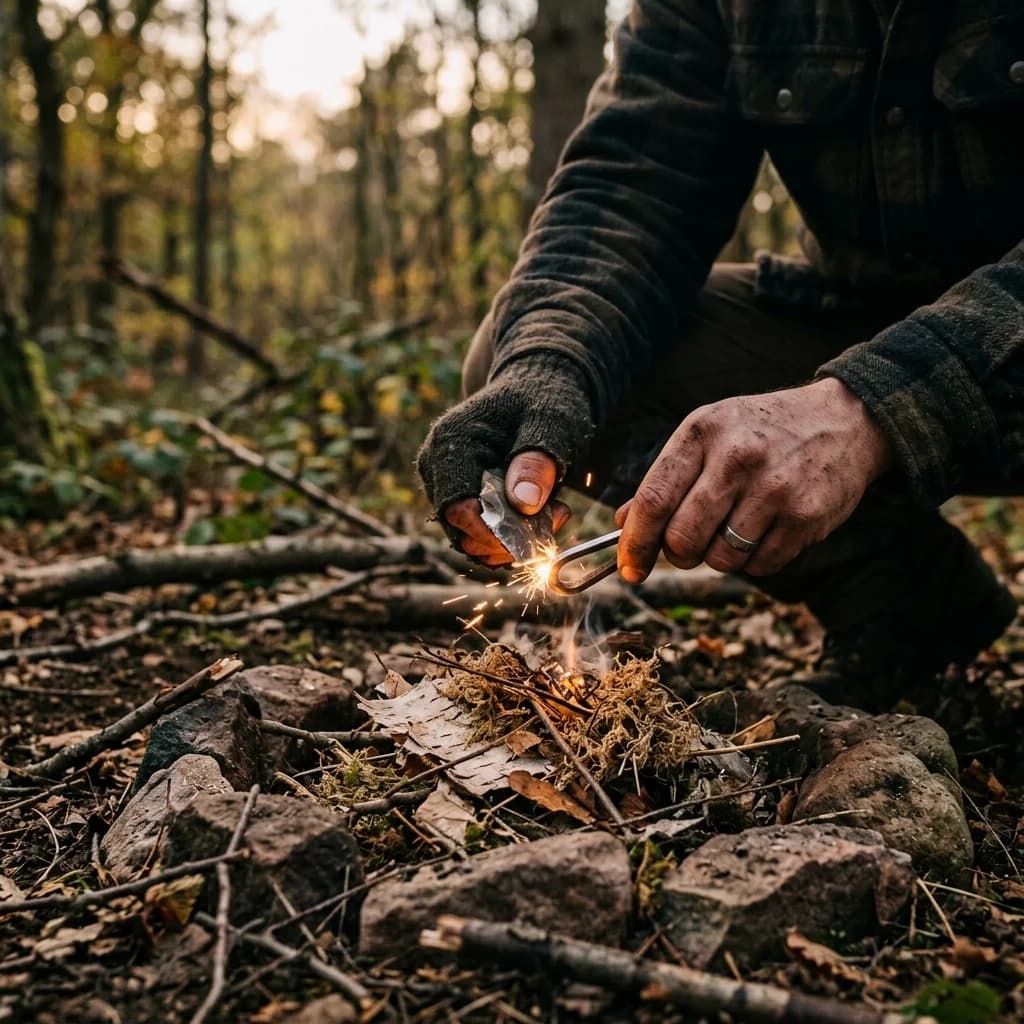
Low tech tools are built from durable, basic materials like high carbon steel, wood, canvas, and brass. High carbon steel knives and axes can be sharpened on a flat river stone. They do not require software updates or battery power. A manual fire steel made of ferrocerium produces sparks through friction, operating in freezing rain or high winds. It has no moving parts to break and does not depend on fuel seals that rot over time. The physics of mechanical tools are simple and predictable. When stress is applied, the failure points are visual, such as a cracked wooden handle that can be replaced with a carved branch. This predictability allows for long term planning and safety.
Consider the tool steel used in manual saws and knives. This material is chosen for its hardness and ease of maintenance. When a steel blade becomes dull, filing it restores the edge. No electrical grinders are necessary. The structural integrity of wood and steel is superior in harsh environments because these materials do not degrade when exposed to ultraviolet radiation from the sun. In contrast, the plastics used in high tech casings become brittle and crack after prolonged exposure to sunlight. The physical science behind manual tools is aligned with the natural world.
The Psychological Dependence on Electronic Systems
Relying on advanced gadgets creates a dangerous psychological reliance. When people believe their gear will solve every problem, they fail to develop essential survival skills. A global positioning system receiver shows precise coordinates, but if the screen cracks or the satellite signal is lost, the user is lost. A survivor who knows how to read a physical map and navigate using a magnetic compass or the stars is resilient. This knowledge cannot be dropped, wet, or broken. Skills do not occupy space in a backpack and do not add weight to a load. True security comes from internal knowledge and muscle memory, not from the objects stored in a backpack.
This psychological trap extends to shelter and food gathering. An individual with an electronic game caller or a high tech compound bow with laser sights may find it difficult to hunt if those devices fail. A simple manual snare or a traditional wooden bow requires practice and understanding of animal behavior. This understanding makes the hunter effective under any conditions. Relying on technology distances the individual from the environment. Learning to read the weather, track animals, and identify edible plants creates a deep connection to the land that no electronic database can replicate.
- Global positioning systems fail under heavy tree canopy or in deep canyons.
- Physical maps do not require signal acquisition or battery power to function.
- Compass navigation is a skill that remains constant regardless of technology shifts.
- Mechanical skills build confidence, reducing panic during emergency situations.
Weight, Logistics, and Survival Mobility
Survival in a changing climate requires mobility. Heavy backpacks increase energy expenditure and cause physical fatigue. High tech gear requires users to carry backup batteries, solar panels, protective cases, and cables. This gear adds bulk and weight, slowing down travel and increasing the risk of joint injuries. On the other hand, low tech gear is light and versatile. A simple wool blanket provides warmth even when wet, acts as a shelter sheet, and resists sparks from a campfire. It replaces heavy synthetic sleeping bags that lose insulation value when punctured. Reducing weight by choosing simple, multipurpose tools improves speed and endurance during evacuation.
Mobility is a primary defense mechanism. When a wildfire or flood approaches, the ability to pack quickly and move on foot is paramount. If a survivor is burdened by the need to protect delicate electronics from shock and water, their movement is compromised. A kit built around manual tools can be thrown into a sack without fear of damage. A steel pot, a wool blanket, and a quality axe are virtually indestructible. They can survive falls, immersion in water, and rough handling, allowing the survivor to focus entirely on movement and navigation.
Long Term Utility and Multigenerational Use
When planning for a long term societal collapse, the lifespan of tools is a primary concern. High tech devices have a designed obsolescence, lasting only a few years before their batteries fail or their casings degrade. Mechanical tools can last for generations if maintained properly. A cast iron skillet, a hand drill, a manual crosscut saw, and a wool coat can be passed down to children. These items require minimal maintenance, such as oiling metal parts to prevent rust. They do not become obsolete when a server goes offline or a software protocol changes. Investing in simple, high quality mechanical tools ensures that future generations will have the means to build, farm, and survive.
This multigenerational utility is critical for rebuilding community structures. If the knowledge of how to use and maintain simple tools is preserved, communities can establish local production of food and shelter. A community reliant on electronic diagnostic tools and computerized farming equipment will collapse when those tools fail. A community that uses manual plows, hand saws, and mechanical pumps can maintain their infrastructure indefinitely. Simple tools serve as a bridge between past knowledge and future recovery, enabling long term survival.
- Cast iron cookware improves with age and can be used directly on open fires.
- Hand drills and manual saws operate without noise, preserving tactical security.
- Mechanical tools allow for the teaching of simple engineering principles to children.
- The absence of software dependencies guarantees operation across multiple centuries.
Designing a Minimalist Manual Survival Kit
A resilient survival kit must prioritize mechanical reliability. The core components should include a fixed blade knife made of tool steel, a manual folding saw, a ferrocerium rod, a stainless steel canteen for boiling water, a canvas shelter, and a physical magnetic compass. These items should be selected for their material strength and simplicity. Avoid tools that combine electronics with mechanical functions, such as flashlights with built in radios and solar panels. These hybrid devices are weak in all their functions and fail quickly. Keep tools separate, simple, and manual. By focusing on durability, simplicity, and individual skills, a survivor builds a foundation that can withstand any disaster.
In conclusion, the path to true preparedness lies in shedding the dependence on complex, fragile systems. While high tech gadgets offer convenience in normal times, they represent a liability when the grid fails. By embracing the principles of mechanical simplicity, material durability, and manual skill, individuals can ensure their survival in a changing world. The best tools are not the ones that require charging cords, but the ones that rely on human muscle and practical knowledge.