Hyperthermia and Grid Outages: The Super El Niño Heatwave Survival Protocol
A comprehensive, field-tested survival manual for enduring prolonged 45°C+ heatwaves when the electrical grid collapses and air conditioning is offline. Passive cooling, electrolyte chemistry, and microclimate engineering.
# Hyperthermia and Grid Outages: The Super El Niño Heatwave Survival Protocol
The Lethality of Wet-Bulb Thresholds During Blackouts
When extreme ocean heat anomalies collide with continental high-pressure ridges, ambient temperatures frequently exceed 45°C (113°F). However, dry air temperature is deceptive. The true biological limiting factor is the wet-bulb temperature ($T_w$). When relative humidity and air temperature push wet-bulb values above 35°C (95°F), the human metabolic cooling mechanism—evaporative sweating—ceases to function. Metabolic heat accumulates internally, inducing clinical heat exhaustion within hours and fatal hyperthermic organ failure shortly thereafter.
When a regional electrical grid trips under peak air-conditioning load, modern residential buildings quickly transform into thermal traps. Without mechanical ventilation or active refrigeration, interior temperatures can rise 5°C to 10°C above ambient outdoor conditions within 48 hours. Surviving this reality requires immediate, disciplined implementation of passive thermodynamic protocols.
Passive Thermal Shielding and Microclimate Engineering
Do not wait for interior living spaces to heat up. Execute thermal isolation protocols at the first sign of grid instability:
1. Exterior Radiant Barriers
- Window Deflection: Cover all exterior-facing window panes with reflective radiant barrier foils or space blankets (mylar). Crucially, affix them to the *exterior* of the glass using weatherproof tape. Interior blinds trap radiant energy between the glass and the shade, turning the window into a radiator.
- Thermal Mass Utilization: Retreat to subterranean basements or ground-floor rooms situated on the north or northeast side of the structure. Concrete slabs and earthen basements maintain a thermal inertia 8°C to 12°C cooler than upper floors.
2. Nocturnal Purge Ventilation
- During peak daylight hours (09:00 to 19:00), seal all doors, windows, and chimney flues hermetically.
- Between 02:00 and 06:00, when outdoor air reaches its diurnal minimum, open lowest-level intake windows and highest-level exhaust vents to induce the stack effect, flushing stagnant thermal mass and pulling in cooler ambient air.
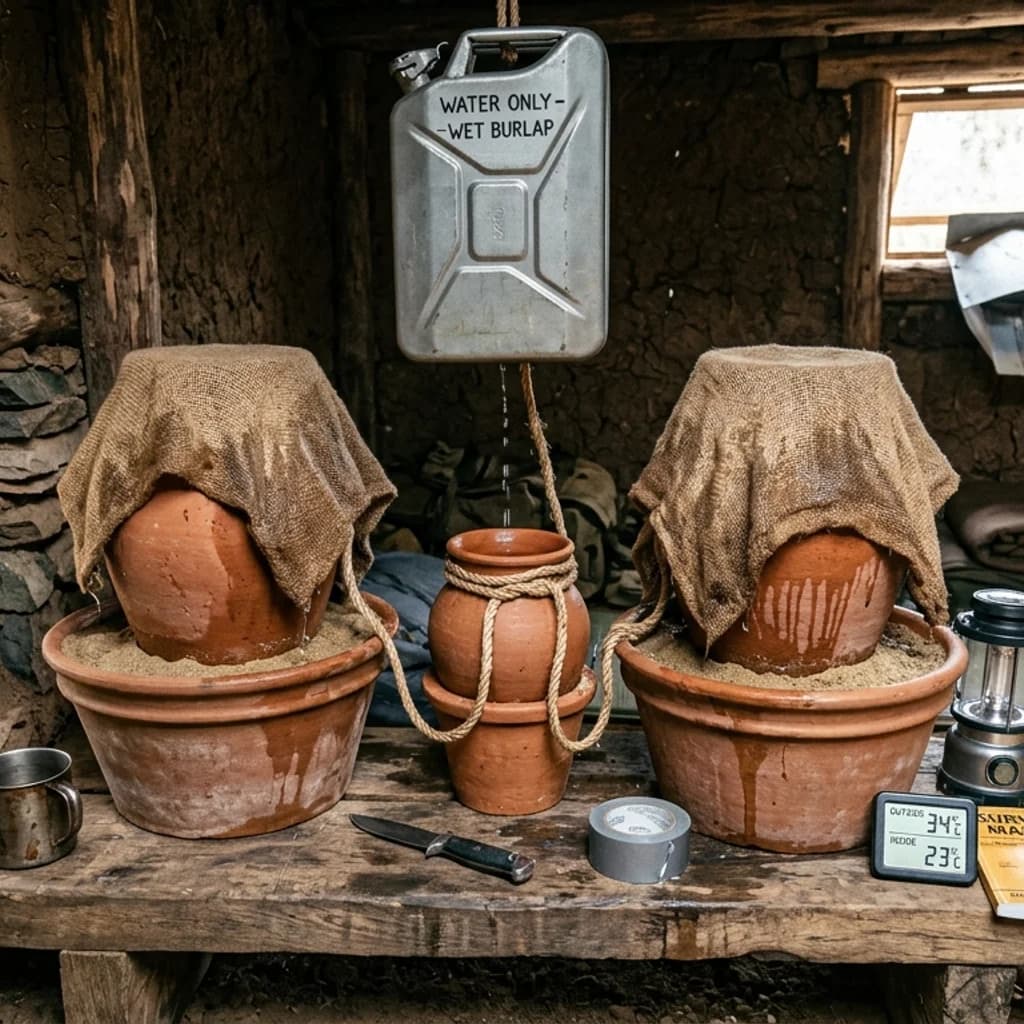
DIY Evaporative Cooling and the Zeer Pot Refrigerator
When active refrigeration fails, food and critical medications (such as insulin) spoil rapidly. Constructing an evaporative Zeer pot provides continuous cooling without electricity:
- 01.Materials: One large porous earthenware clay pot, one smaller clay pot that fits inside leaving a 3–5 cm gap, fine silica sand, and clean water.
- 02.Assembly: Place the small pot inside the large pot. Fill the interstitial cavity completely with sand. Saturate the sand thoroughly with water twice daily.
- 03.Operation: Cover the top opening with a damp burlap sack or cotton cloth. As moisture wicks through the porous outer pot and evaporates, it draws latent heat from the interior container, maintaining temperatures 10°C to 15°C below ambient dry-bulb levels.
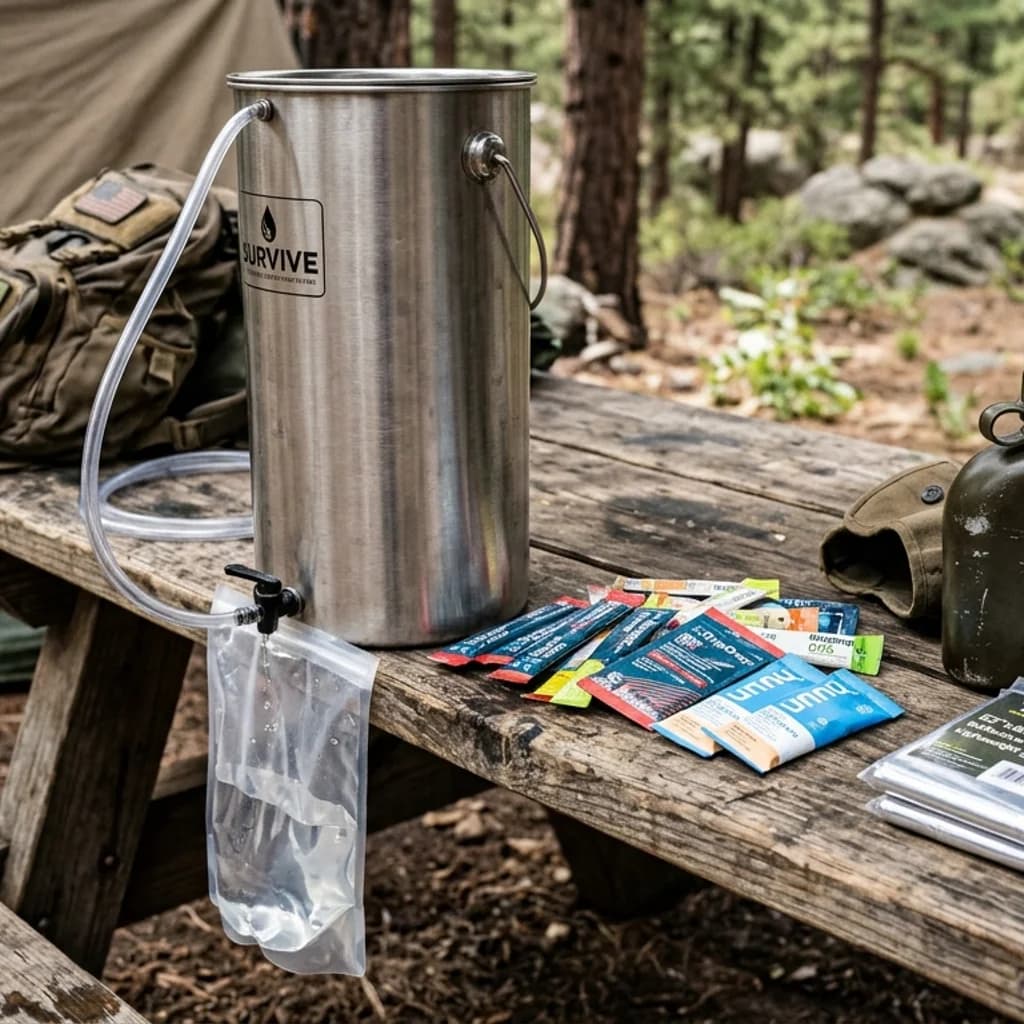
Precision Electrolyte Chemistry: The Homebrew ORS Formula
Drinking excessive plain water during severe heat leads to fatal hyponatremia (water intoxication), diluting blood sodium levels and triggering cerebral edema. In a survival environment, prepare the WHO-Standard Oral Rehydration Solution (ORS):
- Clean Water: 1 Liter (boiled or gravity filtered)
- Sodium Chloride (Table Salt): 2.6 grams (~1/2 level teaspoon)
- Potassium Chloride (Lite Salt): 1.5 grams (~1/4 level teaspoon)
- Glucose / Sugar: 13.5 grams (~6 level teaspoons)
- Sodium Bicarbonate (Baking Soda): 2.5 grams (~1/2 level teaspoon)
Sip consistently at a rate of 500–750 ml per hour of mild exertion. Never consume alcohol, heavy protein meals, or caffeinated diuretics, which radically accelerate metabolic heat production and kidney strain.