Dissecting the Empire: The True Valuation of Tesla and SpaceX Based on Revenue and Profits
How much are Elon Musk's flagship companies actually worth? We analyze the balance sheets, operational revenues, and net profits of Tesla and SpaceX to separate speculative hype from real value.
The Hype Premium of the Musk Empire
In the history of modern capitalism, few individuals have wielded as much influence over public market valuations and private capital flows as Elon Musk. His primary companies—Tesla, the electric vehicle and energy storage giant, and SpaceX, the dominant force in global aerospace—have achieved valuations that defy standard financial analysis. Tesla has repeatedly entered the trillion-dollar market cap club, while SpaceX’s private valuation has climbed past $200 billion in secondary market trades.
To supporters, these valuations are justified. They view Tesla not as a car manufacturer, but as an artificial intelligence, robotics, and energy utility company. Similarly, they see SpaceX not as a launch provider, but as a global satellite telecom monopoly and the platform for Mars colonization. However, to conservative financial analysts, these valuations represent a historic bubble fueled by narrative-driven investing and low interest rate policies. This report examines the balance sheets, actual revenues, and net profits of Tesla and SpaceX, providing a realistic valuation based on fundamental discounted cash flow (DCF) metrics.
---
Tesla: An Automotive Manufacturer or an AI Utility?
To evaluate Tesla, we must look at its actual revenue streams. For all the discussion of Full Self-Driving (FSD), Optimus humanoid robots, and artificial intelligence, Tesla's financial health remains tied to selling physical cars.
The Automotive Core and Margin Compression
According to recent financial reports leading into mid-2026, Tesla’s annual revenue is approximately $100 billion. The vast majority of this (around 80-85%) is generated from automotive sales and leasing. In 2025, Tesla delivered roughly 1.8 million vehicles globally.
For years, Tesla's key advantage was its high automotive gross margin, which peaked above 25% in 2022. This allowed the company to generate substantial profits compared to legacy automakers. However, by 2026, global competition—particularly from Chinese EV manufacturers like BYD and Geely—has intensified. This has led to price cuts across Tesla's vehicle lineup, compressing its automotive gross margin to approximately 16-17%.
$$\text{Gross Margin} = \frac{\text{Revenue} - \text{Cost of Goods Sold}}{\text{Revenue}} \times 100$$
Furthermore, a significant portion of Tesla's net income is derived from regulatory credits sold to other automakers who fail to meet government emissions standards. These credits represent pure profit, but they are a temporary revenue stream that will decline as other companies increase their own EV production.
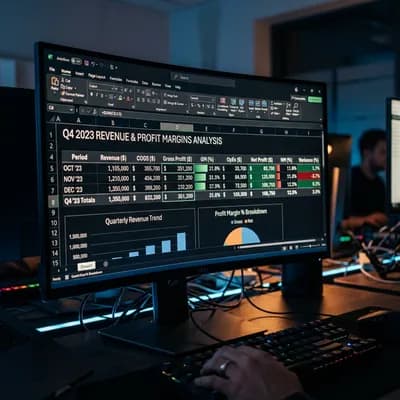
| Division | Annual Revenue (Est. 2026) | Gross Margin Range | Growth Outlook | | :--- | :--- | :--- | :--- | | Automotive Sales | $80 Billion | 16% - 18% | Low growth, high competition | | Energy Storage (Megapack) | $12 Billion | 12% - 15% | High growth, supply-constrained | | Regulatory Credits | $2.5 Billion | 100% | Declining as market adapts | | Services & Other | $5.5 Billion | 5% - 8% | Low margin, steady |
The Hype Valuation vs. Industry Comparables
As of mid-2026, Tesla's stock trades at a Price-to-Earnings (P/E) ratio of approximately 65x. By comparison, Toyota, the world’s largest automaker by volume, trades at a P/E of 9x; BYD trades at 18x; and premium brand Porsche trades at 15x.
If we value Tesla purely as a car company, its stock price would drop significantly. To justify its current premium, Tesla must deliver on its non-automotive promises:
- The Energy Storage Division: The Megapack division is growing, with utilities deploying battery systems to stabilize grids. However, this is a lower-margin business than software and faces competition from battery manufacturers like CATL and BYD.
- Full Self-Driving (FSD): Tesla's autonomous driving software is marketed as a major value driver. However, FSD remains a Level 2 driver-assist system requiring driver supervision. Competitors like Waymo operate commercial Level 4 autonomous rideshare networks in major cities, challenging Tesla's autonomous leader narrative.
Using a conservative Discounted Cash Flow (DCF) model that projects a 10% annual revenue growth and a stabilization of margins at 15% over the next decade, Tesla's intrinsic valuation is estimated to be between $250 billion and $300 billion—a significant correction from its current market cap.
---
SpaceX: The Real Economics of the Rocket Business
Unlike Tesla, SpaceX is a private company, meaning it does not publish public quarterly financial statements. However, secondary market transactions and government contract filings provide insight into its financials.
As of mid-2026, SpaceX's valuation in secondary markets is estimated at $210 billion. To evaluate this, we must examine its two primary business units: the rocket launch business (Falcon and Starship) and the Starlink satellite internet service.
The Launch Division: Falcon 9 Dominance
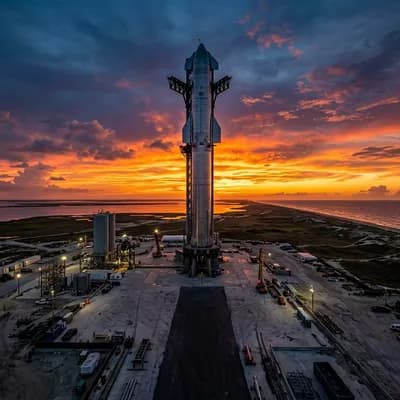
SpaceX has achieved a near-monopoly on global orbital launch services. In 2025, the company completed over 140 successful launches, carrying the majority of the world's payload to orbit.
However, the orbital launch market is relatively small:
- Commercial Launch Pricing: A standard Falcon 9 launch is priced at approximately $67 million. For national security or specialized launches, the price can exceed $100 million.
- Annual Launch Revenue: With 140 launches, the launch division generates approximately $9 billion to $10 billion in annual revenue.
- Margin Limits: While reusability has lowered costs, rocket launches are capital-intensive. Fuel, launch site operations, and rocket refurbishment limit the division's profit margins, which are estimated at 15% to 20%.
Thus, the rocket launch business alone generates around $1.5 billion to $2 billion in annual operating profit. Applying a premium aerospace P/E multiple of 25x, the launch division is worth approximately $40 billion to $50 billion.
Starlink: The Telecom Valuation Driver
The primary driver of SpaceX's $210 billion valuation is Starlink. By mid-2026, Starlink has deployed over 6,000 active satellites and acquired approximately 4.5 million subscribers globally.
Let's look at the math behind Starlink's revenue:
- Subscriber Revenue: At an average subscription cost of $100 per month, 4.5 million subscribers generate $450 million per month, or approximately $5.4 billion annually.
- Hardware Sales: Starlink terminal sales add another $1 billion to $1.5 billion in one-time revenue, though this is often sold near cost.
- The Capital Expenditure Loop: Starlink's operating expenses are high. The satellites orbit in low-Earth orbit, where atmospheric drag de-orbits them within 5 to 7 years. To maintain the network, SpaceX must launch hundreds of replacement satellites annually. This requires a continuous capital expenditure of $2 billion to $3 billion per year.
While Starlink generates positive operating cash flow, its net profit margins are limited by these ongoing capital requirements. If we value Starlink as a satellite telecom provider (comparable to companies like Comcast or Viasat, which trade at enterprise value-to-EBITDA multiples of 6x to 8x), its valuation is approximately $60 billion to $80 billion.
Combining the launch business and Starlink, a realistic valuation for SpaceX is between $100 billion and $130 billion. The current private valuation of $210 billion relies on a "future growth premium" that assumes Starship will reduce launch costs by an order of magnitude and unlock space mining or orbital manufacturing—prospects that remain speculative.
---
Corporate Governance and Cross-Collateralization Risks
Beyond the valuations of individual companies, investors must consider the risks of cross-collateralization across Elon Musk's business empire.
Musk has historically used his shares in public entities to fund his other ventures. The acquisition of Twitter (now X) for $44 billion in late 2022 was funded in part by selling Tesla shares and borrowing billions against his remaining Tesla stock.
This leverage creates systemic risks:
- The Margin Call Threshold: If Tesla's stock price falls below a critical level, lenders may issue margin calls, forcing Musk to sell shares to cover the loans. This forced selling could trigger a further drop in the stock price.
- Capital and Talent Allocation: Musk has shifted resources, including AI engineers and Nvidia GPU allocations, between Tesla, xAI, and X. For public Tesla shareholders, this creates potential conflicts of interest, as assets paid for by Tesla may benefit his private ventures.
This interconnected structure means that financial stress at one company could quickly spread to the others, potentially leading to a broader correction across his businesses.
---
Wealth Protection: Navigating the Tech Empire Volatility
For the prudent investor, the discrepancy between narrative valuations and cash flow realities suggests a conservative approach:
1. Avoiding Growth Stocks Lacking Cash Flow
- Focus on Fundamentals: When evaluating tech or manufacturing companies, focus on free cash flow yield and operating margins. Avoid companies whose valuations are based on future technologies that have not yet generated revenue.
- Diversify Beyond Charismatic Leaders: Do not concentrate capital in companies where the valuation is tied to a single key figure. The "key man risk" is high in these organizations; any health or legal issues affecting the leader can impact the stock price.
2. Allocating to Real Value
- Tangible Assets: Allocate a portion of your portfolio to tangible assets like productive real estate, physical gold, and industrial infrastructure. These assets hold intrinsic value regardless of stock market volatility.
- Value Equities: Look for companies trading at low P/E multiples with stable dividends, particularly in essential sectors like food production, energy distribution, and logistics.
The valuations of Tesla and SpaceX are built on assumptions of future technological dominance. By understanding the underlying financial realities and focusing on cash-flow-backed assets, you can protect your capital from market volatility.