The Looming El Niño of 2026: Anticipating Unprecedented Global Climate Disruption
The global climate system is bracing for a historic El Niño event in late 2026. This comprehensive analysis details the meteorological signals, expected agricultural collapse, and cascading geopolitical effects.
The global climate system is on the precipice of a historic disruption. Emerging meteorological data from mid-2026 points to the rapid strengthening of a super-El Niño event, slated to peak late in the year and persist well into 2027. Unlike previous cycles, this upcoming El Niño-Southern Oscillation (ENSO) anomaly is superimposing onto oceans that have already experienced record-breaking thermal storage over the last decade. The result is not merely a cyclical weather pattern, but a potent trigger for systemic agricultural, infrastructural, and geopolitical collapse.
For prep-minded individuals and resource analysts alike, understanding the anatomy of the 2026 El Niño is crucial. The cascading impacts of this event will test the limits of global supply chains, drive food prices to unprecedented heights, and exacerbate regional instabilities. This intelligence brief outlines the scientific drivers of the 2026 anomaly, projects its physical and agricultural consequences, and provides a blueprint for hardening local systems against the impending shockwaves.
---
The Meteorological Drivers: Why 2026 is Different
The foundation of the El Niño-Southern Oscillation lies in the cyclical shifting of sea-surface temperatures (SSTs) and atmospheric pressures across the equatorial Pacific. Under normal conditions, trade winds blow from east to west, pushing warm water toward Southeast Asia and allowing cool, nutrient-rich water to upwell along the South American coast. During an El Niño event, these trade winds weaken or reverse, allowing the vast pool of warm water to migrate eastward toward the Americas.
However, three distinct factors elevate the 2026 event from a routine fluctuation to a catastrophic anomaly:
- 01.Subsurface Marine Heatwaves: Oceanic monitoring networks indicate that heat is not merely concentrated on the surface; deep marine layers down to 300 meters are exhibiting temperatures 3.5°C above historic baselines. This massive reservoir of thermal energy guarantees that the El Niño will be long-lasting and highly resistant to atmospheric cooling.
- 02.Weakened Polar Jet Streams: The atmospheric pressure differences (the Southern Oscillation Index) are plunging to record lows. This pressure drop is interacting with a highly unstable polar jet stream, creating atmospheric blocks that will trap extreme weather patterns over key agricultural zones for months at a time.
- 03.The Multi-Decadal Ocean Feedback: The Pacific Decadal Oscillation (PDO) has entered a strong positive phase, aligning with the ENSO signal to amplify the eastward heat transfer. This synergy increases the likelihood of a "Super-El Niño" status, defined by SST anomalies exceeding 2.5°C.
---
Projected Regional Impacts: Fire, Flood, and Drought
The atmospheric realignment triggered by El Niño creates a stark dichotomy of extreme conditions across the globe. As warm moisture rises in the eastern Pacific, it fuels torrential downpours in the Americas, while leaving the western Pacific in a state of severe subsidence and drought.
#### 1. Southeast Asia and Australia: The Tinderbox
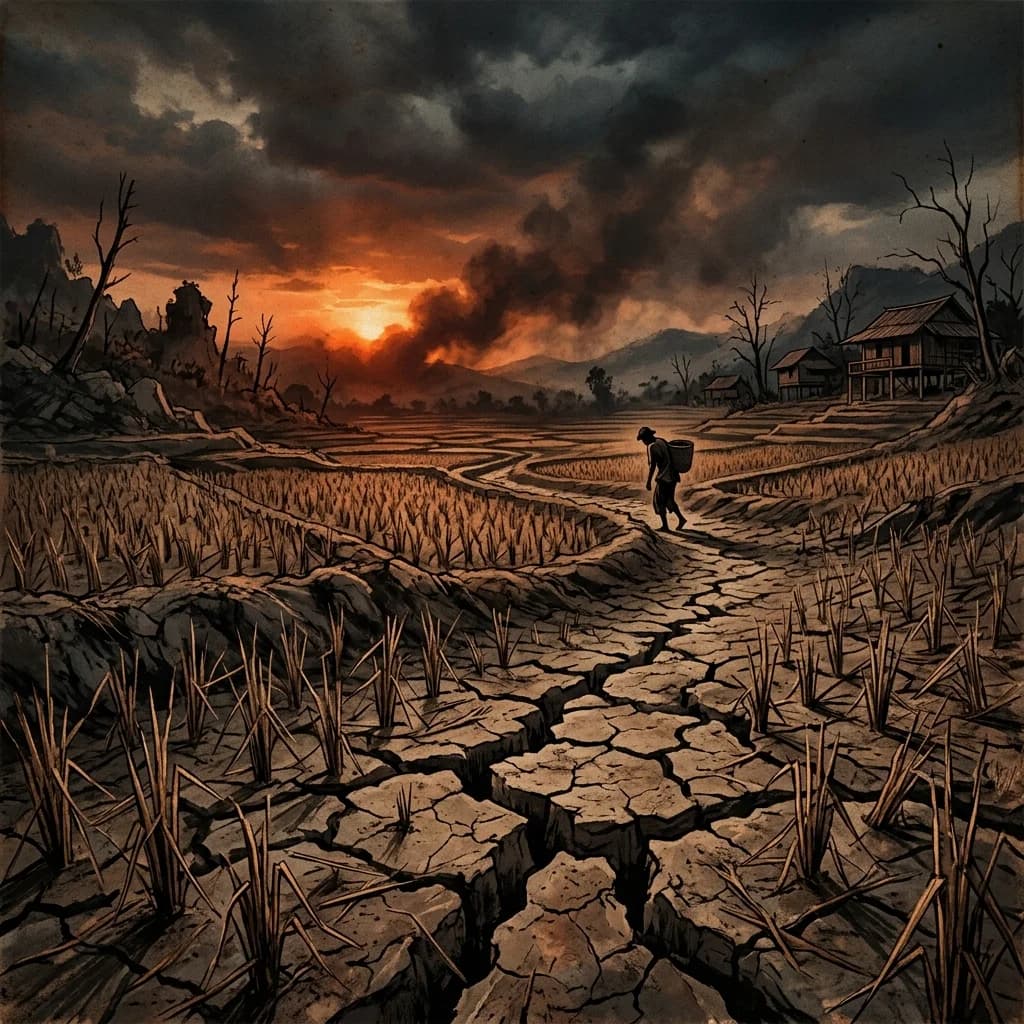
Historically, El Niño spells disaster for Indonesia, Malaysia, and Australia. In late 2026, the drying effect is projected to be particularly severe. Reduced monsoon rainfall will lead to immediate agricultural failures in rice-producing regions of Thailand and Vietnam. More critically, the peatlands of Indonesia will dry out, triggering massive, uncontrollable forest fires. The resulting haze will not only disrupt regional air travel and public health but will also release gigatons of stored carbon back into the atmosphere, accelerating the global heating loop. In Australia, the Murray-Darling basin—the nation's food bowl—will face acute water shortages, threatening livestock and wheat yields.
#### 2. The Americas: Torrential Inundation
Conversely, the west coast of South America (Peru, Ecuador) and the southern United States will experience atmospheric rivers carrying tropical moisture. Coastal Peru is bracing for catastrophic flooding and mudslides, which historically wipe out transport infrastructure and wash away topsoil. In the United States, California and the Gulf Coast will face severe winter storms. While this may temporarily replenish reservoirs, the intensity of the rainfall will cause widespread soil erosion, reservoir overflow, and major urban flooding, particularly in areas previously denuded by wildfires.

#### 3. Sub-Saharan Africa and the Horn: Acute Destabilization
Southern Africa is highly vulnerable to El Niño droughts. Corn yields in South Africa, Zimbabwe, and Zambia are expected to decline by 30% to 50%. In contrast, East Africa (Somalia, Kenya, Ethiopia) will likely face devastating floods, replacing drought with waterborne disease outbreaks and locust plagues. This shift between climate extremes prevents the stabilization of local agricultural cycles, guaranteeing prolonged food insecurity.
---
The Global Food Supply Chain: A Systemic Crisis
The modern food supply chain is optimized for efficiency, not resilience. With just-in-time logistics and highly concentrated production hubs, even minor weather anomalies can cause global price spikes. The 2026 El Niño threatens to strike several key agricultural engines simultaneously:
- Rice (Southeast Asia): Rice is the primary staple for over three billion people. A severe drought in India and Southeast Asia will trigger export bans, similar to those seen in 2023 but on a wider scale, leading to food riots in import-dependent nations across the Middle East and Africa.
- Soy and Corn (South America): Heavy rain during the harvest season in Brazil and drought in Argentina will disrupt the global animal feed supply, causing meat prices to surge globally.
- Sugar and Coffee: Major producers like Vietnam (Robusta coffee) and Brazil (sugar cane) will see yields drop due to localized drought and excessive moisture, respectively.
As export restrictions multiply, the global food market will fragment. Wealthy nations will bid up prices, leaving developing countries to face outright shortages, prompting a dramatic increase in resource-driven migration.
---
Geopolitical Fallout: Cascading Infrastructure Failures
Beyond agriculture, the extreme weather of 2026 will stress energy and transportation infrastructure to the breaking point. Hydropower-dependent regions, such as parts of South America and Southern Africa, will face severe electricity deficits as reservoir levels drop, leading to rolling blackouts and industrial shutdowns.
Conversely, extreme heatwaves in North America and Europe will drive electricity demand for cooling to record highs, overloading aging electrical grids. We anticipate localized grid failures during the summer of 2026, forcing governments to ration power and prioritize critical services.
Geopolitically, the combination of food scarcity, energy insecurity, and infrastructure breakdown will serve as a threat multiplier. Already strained by economic stagflation, weak governments in Latin America and East Africa will struggle to maintain order. Border disputes over shared water resources—such as the Nile and Mekong basins—will intensify, raising the risk of localized military conflicts.
---
Survival Takeaway: Hardening Against Climate Collapse
As the macro-systems degrade, individuals and local communities must take proactive measures to insulate themselves from the fallout of the 2026 El Niño. Survival during a multi-year climate anomaly requires a shift from passive storage to active, resilient production.
- 01.Water Security: Establish redundant water storage and harvest rainwater. If you rely on a well, verify the depth of your water table and invest in a manual pump backup. For agricultural endeavors, transition to drip irrigation systems that minimize evaporative loss.
- 02.Food Autonomy: Shift your focus to drought-resistant crops (such as sweet potatoes, millet, and certain varieties of beans) and implement permaculture techniques like mulching and swales to retain soil moisture. Invest in indoor growing systems (hydroponics/aquaponics) that are insulated from outdoor weather extremes.
- 03.Off-Grid Power: Prepare for grid instability. Ensure your solar array is equipped with robust battery storage to handle peak summer demands and potential grid blackouts. Keep mechanical and electrical backups shielded from potential storm damage.
- 04.Community Networks: The single most effective tool against systemic collapse is a functional local network. Form crop-sharing agreements, establish community tool libraries, and pool resources to secure collective water filtration and medical supplies.
The El Niño of 2026 is not a future projection; the thermodynamic energy is already locked into the Pacific. The systems we rely on will bend, and in some regions, they will break. Hardening your household and community now is the only logical response.