What Happens in the First 72 Hours After a Nationwide Blackout?
A technical chronological breakdown of the rapid collapse of communications, water supply, and security during the first three days of a complete grid failure.
Phase One: Hours 0 to 12 — The Initial Disruption
The collapse of a national electrical grid begins with immediate physical consequences. When the grid fails, the sudden imbalance between electricity generation and load triggers automatic safety disconnects. Power plants shut down to protect their own turbines from damage caused by frequency deviations. Within seconds, millions of homes, offices, and industrial facilities lose electricity. The public assumes the outage is local, expecting a quick recovery. However, the failure of transmission infrastructure means that restoring stability will take days or weeks.
The first critical failure occurs in transportation networks. Traffic lights immediately turn dark, causing gridlock in major intersections. Automated transit systems, including subways and electric trains, stop operating, trapping passengers underground or between stations. Electric vehicles cannot recharge, and gas stations cannot pump fuel because their pumps rely on electric motors. Commuters are stranded, and roads become blocked by accidents and abandoned cars, stopping emergency vehicles.
At the same time, water supply systems begin to fail. Municipal water treatment plants and distribution pumps require massive amounts of electricity. While some water towers hold water that flows by gravity, the pressure drops within hours. High rise buildings lose water immediately because they rely on electric pump systems to move water to upper floors. Sewage treatment stops, creating immediate sanitary concerns in dense urban areas.
- Traffic light failure causes gridlock and blocks emergency vehicle access.
- Mass transit systems freeze, trapping travelers in transit.
- Gas station pumps stop working, halting fuel distribution.
- Water distribution pumps fail, leading to a drop in pressure.
- High rise buildings lose water pressure immediately.
Phase Two: Hours 12 to 24 — Communication Collapse
As the blackout enters its second half day, backup batteries on cell towers begin to drain. Most cellular base stations only have backup power for four to eight hours. When these batteries fail, the cellular network shuts down. Mobile phones show no signal, making it impossible to call emergency services, text family members, or access the internet. Landline telephones that rely on fiber optic nodes also fail as local cabinets lose battery power.
Without communication, rumors spread rapidly, and coordination becomes impossible. Emergency dispatchers cannot send police, fire, or medical units to locations in need. Security systems in homes and businesses fail as their backup batteries die, leaving properties vulnerable. The absence of television, radio, and internet services prevents government officials from distributing instructions or reassurance to the public. This lack of information is a major driver of public panic.
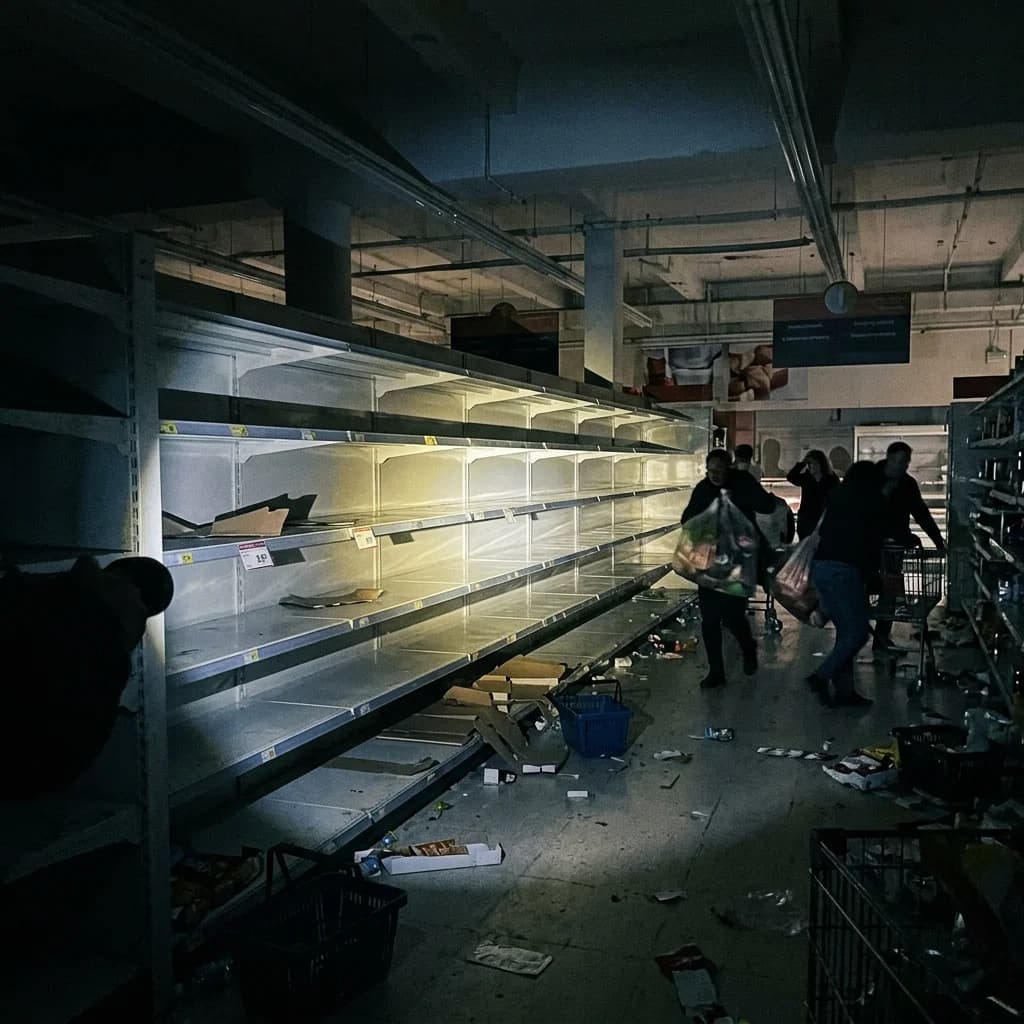
Simultaneously, retail food distribution stops. Supermarkets and grocery stores rely on barcode scanners, inventory databases, and electronic payment systems. When these systems are down, stores close their doors. Those that attempt to open are quickly overwhelmed by crowds trying to buy supplies. Cash becomes the only medium of exchange, but automated teller machines are nonfunctional, leaving most people without currency.
- Cellular base station backup batteries drain, disabling mobile networks.
- Landline networks fail as local nodes lose battery power.
- Lack of communications stops emergency dispatch services.
- Security alarms turn off, leaving properties unprotected.
- Retail food stores close because checkout systems fail.
Phase Three: Hours 24 to 48 — Critical Systems Failure
By the second day, the consequences of the power failure affect life support infrastructure. Hospitals rely on diesel generators to run ventilators, dialysis machines, and surgical units. However, these generators require continuous fuel deliveries, and fuel storage tanks only hold enough diesel for twenty four to seventy two hours. Without new deliveries, which are blocked by gridlocked roads, hospitals must prepare to prioritize patients as fuel runs out.
Municipal water supplies are now completely depleted in most areas. Without water, sanitation standards drop. People begin to consume untreated water from local ponds, rivers, and swimming pools, starting the spread of waterborne pathogens. In high density apartments, toilets cannot flush, leading to the accumulation of waste and increasing the risk of disease outbreaks. The lack of water also makes firefighting impossible, allowing local fires to spread unchecked.
Food preservation systems are failing. Commercial cold storage warehouses and household refrigerators lose their cool temperatures. Frozen food begins to thaw, and dairy and meat products spoil. In high temperature regions, this spoilage occurs within twenty four hours, destroying a large portion of the available food supply. Panic buying turns into desperation as families realize they have limited food at home.
- Hospital diesel generators run out of fuel, threatening patient lives.
- Fire stations cannot fight fires due to lack of water pressure.
- Lack of sanitation leads to the spread of waterborne pathogens.
- Household refrigerators and commercial cold storage lose temperature.
- Food spoilage reduces the available food supply.
Phase Four: Hours 48 to 72 — Societal Breakdown
By the third day, the absence of public authority becomes clear. Without police patrols, which are limited by fuel conservation and communication failures, looting begins in urban centers. Pharmacies, grocery stores, and hardware stores are targeted first as individuals seek medicine, food, and tools. Security personnel cannot defend properties without support. Vandalism and arson increase, and smoke from fires fills the sky.
The physical effects of water deprivation become severe. A human can survive only three days without water, and by hour seventy two, dehydrated individuals suffer from confusion, kidney strain, and extreme fatigue. This desperation drives people to search for water outside their immediate neighborhoods, leading to conflict over remaining resources. The community structure breaks down as individuals focus purely on the survival of their own household.
Finally, the scale of the disaster becomes clear to the survivors. It is no longer a temporary inconvenience but a survival situation. The absence of utility crews, emergency services, and government assistance forces people to realize that help is not coming. The transition from dependency on modern utilities to self reliance is complete. Those without preparations face immediate, life threatening challenges.
- Looting of pharmacies and grocery stores begins in urban areas.
- Dehydration symptoms become severe for individuals without water.
- Conflict over remaining food and water resources increases.
- Public services are inactive, forcing complete self reliance.
- The transition to a survival situation is recognized by the public.

Phase Five: Beyond 72 Hours — The Long Term Outlook
When the blackout extends past seventy two hours, the grid enters a state of deep degradation. Restarting the system requires a process known as a black start. This requires small, specialized generators to start larger turbines, which must then be synchronized across the network. If the transmission lines have suffered physical damage, or if the generators have run out of startup fuel, this restoration process can fail repeatedly.
At this stage, municipal sewage lift stations overflow. Without electricity to run the pumps that move liquid waste to treatment facilities, gravity causes sewage to back up into basement drains and lower street levels. This creates an immediate hazard of toxic gases and bacterial contamination. The risk of cholera, dysentery, and other waterborne illness increases rapidly, particularly in areas with dense populations.
Resource distribution systems are completely broken. Fuel for trucks is unavailable, meaning food and medical supplies cannot reach distribution centers. The financial system remains offline, and electronic savings are inaccessible. The economy shifts entirely to a local barter system where physical goods, such as ammunition, water filtration tablets, and canned food, are the only items of value. The survival of individuals depends on their local community support networks and prearranged emergency resources.
- Black start procedures are complex and can fail due to equipment damage.
- Sewage lift stations overflow, backing up waste into residential areas.
- Bacterial disease outbreaks become a primary threat to survivors.
- Supply chain logistics halt due to lack of fuel and communications.
- Barter systems replace currency for all local transactions.
Technical Summary of Grid Collapse Timeline
To prepare for a grid failure, one must understand the exact timeline of infrastructure decay. The table below lists the primary events that occur during the first seventy two hours of a nationwide blackout.
| Time Period | Primary Infrastructure Affected | Immediate Consequence | | :--- | :--- | :--- | | Hours 0 to 12 | Transportation & Water | Gridlock on roads, loss of water pressure, transit systems stop | | Hours 12 to 24 | Communications & Retail | Cell networks fail, stores close, cash transactions stop | | Hours 24 to 48 | Healthcare & Sanitation | Hospital generator fuel runs low, food spoils, water contamination | | Hours 48 to 72 | Security & Survival | Looting begins, dehydration peaks, social order breaks down | | Beyond 72 Hours | Grid Restoration & Sanitation | Black start failures, sewage backup, barter economy transition |
Understanding this sequence allows survivors to allocate resources effectively. The first hours must be spent securing water and establishing shelter defenses, rather than waiting for communication to return. Preparing tools, manual pumps, and stored food is the only way to survive the critical first seventy two hours of a national blackout.