What Would Happen if the Power Grid Went Down for 30 Days?
An analytical assessment of the infrastructural, medical, and social consequences of a month long national power grid failure.
Week One: The Failure of Critical Interdependent Systems
A thirty day electrical grid collapse begins with the rapid failure of critical systems that rely on constant power. During the first seven days, the initial shock transforms into systemic paralysis. The most pressing challenge is the loss of municipal water systems. Without electricity to run high pressure pumps, water reserves in municipal towers drain within hours. High rise apartments lose water immediately, and suburban neighborhoods experience a complete loss of water pressure by the third day.
In addition to water issues, the physical transmission network itself suffers immediate damage during the initial shutdown. The sudden disconnect of generation stations causes transient voltage surges that can burn out substation transformers. These transformers are complex pieces of machinery that take months to manufacture and transport. If a large percentage of these transformers are damaged during the collapse, the repair process is delayed.
Transportation stops due to the lack of fuel. Fuel stations cannot pump fuel without electricity. Fuel deliveries are blocked by gridlocked streets and abandoned vehicles. Automated logistics networks, which coordinate the delivery of food, medical supplies, and raw materials, go offline. Grocery store shelves are completely emptied within forty eight hours as panic buying peaks. By the end of the first week, municipal garbage collection stops, and sewage lift stations overflow, leading to raw sewage backing up into lower streets and residential drains.
- Municipal water towers drain, causing a complete loss of tap water pressure.
- Gas station pumps are nonfunctional, halting fuel supply chain logistics.
- Just in time food distribution systems fail, leaving retail shelves empty.
- Sewage system pumps fail, resulting in waste accumulation in urban areas.
- Garbage accumulation starts, creating immediate pest and sanitary issues.
Week Two: The Spread of Waterborne Disease and Sanitation Crises
By the second week, the lack of clean drinking water becomes the primary cause of mortality. Desperate residents begin consuming water from open sources, including rivers, canals, ponds, and swimming pools. Without municipal water treatment, these sources are contaminated with runoff and sewage. The lack of electricity prevents water purification at home unless residents have prepared manual filters or boiling tools. Waterborne pathogens, including cholera, giardia, and E coli, spread rapidly.
To counter this, survivors must construct makeshift biological filters. A typical home sand filter requires layering gravel, clean sand, and active charcoal inside a plastic container. This filter can remove large particles and some bacteria, but it does not sterilize the water. Boiling remains necessary, but gathering dry wood in urban areas becomes difficult, leading to the destruction of park trees and wooden furniture for fuel.
Human waste disposal becomes a severe health hazard. Without flushing toilets, residents resort to burying waste in shallow yards or using plastic bags. If these bags are not managed correctly, they attract flies, rats, and other disease vectors. The lack of municipal trash removal causes garbage to accumulate in apartment courtyards, accelerating the spread of bacterial infections.
Medical systems are overwhelmed and start to fail. Hospital backup generators, which run on diesel, run out of fuel because fuel trucks cannot navigate roads or obtain fuel. Critical equipment, including ventilators, dialysis machines, and neonatal incubators, stops working. Patients with severe injuries or those requiring life support cannot be cared for. The lack of air conditioning in hospitals during warm seasons increases patient stress, and sanitary conditions inside medical wards decline due to the lack of running water.
- Consumption of untreated surface water causes outbreaks of dysentery.
- Hospital generators fail due to lack of diesel fuel deliveries.
- Intensive care units lose power, leading to immediate patient deaths.
- Medical sanitation drops due to lack of clean water for sterilizing tools.
- Pharmaceuticals requiring refrigeration spoil, destroying insulin and vaccine supplies.
Week Three: The Breakdown of Law and the Rise of Local Security
By the third week, the absence of police patrols and emergency services leads to widespread security failures. Police units are limited by fuel exhaustion and the breakdown of radio repeaters. Urban areas experience looting of remaining pharmacies, warehouses, and distribution centers. Armed groups form to control local food and water supplies, leading to violent clashes in suburban neighborhoods.
To protect their families, residents organize community defense teams. These groups establish checkpoints at neighborhood entry points, using debris and abandoned cars to block traffic. They coordinate security watches using simple methods, such as watch towers and mechanical bells. Communication is maintained through battery powered walkie talkies or simple hand signals.
The trade of goods shifts to a local barter system where currency is ignored. The physical value of items is determined by immediate utility. Silver and gold coins, while holding theoretical value, are often passed over in favor of practical tools, matches, salt, and medical supplies. A single bottle of water purification tablets can be exchanged for multiple tools, indicating the shift in economic priorities.
- Police response is nonexistent due to fuel scarcity and communications loss.
- Looting transitions from commercial stores to residential properties.
- Communities establish checkpoints and neighborhood watches for defense.
- Barter systems replace paper currency for all local transactions.
- Resource scarcity leads to conflicts over local water wells and food storage.
Week Four: Industrial Hazards and Critical Infrastructure Decay
In the final week of a thirty day blackout, industrial hazards become a major risk. Chemical plants, petroleum refineries, and nuclear facilities rely on cooling systems to prevent thermal runaway. While these facilities have backup generators, they face the same fuel delivery issues as hospitals. If backup power fails, hazardous chemicals can leak, or cooling pools for spent fuel can overheat, releasing radioactive materials or toxic gases into the local environment.
Spent fuel pools at nuclear reactors are particularly vulnerable. These pools store highly radioactive fuel rods that must remain submerged in water to absorb decay heat. If the circulation pumps stop due to lack of power, the water in the pools begins to boil. Over several days, the water level drops, exposing the fuel rods. This exposure can lead to a fire that releases radioactive cesium and iodine into the atmosphere, forcing the evacuation of surrounding regions.
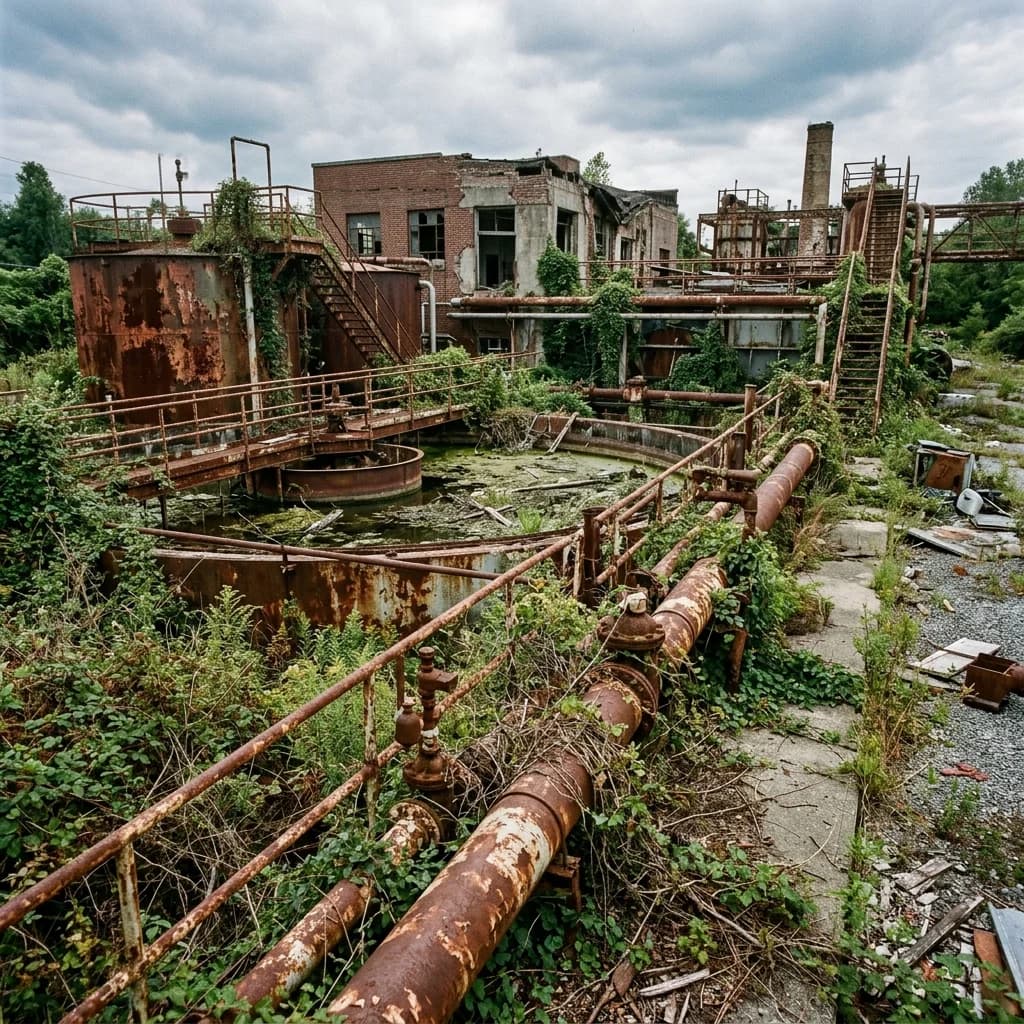
The physical structure of cities begins to decay. Without maintenance, water leaks from broken pipes erode road foundations. Fires started by unattended candles or cooking fires spread unchecked through residential blocks because fire trucks cannot travel and lack water pressure. The electrical distribution equipment, including transformers and substations, suffers damage from the initial shutdown and subsequent weather events, making future grid restoration efforts more difficult.
- Industrial facilities face cooling failures, increasing the risk of chemical leaks.
- Spent fuel pools at nuclear sites risk overheating without generator fuel.
- Uncontrolled fires destroy residential areas due to lack of firefighting capability.
- Water pipe leaks erode road foundations and collapse underground utilities.
- Grid distribution components suffer exposure damage, delaying recovery.

The Long Term Recovery Process
When the grid remains down for thirty days, restoration is not a simple matter of flipping a switch. The damage to transmission lines, generators, and transformers is extensive. Technicians must perform black start operations, bringing small power stations online to provide the startup power needed for larger plants. This process must be coordinated manually, which is difficult without communication networks.
The societal damage is also severe. The population loses trust in municipal infrastructure. The economy remains damaged for months, as businesses struggle to restore digital databases, supply lines, and financial connections. The transition back to normal operations requires massive resource redirection, often relying on military assistance to distribute food and water while crews repair electrical systems.
The table below outlines the progression of infrastructure damage and societal response over a thirty day grid down scenario.
| Phase | Primary Concern | Infrastructure State | Societal Status | | :--- | :--- | :--- | :--- | | Week 1 | Water & Transport | Gridlock, water towers empty | Panic buying, initial confusion | | Week 2 | Medical & Sanitation | Hospital generator failure, sewage backup | Disease outbreaks, hospital collapse | | Week 3 | Security & Trade | Communication nodes dead, no police | Looting, community checkpoints, barter | | Week 4 | Industrial Hazards | Refinery cooling failures, structural fire | Urban flight, local resource control | | Post Outage | Grid Reconstruction | Black start coordination, physical repairs | Military distribution, slow economic recovery |
Surviving a thirty day grid collapse requires preparing resources beforehand. Storing water, installing gravity based filtration tools, keeping shelf stable food, and planning home defense are essential tasks. Relying on municipal utilities is a vulnerability that will be exposed within the first week of a grid down event.