Hardened Off-Grid Mesh Networking
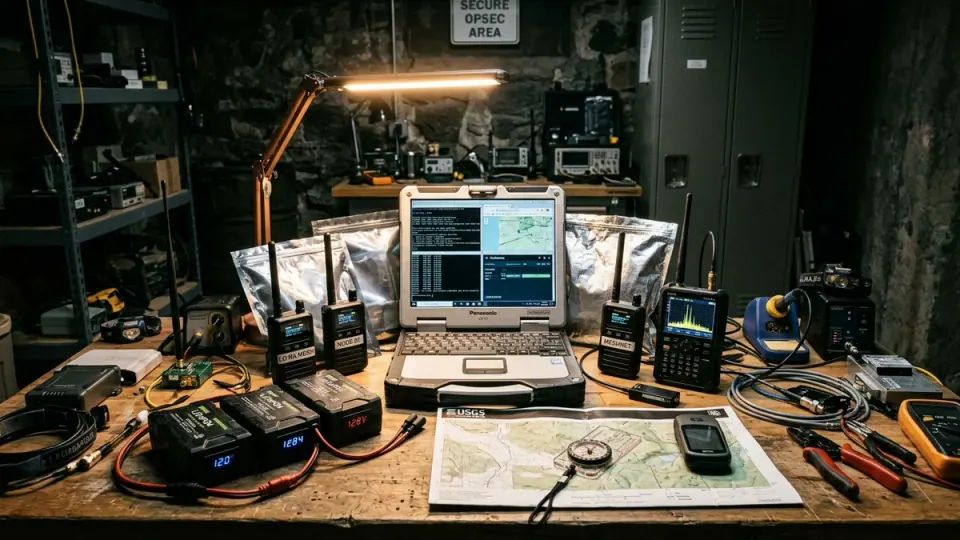
When cellular towers go dark and the central internet collapses, community resilience depends on hardened, decentralized digital radio mesh networks. Here is the operational field manual for deploying autonomous, unjammable local communications.
When the high-voltage electrical grid suffers catastrophic collapse or cyber warfare severs subsea fiber optic backbones, the fragile architecture of civilian cellular telecommunications fails with shocking velocity—a reality outlined in Ready.gov power outage preparedness guidance and our breakdown of staying connected when the grid goes down. Cellular base stations and 5G small-cell nodes are engineered with battery backup systems designed to sustain operational power for a mere four to eight hours following grid severance. In major disasters and regional conflicts, diesel emergency generators at tower sites run out of fuel within forty-eight hours or suffer mechanical failure due to contaminated fuel supplies. Within three days, the modern citizen’s $1,200 smartphone transforms into a useless brick of glass and aluminum.
Without communications, community coordination evaporates. Essential mutual-aid logistics, perimeter defense alerts, medical casualty coordination, and vital intelligence sharing descend into chaotic rumor and panic—underscoring the need for resilient CISA SAFECOM emergency communications interoperability.
To survive a prolonged, systemic communications blackout, prepared individuals and mutual-aid networks must deploy hardened, autonomous, off-grid communication networks that require zero cellular infrastructure, zero internet connectivity, and zero commercial utility power. Extending our analog countermeasures and digital blackout field guide, this operational manual outlines the precise technical protocols for constructing, shielding, and operating resilient LoRa (Long Range) mesh networks and High-Frequency (HF) packet-radio relays designed to withstand active electronic warfare, EMP pulses, and total infrastructure collapse.
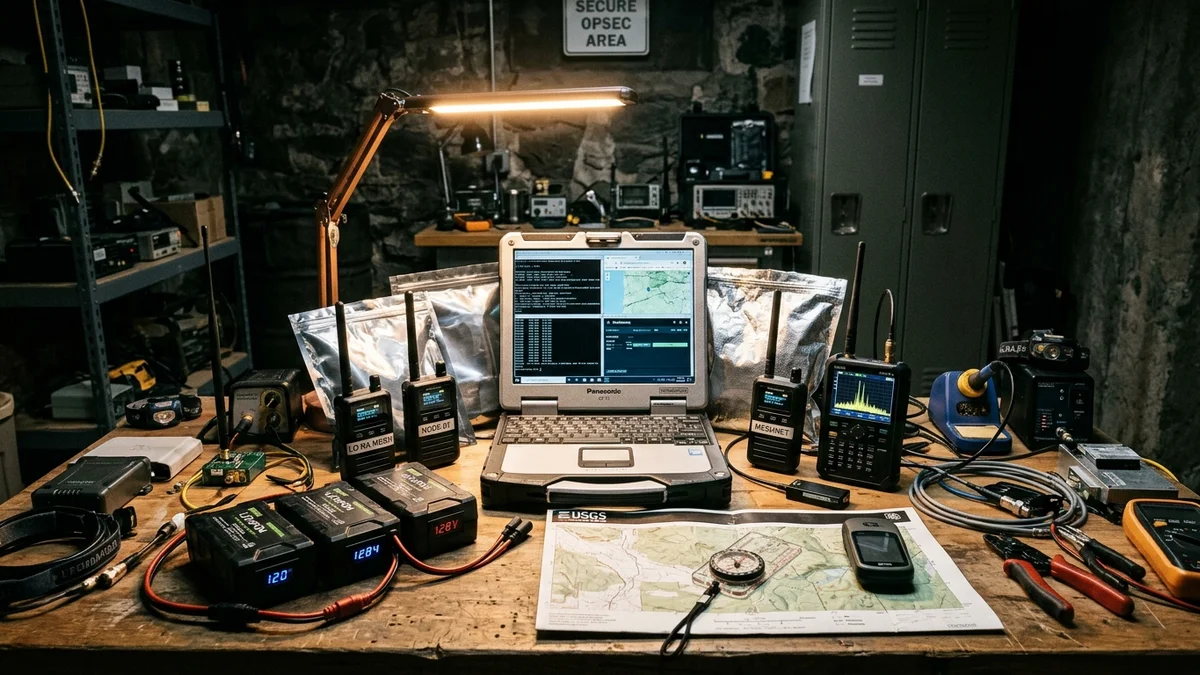
Technical Architecture of Decentralized LoRa Mesh Networks
The premier technological foundation for hyper-local tactical communication is open-source LoRa mesh networking, epitomized by the Meshtastic protocol. Operating within unlicensed ISM radio frequency bands (915 MHz in North America, 868 MHz in Europe, 433 MHz in Asia), LoRa utilizes chirp spread spectrum (CSS) modulation. This mathematical encoding embeds digital data within frequency-sweeping chirps, allowing low-power radio signals to be detected and decoded deep beneath the ambient electronic noise floor—even at signal-to-noise ratios (SNR) as low as -20 dB.
Unlike point-to-point walkie-talkies where two operators must maintain direct line-of-sight, a Meshtastic network is an autonomous, self-healing, peer-to-peer ad-hoc mesh. Every radio node on the network acts simultaneously as a transmitter, a receiver, and an automated store-and-forward packet router:
- Automatic Multi-Hop Routing: If Node A (in a low river valley) wishes to transmit an encrypted tactical text message or GPS waypoint to Node D (five miles away behind a granite ridge), Node A transmits a digital packet. Node B (perched on an intermediate water tower) and Node C (on a suburban two-story roof) automatically receive the packet, verify its cryptographic integrity, and re-broadcast it into the ether until it successfully reaches Node D.
- Zero Infrastructure Overhead: The entire network operates with zero central servers, zero cell towers, and zero cloud backends. Each participant communicates with their individual LoRa pocket radio via offline Bluetooth using an ordinary smartphone running the Meshtastic application, or through direct physical OLED and standalone keyboard terminals.
- Low Probability of Intercept (LPI): Because LoRa transmissions occur in sub-second data bursts (typically 50 to 250 milliseconds) at low transmission power (100 milliwatts to 1 watt), hostile radio direction-finding (RDF) units and SIGINT interceptors struggle to detect, geolocate, or jam the transmissions.
| Tier | Hardware Platform | Operational Range |
|---|---|---|
| Tier 1: Personal Node | Heltec V3 / LilyGO T-Echo | 1 - 4 Miles (Ground Level) |
| Tier 2: Solar Relay | RAKwireless 4631 + Solar Panel | 15 - 35 Miles (Mountaintop |
| Tier 3: Long-Haul HF | Yaesu FT-891 + JS8Call / VARA HF | 100 - 2,500 Miles (Global) |
| Primary Battery Chem | LiFePO4 (Lithium Iron Phosphate) | 3,500+ Duty Cycles |
| Encryption Protocol | AES-256 GCM (Symmetric Key) | Military Grade Security |
Fabricating and Deploying Autonomous Solar Repeater Nodes
To establish a resilient regional mesh spanning an entire county or metropolitan district, mutual-aid networks must deploy autonomous solar repeater nodes situated on high-elevation topography: ridge tops, silo roofs, water towers, and tall coniferous trees.
A hardened, autonomous field repeater is engineered using the following bill of materials:
- 01.Ultra-Low-Power Transceiver Core: The RAKwireless WisBlock 4631 (combining an nRF52840 ARM Cortex processor with a Semtech SX1262 LoRa transceiver). This Nordic-based chip architecture consumes less than 12 milliamps during active listening, allowing it to operate indefinitely on modest battery reserves.
- 02.High-Efficiency Solar Power: A 10-watt to 20-watt monocrystalline solar panel coupled with a ruggedized MPPT (Maximum Power Point Tracking) solar charge controller board.
- 03.Cold-Resilient Battery Storage: A 12-volt 6Ah or dual 18650/21700 lithium iron phosphate (LiFePO4) battery pack. Unlike standard lithium-ion pouch cells that degrade rapidly in sub-freezing temperatures, LiFePO4 chemistry safely discharges down to -20°C (-4°F) and delivers over 3,000 charge cycles.
- 04.Tuned Omnidirectional Antenna: Discard the miniature factory "rubber duck" antennas. Install a commercial-grade, fiberglass-encased collinear omnidirectional antenna tuned precisely to 915 MHz (or 868 MHz) with a gain of 3.0 to 5.8 dBi. Connect the antenna via high-grade, double-shielded LMR-400 coaxial cable to minimize RF insertion losses.
- 05.NEMA-Rated Weatherproof Enclosure: House the electronics inside an IP67-rated polycarbonate or die-cast aluminum enclosure equipped with gore-tex pressure equalization vents to prevent internal moisture condensation.
Camouflage the enclosure using non-metallic infrared-reflective (IR) spray paints to blend into surrounding foliage, and place the node at maximum elevation to achieve optical line-of-sight across the valley below.
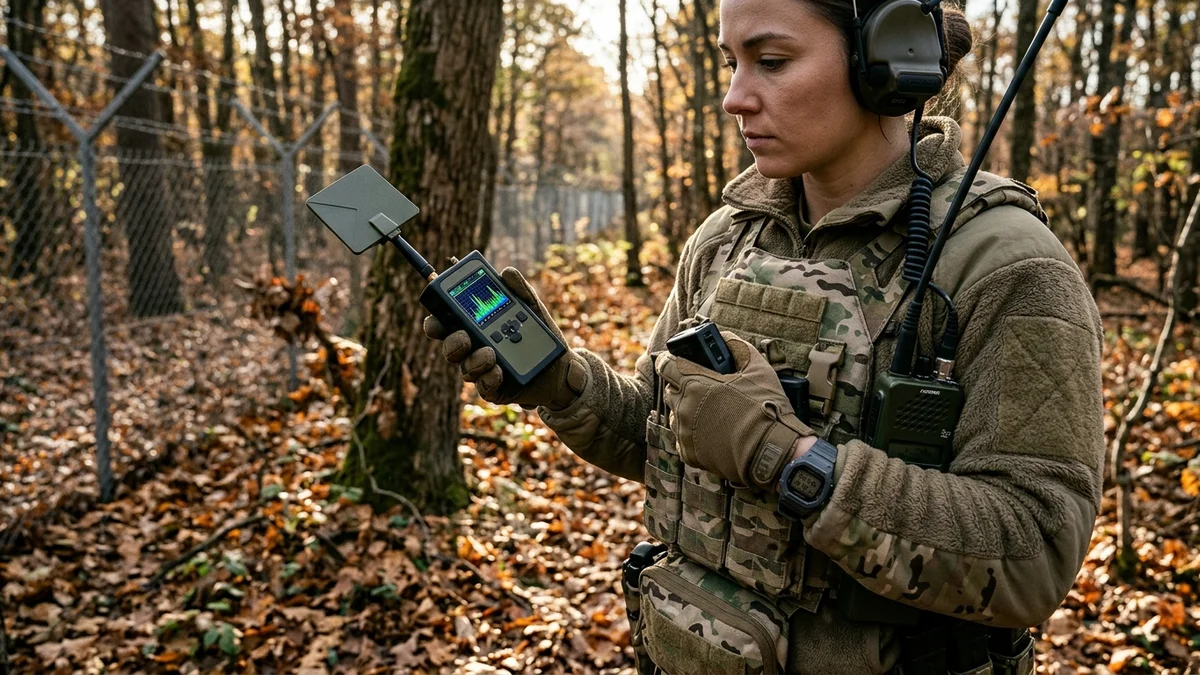
Long-Haul Communications: Integrating HF Digital Packet Radio
While 900 MHz LoRa networks excel at hyper-local tactical communications (1 to 25 miles), they cannot bridge intercontinental or interstate distances during nationwide telecommunications collapse. To receive strategic intelligence, news from unaffected geographic regions, and coordinate across hundreds of miles, networks must integrate High-Frequency (HF) digital packet radio as practiced by ARRL amateur radio emergency communications teams and detailed in our HF-NVIS antenna and covert relay doctrine.
Operating across the 1.8 MHz to 30 MHz shortwave spectrum, HF radio signals bounce off the ionosphere in a phenomenon known as skywave propagation:
- JS8Call Protocol: Based on the Nobel-prize-winning FT8 weak-signal modulation, JS8Call allows keyboard-to-keyboard text messaging, automated message relaying, and emergency beaconing at signal levels up to 24 dB below the noise floor. A 20-watt HF transceiver using JS8Call can reliably transmit emergency text messages over 1,500 miles using an inexpensive wire dipole antenna strung between two trees.
- VARA HF and Winlink Global Radio Email: By coupling an HF radio to a field laptop or Raspberry Pi computer running the VARA HF modem, operators can transmit full digital text documents, encrypted emails, and medical triage lists directly to distant shore stations or regional emergency hubs without commercial internet.
- Near Vertical Incidence Skywave (NVIS): By erecting an HF antenna horizontally just 8 to 15 feet above the ground on the 40-meter (7 MHz) or 80-meter (3.5 MHz) amateur bands, radio waves radiate straight up into the ionosphere and reflect downward in an umbrella pattern. This completely eliminates the classical "skip zone," providing flawless, high-reliability tactical communications across a 50-mile to 300-mile regional radius, bypassing mountainous terrain and deep valleys.
Counter-SIGINT Operational Security and EMP Hardening
In contested environments involving hostile military actors, rogue domestic factions, or opportunistic bandits, radio transmissions present severe operational security risks. Adversaries equipped with cheap software-defined radios (SDRs) like the HackRF or RTL-SDR can monitor the spectrum, log signal strengths, and execute triangulation to locate your basecamp.
Strict communications discipline (COMSEC) must be enforced at all times:
- 01.Mandatory AES-256 Symmetric Encryption: Never utilize the default "Public" channel on Meshtastic nodes. Generate a random 256-bit symmetric encryption key using physical dice or a verified offline cryptographic utility. Share this key physically via QR-code scanning between trusted team members before deploying to the field. Any unauthorized eavesdropper monitoring the radio frequency will intercept only randomized, mathematically indecipherable digital noise.
- 02.Duty Cycle and Burst Transmission Discipline: Minimize airtime. Text messages must be terse, standardized, and pre-formatted (e.g., using military SALUTE reports: Size, Activity, Location, Uniform, Time, Equipment). Never transmit long, rambling conversational messages that provide hostile direction-finders time to establish bearings.
- 03.Rigid EMP and Solar Flare Hardening: A high-altitude nuclear detonation (HEMP) or an extreme Carrington-class solar superstorm—tracked continuously by the NOAA Space Weather Prediction Center and our planetary hazard radar—will induce thousands of volts per meter of electrical current across metal structures, instantly frying delicate semiconductors. Store spare transceivers, backup batteries, programming cables, and handheld radios inside multi-layered nested Faraday cage enclosures:
- 02. * Layer 1: Wrap individual devices in heavy-duty polyethylene bubble wrap (non-conductive dielectric barrier).
- 03. * Layer 2: Seal inside heavy-duty, heat-sealed MIL-SPEC aluminum static shielding foil bags.
- 04. * Layer 3: Place the sealed packets inside a heavy galvanized steel ammo can or steel garbage can with all seams, lids, and handles lined with conductive copper-nickel RF gasket tape.
When the grid goes dark and the modern digital illusion fades away, the ability to coordinate across distances will separate thriving communities from chaotic collapse. Build your network today, train your team under simulated blackout conditions, and secure your place on the resilient electromagnetic spectrum.
Real-time geospatial feed aggregating USGS M5.0+ earthquakes, NASA EONET wildfires, volcanoes, severe storms, UN/EC GDACS alerts, and NOAA geomagnetic status.
Related Reports & In-Depth Intel
The Analog Firewall Manual
In the wake of FBI warning FLASH-20261113-001 (ARTEX), European cold-chain controller hacks, and $2.58 TCP/IP zero-days, physical resilience demands isolating critical inverters, wells, and refrigeration equipment onto offline LANs backed by hard electromechanical failsafes.
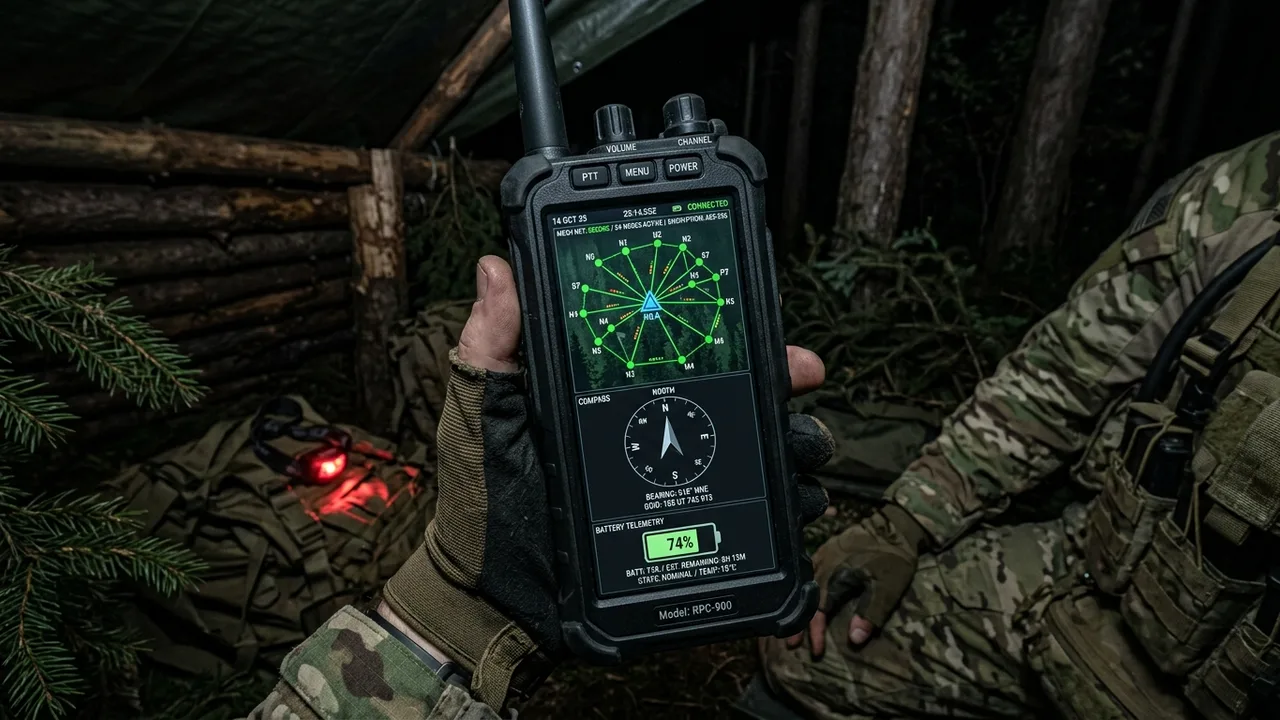
Stranded When Planes and Banks Freeze
When FAA telecom outages ground flights and cloud failures freeze card terminals, carrying cash, paper maps, offline routing, and multi-carrier comms turns chaos into a routine detour.

Stockpiling Spares Before the Strait Closes
With Chinese carrier and coast guard drills rehearsing a shipping quarantine around Taiwan, households and small workshops should build a targeted two-year spare-parts cache before East Asian electronics and tool imports stall.
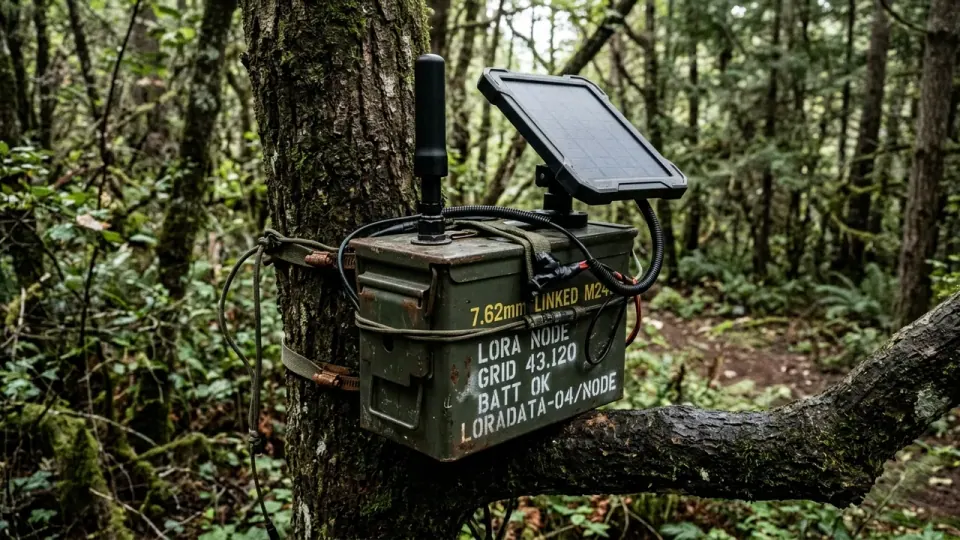
Tactical Communications Field Manual
A technical field manual for establishing resilient off-grid communications networks using Near-Vertical Incidence Skywave (NVIS) HF radio antennas and solar-buffered, AES-256 encrypted LoRa mesh topologies during electronic jamming and grid-down blackouts.