Planetary Heat Threshold Breached
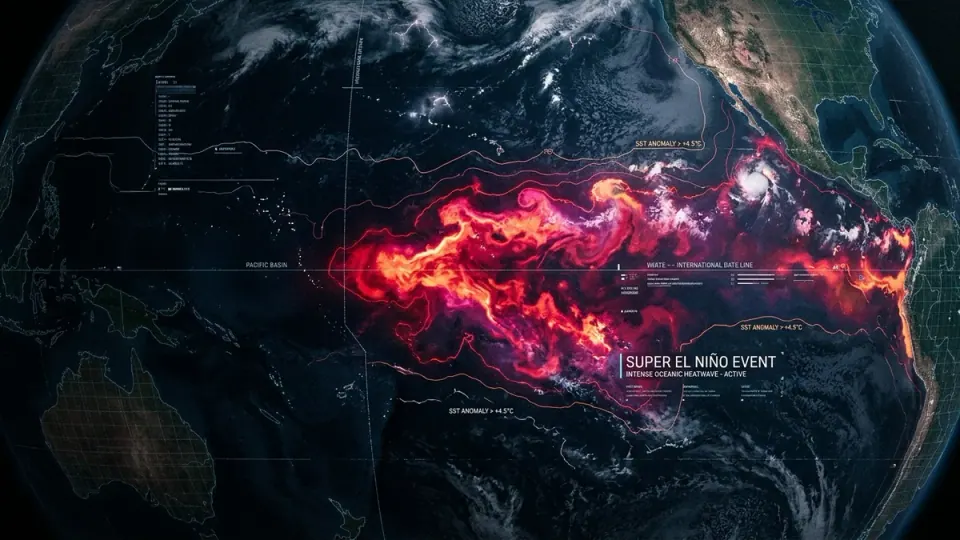
Unprecedented equatorial Pacific thermocline displacement and multi-year thermal inertia have pushed tropical biosphere systems past irreversible tipping points. We examine synchronous crop failures, drying mega-reservoirs, and municipal water grid collapse across three continents.
# Planetary Heat Threshold Breached: How the Super El Niño Triggered Multi-Basin Hydro-Agricultural Collapse
For decades, climate models warned that the primary danger of anthropogenic global warming lay not in linear, incremental temperature increases, but in violent non-linear phase shifts when natural decadal oscillations collide with planetary energy imbalances. Throughout late 2026, that theoretical threshold was violently crossed—a thermal escalation tracked on our planetary hazard Radar alongside NOAA Climate Prediction Center ENSO advisories. A record-shattering "Super El Niño"—magnified by historic sub-surface ocean heat content accumulated over consecutive record-warm years—displaced the Pacific equatorial thermocline by more than one hundred meters, triggering a planetary cascading collapse of hydrological, agricultural, and power generation systems across three continents.
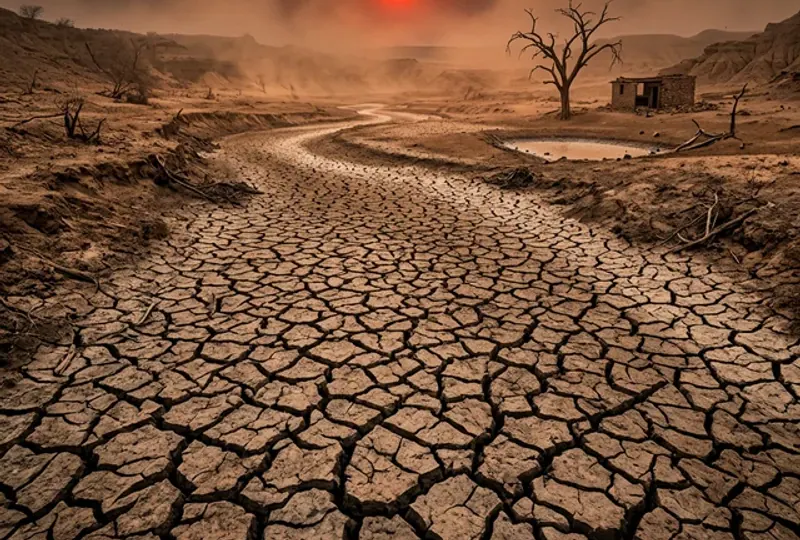
What meteorological agencies initially classified as an extreme ENSO (El Niño–Southern Oscillation) event has metastasized into a structural biospheric fracture. The simultaneous disruption of the Walker and Hadley atmospheric circulation cells has decoupled seasonal precipitation from historical agricultural calendars, desiccated primary continental water basins, and forced millions of hectares of prime agricultural land into premature ecological senescence.
The Atmospheric Rupture: Walker Circulation Breakdown and Equatorial Drought
The thermodynamic engine driving this multi-basin breakdown is the total breakdown of the Pacific Walker Circulation. Under normal conditions, trade winds blow warm equatorial surface waters westward toward Indonesia, maintaining cool, nutrient-rich upwelling along the western coast of the Americas. In late 2026, an unprecedented atmospheric pressure collapse over Tahiti, coupled with prolonged anomalous westerly wind bursts, reversed this gradient with catastrophic speed.
A massive plume of warm water, measuring over three degrees Celsius above baseline across the Niño 3.4 monitoring region in Copernicus Climate Change Service (C3S) anomaly datasets, surged eastward. This colossal redistribution of ocean heat energy violently altered the global jet streams:
- Atmospheric River Diversion: High-latitude atmospheric rivers that historically sustained the Pacific Northwest and the Mediterranean have shifted poleward, denying Mediterranean Europe, North Africa, and Central America their critical autumn recharge precipitation.
- The Amazonian Transpiration Deficit: Across the Amazon River basin, moisture transport from the Atlantic has fallen by forty-two percent, accelerating Amazon dieback and South American hydroelectric grid shutdowns. The world's largest rainforest is exhibiting acute localized biome tipping points, with tributary water levels plummeting beneath historic hundred-year lows, stranding commercial river shipping and cutting off hundreds of riparian communities.
- The Southeast Asian Cloud Cover Collapse: Across the Indo-Gangetic Plain and the Mekong River basin, persistent anticyclonic high-pressure systems have suppressed monsoonal convection. Soil moisture anomalies in the upper forty centimeters have dropped into the fifth percentile, preventing the planting of second-cycle cereal crops.
Synchronous Agricultural Seizure: The Failure of the Breadbaskets
Industrial civilization operates on a razor-thin buffer of global grain stocks, typically maintained at approximately seventy to eighty days of consumption. The fundamental vulnerability of this global food architecture is synchronous crop failure—the simultaneous loss of yields across major non-contiguous planetary breadbaskets. In late 2026, the Super El Niño delivered precisely this fatal convergence.
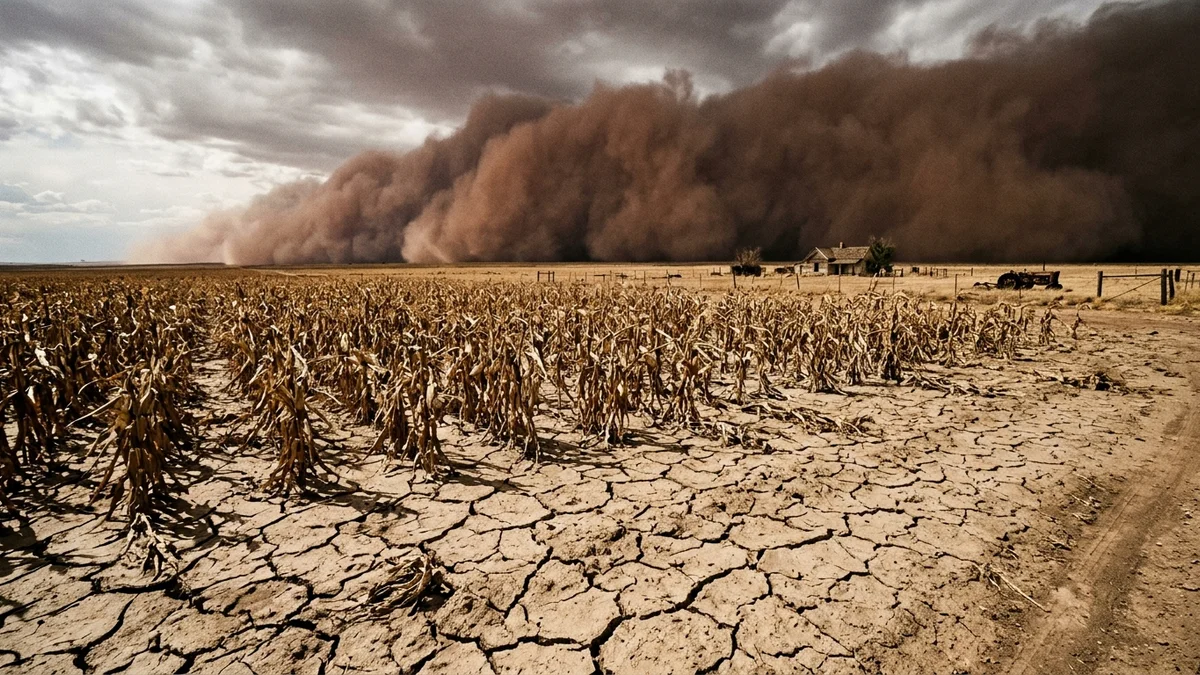
In South America, the Cerrado agricultural belt in Brazil and the Pampas in Argentina suffered consecutive heatwaves exceeding forty-four degrees Celsius during the critical flowering and grain-filling windows. Soil temperature probes registered sustained ground heat exceeding fifty-five degrees Celsius, causing thermal sterilization of soy and corn pollen. Yield projections for the 2026–2027 harvest have been downgraded by thirty-five percent across the Mercosur trading bloc.
Simultaneously, the Murray-Darling basin in southeastern Australia entered a state of emergency as water allocations for irrigation were slashed to zero across major catchments. Winter wheat harvests collapsed by half, cutting off one of the key swing suppliers to Asian grain-importing nations.
The compounding shock wave through commodity markets has been immediate and unforgiving:
- 01.Staple Crop Export Bans: Major producer nations, traumatized by the rapid depletion of national strategic reserves tracked in FAO Crop Prospects and Food Situation reports, have enacted sweeping export restrictions. India, Vietnam, and Cambodia have suspended non-basmati rice foreign shipments to stabilize domestic consumer prices, sparking panic buying across import-dependent states in West Africa and the Middle East while compounding global rice and cocoa commodity stagflation.
- 02.The Caloric Margin Squeeze: The FAO Food Price Index experienced its steepest quarterly surge since 2008, with cereal and edible oil indices rising twenty-eight percent in sixty days. For the bottom two billion individuals on the global economic ladder—who spend between fifty and seventy percent of disposable income on raw calories—this represents an immediate plunge into acute food insecurity.
- 03.Animal Feed Rationing and Herd Liquidation: Skyrocketing prices for soybean meal and feed maize have driven livestock producers worldwide into emergency herd liquidation. While temporarily depressing short-term meat prices at retail, this structural herd culling guarantees severe protein shortages and structural price inflation throughout subsequent years.
The Hydroelectric Chokehold: When the Grid Runs Dry
Beyond food production, the El Niño heat anomaly has exposed a fatal interdependency in modern energy infrastructure: the absolute reliance on freshwater throughput for electrical grid stability, a systemic vulnerability detailed in the International Energy Agency (IEA) hydropower climate assessment. Over thirty percent of global baseload and load-following capacity is tied directly to hydroelectric dams, run-of-the-river turbines, and thermoelectric power plants that require vast volumes of cooling water—even as other regions face spillway structural failures from compound atmospheric rivers.
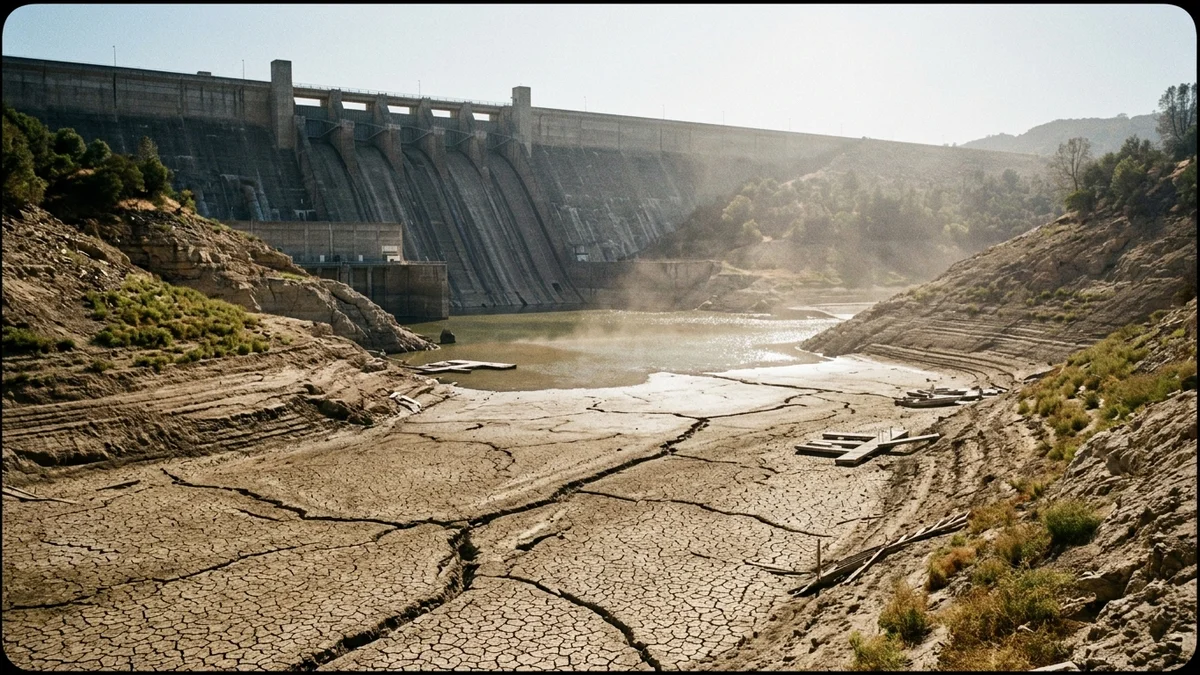
In Colombia, Ecuador, and Venezuela, reservoirs behind monumental hydroelectric facilities—including Guri and Guavio—have plunged below their operational penstock intake levels. National power authorities have been forced to implement rolling rolling blackouts of up to twelve hours daily, halting manufacturing facilities, paralyzing electrified urban rail transit, and shutting down municipal water purification plants.
In Southern Africa, the Kariba Dam on the Zambezi River has experienced a ninety-percent reduction in usable generation storage. The regional Southern African Power Pool has fragmented into localized, uncoordinated island grids, crippling mining operations and chemical refining.
Even thermal and nuclear power plants located inland have been caught in the crosshairs. With ambient river temperatures rising above regulatory environmental thermal discharge thresholds and river discharge volumes dropping to trickles, reactors across Western Europe and the American Midwest have been curtailed or completely shut down to prevent boiling local aquatic ecosystems or suffering catastrophic cavitation in cooling intake pumps.
The Unraveling Urban Social Contract
When running tap water and electricity disappear simultaneously during a record-shattering heatwave, modern urban centers cease to function as viable habitats. Major metropolitan complexes from Bogotá to Johannesburg, and from Karachi to Phoenix, are confronting the physical limits of municipal water delivery.
Emergency water tankers ("water mafias") have become the primary distribution mechanism in low-income urban peripheries, sparking violent civil clashes at distribution hubs and triggering localized curfew declarations. As sewage infrastructure loses sufficient hydraulic pressure to clear solid waste, vector-borne and waterborne pathogens—including cholera, typhoid, and dengue fever—are reemerging in high-density urban populations whose immune systems are already weakened by thermal stress and malnutrition.
The fiction of perpetual climate resilience through technological insulation has evaporated. The 2026 Super El Niño has demonstrated that human socioeconomic organization—from sovereign bond markets to global food system fragility—remains entirely subordinate to thermodynamic planetary constraints. As global temperatures refuse to retreat and oceanic heat reservoirs continue to discharge their stored energy into the atmosphere, the baseline has permanently shifted. What was once considered an anomalous climate event is now the harsh, unyielding foundation of the collapse era.
Authoritative Sources & Further Reading
Real-time geospatial feed aggregating USGS M5.0+ earthquakes, NASA EONET wildfires, volcanoes, severe storms, UN/EC GDACS alerts, and NOAA geomagnetic status.
Related Reports & In-Depth Intel
The +1.47°C Breach and the 2026–2027 Super El
With WMO global temperature anomalies hitting 1.47°C above pre-industrial norms and Niño 3.4 Pacific waters surging into a historic November–January peak, simultaneous Southern African crop failure and Andean emergency declarations reveal how a supercharged ENSO fractures fragile food and aid networks.

What Happens in the First 72 Hours
A technical chronological breakdown of the rapid collapse of communications, water supply, and security during the first three days of a complete grid failure.
Climate Collapse: The Looming Threat to Human Survival
Non-linear climate volatility is already hitting grids, breadbaskets, and insurance markets decades ahead of gentle textbook curves. Here is how compound weather shocks threaten survival—and how to adapt realistically.
El Niño Pushes Global Warming Past 2.2°C
When a strong El Niño stacks on top of record ocean heat, brief planetary spikes past 2.2°C above the pre-industrial baseline stop being distant computer projections and start breaking grids, crops, and coastal defenses.