190,000 Pink Slips and a Missing Boom

Corporate layoffs tied to AI restructuring hit roughly 190,000 workers through November 2026, yet independent economic audits show many firms cutting headcount just to pay server bills without seeing real productivity gains.
If a chief executive wants Wall Street to forgive bloated expenses on a Tuesday earnings call, there are two magic letters left in late 2026: AI.
Through mid-November 2026, workforce trackers tallying corporate restructuring announcements counted roughly 190,000 jobs eliminated globally in cuts explicitly linked to artificial intelligence adoption or "AI-era efficiency." That total already clears prior annual records across tech, banking, customer support, and telecoms. Just this month, major European carriers like Vodafone Germany and large American software firms trimmed fresh layers of salaried staff while telling shareholders the freed cash will go straight into automation and compute clusters.
Here is the awkward catch buried inside late-2026 management research from Gartner, official U.S. Bureau of Labor Statistics productivity data, and independent labor economists: in a huge share of those companies, the promised productivity miracle has not shown up yet. Firms are firing mid-level analysts, coordinators, and junior coders first—not because autonomous agents already do their jobs flawlessly, but because multi-billion-dollar GPU, private cluster power, and cloud licensing bills are eating operating margins alive.
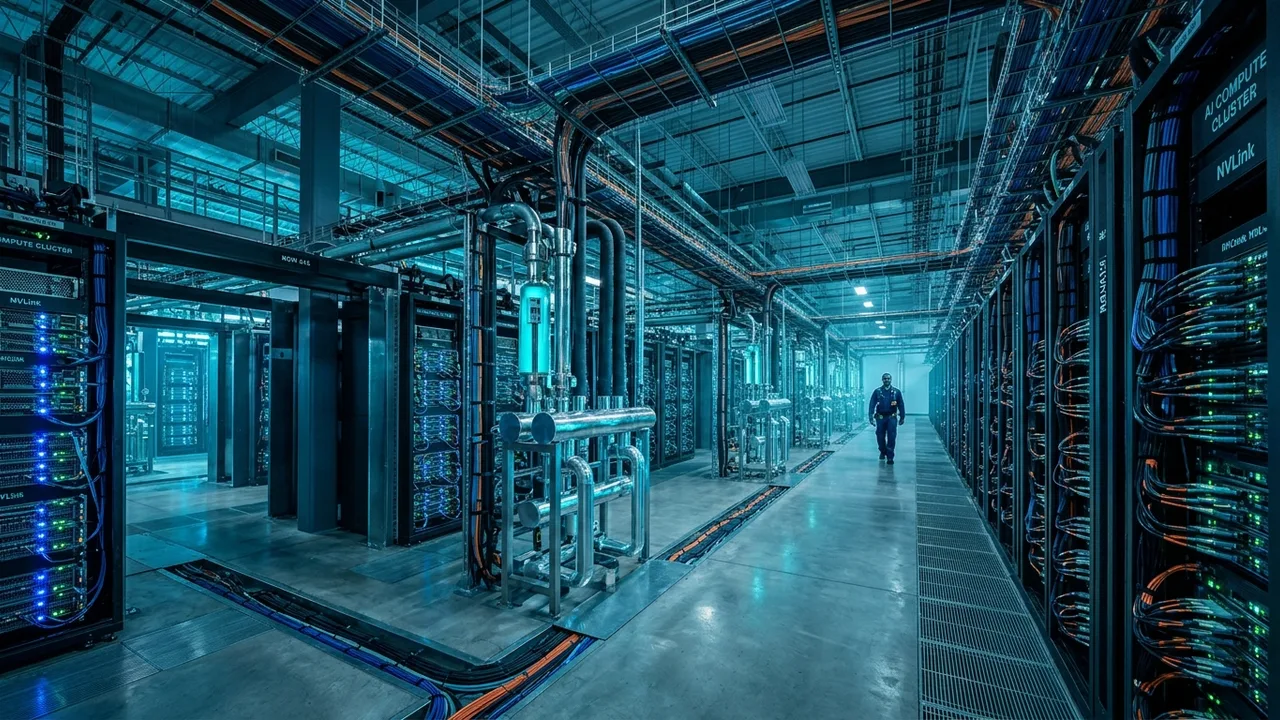
Following the Money Behind the Layoff Headlines
Look closely at the cash-flow math inside a typical Fortune 500 software or telecom company in November 2026. Five years ago, software seats were cheap, capital was near zero percent interest, and firms hired tens of thousands of project managers, operations coordinators, and regional support leads to chase growth.
Today, Federal Reserve monetary policy keeps borrowing costs stubbornly high while cloud AI infrastructure—GPU cluster leases, industrial electricity rates, fine-tuning talent, enterprise seat licenses, and compliance monitoring—costs real money every quarter. Shareholders have grown impatient waiting for top-line revenue explosions from chatbots. When revenue rises four percent instead of forty, there is only one fast lever left for a CFO to pull before Q4 closes: payroll.
Calling a ten-percent headcount cut an "AI transformation" solves two PR problems simultaneously:
- 01.It Makes Distress Look Like Genius: Laying off two thousand workers because sales slowed sounds like management failure. Laying off two thousand workers to "reallocate capital toward agentic AI workflows" sounds visionary on financial television.
- 02.It Funds CapEx Without Debt: Trimming
$300 millionin annual salary and benefits directly offsets$300 millionin server bills without issuing expensive corporate bonds.
- 03.It Resets Compensation Bands Quietly: Re-hiring a smaller skeleton crew six months later under "AI Operations Specialist" job titles lets HR reset legacy salary bands and strip out older remote-work perks without picking a public fight with existing teams.
| Corporate Segment | 2026 Layoff Driver | Actual Ground Reality |
|---|---|---|
| Tier-1 Call & Ticket Desks | Chatbot & voice-agent rollout | Real headcount compression (~30%+) |
| Junior Code & QA Testing | Automated coding copilots | Fewer hires; senior review burden |
| Mid-Level Admin & Ops | "AI efficiency" CapEx funding | Remaining staff overloaded; errors |
| Telecoms & Finance | Headcount -> server budgets | Margin defense; flat service speed |
Where Agents Actually Replace People—and Where They Fail
None of this means AI job displacement is fake. It simply cuts unevenly, and corporate press releases blur the line on purpose.
In narrow, text-heavy, rule-bound queues—Tier-1 customer billing questions, standard insurance claim intake, basic translation localization, boilerplate marketing copy, and routine unit-test generation—modern Agentic AI pipelines genuinely do the work of large junior teams. A handful of sharp human supervisors running verified agent scripts now clear ticket volumes that required eighty-person call centers in 2022.
Where the wheels wobble is messy real-world exceptions. When an autonomous logistics system misroutes freight around a Red Sea delay, when a hospital billing bot hallucinates an insurance code, or when a rushed developer pastes subtle security bugs out of an AI IDE without reading memory boundaries—compounding the collapse of enterprise vulnerability windows—the remaining human staff ends up playing frantic cleanup.
Gartner's late-2026 findings pointed straight at this gap: companies slashing headcount without investing heavily in retraining surviving employees to audit, govern, and constrain autonomous systems—structured safeguards outlined in the NIST AI Risk Management Framework—routinely end up with brittle workflows, slower exception handling, and zero net productivity boost twelve months later. You cannot fire the people who know where the institutional skeletons are buried and expect a language model to guess your company's unwritten rules, especially amid a wider flood of synthetic digital noise.

Where Remaining Teams Break Under Load
When firms cut twenty percent of salaried analysts without rebuilding internal tooling, surviving managers spend half their week babysitting half-baked agent drafts, chasing silent hallucinated API calls, and writing post-mortems for bugs introduced by automated code commits nobody read carefully. Institutional memory walks out the lobby door with every severed badge: when a rare legacy billing script crashes before quarter-end, nobody remaining remembers why a specific workaround existed in 2019, turning a five-minute fix into a three-day outage. That is the real paradox of late-2026 restructuring—quarterly payroll drops cleanly on paper, yet customer response times and error rates quietly worsen while software vendors pocket the saved cash in GPU lease fees.
The Quiet Vanishing of the Entry-Level Ladder
Even if total unemployment numbers look deceptively mild in official headlines, the shape of white-collar hiring has warped in a way that creates long-term trouble.
Senior staff engineers, experienced field technicians, and seasoned domain auditors are still in fierce demand—often busier than ever cleaning up machine-generated drafts and supervising automated tools. What quietly dried up across 2025 and 2026 are the entry-level rungs: junior paralegals, associate analysts, entry-level programmers, and trainee operations coordinators.
Think five years ahead. How does an engineering firm, bank, or power utility mint a competent forty-year-old senior decision-maker in 2031 if it stopped hiring and mentoring twenty-three-year-olds in 2026 because an AI assistant drafted decent memos? Nobody in corporate human resources has a serious answer to that question yet, because quarterly bonus plans do not reward training pipelines five years out. Universities are still graduating hundreds of thousands of debt-carrying business, marketing, and computer science majors into an entry-level job market that quietly pulled up the gangplank behind itself. Many end up taking patchwork gig roles or retraining late into regulated municipal and industrial trades where licensing boards still protect wages.
Physical AI Moves Off the Screen Into Warehouses
While office workers watch Slack channels shrink, another shift picked up speed in late 2026: physical AI moving onto loading docks, factory floors, and retail campuses. Companies like Tesla and industrial logistics integrators continue pouring money into humanoid robotics pilots, autonomous yard trucks, and round-the-clock vision-inspection lines.
Unlike human shift workers who clock out at 5:00 PM, continuous machine fleets run twenty-four hours a day—streaming high-definition video telemetry, lidar point clouds, and fleet-coordination packets nonstop across plant networks. Notice the twist: automating physical warehouses eliminates repetitive forklift and sorting shifts, yet simultaneously creates acute shortages of hands-on electromechanical repair techs, industrial electricians, and PLC maintenance mechanics who cannot be replaced by a cloud API when a servo motor jams at 3:00 AM.
What Working Households Should Take From This
Forget breathless debates about whether hypothetical AGI arrives next year or in 2035. Look at the incentives driving payroll decisions right now in November 2026:
- 01.Routine Screen Work Has Zero Moat: Any desk job whose daily output is turning emails, spreadsheets, or standard templates into slightly different emails and spreadsheets is exposed to either direct agent automation or CapEx-driven budget cuts.
- 02.Audit Responsibility Beats Raw Drafting Speed: Workers who stay indispensable are the ones legally or technically accountable for verifying whether machine output matches physical reality—signing off on structural drawings, debugging live production failures, negotiating angry human vendors, or fixing real hardware.
- 03.Physical Trades Carry Real Pricing Power: While
190,000salaried corporate workers absorbed pink slips this year, qualified diesel mechanics, substation relay technicians, HVAC chiller specialists, and industrial plumbers remained nearly impossible to hire on short notice.
Building Personal Leverage Outside Corporate Payrolls
Smart white-collar workers watching these restructuring waves in late 2026 are quietly hedging their bets before another quarterly memo lands. That means cross-training out of pure slide-deck administration into direct technical verification, local service businesses, equipment maintenance, or small-batch manufacturing where software cannot sign its own safety inspection. Keeping liquid cash reserves (six months of lean living costs) plus paid-off tools and low fixed monthly overhead gives you breathing room to walk past bad corporate restructurings instead of panicking when an HR calendar invite pops up unannounced. It also pays to build direct customer relationships or independent consulting retainers outside a single employer's Slack workspace, so one boardroom budget cut never zeroes out your entire family income in a single afternoon.
The corporate layoff wave of 2026 is half genuine automation, half financial desperation dressed up in Silicon Valley vocabulary—macroeconomic strains echoed across the IMF World Economic Outlook and our analysis of late-2026 AI IPO and bubble pressures. Either way, counting on a generic salaried desk role as a safe ten-year shelter while firms liquidate payroll to buy server racks is a gamble with worsening odds. Pay attention to what breaks physically around you—machines, pipes, power systems, food distribution, and local compliance—keep primary macroeconomic and technical monitors bookmarked in our Useful Websites directory, and keep one foot planted firmly in work that cannot be replaced by an invoice-cutting API token. Whether corporate AI spending pays off smoothly in 2028 or triggers a sharp data-center budget pullback, people holding tangible repair licenses, customer trust, and lean household balance sheets keep steady leverage while downsized middle-office ranks fight over shrinking corporate headcounts. Notice also how local municipalities, regional hospitals, and utility co-ops struggle endlessly to fill practical operations billets even during tech downturns—reliability in the physical economy remains one of the few durable career moats left.
Real-time geospatial feed aggregating USGS M5.0+ earthquakes, NASA EONET wildfires, volcanoes, severe storms, UN/EC GDACS alerts, and NOAA geomagnetic status.
Related Reports & In-Depth Intel
The Great Silicon Mirage
As tech giants OpenAI, Anthropic, and SpaceX prepare for landmark IPOs, we analyze the systemic inflation of the AI industry and the economic shockwaves that will follow.

Big Tech's 181-Gigawatt Power Grab
Tired of waiting seven years in public utility queues, data center developers across the US, UK, and Europe are building 181 gigawatts of private on-site gas turbines to feed AI clusters.
Strategic Analysis: The Open-Weights Reasoning Revolution, DeepSeek-R1 Shockwaves
The sudden algorithmic leap of high-efficiency open-weights reasoning architectures has shattered the trillion-dollar hyperscale capital expenditure narrative, exposing the extreme structural vulnerability of centralized semiconductor monopolies and utility grid capacity.
Runaway AI Development and the Collapse of Cognitive
As organizations hand software architecture, grid dispatch, financial routing, and diagnostic judgment to opaque neural networks, human operators are losing the ability to audit or manually run critical systems when automation fails.