Strategic Analysis: The Open-Weights Reasoning Revolution, DeepSeek-R1 Shockwaves
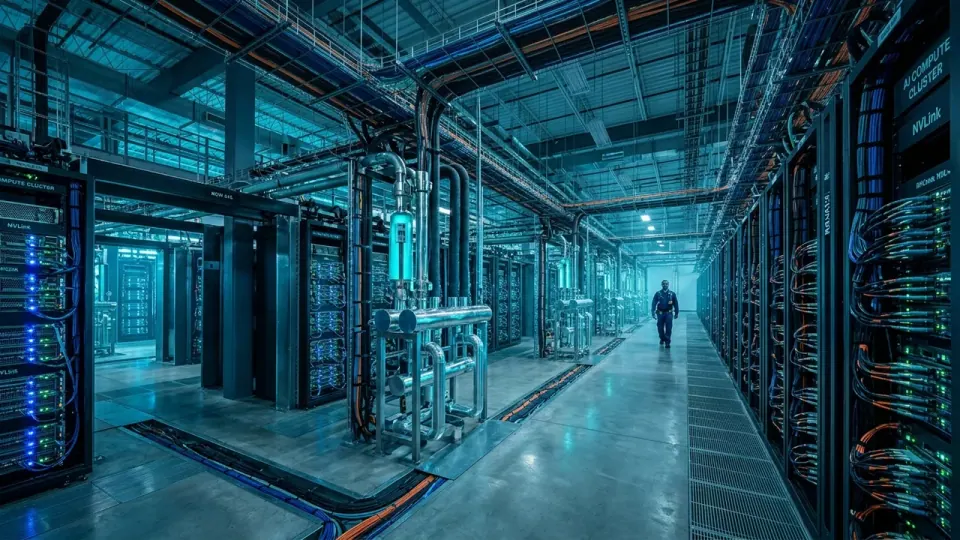
The sudden algorithmic leap of high-efficiency open-weights reasoning architectures has shattered the trillion-dollar hyperscale capital expenditure narrative, exposing the extreme structural vulnerability of centralized semiconductor monopolies and utility grid capacity.
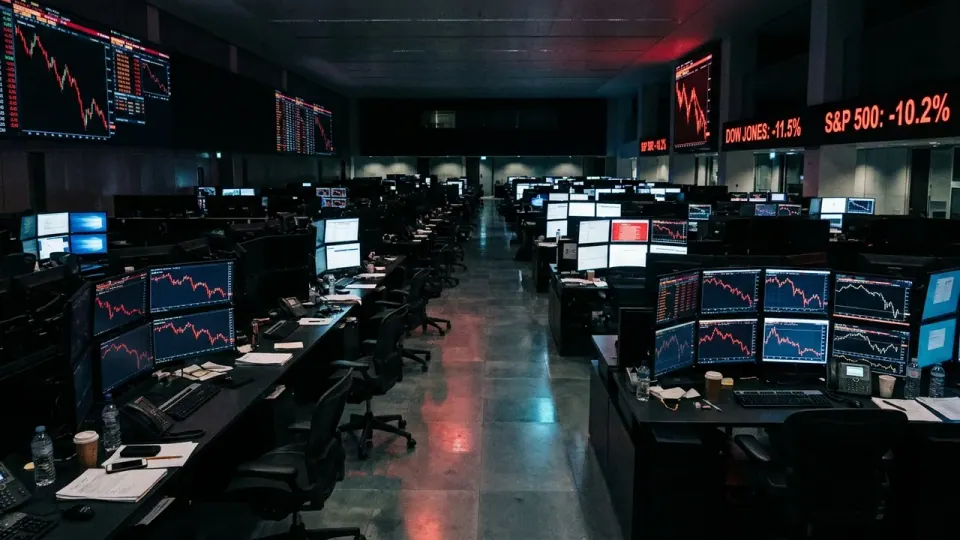
In late January 2025, global technology capital markets experienced one of the most violent single-day repricing events in modern financial history. The catalyst was not a catastrophic kinetic conflict or a novel macroeconomic shock, but the unexpected release of an open-weights reasoning model developed by a nimble, quantitative trading-backed research laboratory based in Hangzhou: DeepSeek-R1. In a single stroke, the foundational premise underpinning trillions of dollars in projected Western hyperscale capital expenditures—the dogmatic belief that frontier artificial intelligence could only be achieved through multi-billion-dollar semiconductor clusters and monstrous gigawatt-scale electrical infrastructure—was decisively dismantled, exposing the same AI valuation and IPO bubble vulnerabilities building across the sector.
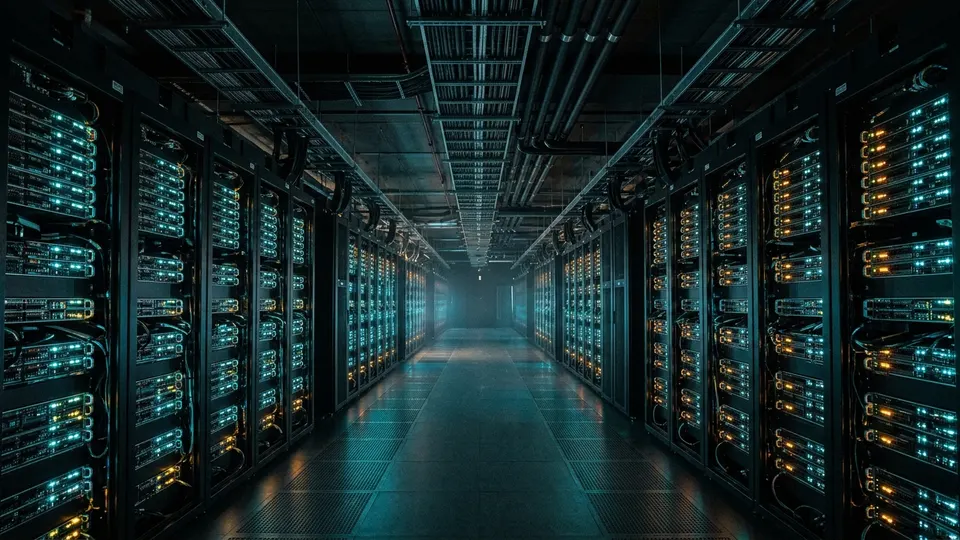
For nearly four years, the dominant tech narrative argued that intelligence was a direct linear function of capital intensity, raw silicon acreage, and electrical power consumption. Technology conglomerates, sovereign wealth funds, and Wall Street investment banks poured hundreds of billions of dollars into advanced NVIDIA H100 and B200 GPU infrastructure, constructing immense multi-hundred-megawatt computing bunkers across the Virginia, Texas, and Nordic power grids. Venture capital valuations and enterprise software multiples assumed that whoever controlled the largest centralized compute clusters would establish an impenetrable economic and technological moat.
DeepSeek-R1 proved that algorithmic ingenuity, surgical architectural optimization, and advanced post-training distillation could replicate—and in many formal mathematical and coding benchmarks, surpass—the reasoning capabilities of closed proprietary frontier models at less than one-twentieth of the training and inference cost. The strategic, geoeconomic, and infrastructure implications of this algorithmic leap are profound and destabilizing.
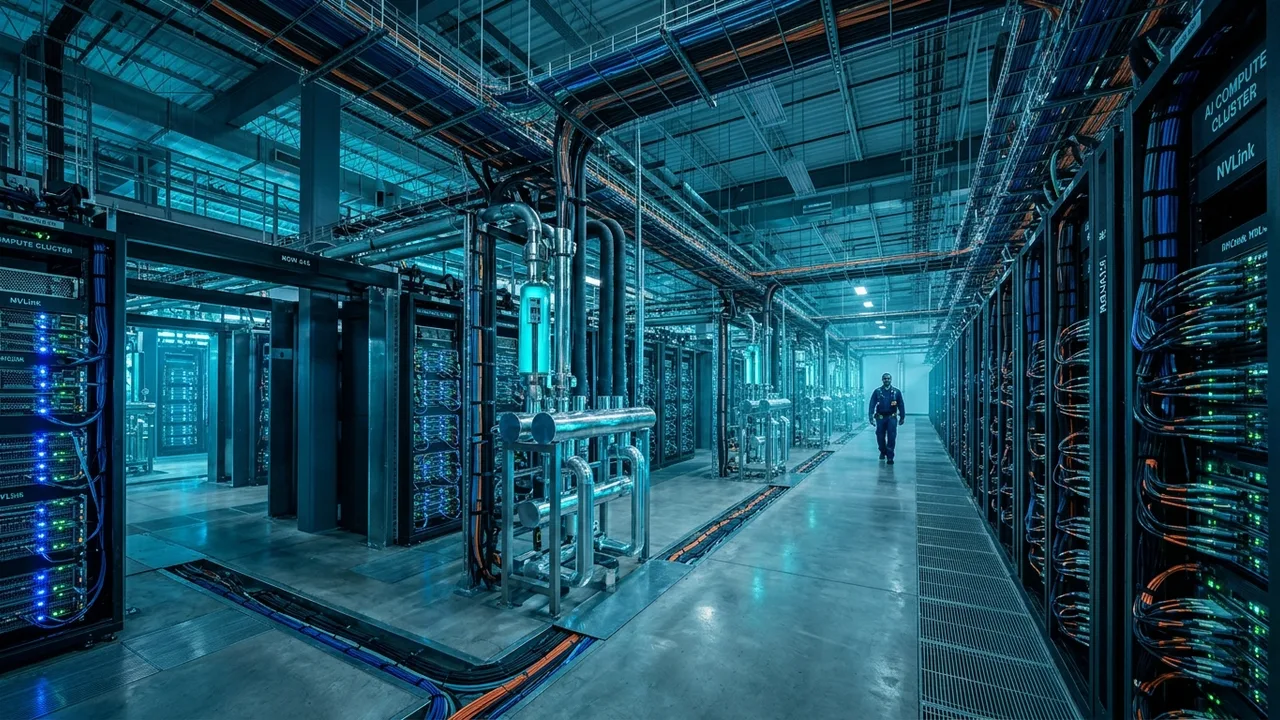
The Engineering Breakdown: How the Moat Was Breached
To understand why DeepSeek-R1 sent shockwaves through the geopolitical and semiconductor landscape, one must examine its core architectural innovations:
- 01.Multi-Head Latent Attention (MLA): Traditional transformer architectures suffer from severe memory bottlenecks during the generation phase due to the explosive growth of the Key-Value (KV) cache. DeepSeek engineered a compressed low-rank projection mechanism that compresses the KV cache by over ninety percent, allowing massive batch sizes to be processed within standard GPU high-bandwidth memory (HBM) without requiring multi-node cluster synchronization.
- 02.DeepSeekMoE with Fine-Grained Sparsity: Rather than routing tokens through monolithic, power-hungry parameters, the architecture utilizes 256 ultra-fine experts, activating only eight experts (roughly 37 billion active parameters out of 671 billion total) per individual token. This sparsity achieves state-of-the-art capability while operating within a tiny thermodynamic envelope.
- 03.Pure Reinforcement Learning for Reasoning Emergence: Unlike legacy models that relied on millions of expensive, manually curated human demonstration tokens (SFT), DeepSeek pioneered large-scale reinforcement learning (RL) without prior supervised warmup. The model autonomously developed self-reflection, multi-step error correction, and internal chain-of-thought verification loops through mathematical reward functions.
- 04.Distillation into Lightweight Consumer Silicon: Crucially, the reasoning behaviors discovered by the 671B model were successfully distilled into dense models ranging from 1.5B to 70B parameters, allowing frontier reasoning to run locally on single desktop GPUs, edge hardware, and off-grid mobile terminals.
| Model Architecture | Est. Training Cost | Active Parameters | Inference Cost/M Tokens |
|---|---|---|---|
| Proprietary Frontier | $150M - $300M | Monolithic Dense | $15.00 - $60.00 |
| Hyperscale Next-Gen | $500M - $1.2B | Multi-Cluster H100 | $20.00 - $75.00 |
| DeepSeek-V3 / R1 | ~$6.0M (Reported) | 37B (out of 671B) | $0.14 - $0.55 |
| Distilled Edge (14B) | <$50,000 Distilled | 14B Dense | Zero (Local Consumer) |
The table above illustrates the unprecedented delta in operational economics. A three-order-of-magnitude reduction in inference and training costs destroys the projected software profit margins of centralized SaaS giants. If an open-source model can deliver equivalent reasoning for pennies on consumer-grade hardware, the economic justification for multi-hundred-billion-dollar enterprise subscriptions and venture capital subsidization evaporates overnight.
Geopolitical Realignment and the Failure of Export Controls
The strategic fallout of the DeepSeek breakthrough has delivered a humiliating blow to Western export control regimes. For over three years, the United States Department of Commerce Bureau of Industry and Security (BIS) enacted sweeping trade sanctions intended to cripple Chinese artificial intelligence development. The export of advanced extreme ultraviolet (EUV) photolithography scanners from ASML, cutting-edge foundry services from TSMC, and top-tier NVIDIA compute accelerators was strictly prohibited.
Washington's strategic thesis rested entirely on the assumption that without access to the world's most advanced 3-nanometer and 2-nanometer fabrication nodes, foreign adversaries would remain permanently relegated to secondary technological status.
DeepSeek disproved this assumption by demonstrating that algorithmic efficiency surpasses hardware brute force:
- Facing physical hardware constraints and restricted interconnect bandwidth, Chinese researchers optimized software, communications kernels, and memory allocation down to bare-metal assembly.
- By co-designing software around clusters of downgraded, export-compliant H800 and domestic chips, they extracted near-theoretical maximum utilization, bypassing the need for tens of thousands of unrestricted flagship chips.
- The open-sourcing of model weights under permissive MIT licenses democratized advanced frontier reasoning across the entire Global South, empowering military establishments, state intelligence organs, and commercial competitors globally with state-of-the-art capability outside the governance boundaries of Western standards such as the NIST AI Risk Management Framework, accelerating unaligned frontier compute and kinetic AI competition.

The Energy Grid and Data Center CapEx Reckoning
Beyond the semiconductor supply chain, the open-weights reasoning revolution has triggered an acute structural reckoning across the energy sector. In 2023 and 2024, utility companies across North America and Europe projected staggering double-digit increases in baseload electrical demand—trends tracked in U.S. EIA monthly electricity datasets—citing the insatiable appetite of planned AI mega-datacenters requiring up to two gigawatts each. Nuclear power plant restart agreements were signed, decommissioned coal facilities were slated for life-extension, and multi-billion-dollar transmission grid expansions were approved under the assumption that hyperscale AI compute energy cannibalization would consume up to nine percent of total continental electricity by 2030.
Now, that capital allocation thesis is confronting an existential valuation squeeze:
- If frontier reasoning can be achieved through ultra-sparse architectures requiring only five percent of the electrical energy per query, the projected demand curve modeled by the International Energy Agency (IEA) for dedicated mega-datacenters faces sharp downward revision.
- Commercial real estate investment trusts (REITs) and infrastructure funds that heavily leveraged their balance sheets under tight Federal Reserve monetary policy to purchase land and secure utility interconnection queues—mirroring Big Tech's 181 GW private gas and power grab—are facing severe asset write-downs.
- Regional grid balancing authorities, which risked system stability to accommodate massive industrial compute loads, must now manage stranded transmission investments and volatile industrial load patterns alongside broader global infrastructure and energy telemetry.
The Strategic Horizon: From Compute Hegemony to Epistemic Asymmetry
The ultimate strategic lesson of the DeepSeek shock is that in the domain of cognitive technology, intellectual centralization is inherently brittle. The dream of a handful of Silicon Valley monoliths acting as proprietary gatekeepers of artificial intelligence has been shattered. The democratization of frontier reasoning into the wild open-source commons is permanent and irreversible.
In this decentralized landscape, competitive advantage will no longer be determined by who owns the largest centralized supercomputer cluster, but by who possesses the domain-specific data, the physical manufacturing capacity, and the cultural adaptability to integrate sovereign, local, edge-based artificial intelligence into real-world industrial, military, and civil infrastructure. The semiconductor moat has been crossed; the era of algorithmic asymmetric warfare has begun.
Real-time geospatial feed aggregating USGS M5.0+ earthquakes, NASA EONET wildfires, volcanoes, severe storms, UN/EC GDACS alerts, and NOAA geomagnetic status.
Related Reports & In-Depth Intel
Runaway AI Development and the Collapse of Cognitive
As organizations hand software architecture, grid dispatch, financial routing, and diagnostic judgment to opaque neural networks, human operators are losing the ability to audit or manually run critical systems when automation fails.
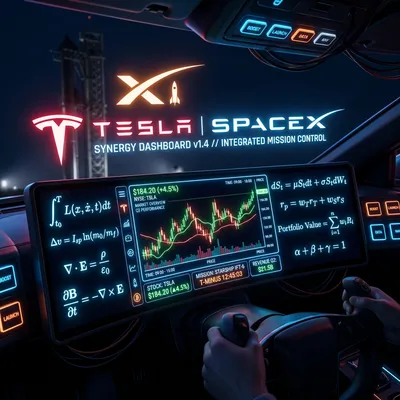
Dissecting the Empire
How much are Elon Musk's flagship companies actually worth? We analyze the balance sheets, operational revenues, and net profits of Tesla and SpaceX to separate speculative hype from real value.
What Happens If Next-Gen AI Jumps Again
Frontier models like Opus 5.5, Gemini 4, and Astra 6 shifted AI from chat assistants to reliable multi-step agents. Here is what happens to jobs, software, and energy grids if the next generation makes the same jump.
190,000 Pink Slips and a Missing Boom
Corporate layoffs tied to AI restructuring hit roughly 190,000 workers through November 2026, yet independent economic audits show many firms cutting headcount just to pay server bills without seeing real productivity gains.