Big Tech's 181-Gigawatt Power Grab
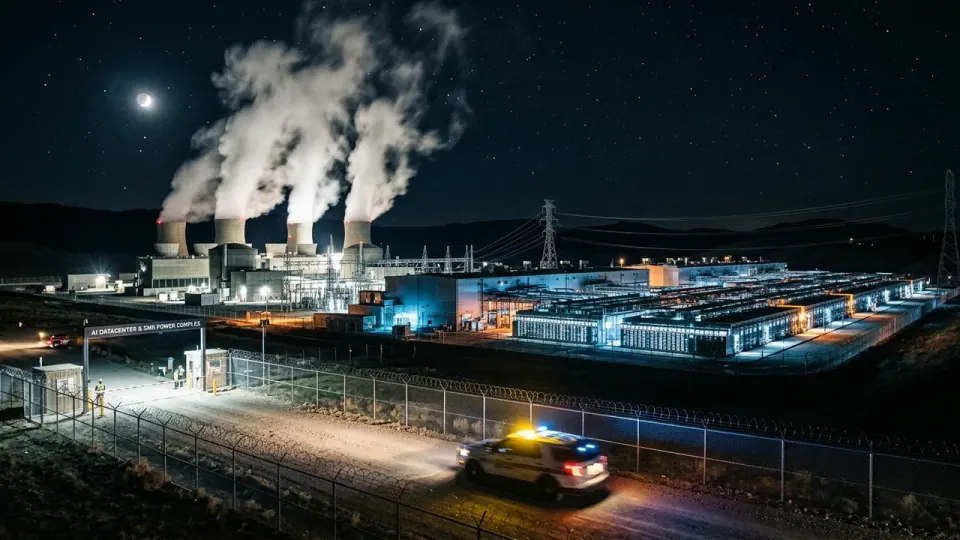
Tired of waiting seven years in public utility queues, data center developers across the US, UK, and Europe are building 181 gigawatts of private on-site gas turbines to feed AI clusters.
Every tech conference still puts sunny photographs of solar panels and spinning offshore wind blades on the opening keynote slide. Out in the muddy industrial parks of West Texas, rural Virginia, Wales, and northern Germany, the people actually pouring concrete for artificial intelligence server halls are ordering gas turbines as fast as Siemens, GE Vernova, and Mitsubishi can cast blades.
In November 2026, BloombergNEF put a hard number on this quiet land rush: tech developers have queued up 181 gigawatts of private, on-site gas-fired power capacity across the United States, the United Kingdom, and Europe. That is not a typo. One hundred and eighty-one gigawatts is roughly equal to the entire electrical generating fleet of Germany and the Netherlands combined—built strictly behind the fence to bypass public electricity grids that can no longer connect giant server campuses on Wall Street's schedule.
Inside the utility industry, they call the trend "speed to power." Outside it, energy economists—tracking soaring data-center electricity demand flagged by the International Energy Agency and our report on hyperscale AI compute energy cannibalization—see something blunter: Silicon Valley has decided that if the public grid takes seven years to build transmission lines, hyperscalers will simply drop private fossil fuel power stations beside their server halls and burn methane directly.
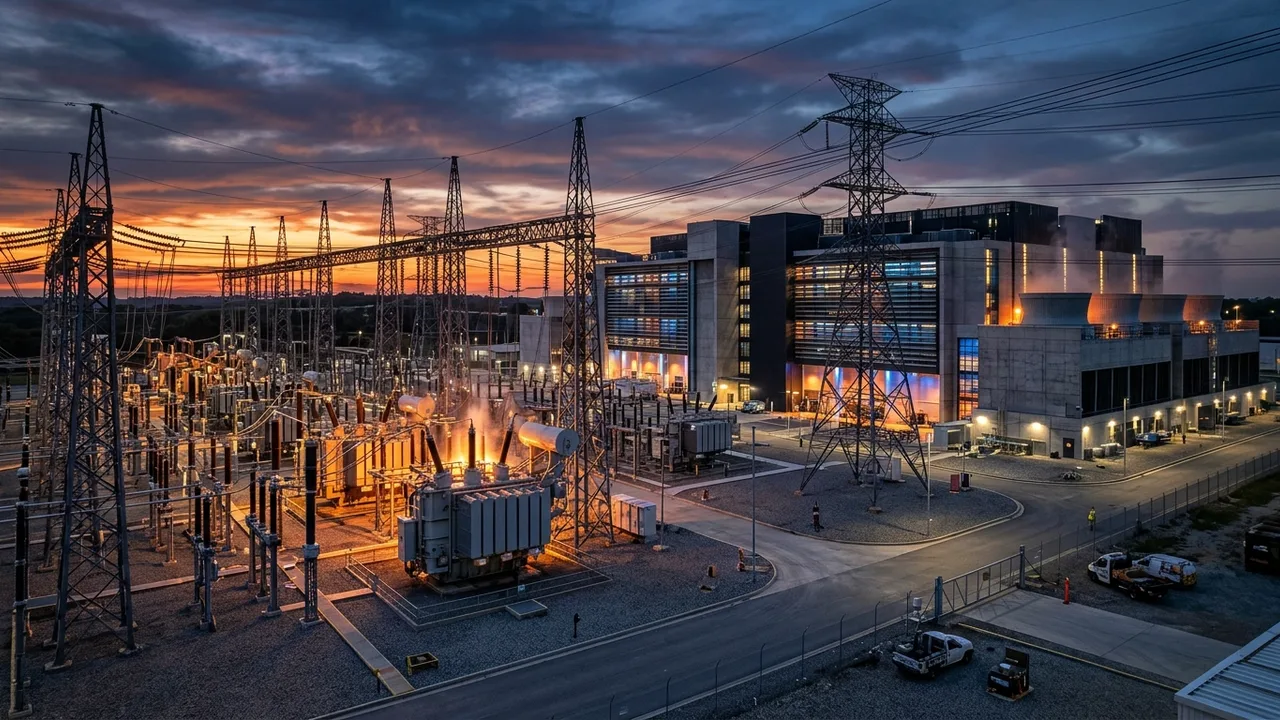
Why Public Grids Lost the Race
None of this happened because data center engineers secretly love burning natural gas. It happened because modern electrical grids move at the speed of zoning hearings, environmental lawsuits, and high-voltage transformer backlogs, while frontier AI capital burns through cash on eighteen-month hardware cycles.
Ask a utility planner in PJM Interconnection (the regional grid covering Virginia's famous Data Center Alley), operators posting live continental flows on the ENTSO-E Transparency Platform, or National Grid in Britain when a new five-hundred-megawatt substation tie-in can go live. The honest answer in late 2026 runs anywhere from five to nine years. High-voltage circuit breakers and grain-oriented electrical steel transformers sit on multi-year waitlists. Residents fight new 345-kilovolt overhead pylons across suburban counties for years in court.
A private equity developer holding fifty thousand liquid-cooled GPU racks that depreciate rapidly cannot sit on idle concrete for seven winters waiting for a public transmission permit. So engineers pulled out an old oilfield playbook: park modular aeroderivative gas turbines right beside the server building, tap directly into an interstate high-pressure gas pipeline running half a mile away, and skip the electrical utility queue completely.
How Behind-the-Fence Power Works in Practice
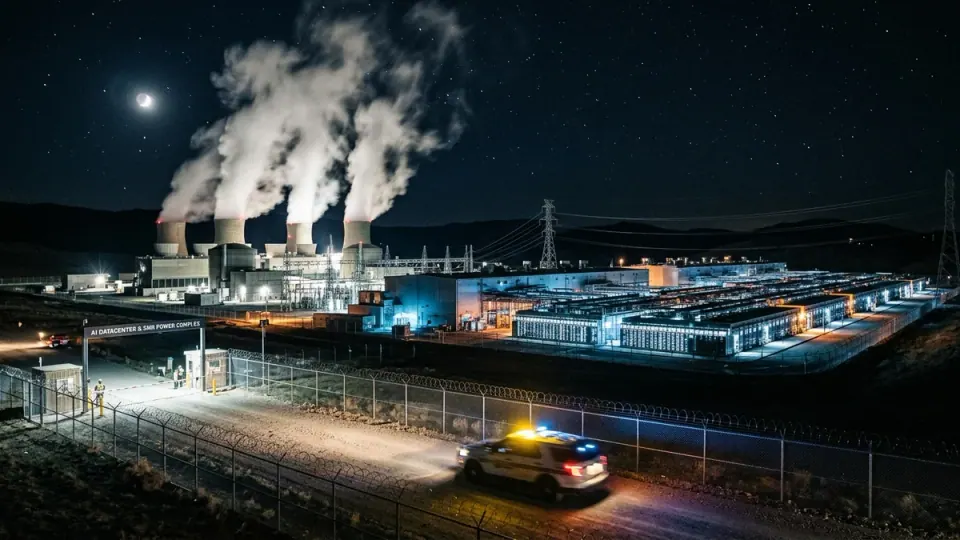
Walk a construction site outside Abilene or northern Virginia this autumn and the layout looks nothing like a clean suburban office park. Long windowless server halls sit flanked by rows of shipping-container-sized turbine enclosures, massive radiator chillers humming to reject tens of megawatts of heat, and freshly welded yellow pipeline taps tied straight into regional gas gathering lines. Because the electricity never steps onto public utility wires, developers avoid retail utility tariffs, long-distance transmission line losses, and state public-utility-commission rate hearings—answering strictly to air-quality permit boards and pipeline pressure contracts.
| Power Strategy | Typical Wait Time | Key Bottleneck | Grid Side Effect |
|---|---|---|---|
| Public Utility Grid Tie-In | 5 - 9 Years | 345kV transformers & NIMBY | Ratepayer hikes |
| Nuclear Small Modular (SMR) | 2031 - 2035+ | Licensing & fuel enrich. | Zero near relief |
| Solar + Battery Microgrid | 2 - 4 Years | Land acreage & cloudy days | Needs gas backup |
| On-Site Private Gas Turbine | 18 - 30 Months | Turbine slot & pipe tap | +181 GW methane |
What Happened to All Those Net-Zero Pledges?
Three years ago, nearly every major cloud company swore its 2030 data centers would hum strictly on clean electricity. Those pledges relied on an accounting trick—buying renewable energy credits from wind farms in Kansas to offset coal-heavy power consumed at night in Ohio—plus optimistic timelines for nuclear restarts and fusion startups.
Physics caught up with accounting in 2026. Training and running giant reasoning clusters, autonomous campus cameras, and always-on enterprise agent workflows pulls flat, ruthless baseload power twenty-four hours a day, 365 days a year. A server hall cannot throttle down by half when wind speeds drop at 2:00 AM on a Tuesday in January.
Nuclear restarts like Three Mile Island Unit 1 help at the margins, and small modular reactors remain mostly PowerPoint drawings until the 2030s. That left natural gas as the only fuel capable of delivering steady multi-hundred-megawatt juice inside twenty-four months. When BloombergNEF dropped the 181-gigawatt figure right in the middle of November 2026 climate talks, environmental groups called it a betrayal of net-zero promises. Tech executives barely bothered defending the optics—quarterly compute capacity beats climate press releases every single time when billions in cloud market share are on the line.
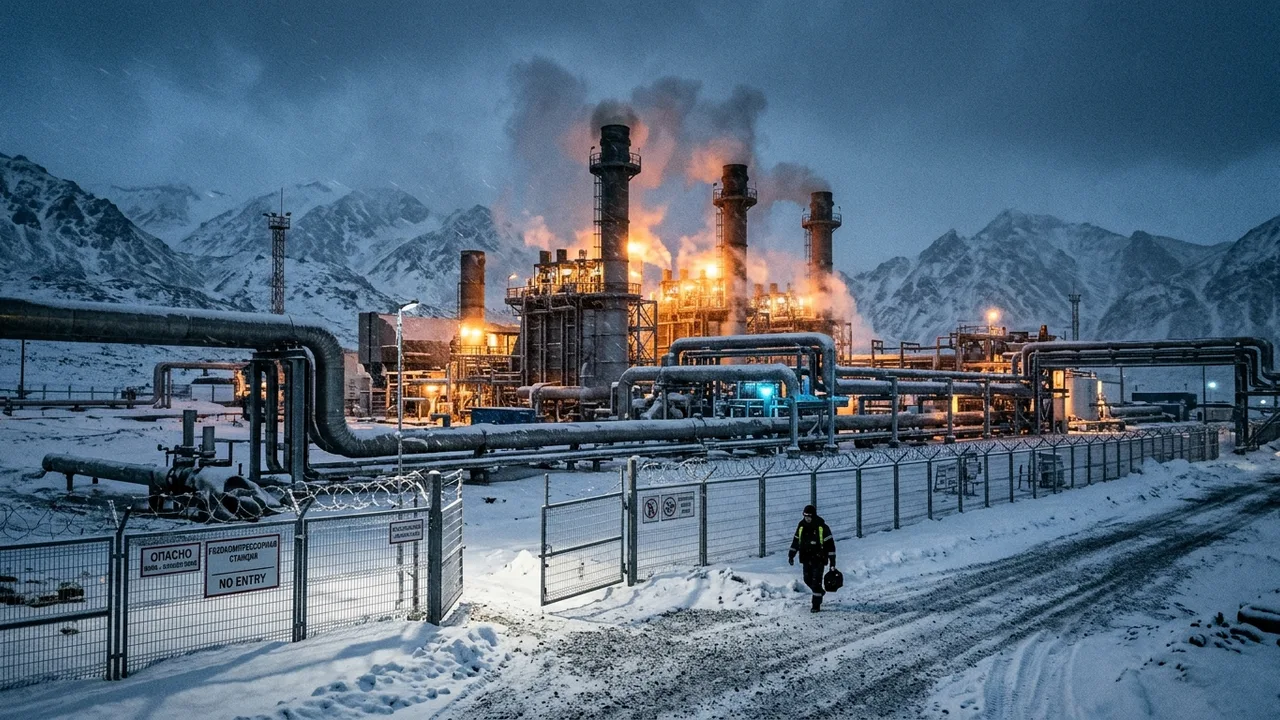
Who Pays When Pipelines Run Tight?
Suppose you do not own a single Nvidia share and do not care what software giant wins the AI race. Why should 181 gigawatts of behind-the-fence gas turbines matter to your kitchen heating bill?
Because gas molecules do not teleport to Virginia or Frankfurt for free. Even though private server campuses bypass the public electrical transmission grid, they still plug straight into the exact same finite natural gas pipeline network tracked in the U.S. EIA Electric Power Monthly that heats homes, fires brick kilns, and feeds nitrogen fertilizer plants.
- 01.Winter Pipeline Bottlenecks: High-pressure trunk pipelines in New England, parts of Europe, and the UK already hit physical flow limits during cold snaps. Adding massive industrial gas-turbine draws that run flat-out at minus ten degrees Celsius forces gas utilities to bid harder against residential heating suppliers, compounding the cold-weather fuel bill.
- 02.Turbine Manufacturing Crowding: Every aeroderivative gas turbine bolted onto a private AI campus in Texas is one fewer peaking turbine available for a municipal electric cooperative trying to replace an aging coal plant or stabilize wind-heavy grids during winter calm spells.
- 03.Abandoned Grid Cost-Sharing: Public electrical utilities recover the cost of maintaining poles, wires, and storm crews across total kilowatt-hours sold. When giant industrial electricity buyers unplug from public grids to self-generate behind private fences, the fixed upkeep bill for aging wires—already a factor in broader electric grid fragility—gets divided across fewer remaining households and small shops.
The Strange Rise of "Active Grid Intelligence"
Not everyone in the power business is surrendering customers quietly. Alongside resilience programs led by the U.S. Department of Energy's CESER office, utilities and grid software vendors spent much of 2026 rolling out Active Grid Intelligence tools—real-time sensor networks and automated load-balancing software meant to squeeze another fifteen or twenty percent of headroom out of existing copper wires without waiting years for new steel towers.
Dynamic line rating sensors measure actual wind cooling along sagging transmission cables so dispatchers can push heavier amperage through cold winter air safely. Automated demand-response switches let data centers drop non-urgent batch training jobs for ninety minutes during evening dinner peaks in exchange for faster interconnection approval.
It is clever engineering, and it buys utilities a bit of breathing room. Still, software cannot conjure megawatts out of thin air when whole industrial parks suddenly ask for a gigawatt each. And ironically, the companies building grid-balancing software are competing for the same scarce electrical engineers and transformer cores as the hyperscalers bypassing them.
Water Cooling Meets Energy Politics
Behind-the-fence gas turbines solve electricity queues, yet they also create an awkward side fight over local water rights. Evaporative cooling towers at multi-hundred-megawatt AI campuses gulp millions of gallons of municipal or aquifer water weekly—often inside arid counties in West Texas, Arizona, or dry European industrial belts already watching streamflow and water tables sag on the USGS National Water Dashboard under 2026 heat waves. Local residents who already grumbled about rising residential electric rates suddenly watch private turbines burn gas next door while municipal water utilities ask homeowners to stop watering lawns. Expect zoning boards across North America and Europe to turn markedly more hostile toward unpermitted data center utility campuses over the next eighteen months, dragging projects into county water-board hearings even after developers paid extra to skip the public electrical queue.
What Happens If the AI Boom Cools Off?
Every infrastructure gold rush carries a hangover risk. Look back at the fiber-optic trenching frenzy of 1999–2000: telecom firms buried millions of miles of dark glass across continents, went bankrupt, and left cheap bandwidth behind for the next wave of companies.
Private gas-fired AI power plants carry a messier hangover. Unlike dark fiber sleeping harmlessly under Kansas cornfields, natural gas turbines require constant mechanical maintenance, pipeline pressure contracts, and twenty-year amortization schedules. If open-weights reasoning models and cheaper edge hardware keep driving down the compute cost of intelligence faster than enterprise AI revenues grow—a margin squeeze already driving AI-era corporate layoffs without productivity gains—some second-tier server campuses built on rush-order gas turbines could end up stranded by 2029—too expensive to run without hyperscale tenants, yet bolted straight into local gas mains. Worse still, regional utilities that upgraded local distribution feeders hoping to serve adjacent commercial parks could find themselves stuck holding empty transformer capacity while the biggest industrial buyers sit permanently behind private fences.
For now, though, the concrete mixers are still rolling. Tech giants looked at slow democratic permitting, looked at aging public wires, and chose to build their own parallel fossil-fueled power system instead. Whether you view that as pragmatic engineering or reckless energy hoarding, one thing is obvious in November 2026: the age of polite grid sharing is over. Regional homeowners should watch local natural gas basis spreads, winter heating tariffs, and macro resource charts in our Data Center closely over the next twenty-four months—because when trillion-dollar data center operators start bidding for winter pipeline molecules alongside municipal gas utilities, ordinary households never win the auction. Keep an eye on local utility rate filings and pipeline capacity hearings in your county—what gets approved behind quiet industrial zoning boards this winter will decide your heating bill three winters from now. Watching industrial natural gas demand jump quietly alongside residential peak winters is one of the clearest leading indicators of regional household energy inflation.
Real-time geospatial feed aggregating USGS M5.0+ earthquakes, NASA EONET wildfires, volcanoes, severe storms, UN/EC GDACS alerts, and NOAA geomagnetic status.
Related Reports & In-Depth Intel
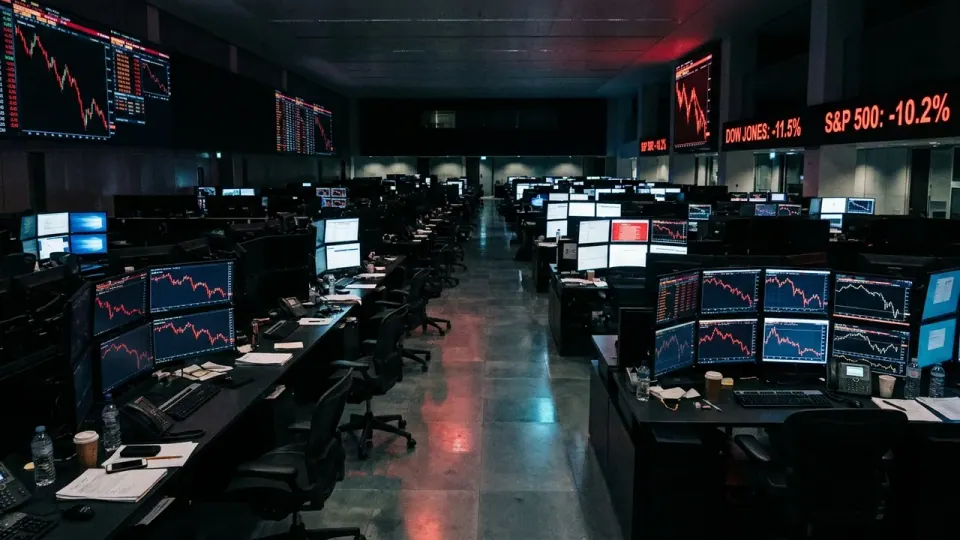
190,000 Pink Slips and a Missing Boom
Corporate layoffs tied to AI restructuring hit roughly 190,000 workers through November 2026, yet independent economic audits show many firms cutting headcount just to pay server bills without seeing real productivity gains.
The Collapse of Patching Windows
As automated static analysis audits nine months of C/C++ network code in 90 hours for $935, defenders are witnessing the permanent death of traditional 6-month vulnerability grace periods—triggering Google Project Zero's 'Full X' mandate and federal AI-FORTS grid mobilization.
Strategic Analysis: The Open-Weights Reasoning Revolution, DeepSeek-R1 Shockwaves
The sudden algorithmic leap of high-efficiency open-weights reasoning architectures has shattered the trillion-dollar hyperscale capital expenditure narrative, exposing the extreme structural vulnerability of centralized semiconductor monopolies and utility grid capacity.
The Gigawatt Compute Trap
The insatiable electricity appetite of frontier artificial intelligence training clusters is colliding with aging electrical grids, forcing tech conglomerates to monopolize baseload nuclear and gas generation while civilian utility rates skyrocket.