The Cold-Weather Fuel Bill
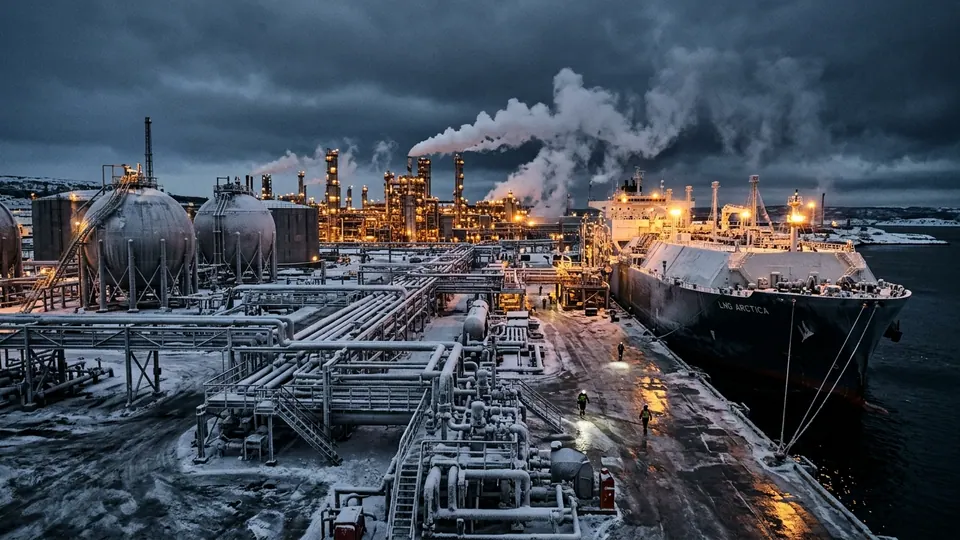
Winter heating demand collides with Middle East supply risks in three clear ways: tighter diesel and LNG tankers, trapped central banks, and squeezed local businesses.
Why Winter Changes the Math on Middle East Conflicts
Every conflict looks different in July than it does in January. In warm weather, countries can coast on lower power demand and full storage tanks. Once temperatures drop across North America, Europe, and East Asia, energy stops being an abstract chart on a trading screen and becomes a daily survival cost. Families turn on furnaces, factories switch on winter lighting and heating, and shorter daylight hours mean solar panels produce far less power just when electricity demand peaks.
With the Iran and Gaza shipping conflicts still simmering this winter, economists are watching three specific pressure points that matter far more than daily stock-market swings: competition for heating fuel and LNG tankers, the trap facing central banks, and the quiet squeeze on factories and small businesses.
When those three pressures overlap in December, January, and February, they do not stay confined to energy traders. They show up in utility bills, mortgage rates, and neighborhood store prices across dozens of countries at once. Let's break down those three forces in plain English.
1. Diesel, Heating Oil, and the Winter Tanker Squeeze
When most people hear "Middle East oil," they think of gasoline at the pump. In winter, the real chokepoint is middle distillates—diesel, heating oil, and jet fuel—alongside liquefied natural gas (LNG).
Here is why:
- Homes and trucks share the same barrel: Heating oil used in millions of older furnaces across the northeastern United States and Europe comes from the exact same refining cut tracked in the U.S. EIA Short-Term Energy Outlook as the diesel fuel that runs freight trucks, trains, and backup generators. When a cold snap hits, heating demand pulls supply away from trucking, driving both heating and delivery costs up together. Even if you heat your home with electricity or natural gas, the grocery truck delivering milk and bread to your neighborhood runs on diesel—so higher distillate prices ripple into every aisle.
- The LNG bottleneck: Roughly 20 percent of the world's LNG travels out of Qatar through the Strait of Hormuz, right past Iran's coastline. Whenever tensions rise between Iran, Israel, and Western naval forces—a shipping bottleneck monitored daily on IMF PortWatch—LNG tankers either slow down, take longer routes around Africa to reach Europe, or wait for naval escorts. Every extra week an LNG carrier spends at sea is a week that ship cannot load another cargo.
- Europe and Asia bid against each other: Unlike pipelines, LNG ships go to whoever pays the most. If a cold winter hits Tokyo, Seoul, and Berlin at the same time—while Middle East tanker routes are slowed by conflict—European and Asian utilities end up in a bidding war for the same cargoes. A sudden cold front in East Asia can push European wholesale gas prices up within 48 hours, even if Europe itself is having a mild week.
- Refinery maintenance and winter specs: Refineries also switch to winter-grade fuels and run maintenance schedules in late autumn. As analyses in the IEA Oil Market Report routinely illustrate, when a refinery has to pay more for Middle Eastern sour crude—or replace delayed Gulf shipments with heavier crude from further away—its profit margin on diesel shrinks, and pump prices stay stubbornly high through February.
Even if natural gas storage tanks in Europe start November at 90 percent full, storage is only meant to cover part of winter demand. The rest has to arrive by ship and pipeline every single week through March. Any prolonged Gulf shipping standoff forces utilities to burn through reserves faster, pushing wholesale electricity and gas prices higher right when families need the heat on most. And when storage ends March nearly empty, utilities have to buy extra gas all summer long just to refill tanks for the following year, stretching one winter's conflict premium into the next twelve months.
2. Why Central Banks Are Trapped
Over the past two years, families and businesses have been waiting for interest rates to fall back to comfortable levels so mortgages, car loans, and business credit get cheaper. The continuing Iran and Gaza conflicts make that much harder for central banks—like the Federal Reserve, the European Central Bank, and the Bank of England—to pull off.
Here is the simple dilemma they face:
- 01.If they cut interest rates aggressively to help struggling households and slow economies, cheaper money can weaken their currency. Since oil, gas, and shipping are priced in US dollars, a weaker euro or pound instantly makes imported winter fuel even more expensive.
- 02.If they keep interest rates high to fight energy-driven inflation, borrowers stay crushed by expensive mortgages, credit card debt, and business loans during a season when utility bills are already peaking.
In short, central banks can print money, and they can raise or lower interest rates, but they cannot print a single tanker of diesel or clear a contested sea lane. When conflict keeps shipping and energy costs stubbornly high through the winter months, inflation refuses to settle down cleanly, leaving interest rates higher for longer than most households planned for. For anyone trying to plan a winter budget or run a small business, that means high monthly loan payments are likely to stick around right through the coldest months of the year.
For an ordinary family, that trap shows up in two places at once. Your monthly electric or gas bill stays high because of winter fuel risk, and your bank still charges high rates if you need to finance a used car, renew a fixed-rate mortgage, or carry a balance on a credit card after the holidays. Governments cannot easily step in with big new energy subsidies either, because high interest rates make government borrowing far more expensive than it was five years ago.
3. The Quiet Squeeze on Factories and Main Street Shops
Big tech companies and oil giants usually survive winter energy spikes without blinking. The real casualties are mid-sized factories, bakeries, greenhouses, restaurants, and local workshops.
Consider what happens to a small European or American manufacturer this winter:
- Electricity and heating bills jump because utilities pass higher wholesale winter gas and power costs along to commercial accounts, which often have less price protection than residential customers. A neighborhood bakery running gas ovens at 4 a.m. or a greenhouse growing winter tomatoes cannot simply turn off the heat without shutting down completely.
- Incoming parts arrive late because container ships detouring around Africa disrupt tight factory schedules, forcing plants to either pay for expensive air freight or let workers sit idle waiting for components.
- Borrowing costs stay elevated, meaning a business that needs a short-term credit line to buy winter inventory pays 7 to 10 percent interest instead of 3 percent.
When those three costs hit together, small businesses rarely announce dramatic closures on the front page. Instead, they quietly adapt in ways consumers feel every week: higher menu prices, smaller package sizes, fewer store hours, reduced seasonal hiring, and postponed repairs.
Think about what happens in a small town when a dozen local employers—a metal shop, a food processor, two restaurants, and a trucking outfit—all decide to freeze hiring and delay buying new equipment until spring. Nobody calls it a crash, yet overtime pay disappears, part-time shifts get trimmed, and families pull back on discretionary spending.
Multiply that across thousands of towns, and winter economic growth slows down even while prices stay stubbornly high—a combination economists call stagflation, whose household and investment implications we examine in our stagflation survival guide. It is one of the hardest economic moods for families to manage because paychecks do not grow fast enough to outrun the higher cost of heat, food, and rent.
What to Watch Between Now and March
You do not need a Bloomberg terminal to tell whether this winter's Middle East fallout is getting worse or easing up. Alongside the indicators tracked in our Data Center, watch three real-world gauges:
- 01.European and US heating oil / diesel prices: If diesel stays noticeably higher than regular gasoline through December and January, winter distillate supply is tightening. That tells you delivery trucks and home furnaces are competing for the same refining capacity.
- 02.Tanker traffic through the Red Sea and Strait of Hormuz: As long as major shipping companies keep routing around Africa, freight and insurance inflation remains baked into retail goods. You will see it in imported groceries and hardware well into spring.
- 03.Cold snaps in Europe and Northeast Asia: Mild winter weather buys the global economy breathing room; a prolonged January freeze strips away that cushion fast and forces utilities to bid aggressively for LNG cargoes.
The biggest mistake people make is thinking a regional war stays inside its own borders. In winter, when the world's furnaces, power plants, and freight networks run at full load, a standoff along Middle Eastern sea lanes reaches straight into every heating bill and paycheck thousands of miles away. Families and small businesses looking for practical steps on surviving winter fuel and grocery spikes should plan around steady, slightly elevated fuel and borrowing costs—rather than hoping for a sudden return to cheap energy—to protect their savings until spring. Keeping an eye on fuel, shipping, and local business margins gives you a much clearer picture of the winter economy than any daily stock ticker ever will.
Real-time geospatial feed aggregating USGS M5.0+ earthquakes, NASA EONET wildfires, volcanoes, severe storms, UN/EC GDACS alerts, and NOAA geomagnetic status.
Related Reports & In-Depth Intel
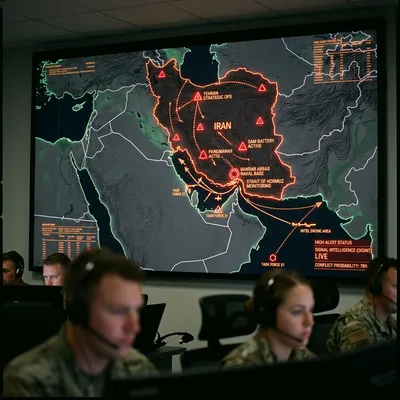
Geopolitical Analysis of the 2026 Iran Conflict
Geopolitical and Strategic Analysis of the 2026 Iran Conflict: Operational Dynamics, Leadership Succession, and Global Consequences.
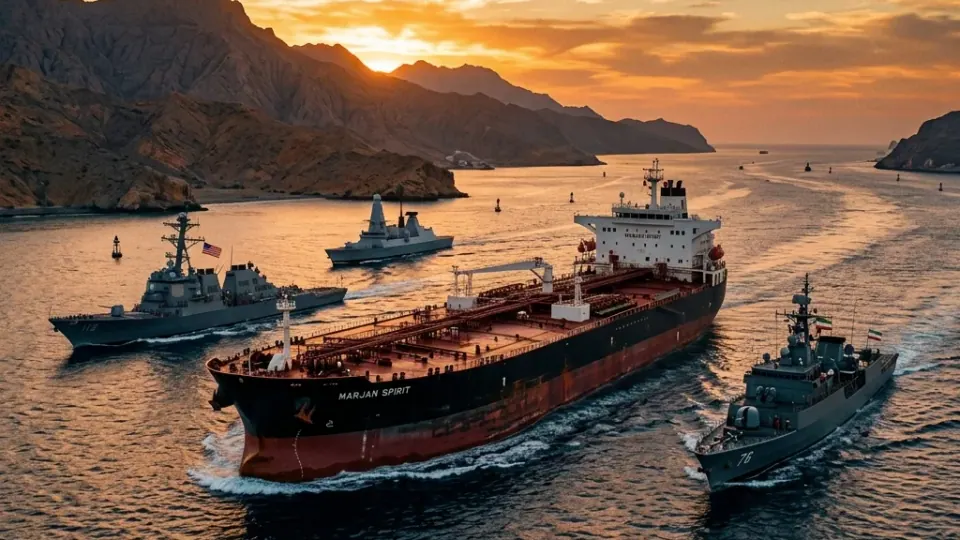
Will oil prices stay low after straight
As maritime traffic resumes through the Strait of Hormuz, we analyze the thermodynamic and economic factors that prevent a return to cheap petroleum.
The Three-Carrier Stalemate
With the USS Theodore Roosevelt entering the theater alongside two forward carrier groups after IRGC drone strikes on Bahrain's Al-Rifaa base, markets face a treacherous 'no-war, no-peace' energy chokepoint that neither Washington nor Tehran can cleanly unwind.
Geopolitical Anatomy of the Moscow-Tehran Axis
A comprehensive geostrategic dissection of the bilateral security treaty between the Russian Federation and the Islamic Republic of Iran. We assess the weaponization of the International North-South Transport Corridor, non-SWIFT financial settlement networks, and the collapse of the petrodollar consensus.