The Three-Carrier Stalemate
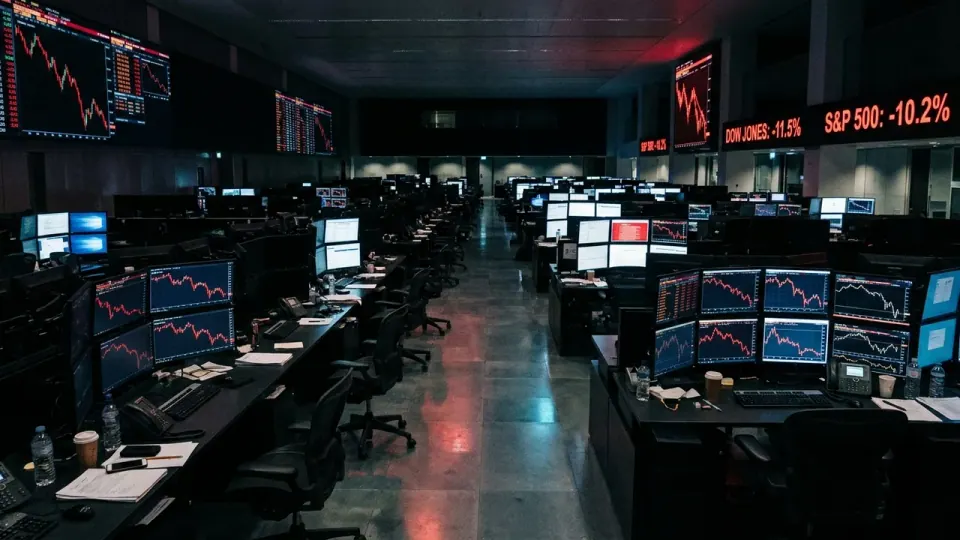
With the USS Theodore Roosevelt entering the theater alongside two forward carrier groups after IRGC drone strikes on Bahrain's Al-Rifaa base, markets face a treacherous 'no-war, no-peace' energy chokepoint that neither Washington nor Tehran can cleanly unwind.
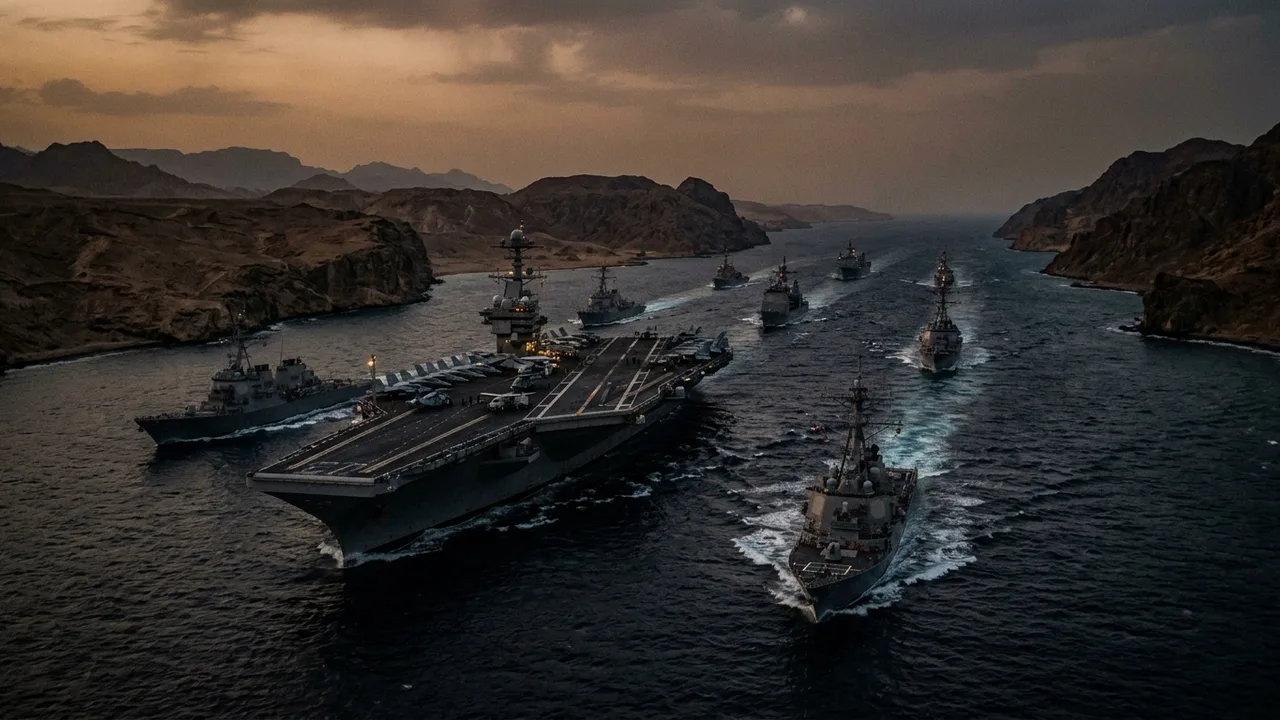
In mid-November 2026, strategic analysts tracking maritime energy risk across the Persian Gulf and Arabian Sea confronted a paradoxical geopolitical geometry: an unprecedented concentration of kinetic strike power paired with frantic back-channel diplomacy designed solely to avoid total economic detonation. Following retaliatory drone salvos launched by Iran's Islamic Revolutionary Guards Corps (IRGC) targeting the U.S. Al-Rifaa helicopter facility in Bahrain—intercepted over Gulf skies by Bahraini air defenses—the United States Navy dispatched a third carrier strike group led by the *USS Theodore Roosevelt* into the Middle Eastern theater, even as diplomatic emissaries from Qatar and Pakistan shuttled desperately between Washington and Tehran.
Public financial headlines frequently misread this stalemate as a prelude to stable containment. When crude prices fail to immediately rocket past catastrophic historical ceilings on a Tuesday morning, Western equity desks assume the risk premium has dissolved. Yet a closer institutional reading of late-2026 naval telemetry, Red Sea maritime chokepoint disruptions, Yemeni southern ground movements toward Aden, nuclear diplomacy deadlocks, and simultaneous IMF World Economic Outlook macroeconomic warnings exposes a much graver dynamic.
Rather than peace or tidy conventional war, global energy markets have been locked inside a structural "no-war, no-peace" siege. This equilibrium imposes persistent uncertainty taxes across shipping insurance, sovereign fiscal reserves, and industrial planning without producing the decisive political resolution required to rebuild peacetime inventory buffers.
Anatomy of the Dual Maritime Vice: Hormuz and Aden
Unlike earlier twentieth-century Gulf standoffs—which largely centered on isolated mines or tanker seizures inside a single operational waterway—November 2026 presents Western and Asian maritime planners with a synchronized two-front naval squeeze bracketing the entire Arabian Peninsula.
1. The Hormuz Deterrence Paradox
Roughly one-fifth of globally traded petroleum liquids and nearly a quarter of liquefied natural gas (LNG) tanker transits must squeeze through the Strait of Hormuz, whose navigable deep-water shipping lanes span barely a few miles across within range of shore-based anti-ship cruise missiles, fast-attack swarm craft, and low-observable one-way attack drones.
- The Bahrain Escalation Signal: By openly claiming drone strikes aimed at Al-Rifaa in Bahrain in direct retaliation for prior U.S. kinetic actions, Tehran signaled that forward Gulf Cooperation Council (GCC) basing architecture remains within immediate retaliation reach—exposing host-nation infrastructure, desalination grids, and export piers if any broader exchange begins.
- Why Three Carriers Do Not Restore Commercial Tranquility: Deploying three U.S. carrier strike groups provides overwhelming conventional air-superiority deterrence against full-scale state invasion or open Iranian naval fleet maneuvers. However, multi-billion-dollar nuclear supercarriers cannot cheaply guarantee commercial hull safety against asymmetric coastal drone volleys, spoofing of Automatic Identification System (AIS) transponders, or selective boarding litigation over nuclear compliance terms.
2. The Southern Yemeni Front and Bab el-Mandeb
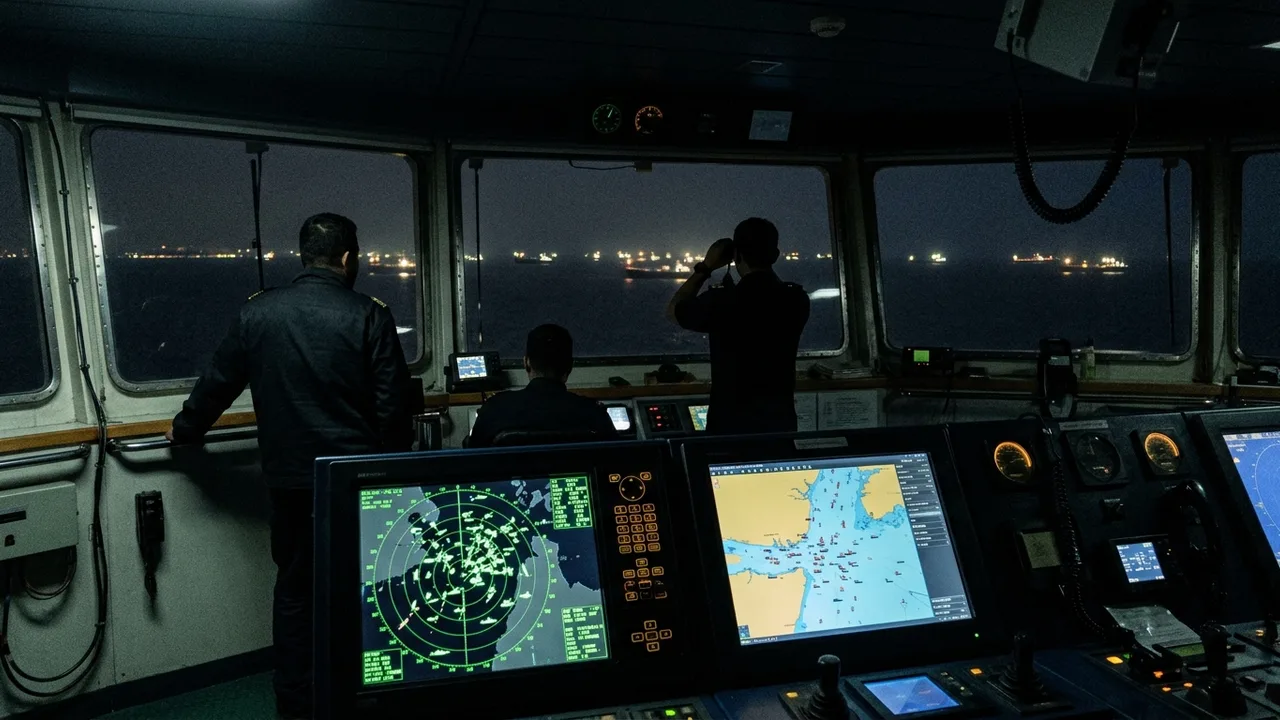
While superpower diplomacy centers tightly on Hormuz navigation rules and stalled nuclear compliance talks, land and coastal pressures along the southern Red Sea rim continue tightening simultaneously. Iran-aligned Houthi forces have pressed operations southward toward Aden, keeping commercial container shipping, European-bound LNG cargoes, and Red Sea insurance desks under permanent high-alert restrictions. For global supply chains tracked daily via IMF PortWatch, the consequence is dual bottleneck friction: vessels forced around the Cape of Good Hope burn nearly two extra weeks of bunker fuel per voyage just as Gulf loadings themselves carry volatile war-risk surcharges.
| Strategic Vector | Current Trigger Event | Commercial Consequence |
|---|---|---|
| Strait of Hormuz Transit | IRGC Al-Rifaa Strikes / U.S. 3-Carrier Surge (Roosevelt) | Nuclear deadlock + elevated Gulf war-risk & charter surcharges |
| Bab el-Mandeb / Gulf of Aden | Houthi Southward Push on Aden & Unmanned Naval Interdiction | Continued Suez diversion; +14 days Cape transit burning middle distill. |
| Northern Refining Overlap | ~55% Russian Refining Offline via Long-Range Drone Strikes | Zero global diesel cushion when Mideast crude/product flows stutter |
| IMF Macroeconomic Diagnostic | Simultaneous Crude/LNG & Food Supply-Side Cost Shocks | Persistent stagflation trap; central banks paralyzed on rates |
Why Neither Side Can Break the Equilibrium
Understanding the persistence of the November 2026 stalemate requires stripping away moral rhetoric and analyzing the rigid domestic and fiscal constraints trapping all primary actors.
Tehran's Asymmetric Leverage Ceiling
For Iranian strategic planners, full closure of the Strait of Hormuz remains a suicidal last resort—doing so would immediately cut off Iran's own covert hydrocarbon export revenues, invite massive coalition retaliation against domestic port and refinery complexes, and antagonize Beijing, Tehran's single largest crude buyer. Conversely, accepting unconditional Western terms on both regional proxy disarmament and nuclear restrictions threatens internal regime cohesion. Sustaining controlled brinkmanship—demonstrating precision reach against Gulf bases like Al-Rifaa while entertaining Qatari and Pakistani mediators—extracts maximum geopolitical deterrence at bearable cost.
Washington's Fiscal and Industrial Bandwidth Trap
For U.S. military planners, maintaining three aircraft carrier strike groups simultaneously inside Middle Eastern waters imposes an immense logistical and maintenance burden on an already stretched fleet surface force. Carrier deployment rotations consume billions in aviation fuel, precision interceptor missiles (costing millions of dollars per shot to swat down low-cost kamikaze drones), and shipyard overhaul margins needed across the Indo-Pacific theater. Yet abruptly withdrawing naval assets without verifiable shipping guarantees would instantly collapse confidence across Gulf energy markets and invite aggressive kinetic probing.
The Macroeconomic Engine: IMF Stagflation Diagnostics
The true victim of a drawn-out "no-war, no-peace" regime is rarely dramatic single-day asset liquidation—it is slow, corrosive global stagflation. As the International Monetary Fund emphasized across late-2026 policy consultations, repetitive energy supply volatility collides violently with post-pandemic sovereign debt loads and slowing industrial productivity.
Consider the structural traps locking central banks into paralysis heading into 2027:
- 01.Interest Rate Asymmetric Traps: When crude oil, refined diesel (already strained by Ukraine's 55% Russian refining strike threshold), and LNG prices surge due to supply shocks rather than booming consumer demand, authorities at the Federal Reserve and peer central banks face an impossible policy choice—a dynamic examined closely in our analysis of winter heating oil and inflation shocks. Raising policy rates cannot manufacture extra tankers or rebuild bombed distillation columns—instead, tighter credit crushes domestic housing construction, small-business credit, and manufacturing investment while sovereign debt-service outlays balloon. Conversely, cutting rates aggressively amid persistent energy and Super El Niño food shocks risks unanchoring long-term consumer inflation expectations entirely.
- 02.Developing World Balance-of-Payments Crises: Wealthy energy-importing blocs in Western Europe and East Asia absorb higher hydrocarbon costs through painful industrial slowdowns and currency pressure. Non-oil-producing emerging economies across South Asia, Sub-Saharan Africa, and Latin America—already battered by 2026–2027 Super El Niño agricultural deficits—must expend scarce U.S. dollar foreign exchange reserves just to keep urban grid generators and grain trucks moving, pushing weaker sovereigns directly toward IMF emergency restructuring queues.
- 03.CapEx Paralysis in Heavy Industry: Corporations facing unpredictable energy tariffs, volatile container routing delays around Aden and Hormuz, and uncertain geopolitical sanction rules routinely freeze multi-year greenfield factory investments in favor of short-term cash hoarding and defensive stock buybacks, hollowing out physical supply resilience for the late 2020s.
Energy Inventory Illusion and Strategic Reserve Depletion
Another under-reported vulnerability underlying November 2026 market calm is the historically thin cushion sitting inside global strategic petroleum and commercial refined product reserves tracked by the U.S. EIA Short-Term Energy Outlook and the IEA Oil Market Report. Unlike early 2022, when Western governments possessed massive sovereign strategic petroleum stockpiles capable of dumping millions of barrels per day onto spot markets to crush temporary panic spikes, years of prior drawdowns and delayed replenishment have severely curtailed rapid-response storage margins.
Furthermore, refined product inventories—particularly winter heating oil, heavy sulfur fuel oil for shipping, and low-sulfur automotive diesel—operate on razor-thin just-in-time working capital budgets due to high financing rates. When a regional drone strike disables a Gulf gathering pipeline or Russian refining output falls abruptly in sub-zero weather, there is no vast global buffer tank ready to flood European or Asian terminals cleanly within seventy-two hours.
Dark-Fleet Insurance Fragmentation and Port Congestion
Compounding thin physical buffers is an intensifying maritime legal fissure separating insured Western charter fleets from rapidly aging, loosely regulated shadow fleet tankers carrying sanctioned barrels across Gulf and Asian lanes. Because Western Protection and Indemnity (P&I) clubs aggressively tighten exclusions whenever naval incidents flare near Bahrain or southern Yemen, legitimate vessels slow-steam outside choke zones awaiting convoy escort clearance, burning scheduling slack across global dry-bulk and chemical parcel trade. Port storage depots in Singapore, Fujairah, and Rotterdam experience violent intermittent surges followed by dry scheduling gaps—turning smooth refining throughput into erratic start-stop batching that quietly drives up inland wholesale rack spreads regardless of temporary dips in benchmark Brent paper futures.
Strategic Forecasts for 2027
Unless Qatari and Pakistani mediation miraculously threads an enforceable security compromise covering both Hormuz navigation guarantees and Iranian nuclear verification—an outcome that looks increasingly fragile given simultaneous escalation across Eastern Europe and southern Yemen—observers should plan around three structural trajectories into 2027:
- Permanent Risk Premia in Freight and Energy: Expect marine insurance war-risk riders, long Cape of Good Hope transit schedules, and sporadic Hormuz drone-interdiction scares to embed a sticky structural floor beneath global freight, diesel, and imported food pricing regardless of short-term futures fluctuations.
- Accelerated Bilateral Resource Blocs: Major Asian energy importers will increasingly bypass dollar-denominated spot auctions in favor of rigid, state-backed long-term bilateral commodity swaps, dark-fleet escort corridors, and overland pipeline expansions insulated from maritime chokepoints.
- Domestic Energy Shielding: Sovereign states with credible fiscal space will double down on subsidizing domestic nuclear restarts, coal baseload retention, and strategic lithium-solar microgrids solely to reduce civilian political vulnerability to Middle Eastern chokepoint blackmail.
Conclusion
The sight of three U.S. aircraft carrier strike groups patrolling the waters around the Arabian Peninsula in November 2026 does not signify imminent peace, nor does it guarantee clean decisive victory. Instead, it marks the institutionalization of chronic chokepoint attrition. When geopolitical standoff overlaps seamlessly with Russian-Ukrainian energy destruction and Super El Niño crop stress—compound risks monitored continuously on our Planetary Hazard & Climate Telemetry Radar—energy becomes the supreme macro lever, capable of grinding down industrial margins, paralyzing central banks, and destabilizing import-dependent nations without ever requiring a formal declaration of World War.
Real-time geospatial feed aggregating USGS M5.0+ earthquakes, NASA EONET wildfires, volcanoes, severe storms, UN/EC GDACS alerts, and NOAA geomagnetic status.
Related Reports & In-Depth Intel
The Nitrogen Trap
As natural gas feedstocks tighten and Middle Eastern ammonia export terminals face blockade risks, global synthetic nitrogen prices have surpassed historic peaks. We model the 2027 agricultural deficit and the return of food nationalism.
Living Off the Land
As state-sponsored operators replace noisy malware with native administrative credentials across power and water SCADA systems, the insurance market is quietly dropping critical infrastructure coverage. We analyze the financial and strategic unraveling of the grid.
Strategic Assessment: The Moscow-Tehran Axis and Western Energy
A comprehensive geostrategic evaluation of the deepening Moscow-Tehran military-economic alignment, the weaponization of Middle Eastern maritime chokepoints, and the resulting multi-year Western energy deficit.
Analysis of the 2026 Middle East War
The 2026 conflict between the US, Israel, and Iran has triggered a systemic global economic shock, closing the Strait of Hormuz and disrupting energy, semiconductor, and food supply chains.