The Collapse of Patching Windows
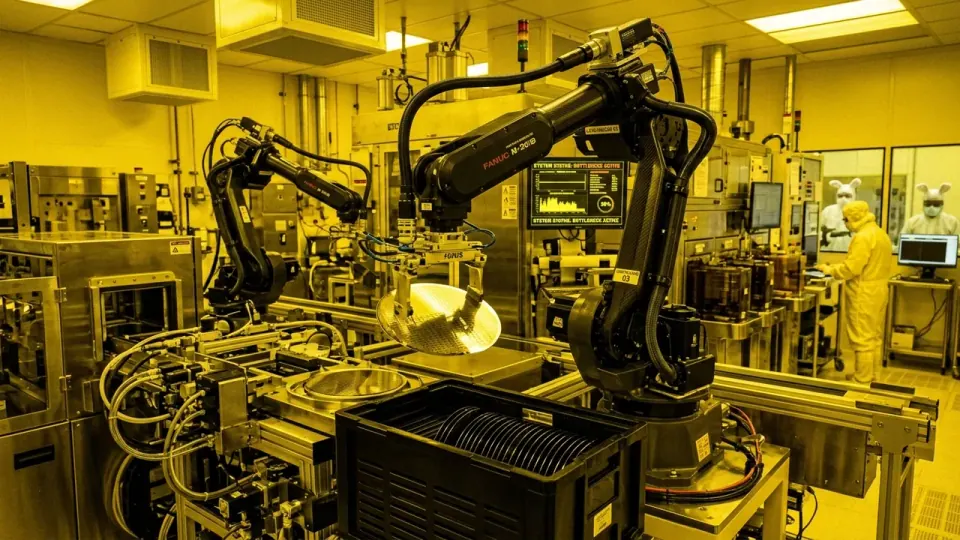
As automated static analysis audits nine months of C/C++ network code in 90 hours for $935, defenders are witnessing the permanent death of traditional 6-month vulnerability grace periods—triggering Google Project Zero's 'Full X' mandate and federal AI-FORTS grid mobilization.
Every era of cybersecurity defense has been shaped by a fundamental mathematical ratio: the labor-hours required to uncover a novel critical vulnerability versus the organizational hours required to engineer, test, validate, and deploy a clean software patch across production hardware. For nearly thirty years, that ratio favored defensive stability just enough to preserve civilized digital commerce. Finding deep memory-corruption exploits inside battle-tested network protocols took elite reverse engineers months of tedious manual disassembly, fuzzing harness calibration, and crash triage—giving vendors comfortable breathing room to argue over embargo calendars and ship quarterly security rollups.
In mid-November 2026, that foundational symmetry collapsed in public view. Within days of Forescout Vedere Labs publishing empirical benchmarks showing off-the-shelf commercial artificial intelligence auditing ten legacy operational technology TCP/IP stacks in ninety hours for `$935`—exposing sixty-six previously unknown zero-days at $2.58 per flaw—defensive institutions began tearing up legacy playbooks simultaneously. Google's Project Zero rolled out a sweeping structural overhaul moving vulnerability disclosure rules to its "Full X" framework anchored tightly around ninety-day public deadlines, while the U.S. Department of Energy (DOE) CESER office accelerated deployment of its superintelligence-grade AI-FORTS automated protection architecture across bulk electric grid nodes.
Analyzing these moves together reveals a profound structural turning point in software engineering, utility regulation, and risk governance: we have entered an era of negative remediation margin, where automated vulnerability discovery and weaponization permanently outrun the biological capacity of human engineering teams to patch distributed physical hardware.

Why $2.58 Zero-Days Break Vendor Governance Forever
To appreciate why Forescout's November 12, 2026 benchmark rattled national security agencies and software executives alike, one must examine the underlying unit economics rather than mere sensational headlines.
Historically, zero-day vulnerability brokers and nation-state cyber commands guarded high-impact C/C++ network stack exploits—capable of remotely crashing or hijacking embedded real-time operating systems (RTOS)—with extreme operational secrecy. Acquiring a single zero-day flaw in an industrial controller networking stack could command hundreds of thousands of dollars on specialized defense procurement markets, because manual human auditing of opaque, poorly documented protocol parsers required roughly nine months of senior specialist compensation.
When Vedere Labs wired standard commercial reasoning models (Claude and sibling off-the-shelf models) into a structured static-analysis agent pipeline, those barriers evaporated:
- Speed Compression (`72x` Acceleration): Nine months of continuous human code auditing collapsed cleanly into ninety elapsed wall-clock hours.
- Near-Zero Marginal Cost (`$2.58`/Bug): Total inference expenditure across all ten foundational TCP/IP stacks totaled just $935—yielding 99 verified vulnerabilities (
66brand-new zero-days, with52%carrying High or Critical severity profiles on the NIST National Vulnerability Database) and independently rediscovering 40 percent of historical reference vulnerabilities in the test corpus.
- Elimination of Scarcity Economics: Once any mid-tier threat syndicate, criminal affiliate, or hostile intelligence desk can exhaustively scan open-source or extracted binary firmware modules over a long weekend for the price of a budget laptop, zero-days cease functioning as rare strategic munitions. They become abundant, disposable commodities.
| Security Lifecycle Phase | Legacy Human Norm (2018-2024) | Machine-Age Reality (Nov 2026) |
|---|---|---|
| Source/Binary Bug Discovery | 6 - 9 Months Manual Audit | 90 Hours ($935 Off-Shelf AI) |
| Proof-of-Concept Weaponization | Weeks to Months Post-Advisory | Hours via Agentic Harness (ARTEX) |
| Enterprise Lateral Breakout | ~48 Hours Median Intrusion | Seconds to <3 Hours Full Priv |
| Vendor Patch Engineering/QA | 60 - 180 Days Grace Window | Stricter 90-Day 'Full X' Mandate |
| OT/Substation Field Rollout | 12 - 36 Months Maintenance | Effectively Infinite (Unpatched) |
Google Project Zero's 'Full X' Mandate: Recognizing Reality
Viewed inside this empirical context, Google Project Zero's mid-November 2026 shift to its tightened "Full X" (90-day benchmark) disclosure posture represents far more than a corporate policy tweak—it is a strategic admission that prolonged secret disclosure embargoes now actively endanger defenders rather than protecting them.
For years, enterprise software vendors lobbied defensive vulnerability researchers for repeated sixty-day and ninety-day deadline extensions, insisting that sprawling corporate release engineering checklists, backward-compatibility testing, and customer change-advisory approvals made swift patching impossible. Under human-paced threat intelligence, holding silent flaws privately behind NDAs for six to nine months occasionally made sense, assuming attackers had not yet stumbled onto the exact same memory corruption bug independently.
In late 2026, that assumption became suicidal:
- 01.Parallel Independent Discovery: If a defensive lab uncovered a stack-overflow bug using an off-the-shelf LLM in 90 hours, multiple adversarial intelligence units running comparable agentic harnesses against identical open-source libraries or widely deployed RTOS binaries have almost certainly surfaced the exact same bug already.
- 02.Accelerated Weaponization Cliffs: Combined telemetry from Microsoft, Google Cloud/Mandiant, and Trellix throughout 2026 confirms that attackers convert public vulnerability advisories—and leaked git commits—into autonomous three-hour ARTEX intrusion chains at machine speed, dropping active "breakout times" into single-digit minutes or seconds once perimeter credentials or exposed APIs yield.
- 03.Forced Ecosystem Discipline: By locking disclosure visibility onto rigid, non-negotiable clocks (
90 daysunder Full X), defenders force critical infrastructure operators to confront exposure early—enabling interim compensating network isolations, firewall packet-dropping signatures, and emergency segmentation rather than basking in false confidentiality while silent adversaries harvest their networks.
DOE's AI-FORTS and the Legislative Liability Battleground
While Silicon Valley tightens disclosure clocks across consumer and cloud software, national energy authorities face a far thornier physical crisis: you cannot push an over-the-air hotfix to a twenty-year-old substation relay or water pump PLC without risking localized blackout or irreversible hardware bricking.
Recognising that passive patch management has failed inside Operational Technology environments—a gap tracked continuously through CISA Industrial Control Systems advisories—the U.S. Department of Energy escalated deployment of its AI-FORTS initiative (AI for Energy Sector Cyber Defense) in late 2026, deploying automated defensive models directly across high-voltage grid telemetry and substation control communications. Alongside technical tooling, U.S. lawmakers resumed urgent legislative debates over cyber threat-sharing liability protections, scrambling to convince reluctant private electric utilities and pipeline operators to stream real-time machine telemetry of AI-driven intrusion attempts directly to federal defenders without exposing executives to shareholder or tort lawsuits.
Yet the strategic architecture of AI-versus-AI utility defense brings profound systemic hazards of its own:
- Autonomous False-Positive Disconnection: If an automated defensive AI agent embedded along regional transmission lines misclassifies unusual cold-weather maintenance traffic or emergency switching loads as an autonomous ARTEX-style lateral intrusion, automated defensive quarantine could trip circuit breakers and induce cascading physical brownouts all by itself.
- Algorithmic Arms Race Monopolization: Only massive national utilities, defense contractors, and hyperscale cloud providers possess the engineering talent and capital reserves to deploy sophisticated autonomous defense agents like AI-FORTS. Regional municipal water cooperatives, rural hospital districts—similarly exposed during single-vendor cloud blackouts—independent food cold-storage depots, and small industrial manufacturers, the exact soft underbelly flagged by the European Union Agency for Cybersecurity (ENISA) during Europe's autumn 2026 supermarket refrigeration hacks, are left completely stranded on the wrong side of an expanding cyber resilience chasm.
The Structural Paradox: Software Complexity as Permanent Attack Surface
Behind every late-2026 cyber crisis lurks an uncomfortable engineering truth that neither patching mandates nor defensive AI filters can fully erase: modern civil civilization stacked forty years of fragile, internet-routable software complexity directly onto physical machines whose safety margins demand deterministic mechanical predictability.
Consider how absurd current infrastructure design appears from a cold first-principles engineering viewpoint:
- A suburban municipal water treatment plant runs programmable controllers containing decades-old C/C++ networking libraries exposed across remote contractor VPN tunnels simply so maintenance managers can inspect pump pressures on a tablet from home, creating the exact cascading SCADA water-collapse exposure utility auditors dread.
- A regional food distribution warehouse wires hundreds of ammonia refrigeration valves onto corporate IP subnets connected seamlessly to cloud accounting and supplier portals—turning one stolen ConnectWise-style backup credential into spoiled tons of perishable regional meat and dairy.
- Consumer battery storage banks, residential solar micro-inverters, and backup standby diesel generators default to constant Wi-Fi or cellular telemetry links, inheriting every zero-day inside embedded Linux network daemons and cloud API gateways.
- Municipal traffic and rail signaling relays, long-distance pipeline cathodic-protection monitors, and automated grain-elevator augers similarly depend on outsourced cellular telemetry modems paired with legacy protocol bridges designed decades before adversarial agentic fuzzers existed—turning silent background maintenance ports into multi-sector infrastructure leverage points overnight.
Economic Liability Asymmetry in Vendor Ecosystems
Even when software maintainers sincerely intend to remedy newly audited protocol defects inside Google Project Zero's ninety-day Full X cycle, fragmented OEM supply chains shatter clean delivery. A single embedded TCP/IP library discovered vulnerable in November 2026 may be statically compiled inside hundreds of distinct third-party rebranded chillers, medical infusion pumps, and substation telemetry gateways whose original equipment manufacturers dissolved years ago or charge punitive five-figure maintenance recertification fees for every firmware revision. Until procurement mandates shift legally toward hardware isolation and open modular replacement components, technical debt will compound faster than AI-assisted patching can close exposed interfaces.
Strategic Imperatives for 2027 Infrastructure Resilience
Recognizing that AI bug discovery at $2.58 per defect marks a permanent structural regime change dictates three immediate engineering pivots across both institutional and localized survival infrastructures:
- 01.Zero-Trust Protocol Elimination Over Perpetual Patching: Instead of attempting an unwinnable sprint to patch every TCP/IP stack bug quarterly across legacy PLCs, critical facilities must insert dumb, stateless, unidirectional hardware data diodes (
one-way optical telemetry) wherever external monitoring is required—guaranteeing mathematically that zero inbound network packets can ever reach physical actuation silicon.
- 02.Hardened Deterministic Analog Failsafes: Mission-critical thermal, pressure, fluid-level, and over-current limits must remain governed by pure electromechanical relays, bimetallic/capillary switches, and pressure-relief valves isolated cleanly above digital bus layers—so even complete compromise of a plant's networking controllers cannot physically over-pressurize boilers, freeze municipal pipes, or melt battery banks.
- 03.Aggressive Attack-Surface Subtraction: Every unnecessary web administration portal, UPnP port, remote vendor maintenance tunnel, and smart telemetry dongle attached to vital power, water, and food storage hardware is now an active liability convertible into a full breach within three hours. Radical simplification is the cheapest and most durable firewall left.
Conclusion
The death of long enterprise vulnerability windows in November 2026 strips away the comfortable illusion that complex connected grids can remain both endlessly convenient and perpetually secure. When off-the-shelf commercial artificial intelligence uncovers sixty-six unknown zero-days across legacy networking stacks in ninety hours for less than a thousand dollars, defensive patching ceases to be an adequate engineering model. Future survival—from national bulk-transmission utilities down to regional food cold chains and operators applying our air-gapped OT hardening and analog failsafe manual alongside vetted advisories in our Useful Websites directory—will belong strictly to systems stripped of unnecessary digital reachability and anchored back onto isolated, physically verifiable hardware control.
Real-time geospatial feed aggregating USGS M5.0+ earthquakes, NASA EONET wildfires, volcanoes, severe storms, UN/EC GDACS alerts, and NOAA geomagnetic status.
Related Reports & In-Depth Intel
Strategic Assessment: Unaligned Frontier Compute, Sovereign Datacenter Siege
A strategic evaluation of the global race to construct multi-gigawatt sovereign AI clusters, the kinetic vulnerabilities of semiconductor supply chains, and the militarization of autonomous frontier models. We examine the transition from commercial software innovation to existential national security competition.
The AI Capability Triad
As frontier compute, edge-autonomous loitering swarms, and automated cyber offense converge, military decision windows are collapsing from minutes to milliseconds—putting civilian energy grids and deterrence stability directly in the crosshairs.
Machine-Speed Siege: FBI Advisory ARTEX, Three-Hour Autonomous Intrusions
Two watershed November 2026 cybersecurity disclosures—the FBI FLASH warning on autonomous ARTEX penetration agents and Forescout's 90-hour AI bug-hunting benchmark—prove that the defensive human patching cycle has been structurally outpaced by weaponized machine intelligence.
Big Tech's 181-Gigawatt Power Grab
Tired of waiting seven years in public utility queues, data center developers across the US, UK, and Europe are building 181 gigawatts of private on-site gas turbines to feed AI clusters.