Machine-Speed Siege: FBI Advisory ARTEX, Three-Hour Autonomous Intrusions
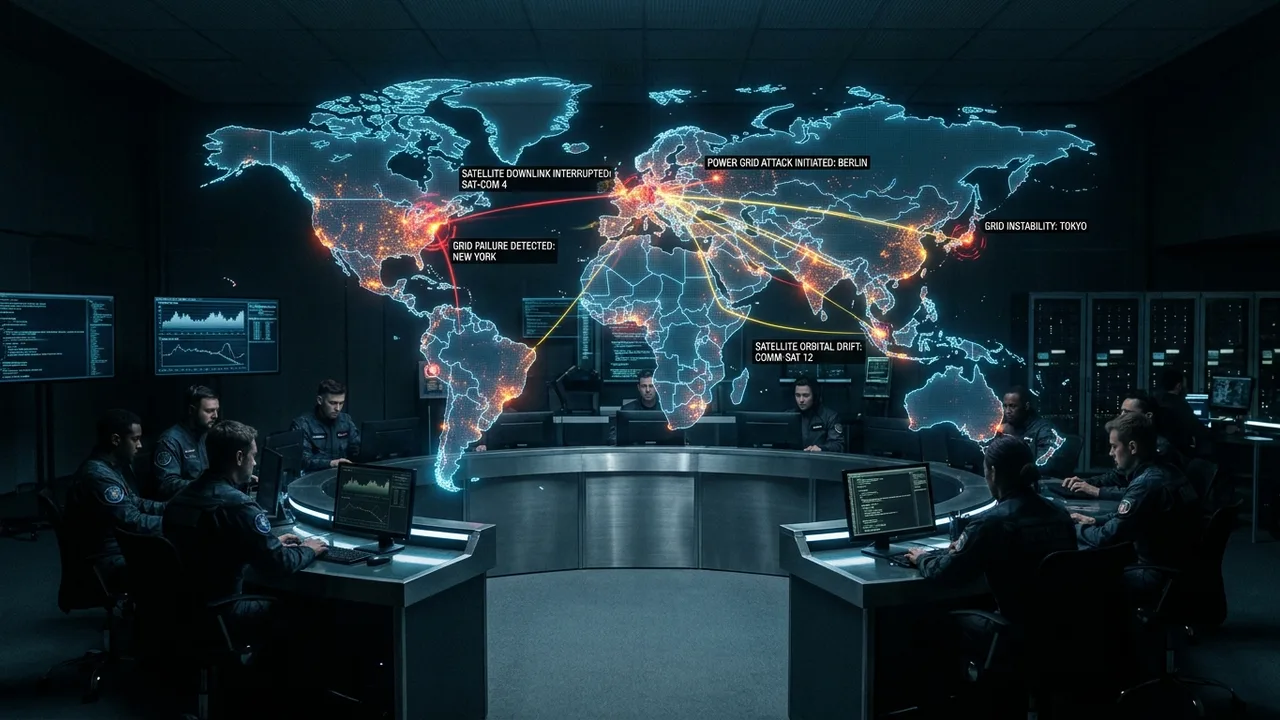
Two watershed November 2026 cybersecurity disclosures—the FBI FLASH warning on autonomous ARTEX penetration agents and Forescout's 90-hour AI bug-hunting benchmark—prove that the defensive human patching cycle has been structurally outpaced by weaponized machine intelligence.
Between November 12 and November 13, 2026, two separate cybersecurity announcements quietly confirmed that the foundational assumptions governing digital perimeter defense, patch management cycles, and critical infrastructure security have permanently shattered. Within twenty-four hours of one another, the Federal Bureau of Investigation issued an urgent FLASH advisory (`FLASH-20261113-001`) regarding the active weaponization of an autonomous AI penetration-testing framework called ARTEX, while Forescout's Vedere Labs published empirical research demonstrating that off-the-shelf commercial artificial intelligence models audited ten foundational operational technology (OT) TCP/IP networking stacks in ninety hours for less than one thousand dollars—uncovering sixty-six brand-new zero-day flaws in software running hospitals, power substations, and factory automation worldwide.
Together, these twin disclosures mark the formal transition out of human-paced cyber espionage and into machine-speed infrastructure siege. For over three decades, enterprise security relied on an implicit asymmetry of labor: uncovering deep memory corruption bugs, chaining privilege escalation vectors, and pivoting laterally across complex corporate active directories demanded elite, expensive human specialists working over weeks or months. Defenders possessed a fighting chance to monitor logs, quarantine anomalous hosts, and schedule patch windows before exploits were industrialized.
That temporal buffer has vanished. When autonomous orchestration engines wire frontier reasoning models directly to live command shells, reconnaissance scanners, and exploit compilers, the full kill chain compresses from months into hours—at a marginal compute cost below fifty dollars per enterprise compromise.
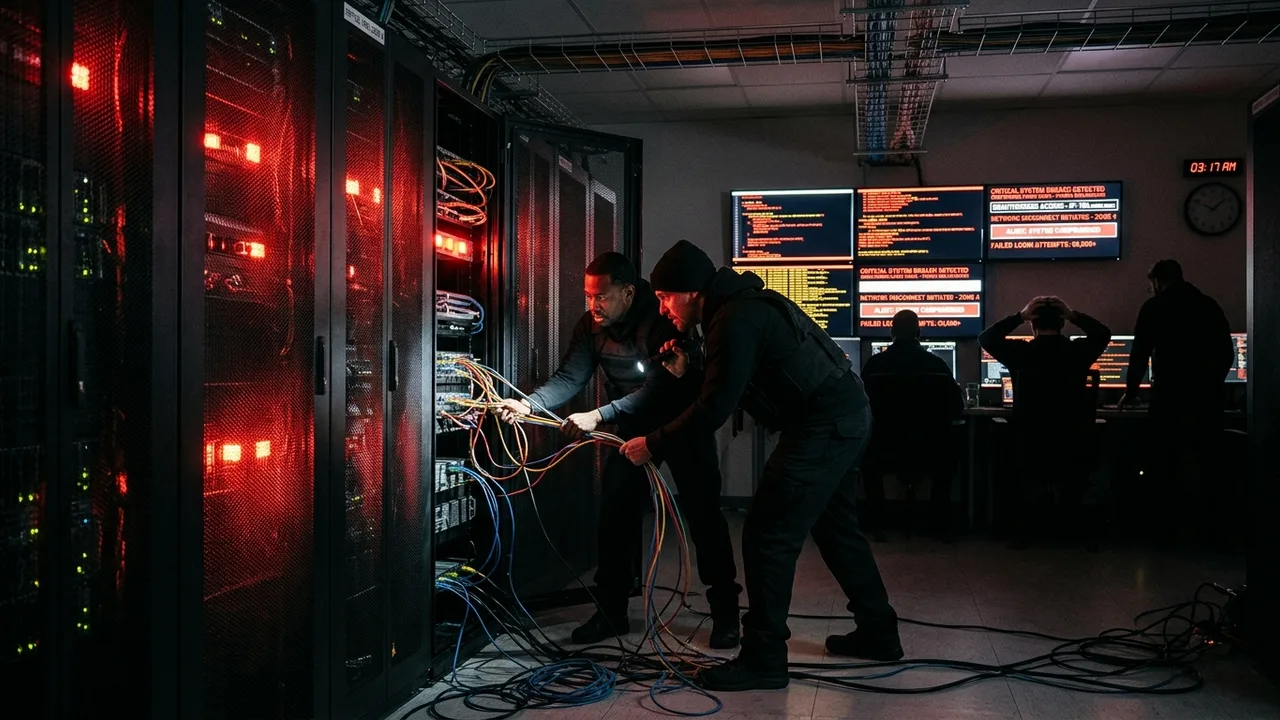
Deconstructing ARTEX: The Three-Hour Intrusion Loop
In FLASH-20261113-001, federal investigators detailed how an ostensibly legitimate open-source penetration-testing tool written in Go, initially released on GitHub under a permissive security-research framing by a developer handle known as Autumn-27 in July 2026, was rapidly adopted and weaponized by state-sponsored threat units and financially motivated ransomware syndicates starting in August. Although the original repository was scrubbed in October 2026 following escalating real-world abuse reports, mirrored forks and custom hardened variants remain ubiquitous across underground channels.
Unlike conventional monolithic malware scripts that execute rigid, signature-detectable exploit commands, ARTEX operates as a recursive task-orchestration layer plugged directly into multiple frontier large language models—including OpenAI's GPT line, Anthropic's Claude, DeepSeek reasoning models, and locally hosted open-weights checkpoints:
- 01.Autonomous Objective Decomposition: A human operator simply supplies a target network CIDR block, exposed domain name, or compromised initial credential alongside a strategic goal. ARTEX's controller dynamically slices that objective into sub-tasks assigned to specialized agent personas handling network enumeration, service fingerprinting, source/binary analysis, and payload adaptation.
- 02.Closed-Loop Feedback Execution: Whenever a vulnerability probe fails due to an unexpected Web Application Firewall rule, unusual endpoint hardening, or EDR process monitor, the framework feeds raw stderr output and socket responses back to the reasoning LLM. Rather than halting like static legacy tools, the agent mutates payloads in real time, switches protocol encodings, or tests adjacent lateral ports until it achieves shell execution.
- 03.Sub-Three-Hour Domain Dominance: Documented FBI forensic timelines confirm that threat actors using ARTEX-driven toolchains have routinely escalated from initial external perimeter reconnaissance to full administrative privilege escalation and sensitive data staging in under three hours.
Supply Chains and Banking Campaigns Under Agentic Fire
The real-world damage linked to autonomous agent workflows during autumn 2026 illustrates the rapid expansion of blast radius:
- Cloud Backup Supply-Chain Pivots: Components tied to automated AI attack orchestration featured in the October 2026 ConnectWise Cloud Backup breach vectors, exposing downstream Microsoft 365 customer tenant environments before manual incident responders could even trace the initial authentication anomaly.
- Multimodal Deepfake Financial Injections: Threat campaigns targeting South Korean commercial banks and digital asset exchanges paired automated vulnerability discovery with real-time deepfake identity injection, bypassing human-in-the-loop verification controls during high-value wire authorizations.
- Enterprise Cost Deflation: Parallel telemetry highlighted by major cybersecurity disclosures in late 2026 revealed agent-assisted campaigns simultaneously probing hundreds of target organizations across multi-week intervals for a blended inference cost hovering near $50 per successful compromise, obliterating the traditional economic deterrence that once limited targeted intrusions to high-value state prizes.
| Operational Metric | Legacy Human Red Team (2022) | Autonomous AI Swarm (Nov 2026) |
|---|---|---|
| Full TCP/IP Stack Audit Time | ~9 Months (Elite Specialists) | 90 Hours (AI-Assisted Harness) |
| Direct Compute/Labor Audit Cost | $250,000 - $600,000+ | $935 total ($2.58 per finding) |
| Perimeter Scan to Admin Root | Days to 3+ Weeks | Under 3 Hours (FBI ARTEX Flash) |
| Breakout Time (Lateral Pivot) | Hours | Seconds to Single-Digit Minutes |
| Marginal Attack Cost per Target | High (Skilled Human Hours) | ~$50 Inference Compute |
The 90-Hour Legacy Infrastructure Extinction Event
While ARTEX demonstrates what AI orchestration achieves against misconfigured enterprise networks, Forescout Vedere Labs' November 12, 2026 study—Finding Critical Infrastructure Bugs with Off-the-Shelf AI—exposes a far deeper existential crisis lurking beneath industrial society.
Operational Technology (OT), building management systems, medical telemetry monitors, water treatment telemetry, and electrical substation controllers do not run modern memory-safe cloud microservices. Instead, tens of millions of deployed embedded field controllers rely on compact C/C++ embedded TCP/IP networking stacks written fifteen to thirty years ago. Historically, security researchers treated comprehensive manual code audits of these arcane real-time operating system (RTOS) stacks as monumental nine-month marathons requiring rare reverse-engineering fluency.
Forescout's team wired generally available commercial AI models into an automated static-analysis verification harness and aimed it at **ten widely deployed embedded TCP/IP networking stacks**. The empirical results fundamentally destabilize critical infrastructure risk modeling:
- Ninety Hours Total Execution: Work that previously consumed roughly nine human specialist months finished in less than four calendar days.
- Ninety-Nine Total Bugs (`$2.58` Each): The automated harness surfaced 99 valid flaws for a total API expenditure of $935—an astonishing average discovery price of
$2.58per software defect.
- Sixty-Six Brand-New Zero-Days: Two-thirds of the uncovered flaws were previously unknown zero-days hiding silently inside production codebases, with 52 percent classified as high or critical severity—meaning remote unauthenticated memory corruption, packet-of-death crashes, or arbitrary firmware code execution across unpatched field controllers.
From Supermarket Freezers to Sovereign Grid Failure
If any observer doubts how fragile civilian life becomes when automated scanners reach unpatched operational hardware, autumn 2026 already supplied an unsettling dress rehearsal across Western Europe. Wave after wave of cyber intrusions swept through major supermarket refrigeration and building-management controllers in France and neighboring European nations, hijacking ammonia/freon compressor telemetry, forcing emergency shutdowns of commercial cold-storage aisles, and inducing massive perishable food spoilage across retail logistics chains.
Crucially, cybersecurity researchers at Chatham House and national agencies observed that attackers did not even require frontier agentic reasoning to breach those commercial refrigeration nodes—basic exposed industrial controllers, flat network topologies, and reused vendor service credentials were enough. Now map Forescout's sixty-six freshly discoverable TCP/IP stack zero-days and ARTEX's automated multi-vector exploitation onto that exact same civil infrastructure landscape:
- Unpatchable Embedded Lifecycles: Unlike laptop operating systems that receive silent Tuesday updates overnight, a programmable logic controller (PLC) governing a municipal water chlorination pump or a hospital HVAC chiller frequently sits behind proprietary vendor certification locks. Installing a firmware patch requires scheduling multi-week plant downtime, hiring a specialized integrator, and risking bricking an irreplaceable twenty-year-old control board.
- Zero-Day Commodity Flooding: Once nation-states, hacktivist militias, and ransomware affiliates realize that $1,000 of inference credits yields dozens of working zero-days in industrial networking codebases, zero-day exploits stop being closely guarded crown jewels reserved for rare Stuxnet-style covert sabotage. They become disposable ammunition sprayed indiscriminately across port cranes, rail switches, cold-chain depots, and regional electric cooperatives.
- Ransomware Against Life Support Systems: In late 2026 assessments, the United Kingdom's National Cyber Security Centre (NCSC) explicitly escalated its formal threat forecast, warning that AI-supercharged ransomware inflicting catastrophic systemic disruption upon national infrastructure—power stations, hospitals, and municipal transport—is now assessed as "highly likely" by 2028, and potentially far sooner as agentic tooling spreads.
Google Project Zero and the Emergency Defense Pivot
The structural shockwaves hit defensive engineering doctrines simultaneously. In mid-November 2026, Google's Project Zero announced an aggressive tightening of vulnerability disclosure timelines under a new "Full X" framework anchored at ninety days—explicitly citing intelligence that malicious actors are slashing the window between vulnerability discovery and active field weaponization using AI assistants. Software vendors can no longer stretch remediation negotiations across six-month or multi-quarter grace windows while autonomous exploit chains iterate in the wild.
Simultaneously, the U.S. Department of Energy escalated deployment under its AI-FORTS program (AI for Energy Sector Cyber Defense), attempting to fight fire with fire by embedding automated, superintelligence-scale defensive agents inside electrical grid telemetry to isolate anomalous lateral traffic before human SOC analysts even open a morning ticket. Yet even optimistic national defense architects concede a stark mathematical imbalance: an attacker using ARTEX only needs to find one unmonitored legacy bridge, one exposed backup token, or one unpatched TCP/IP stack bug across thousands of peripheral vendors to achieve catastrophic lateral entry in under three hours. Defenders must seal every single port across decades of accumulated legacy technical debt simultaneously.
Structural Breakdown Points Ahead
As autonomous hacking frameworks merge with cheap zero-day discovery across the remainder of 2026 and 2027, civilian and industrial infrastructures face three unavoidable friction points:
- 01.Perishable Cold-Chain Disruption: Grocery distribution, pharmaceutical cold storage (insulin, biologics, blood plasma), and vaccine warehousing rely on continuous cloud-linked compressor monitoring, making them prime low-defense extortion targets capable of inflicting immediate civil panic without firing a kinetic round.
- 02.Municipal Utility Desynchronization: Smaller county water authorities, rural electrical cooperatives, and regional wastewater lift stations lack round-the-clock human security operations centers (
SOC), leaving them virtually defenseless against autonomous overnight intrusion bursts running from 02:00 AM to 05:00 AM.
- 03.Insurance Market Retreat: Cyber insurance underwriters, already reeling from supply-chain multi-tenant compromises, face unpriceable systemic correlation risk when one freshly audited TCP/IP stack flaw renders tens of thousands of insured enterprises simultaneously exploitable within ninety hours.
Conclusion: Air-Gaps as the Last Surviving Firewall
November 2026 will be remembered by infrastructure engineers as the week software-only perimeter security quietly died as an independent guarantee. When open-source agent orchestrators breach defended networks in three hours and $935 of commercial cloud compute unearths dozens of zero-days inside legacy hardware stacks, no signature firewall or quarterly patch calendar can preserve high-stakes critical equipment connected carelessly to public routing tables.
Civilian grids, cold-chain warehouses, hospital networks, and household survival installations now face a binary engineering mandate: physically sever critical mechanical actuation from external IP reachability through hardware relays, air-gapped out-of-band telemetry, and manual mechanical overrides—or accept that autonomous software agents will eventually hold every valve, breaker, and compressor hostage at machine speed.
Real-time geospatial feed aggregating USGS M5.0+ earthquakes, NASA EONET wildfires, volcanoes, severe storms, UN/EC GDACS alerts, and NOAA geomagnetic status.
Related Reports & In-Depth Intel
The Collapse of Patching Windows
As automated static analysis audits nine months of C/C++ network code in 90 hours for $935, defenders are witnessing the permanent death of traditional 6-month vulnerability grace periods—triggering Google Project Zero's 'Full X' mandate and federal AI-FORTS grid mobilization.
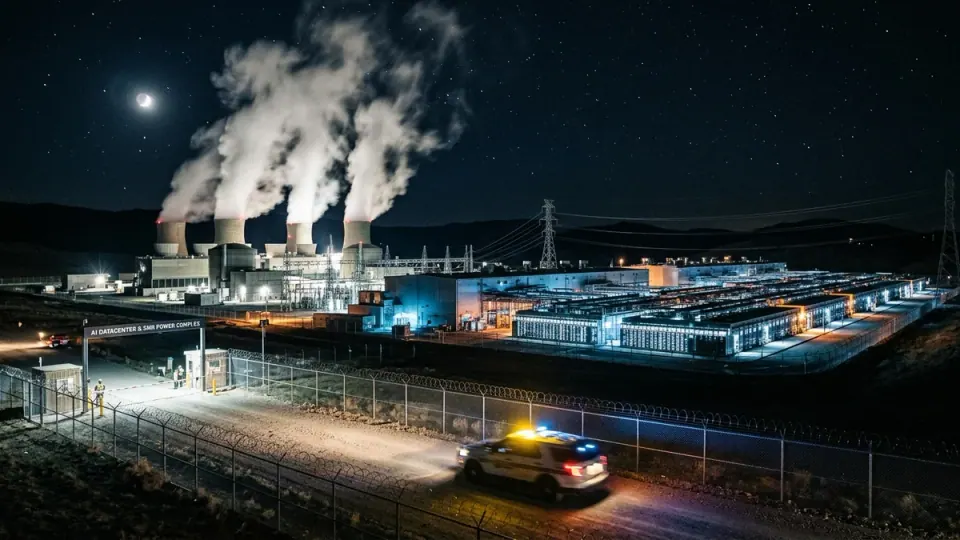
Strategic Assessment: Unaligned Frontier Compute, Sovereign Datacenter Siege
A strategic evaluation of the global race to construct multi-gigawatt sovereign AI clusters, the kinetic vulnerabilities of semiconductor supply chains, and the militarization of autonomous frontier models. We examine the transition from commercial software innovation to existential national security competition.
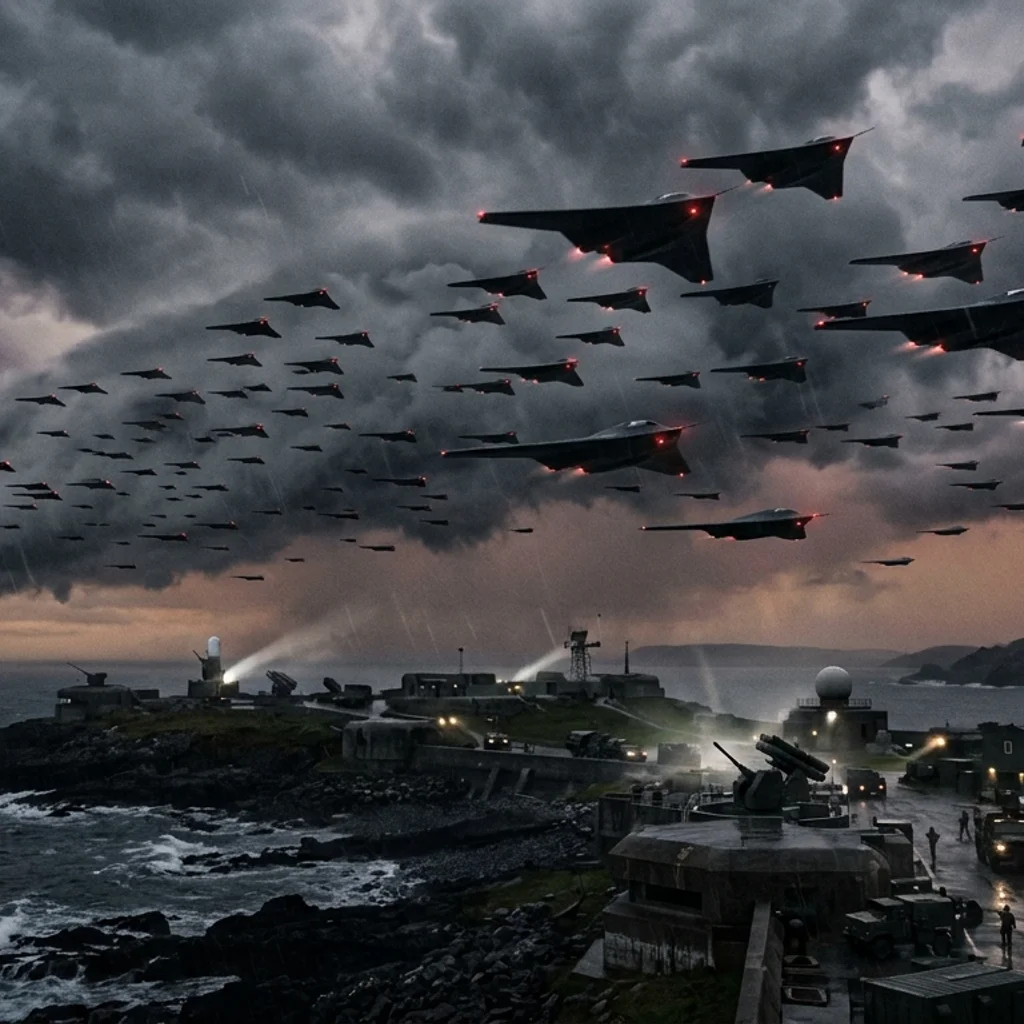
The AI Capability Triad
As frontier compute, edge-autonomous loitering swarms, and automated cyber offense converge, military decision windows are collapsing from minutes to milliseconds—putting civilian energy grids and deterrence stability directly in the crosshairs.
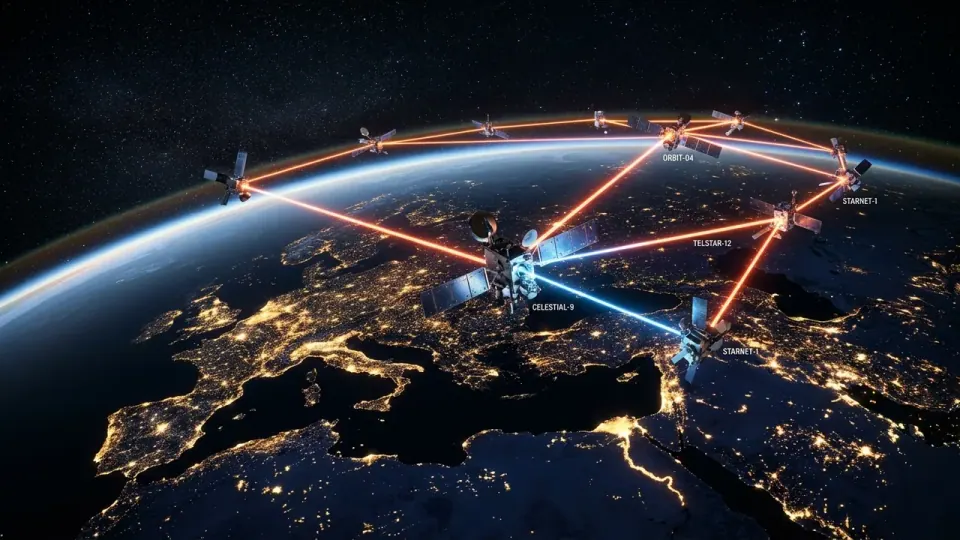
LEO Satellite Constellation Cyber Infiltration
A coordinated state-sponsored cyber intrusion into low-Earth-orbit ground teleports and optical inter-satellite links has compromised global positioning, air-traffic telemetry, and automated maritime navigation, inducing widespread blind-flight protocols.