LEO Satellite Constellation Cyber Infiltration

A coordinated state-sponsored cyber intrusion into low-Earth-orbit ground teleports and optical inter-satellite links has compromised global positioning, air-traffic telemetry, and automated maritime navigation, inducing widespread blind-flight protocols.
At 03:14 UTC, civil aviation ground control radars—normally coordinated alongside FAA National Airspace System status monitors—and international maritime operations hubs registered an unprecedented cascading telemetry disruption across both hemispheres. Over twelve hundred commercial passenger and cargo aircraft transiting the North Atlantic and East Asian flight corridors simultaneously lost primary position integrity, triggering automatic terrain-avoidance alarms and disabling Automatic Dependent Surveillance-Broadcast (ADS-B) tracking transponders. Simultaneously, vessel traffic services (VTS) monitoring the Strait of Malacca, the English Channel, and the Panama Canal approaches—routes tracked continuously via IMF PortWatch maritime telemetry—reported that automated identification system (AIS) maritime transponders were broadcasting false kinetic vectors, inverted coordinates, and phantom vessel signatures.
The crisis was not precipitated by physical anti-satellite missile launches or high-altitude nuclear electromagnetic pulses (HEMPs). Instead, it was the catastrophic realization of the long-feared cyber compromise of commercial and dual-use Low Earth Orbit (LEO) mega-constellations, echoing the broader threat of autonomous cyber swarm intrusions. Sophisticated state-sponsored Advanced Persistent Threat (APT) syndicates executed a multi-vector intrusion into key equatorial ground teleports, intercepting the cryptographic telemetry, tracking, and control (TT&C) root certificates that coordinate optical inter-satellite links (ISL) across over four thousand orbiting communications and positioning nodes.
By poisoning the ephemeris distribution tables and clock synchronization beacons transmitted between LEO relay clusters and terrestrial user terminals, the attackers did not simply shut down orbital connectivity; they corrupted the epistemic ground truth upon which modern autonomous navigation, precision agriculture, and algorithmic power-grid dispatch depend.

The Vulnerability of Commercial Orbital Networks
For over a decade, national defense establishments and civil infrastructure operators celebrated the proliferation of commercial LEO satellite constellations as a revolutionary leap in network resilience. Unlike fragile legacy geostationary (GEO) satellites orbiting 35,786 kilometers above the equator with high latency and single-point-of-failure architectures, LEO constellations disperse telemetry across thousands of small, mass-manufactured satellites orbiting between 300 and 1,200 kilometers. The prevailing dogma asserted that an adversary could not practically destroy thousands of satellites without triggering catastrophic Kessler Syndrome that would deny space to all nations equally.
However, this architectural redundancy concealed an acute software vulnerability: centralized ground teleport coordination and rapid commercial code deployment. To reduce manufacturing costs and accelerate launch cadences, commercial satellite operators extensively utilized commercial off-the-shelf (COTS) processors, containerized microservice architectures, and continuous integration/continuous deployment (CI/CD) pipelines connected directly to terrestrial cloud servers.
When hostile cyber operators compromised the third-party firmware update supply chain of a major European satellite ground network provider—a vector repeatedly flagged in CISA supply chain risk management advisories—they bypassed hardware encryption modules. The attackers injected a micro-payload into the automated telemetry update stream, executing a silent man-in-the-middle (MitM) compromise of the optical cross-links that bridge satellites across the orbital shell, compounding vulnerabilities already exposed by subsea fiber optic cable sabotage.
| Compromised Layer | Technical Mechanism | Terrestrial Impact |
|---|---|---|
| Ground Teleports | BGP Hijacking & Zero-Day Kernel | TT&C Root Certificate Loss |
| Inter-Satellite Link | Optical Frame Injection | Ephemeris Table Poisoning |
| GNSS Relay Beacons | Nanosecond Clock Drift (+380ns) | Blind ADS-B / AIS Scramble |
| Consumer Terminals | Over-the-Air Firmware Bricking | 4.2M Terminals Deactivated |
As illustrated above, the attackers targeted the most foundational metric of modern technocratic society: time synchronization. By introducing an intentional 380-nanosecond timing drift across orbital positioning relays, global positioning calculations were displaced by tens of kilometers in geographic space. Differential GPS corrections used by automated container gantry cranes, robotic tractors, and autonomous port tugs went haywire, immediately triggering automated emergency stop interlocks across every automated container terminal from Rotterdam to Singapore.
The Aviation and Maritime Chaos: Blind-Flight Protocols
The immediate consequence of orbital telemetry poisoning was the instantaneous declaration of international "Blind-Flight" and "Dead-Reckoning" emergency protocols. Commercial airliners operating at cruising altitudes rely heavily on satellite-augmented Global Navigation Satellite Systems (GNSS) for Required Navigation Performance (RNP) approaches. When onboard flight management computers (FMCs) detected irreconcilable discrepancies between satellite signals, inertial reference units (IRUs), and terrestrial VOR/DME beacons, cockpits filled with master warning tones.
Air traffic controllers, stripped of ADS-B real-time radar correlation, were forced to double and triple vertical and horizontal separation distances between aircraft:
- In the congested airspace over Western Europe and North America, takeoff approvals were restricted by eighty-five percent within four hours of the incident, grounding over 14,000 scheduled flights.
- Transoceanic flights already midway across the Pacific and Atlantic were forced to revert to legacy compass headings, non-GPS analog navigation techniques, and high-frequency (HF) voice communications, creating massive saturation across civilian and military aeronautical radio bands.
- In maritime transit corridors, multi-ship collisions were narrowly averted as vessel captains disabled corrupted automated radar plotting aids (ARPA) and returned to manual optical lookouts with binoculars and acoustic foghorns in dense coastal fog banks.
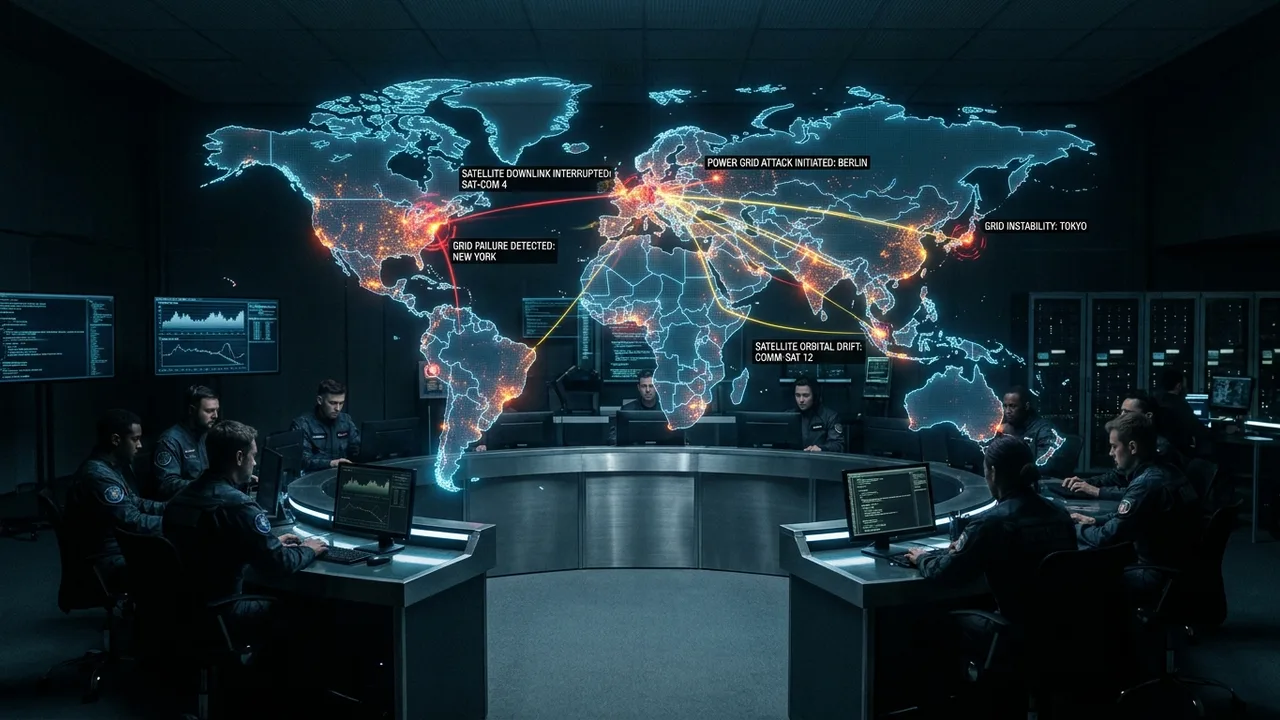
Cascading Industrial and Financial Gridlock
While transport disruptions captured immediate media headlines, the most insidious fallout occurred within the hidden plumbing of the global economy: electrical grid phase alignment and algorithmic financial clearing.
Modern electrical transmission networks rely on Phasor Measurement Units (PMUs) deployed across high-voltage substations to sample voltage and current waveforms at sub-microsecond intervals. These PMUs utilize GPS pulse-per-second (PPS) signals—a critical dependency examined under CISA Positioning, Navigation, and Timing (PNT) resilience guidance—to maintain synchronized phase angle measurements across continental interconnections. When the GPS timing signal was corrupted, regional grid balancing computers registered false phase angle divergence, triggering automated protective relays that decoupled inter-regional transmission lines to prevent phantom grid collapse. In several metropolitan regions, this defensive decoupling created massive localized generation deficits, plunging over eighteen million consumers into sudden rolling blackouts reminiscent of a nationwide 72-hour grid failure.
Simultaneously, high-frequency algorithmic trading desks, which require certified atomic timestamping under strict regulatory frameworks to match bids and offers, halted electronic market-making operations. Equities, derivatives, and foreign exchange trading on major global bourses ground to a shuddering halt as spread prices widened uncontrollably, erasing liquidity across capital markets.
Surviving the Epistemic Blackout
The cyber takeover of low-Earth-orbit satellite networks has exposed the fatal hubris of total digital dependency. When an advanced civilization entrusts its navigation, timing, commerce, and communication to microscopic signals traversing the vacuum of space, it builds its foundation on radio frequencies that can be silenced with lines of malicious code.
The path toward operational resilience requires a ruthless, immediate return to analog and sovereign physical baselines:
- 01.Re-establishment of Terrestrial eLoran: Nations that dismantled terrestrial Long Range Navigation (Loran) stations must rapidly rebuild high-power, low-frequency ground transmitters that are virtually impossible to jam or spoof with orbital cyber attacks.
- 02.Inertial and Celestial Autonomous Navigation: Commercial aviation and maritime fleets must reintroduce standalone quantum-optical gyroscopes and automated celestial star-trackers that calculate absolute geographic position without external radio assistance.
- 03.Hardened Local Time Standards: Critical infrastructure operators, municipal utilities, and emergency services must deploy rubidium and cesium atomic clock standards aligned with NIST Time and Frequency Division references at local substation nodes, severing their existential dependence on satellite time beacons while reinforcing analog blackout survival countermeasures.
The illusion of an invisible, frictionless orbital cloud has dissolved. In the emerging theater of unrestricted digital conflict, the sky above us is no longer an open expanse—it is a contested battlespace where a single corrupted packet can blind a civilization.
Real-time geospatial feed aggregating USGS M5.0+ earthquakes, NASA EONET wildfires, volcanoes, severe storms, UN/EC GDACS alerts, and NOAA geomagnetic status.
Related Reports & In-Depth Intel
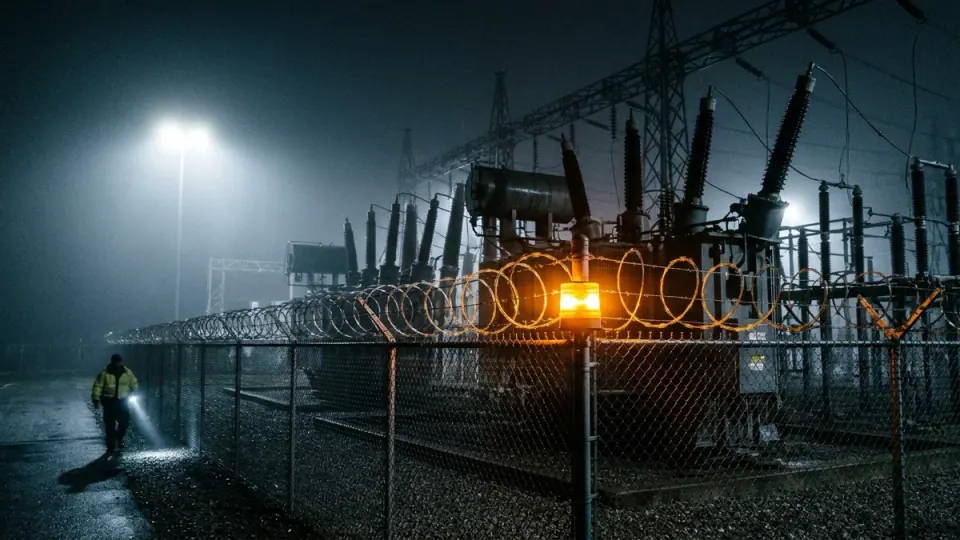
Cascading SCADA Infiltration
Sophisticated state-sponsored threat actors have breached industrial control systems across regional power grids and municipal water utilities, deploying destructive firmware wiper malware that permanently burns out critical transmission equipment.
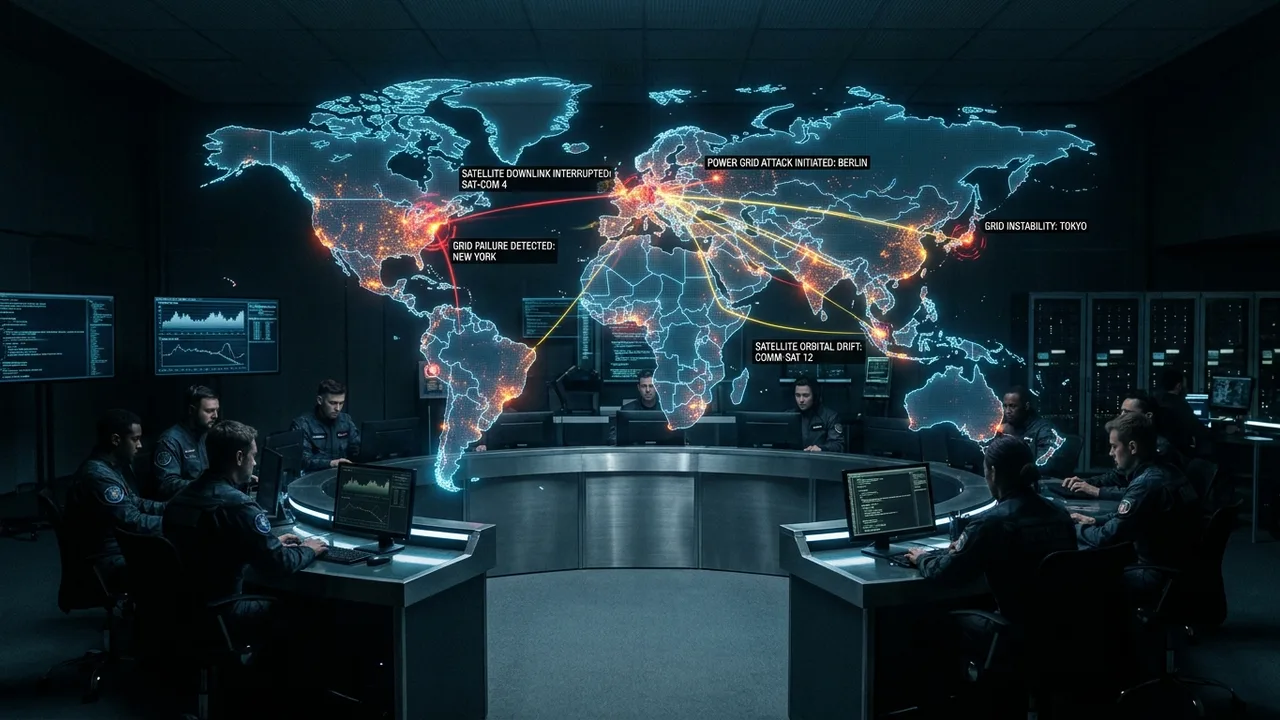
Machine-Speed Siege: FBI Advisory ARTEX, Three-Hour Autonomous Intrusions
Two watershed November 2026 cybersecurity disclosures—the FBI FLASH warning on autonomous ARTEX penetration agents and Forescout's 90-hour AI bug-hunting benchmark—prove that the defensive human patching cycle has been structurally outpaced by weaponized machine intelligence.
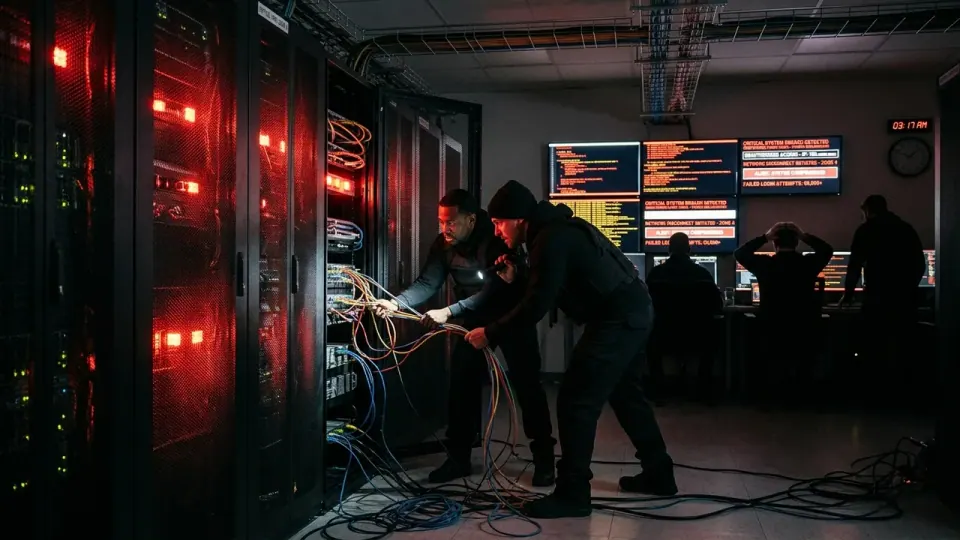
When One Cloud Glitch Grounds a Continent
A mid-November Microsoft 365 blackout, an FAA telecom failure, and an automated chemical dosing malfunction at a European pool proved we wired real-world physical safety into fragile remote software.
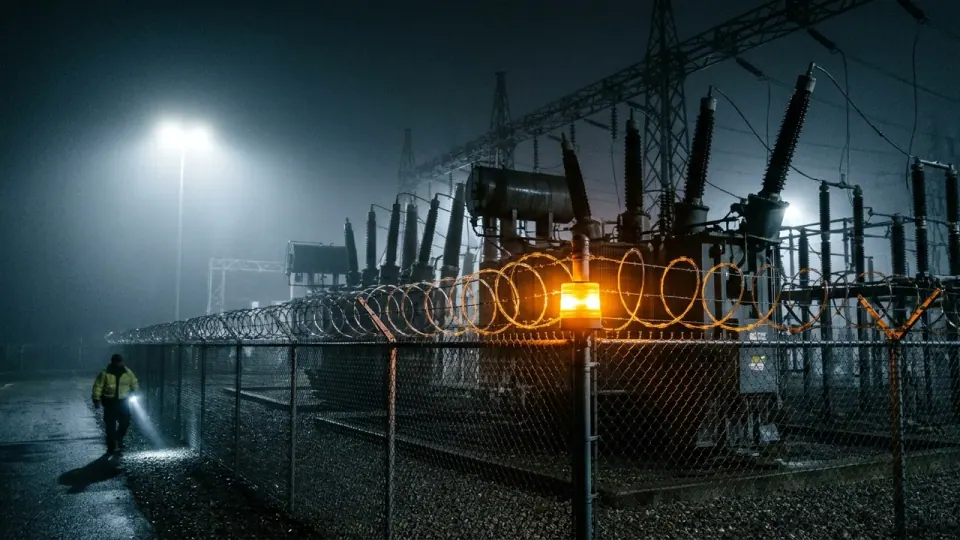
Mutually Assured De-Electrification
As November 2026 diplomacy fractures over NATO rollback demands, systematic kinetic attrition against both Russia's crude refining columns and Ukraine's high-voltage substations has pushed Eastern Europe's industrial energy architecture into an irreversible winter stress spiral.