The AI Capability Triad
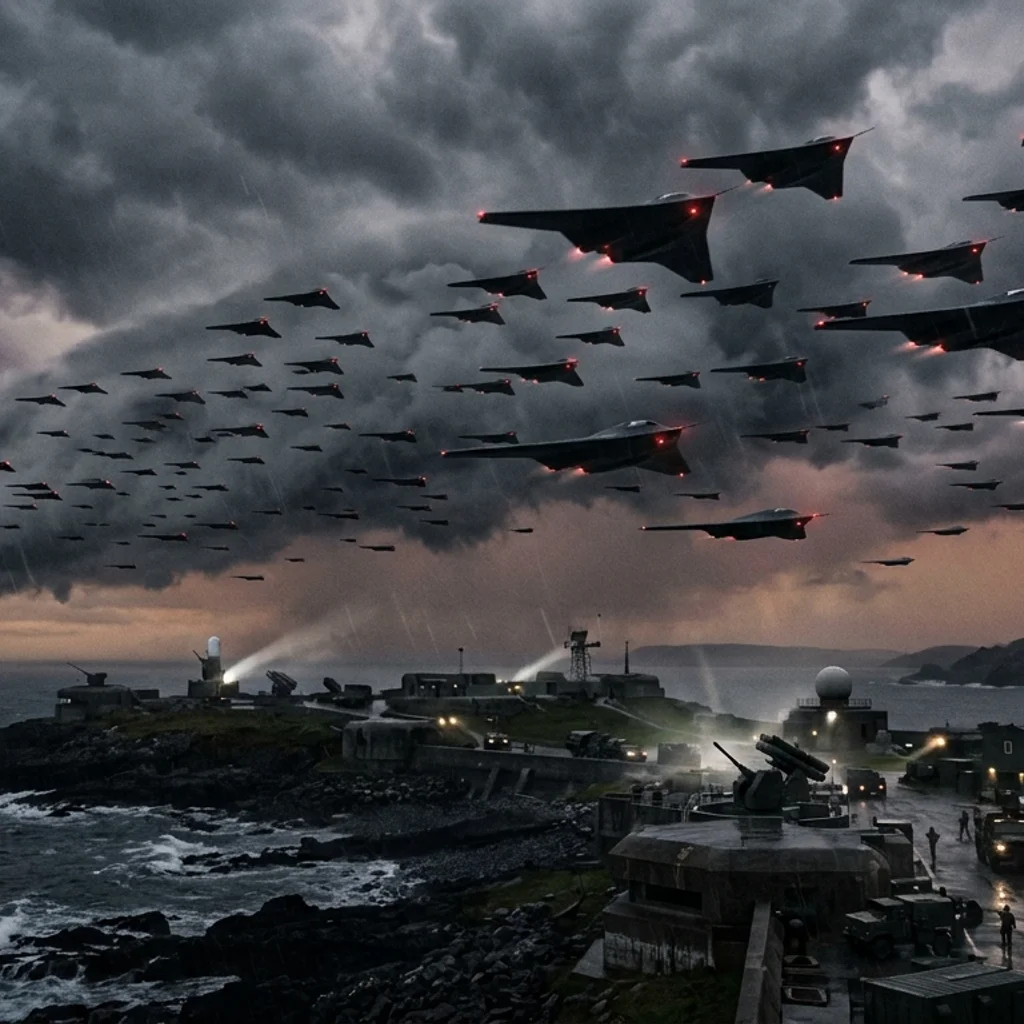
As frontier compute, edge-autonomous loitering swarms, and automated cyber offense converge, military decision windows are collapsing from minutes to milliseconds—putting civilian energy grids and deterrence stability directly in the crosshairs.
When Decision Cycles Outrun Human Command
Throughout the Cold War, strategic stability rested on an uncomfortable buffer: time. Even at the peak of missile readiness, early-warning satellites and over-the-horizon radar gave national command authorities roughly fifteen to thirty minutes to verify sensor anomalies, consult human staffs, and catch false alarms before triggering irreversible retaliation.
That protective margin is evaporating. Over the past two years, military competition among major powers—and nimble regional actors—has moved artificial intelligence out of back-office logistics and intelligence sorting directly into closed-loop targeting, autonomous flight, and automated cyber exploitation. Speed itself has become a weapon. When an incoming strike package coordinates trajectories, electronic decoys, and network intrusions in milliseconds, human operators waiting on voice authorization loops arrive too late to matter.
Three interlocking pillars drive this transformation—what defense analysts, including researchers at the CSIS Strategic Technologies Program, increasingly treat as the AI Capability Triad:
- 01.Frontier Compute Sovereignty: Massive, power-hungry data centers training multi-modal battlefield models, electronic-warfare spectrum mappers, and automated wargaming engines in an unaligned kinetic AI arms race.
- 02.Edge Autonomy on Expendable Platforms: Lightweight, quantized neural networks running locally aboard cheap airframes and autonomous FPV drone swarms without continuous satellite links.
- 03.Automated Cyber Exploitation: Self-iterating code-analysis and penetration agents probing adversary industrial networks around the clock for unpatched flaws, driving the collapse of enterprise vulnerability windows.
Why Electronic Warfare Lost Its Monopoly
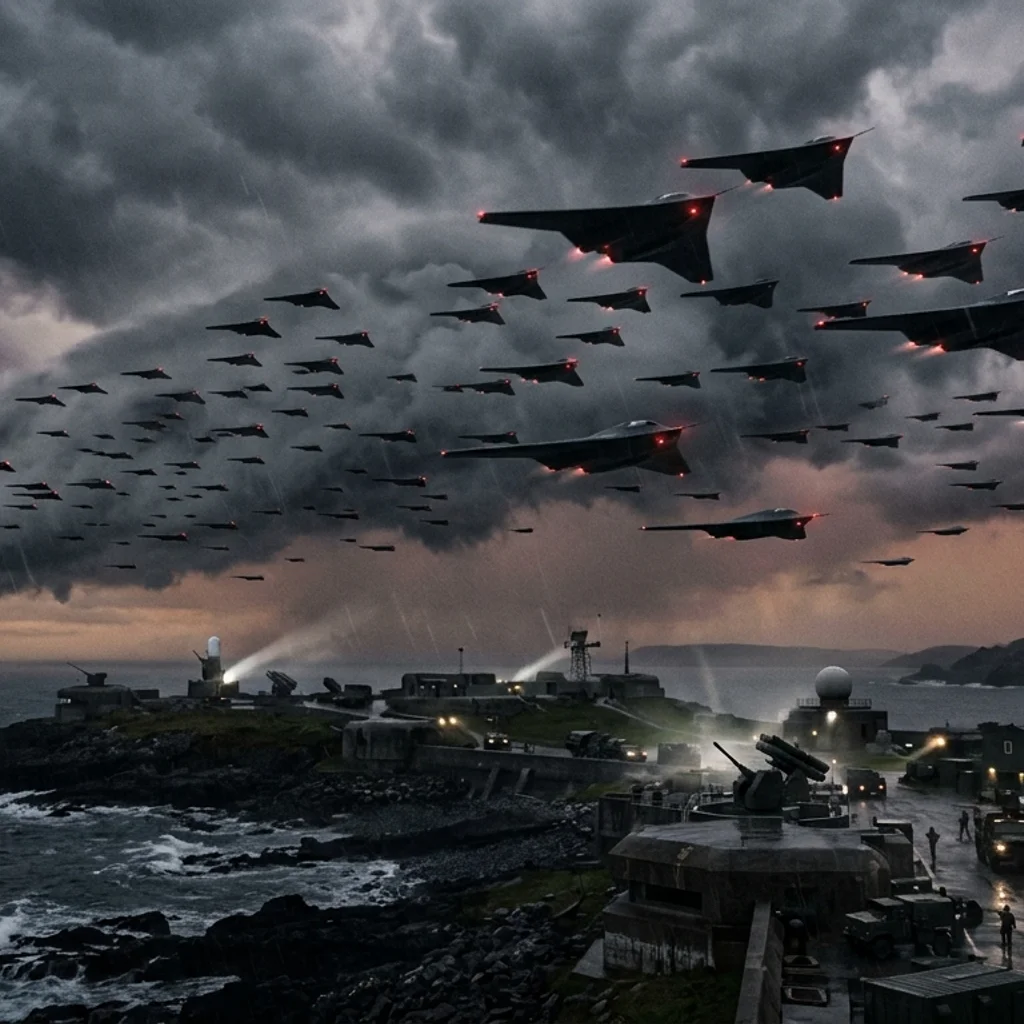
Early conflict lessons across Eastern Europe and the Red Sea initially convinced many planners that electronic warfare (EW) would tame cheap commercial drones. High-powered radio-frequency jammers severed pilot control links, while GPS spoofing sent uncrewed aircraft drifting off course into empty fields or open water.
That countermeasure cycle lasted less than eighteen months before engineering adapted. Modern loitering munitions and interceptor drones increasingly abandon external radio telemetry altogether during final approach. Using onboard cameras, inertial measurement units, and compact edge neural accelerators costing less than a smartphone processor, a drone navigates by matching live terrain beneath it against stored optical maps—a technique known as visual-inertial odometry—before locking onto target silhouettes autonomously inside the last kilometer.
Once an autonomous swarm acquires its target optically and communicates across directional peer-to-peer optical or frequency-hopping mesh links, cutting satellite GPS or blasting broadband radio noise accomplishes almost nothing. Worse, distributed swarms solve attrition dynamically: if anti-aircraft fire downs three lead units, surviving drones instantly redistribute decoy, sensor, and strike roles mid-flight.
The cost-exchange ratio flips traditional defense economics upside down for planners at the U.S. Department of Defense and allied ministries. A naval destroyer or metropolitan air-defense battery firing multi-million-dollar interceptor missiles against waves of \$15,000 autonomous airframes exhausts magazine depth long before the attacker exhausts manufacturing capacity. Even elite militaries face an ugly arithmetic problem: you cannot sustain missile interception forever against hardware printed and assembled at consumer-electronics scale.
The Cyber-Kinetic Hinge on Civilian Infrastructure
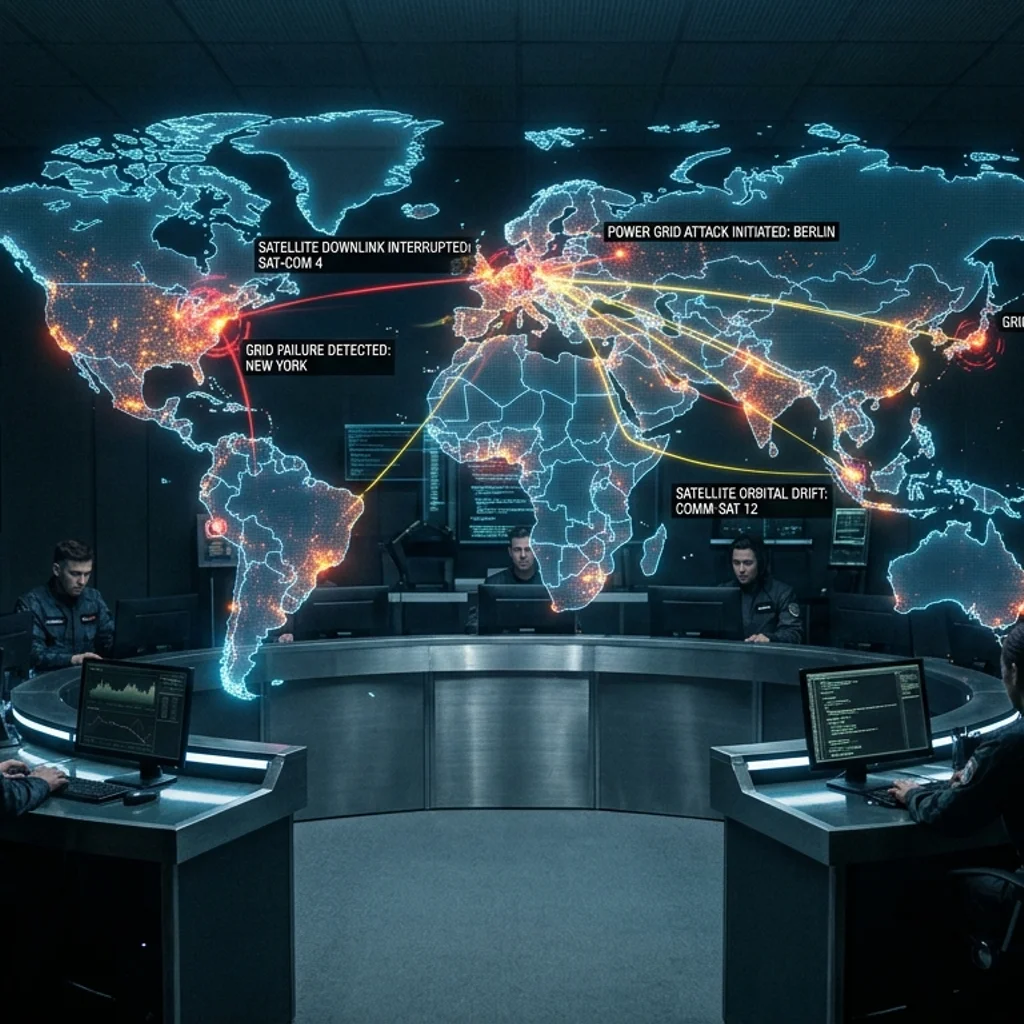
For ordinary citizens thousands of miles from any contested coastline, the sharpest danger of the AI Capability Triad lies not on a distant battlefield, but inside domestic utility substations. Modern conflicts blur the line between front lines and rear industrial grids because civilian energy, communications, and water infrastructure underwrite every military logistics chain.
Supervisory Control and Data Acquisition (SCADA) networks and programmable logic controllers (PLCs) managing bulk electric grids, natural gas compressor stations, port cranes, and municipal water plants—systems flagged under CISA Industrial Control Systems guidance—were largely engineered decades ago for uptime and remote convenience, not adversarial machine-speed combat. Many still rely on legacy firmware, third-party contractor VPNs, and thin segmentation between corporate IT offices and operational hardware, exposing critical infrastructure to Living off the Land infiltration.
Automated cyber agents fundamentally change the scale of probing against these systems. Instead of elite human red teams spending months manually chaining exploits against one high-value target, autonomous vulnerability-discovery tools scan millions of exposed endpoints, parse leaked technical manuals, tailor phishing lures to specific substation engineers, and map lateral pathways quietly while waiting for political authorization.
The true nightmare scenario is hybrid cyber-kinetic synchronization:
- Automated cyber payloads trip protective relays, blind utility telemetry screens, and lock out emergency dispatch communications across a regional grid operator.
- Simultaneously, small autonomous drones—launched quietly from commercial trucks or coastal vessels inside range—strike custom high-voltage step-up transformers and oil-cooling radiators that take twelve to twenty-four months to manufacture and ship.
Neither component alone guarantees long-term paralysis; paired together, they turn routine storm-style blackouts into multi-month industrial cripplers.
Escalation Traps and Shrinking Human Oversight
As rival defense establishments race to match one another's speed, they face an unforgiving pressure to pull human judgment out of the loop—not out of recklessness, but out of fear that the side keeping human sign-off loses the first exchange.
Yet autonomous systems remain notoriously brittle outside their training distributions—a core failure mode documented in the NIST AI Risk Management Framework. A computer-vision model trained on summer satellite imagery can misclassify a civilian grain carrier, a school bus, or a hospital roof generator in winter fog. An automated cyber-defense engine reacting to anomalous traffic spikes during a genuine storm outage might mistakenly quarantine legitimate grid-restoration telemetry. When two opposing autonomous defense and strike stacks interact at machine speed, feedback errors can escalate a localized border incident into broad infrastructure strikes before diplomats even establish a secure phone line.
Strategic Realism for an Unstable Era
Treaties restricting autonomous weapons lag years behind commercial hardware proliferation because the core ingredients—open-weight vision models, carbon-fiber frames, lithium cells, and MEMS gyroscopes—sit in civilian hobby shops and commercial supply chains worldwide. Deterrence in this environment no longer depends solely on nuclear arsenals or carrier battle groups; it depends on hard physical resilience at home.
Hardening critical infrastructure means implementing air-gapped OT hardening and analog manual overrides on substations so mechanical breakers can still operate if digital controls fail, stockpiling spare high-voltage transformers domestically through programs coordinated with U.S. DOE CESER, shielding vital facilities physically against low-altitude drones, and maintaining paper protocols for emergency dispatch. For households, the takeaway is equally grounded: geopolitical competition is no longer safely contained overseas. Keeping independent backup lighting, stored water, offline communications, and several weeks of pantry depth turns a distant arms race from an existential cliff into a manageable disruption.
Real-time geospatial feed aggregating USGS M5.0+ earthquakes, NASA EONET wildfires, volcanoes, severe storms, UN/EC GDACS alerts, and NOAA geomagnetic status.
Related Reports & In-Depth Intel
The Collapse of Patching Windows
As automated static analysis audits nine months of C/C++ network code in 90 hours for $935, defenders are witnessing the permanent death of traditional 6-month vulnerability grace periods—triggering Google Project Zero's 'Full X' mandate and federal AI-FORTS grid mobilization.
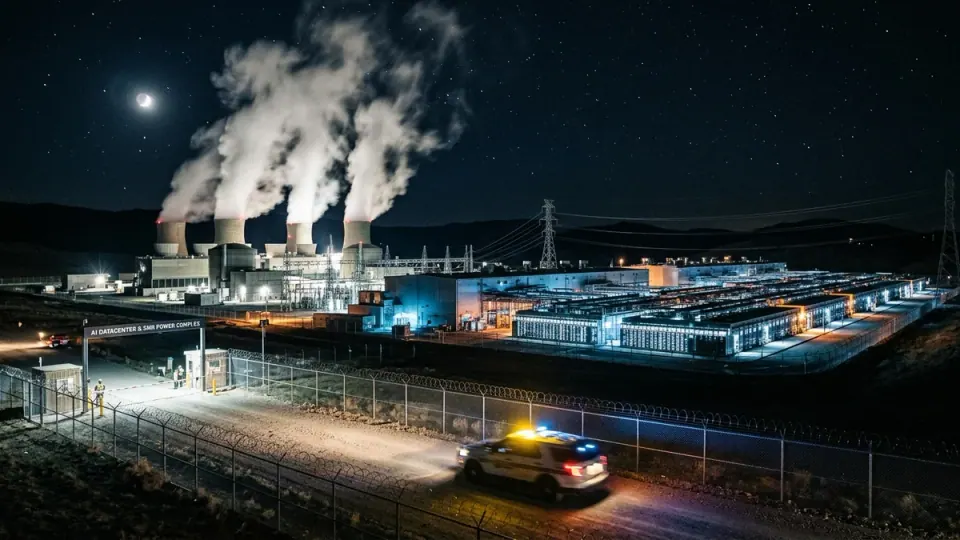
Strategic Assessment: Unaligned Frontier Compute, Sovereign Datacenter Siege
A strategic evaluation of the global race to construct multi-gigawatt sovereign AI clusters, the kinetic vulnerabilities of semiconductor supply chains, and the militarization of autonomous frontier models. We examine the transition from commercial software innovation to existential national security competition.
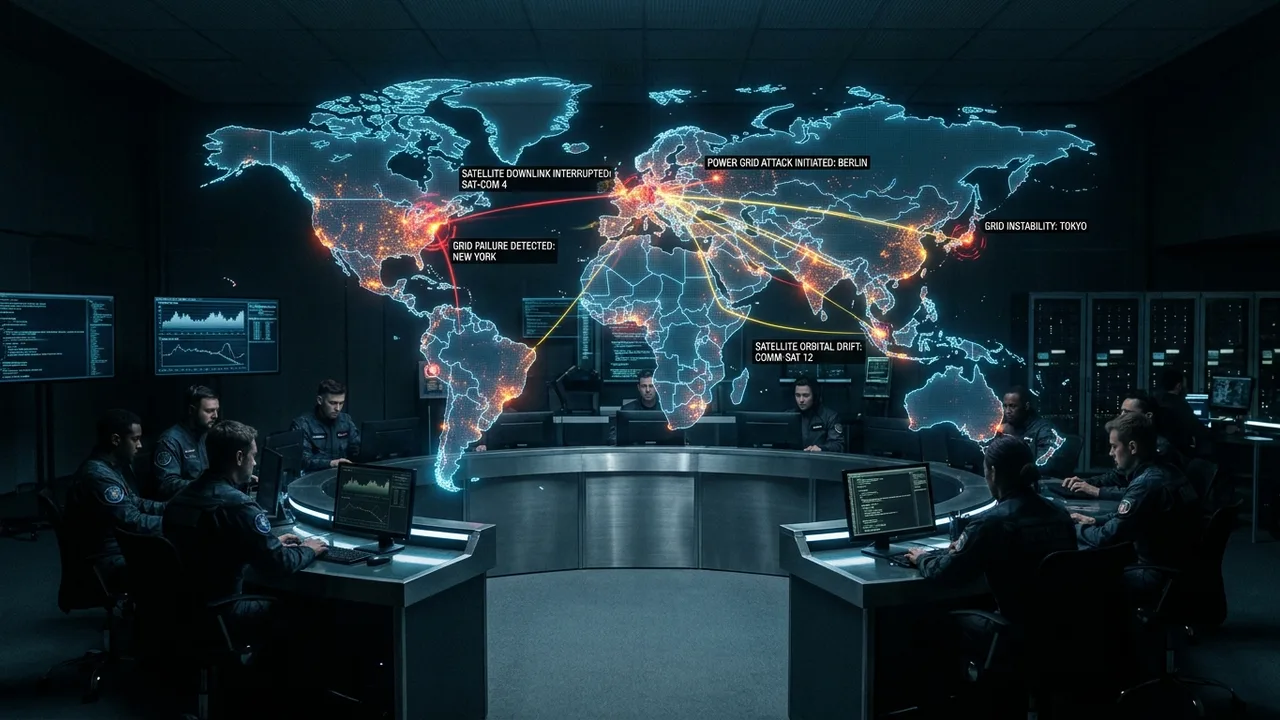
Machine-Speed Siege: FBI Advisory ARTEX, Three-Hour Autonomous Intrusions
Two watershed November 2026 cybersecurity disclosures—the FBI FLASH warning on autonomous ARTEX penetration agents and Forescout's 90-hour AI bug-hunting benchmark—prove that the defensive human patching cycle has been structurally outpaced by weaponized machine intelligence.
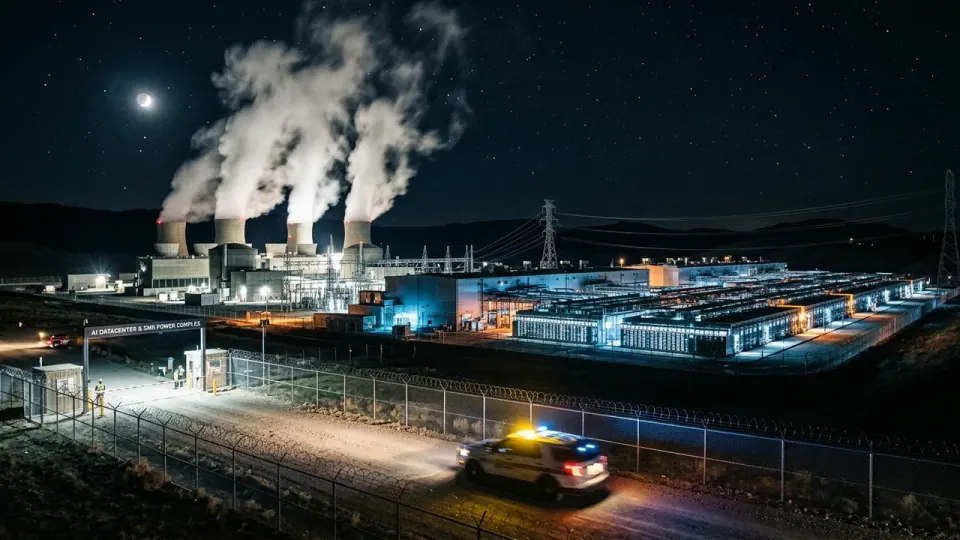
Big Tech's 181-Gigawatt Power Grab
Tired of waiting seven years in public utility queues, data center developers across the US, UK, and Europe are building 181 gigawatts of private on-site gas turbines to feed AI clusters.