Algorithmic Kill Webs and Autonomous FPV Drone Swarms
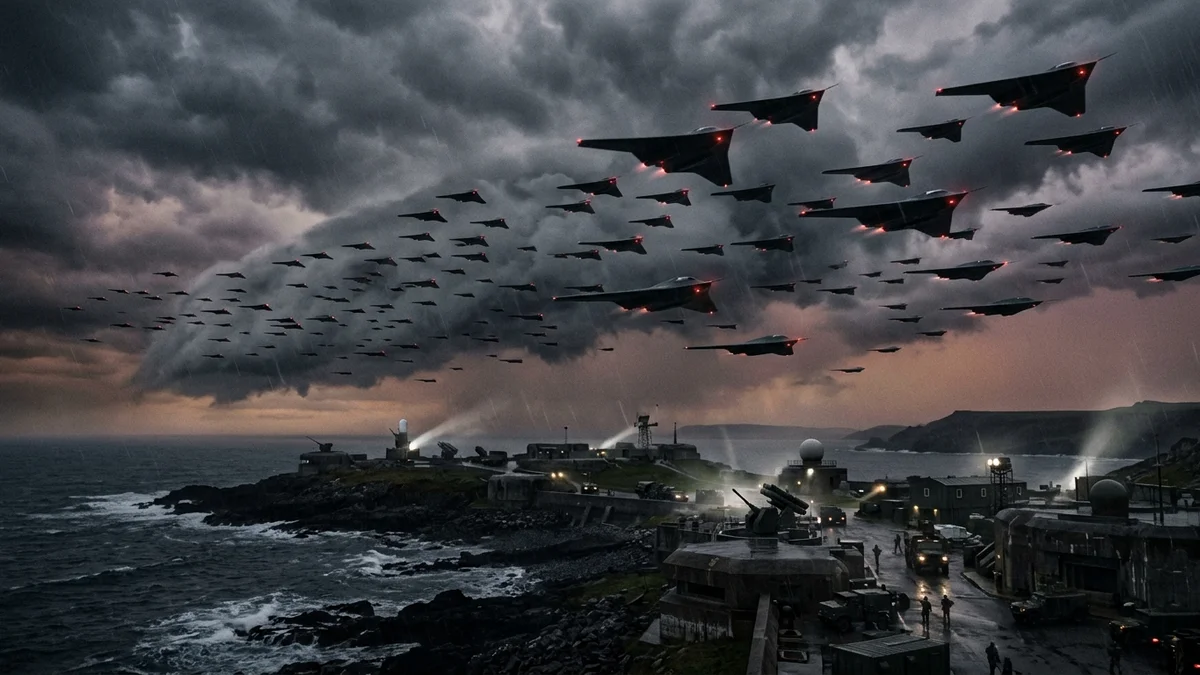
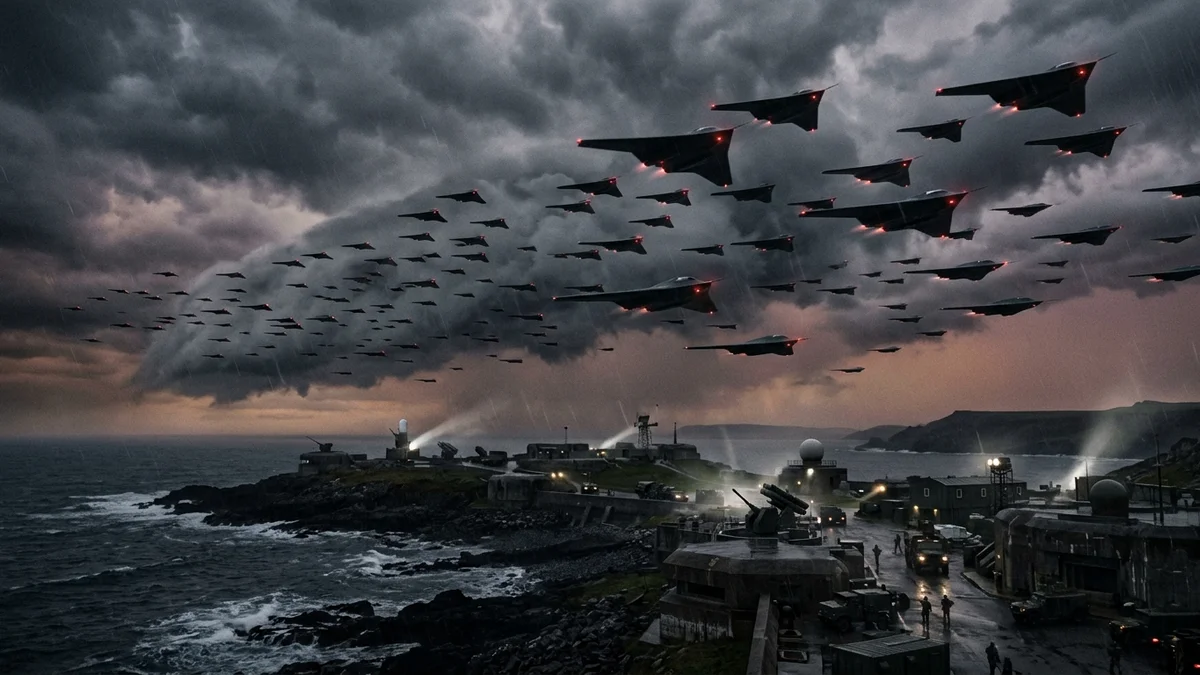
The integration of on-chip computer vision, decentralized mesh communications, and autonomous targeting has eliminated the human-in-the-loop doctrine, inaugurating an era of hyper-accelerated algorithmic warfare.
Across the contested battlefronts of Eastern Europe—evidenced by long-range drone attrition against energy grids—and the Middle East, the definitive paradigm of modern tactical combat has shifted decisively from human marksmanship and mechanized armor to fully automated algorithmic attrition. In early 2024, first-person-view (FPV) strike drones still relied overwhelmingly on analog or digital radio links tethered to human operators wearing virtual reality headsets. Today, relentless electronic warfare (EW)—blanketing radio frequency bands from 400 MHz to 5.8 GHz with hundreds of watts of high-intensity electronic noise—has rendered traditional teleoperated drone flight virtually obsolete within ten kilometers of the forward line of own troops (FLOT).
In response to electromagnetic denial, state militaries and non-state asymmetric combatants have executed a quantum leap in tactical autonomy: deploying terminal optical seeker guidance chips costing less than $40 per unit. These low-power neural processing units (NPUs), mounted directly onto expendable quadcopters, run compressed convolutional neural networks capable of executing real-time target recognition, kinematic trajectory calculation, and terminal kinetic engagement completely independent of human guidance, GPS signals, or external communications links.
The eradication of human latency in the kill chain is no longer a future horizon of defense procurement; it is the brutal, operational reality of contemporary kinetic warfare.
From Teleoperation to On-Chip Optical Terminal Homing
The transition from human-piloted drones to autonomous kill webs was driven by the unforgiving physics of the electromagnetic spectrum. When both combatants deployed dense networks of trench-line electronic warfare systems, GPS spoofers, and directional jammer rifles, human pilots suffered severe signal loss at the decisive terminal phase of flight. A pilot losing video feed at thirty meters from a moving armored vehicle or fortified dugout invariably missed the target.
Terminal optical autonomy fundamentally dismantled this defense. The modern strike architecture operates through a hybrid, two-tiered command sequence:
- 01.Autonomous Waypoint Navigation: The drone ascends from a camouflaged launch redoubt using optical flow sensors and visual inertial odometry (VIO) to track its physical position across terrain by mapping ground texture changes, completely ignoring GPS jamming or spoofed coordinate signals.
- 02.Coarse Operator Cueing: The drone approaches the target area. If radio link permits, an operator clicks a single pixel bounding box on a target displayed via low-bandwidth satellite or relay telemetry. If no radio link exists, the drone enters an autonomous search envelope.
- 03.Onboard Neural Target Acquisition: The edge NPU analyzes 60-frame-per-second onboard camera feeds. Trained on hundreds of thousands of multi-spectral thermal and optical signatures of military hardware, trenches, and personnel, the algorithm locks onto target geometry.
- 04.Autonomous Kinematic Interception: Even if the target executes evasive high-speed maneuvers, releases smoke canisters, or passes under dense forest canopy, the drone's flight controller calculates predictive proportional navigation trajectories and accelerates into the target at over 150 kilometers per hour.
| Attribute | Gen 1: Teleoperated (2022-2024) | Gen 2: Edge Autonomy (2026) |
|---|---|---|
| Command Link | Analog / Digital 2.4/5.8 GHz RF | Zero RF Emission (Optical VIO) |
| Jammer Vulnerability | High (>85% mission loss rate) | Impervious to RF Jammers |
| Terminal Guidance | Human Pilot Reflexes | Edge NPU Neural Tracking |
| Strike Speed / Velocity | 70 - 100 km/h (Cautious flight) | 160+ km/h (Pure Ballistic) |
| Cost Per Kinetic Unit | $800 - $1,200 | $450 - $650 |
| Human in the Loop | Mandatory at all seconds | Completely Eradicated |
By decoupling the kinetic munition from the radio spectrum, edge AI has nullified billions of dollars of conventional electronic warfare investments made by the U.S. Department of Defense and allied defense establishments.
Decentralized Swarm Intelligence and Kill-Web Convergence
The tactical threat escalates by orders of magnitude when individual autonomous drones cease operating as solitary munitions and coalesce into cooperative, decentralized swarms. Utilizing low-power millimeter-wave or optical laser-mesh transceivers that operate beneath the detection threshold of hostile electronic surveillance, multiple drones share tactical situational awareness in real time:
- Role Specialization: Within a six-drone autonomous pack, two high-altitude scout drones carry stabilized thermal optics to survey an area of interest; two drones act as dynamic electronic reconnaissance nodes locating hostile radar or radio emissions; and two low-flying loitering munitions carry tandem shaped-charge warheads.
- Autonomous Target Allocation: When an enemy armor column or air-defense radar array is detected, the swarm algorithm executes instantaneous game-theoretic resource allocation. The algorithm assigns specific targets to individual munitions based on kinetic velocity, battery reserves, angle of approach, and armor thickness, ensuring that multiple high-value targets are struck simultaneously from opposing vectors without human intervention.
- Active Counter-Air Suppression: If the swarm encounters hostile interceptor drones or anti-drone kinetic turrets, designated sacrificial units deliberately execute high-G diversionary maneuvers to exhaust defensive ammunition while companion strike units dive vertically through blind spots.
This algorithmic convergence—part of a broader AI capability triad reshaping kinetic warfare and mirrored in autonomous naval drone blockades—compresses the OODA (Observe, Orient, Decide, Act) loop from minutes to fractions of a second, a doctrinal shift tracked by the CSIS Strategic Technologies Program. A human military commander observing a holographic tactical display cannot possibly perceive, analyze, and counter a swarm attack executing hundreds of cooperative tactical maneuvers per second.

The Geopolitical Collapse of Deterrence and Proliferation
The most destabilizing aspect of autonomous algorithmic weapons is not their battlefield lethality, but their hyper-democratized proliferation. Traditional weapons of mass disruption monitored by the Stockholm International Peace Research Institute (SIPRI)—ballistic missiles, strategic stealth bombers, advanced air defense batteries—require vast state-backed industrial bases, specialized aerospace alloys, and billions in annual maintenance budgets.
Conversely, an autonomous strike drone is composed almost exclusively of commercial dual-use electronics: brushless DC motors manufactured for hobby toys, molded carbon-fiber arms, lithium-polymer batteries, open-source ArduPilot flight management software, and consumer AI vision chips deployed entirely outside governance benchmarks such as the NIST AI Risk Management Framework, fueling a kinetic race in unaligned frontier compute.
The strategic consequences are terrifying:
- 01.Porous Sovereignty and Assassination Vectors: Non-state insurgent groups, international drug cartels, and extremist networks can manufacture swarms of autonomous facial-recognition or silhouette-targeting assassination drones in clandestine garage workshops without specialized state backing.
- 02.Total Deniability: An autonomous drone that operates without radio control leaves no electromagnetic fingerprint. Once it detonates, its plastic and fiberglass components leave minimal forensic trace, rendering state attribution and retaliatory deterrence completely hollow.
- 03.The Death of Mechanized Land Warfare: Expensive legacy armor platforms—such as the $10 million M1A2 Abrams or Leopard 2A7—are fundamentally obsolete on a battlefield saturated with $500 top-attack autonomous munitions capable of diving onto thin engine decks and turret roofs with millimeter precision.
Strategic Realities for the Preparedness Horizon
The proliferation of autonomous aerial kill webs invalidates virtually all legacy civilian and tactical defense assumptions, prompting urgent infrastructure resilience warnings across CISA cybersecurity advisories. To prepare for an era defined by autonomous airborne hunters, defensive doctrine must evolve alongside practical analog countermeasures and blackout survival protocols:
- The Death of Visual Concealment: High-resolution multispectral thermal optics running AI shape-recognition algorithms render traditional optical camouflage and forest canopy shielding ineffective. Warm human bodies, generator exhaust, vehicle engines, and even disturbed soil signatures are instantly flagged by automated algorithms.
- Physical Kinetic and Kinetic-Disruption Defenses: Since RF jammers are useless against autonomous optical seekers, defensive shielding must rely on physical intercept barriers: heavy high-tensile wire netting, physical overhead cage structures, steel mesh grids over shelters, and high-velocity shotgun-style kinetic point-defense munitions.
- Thermal Suppression Architecture: Any long-term shelter or defensive position must integrate thermal masking: radiant heat barriers, subterranean earth berms, underground chimney heat sinks that cool generator exhaust before venting, and complete restriction of daytime surface movement in contested airspace.
The threshold of automated warfare has been irrevocably crossed. Machines are now choosing whom to kill, when to kill, and how to kill—at the speed of silicon, with zero moral friction, and with an accuracy that human biology can never match.
Real-time geospatial feed aggregating USGS M5.0+ earthquakes, NASA EONET wildfires, volcanoes, severe storms, UN/EC GDACS alerts, and NOAA geomagnetic status.
Related Reports & In-Depth Intel

The Collapse of Patching Windows
As automated static analysis audits nine months of C/C++ network code in 90 hours for $935, defenders are witnessing the permanent death of traditional 6-month vulnerability grace periods—triggering Google Project Zero's 'Full X' mandate and federal AI-FORTS grid mobilization.

Strategic Assessment: Unaligned Frontier Compute, Sovereign Datacenter Siege
A strategic evaluation of the global race to construct multi-gigawatt sovereign AI clusters, the kinetic vulnerabilities of semiconductor supply chains, and the militarization of autonomous frontier models. We examine the transition from commercial software innovation to existential national security competition.
The AI Capability Triad
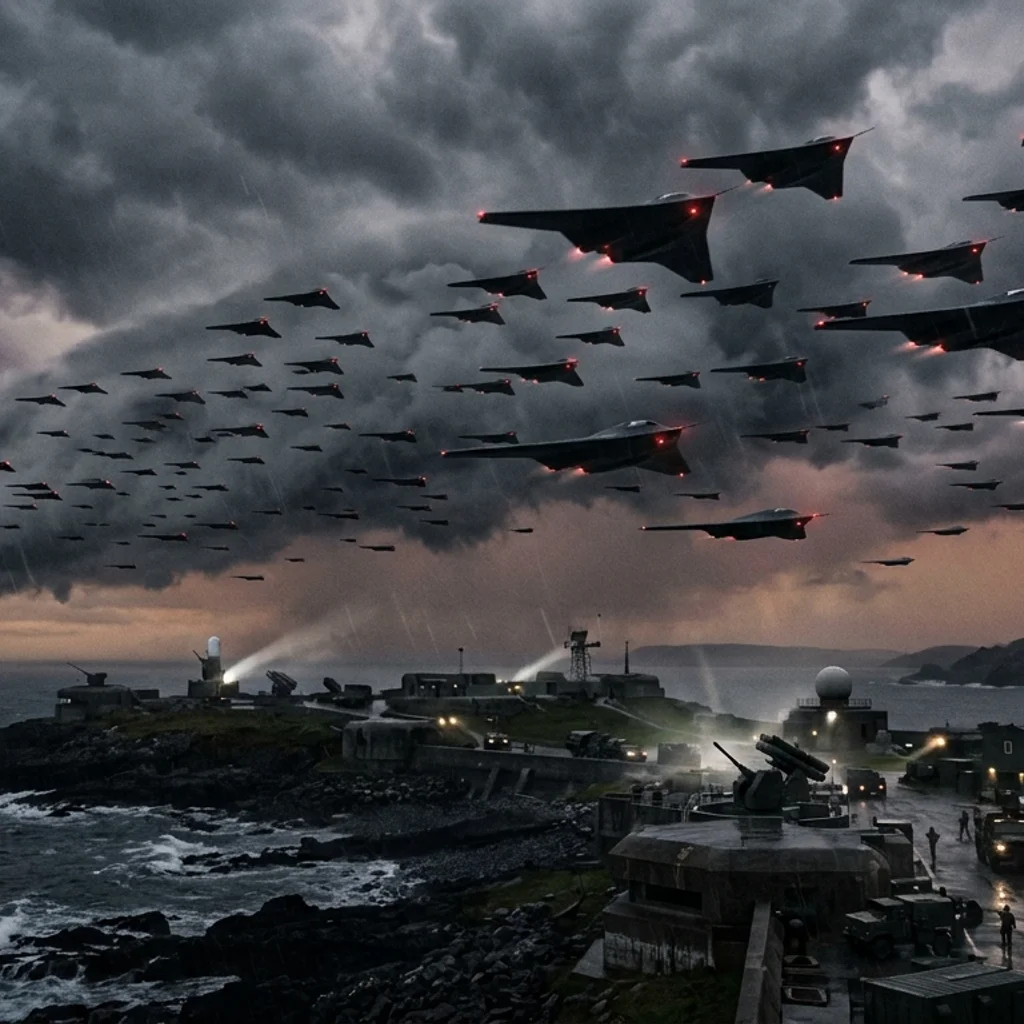
As frontier compute, edge-autonomous loitering swarms, and automated cyber offense converge, military decision windows are collapsing from minutes to milliseconds—putting civilian energy grids and deterrence stability directly in the crosshairs.

Machine-Speed Siege: FBI Advisory ARTEX, Three-Hour Autonomous Intrusions
Two watershed November 2026 cybersecurity disclosures—the FBI FLASH warning on autonomous ARTEX penetration agents and Forescout's 90-hour AI bug-hunting benchmark—prove that the defensive human patching cycle has been structurally outpaced by weaponized machine intelligence.