Black Sea Naval Drone Warfare and the Total
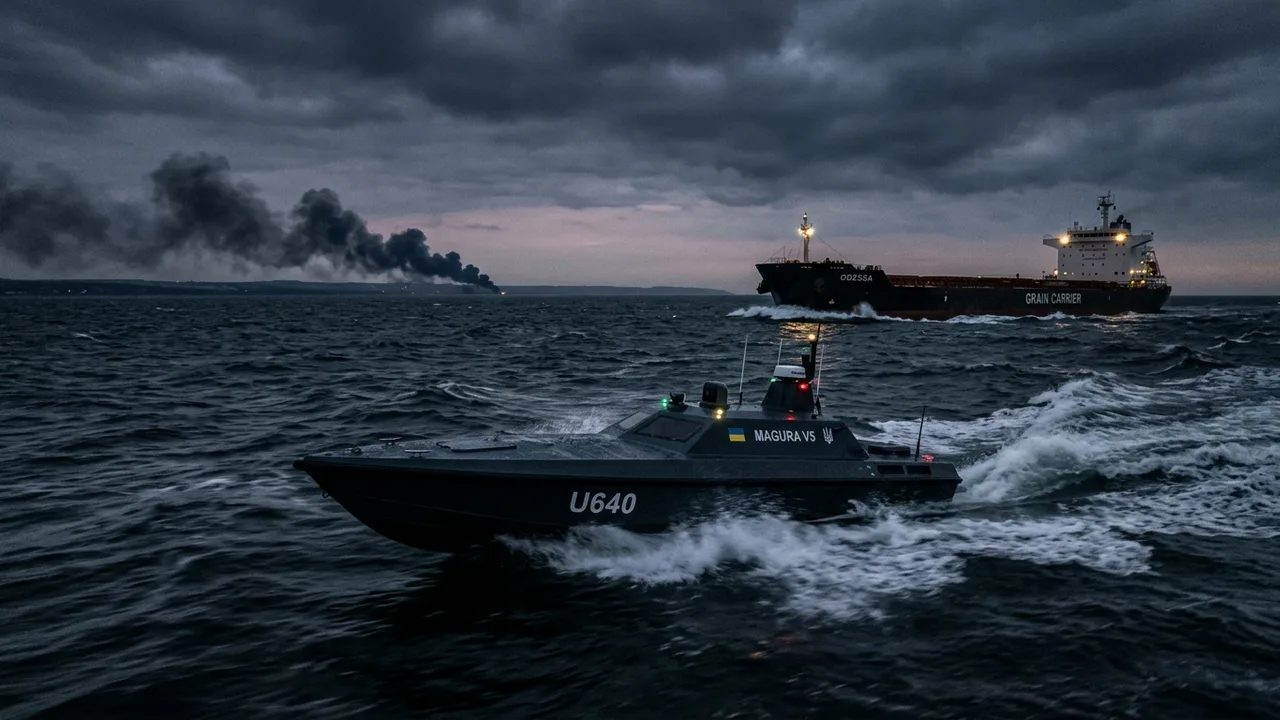
The deployment of autonomous uncrewed surface vessels (USVs) and hypersonic anti-ship missile salvos across the Black Sea basin has triggered the indefinite suspension of commercial maritime shipping, stranding 35 million metric tons of essential agricultural exports.
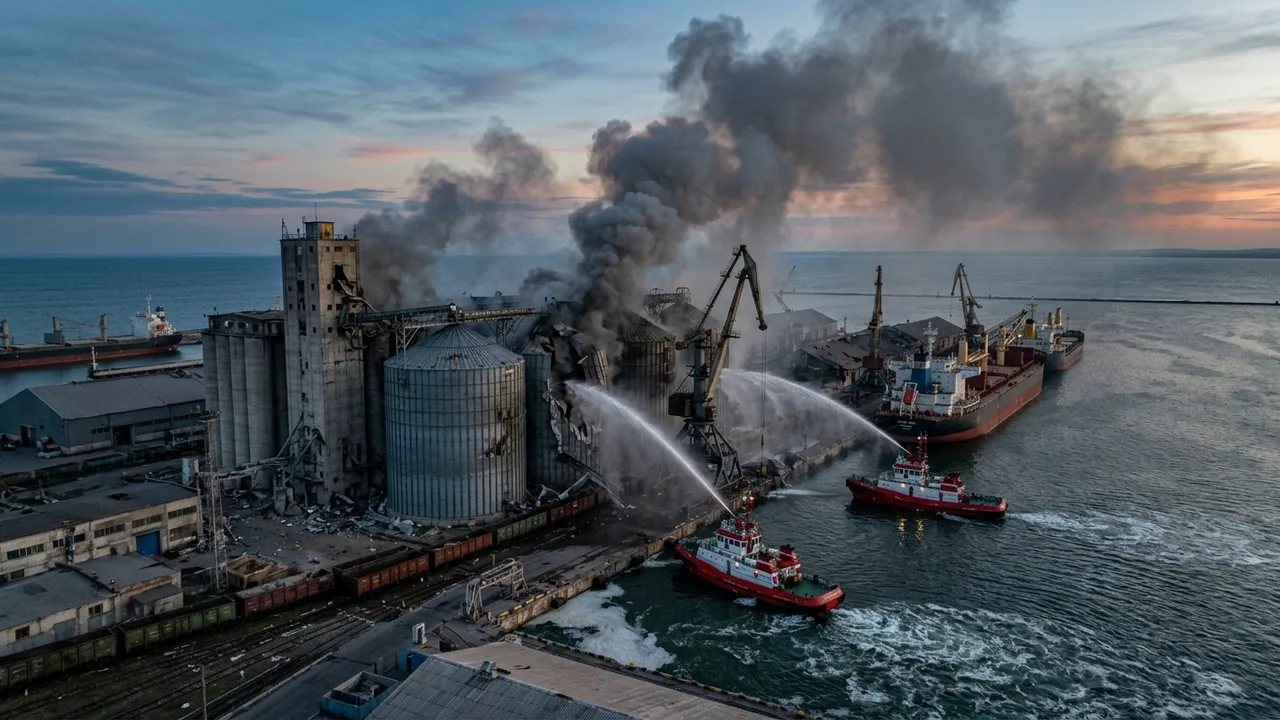
The maritime architecture that has sustained the calorie balance of North Africa, the Middle East, and Southern Europe since antiquity collapsed into absolute kinetic gridlock this week. What began as intermittent gray-zone skirmishing between Russian coastal defense batteries and Ukrainian autonomous uncrewed surface vessels (USVs) has metastasized into a complete, non-permissive exclusion zone across the northern and western basins of the Black Sea—compounding the wider maritime chokepoint paralysis stretching from the Red Sea to the Persian Gulf. Following the simultaneous strike on two laden Panamax bulk carriers transiting the territorial waters of Romania and the destruction of the secondary grain export terminal at Chornomorsk, global maritime underwriters led by Lloyd’s of London announced the immediate cancellation of War Risk insurance endorsements for all merchant hulls operating north of the Bosporus, mirroring heightened security circulars from the International Maritime Organization (IMO).
Without insurance indemnification, commercial maritime shipping ceases to exist. Within seventy-two hours of the insurer withdrawals, over ninety bulk carriers, handysize freighters, and chemical product tankers dropped anchor or reversed course toward Turkish territorial waters. The direct physical outcome is the immediate stranding of approximately thirty-five million metric tons of export-grade wheat, barley, maize, and sunflower oil originating from the Ukrainian, Romanian, and southern Russian grain belts—a disruption documented across UN Food and Agriculture Organization (FAO) crop prospects assessments. For import-dependent sovereign states spanning Cairo, Beirut, Tunis, and Sana'a, this severance is not a distant economic statistic; it is the immediate catalyst for domestic caloric insolvency and accelerating global food security collapse.
The Asymmetric Evolution of Autonomous Maritime Exclusion
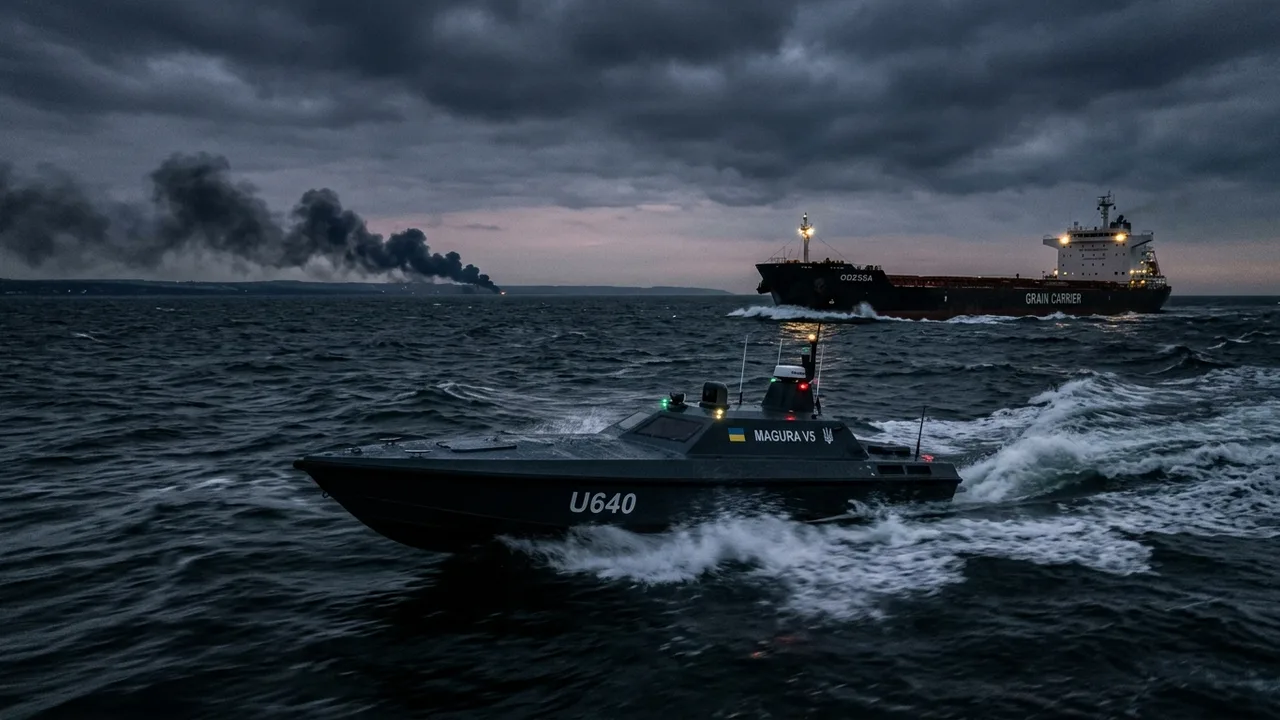
The catastrophic breakdown of the Black Sea corridor represents a profound inflection point in military doctrine: the complete obsolescence of conventional surface naval supremacy in confined maritime chokepoints. For decades, military strategists assumed that sovereign naval fleets composed of guided-missile frigates, corvettes, and air defense cruisers could enforce freedom of navigation across critical maritime commons. That doctrinal paradigm has been obliterated by low-cost, mass-produced autonomous surface and submersible strike crafts.
Modern uncrewed surface vessels—constructed from low-radar-cross-section carbon composites, powered by commercial waterjet diesel-inboard engines, and guided by redundant low-Earth-orbit satellite datalinks coupled with optical edge-AI terminal homing—cost less than $250,000 each. Yet, when deployed in coordinated autonomous drone swarm doctrines, these vessels carry shaped-charge warheads exceeding 450 kilograms of high explosives directly to the vulnerable waterline of deep-draft cargo ships and naval escorts alike.
Against such saturated asymmetric threats, conventional radar-directed point-defense weapons and rotary-cannon systems face mathematical exhaustion. Commercial bulk freighters, measuring over 220 meters in length with slow acceleration and high radar reflectivity, represent defenseless, slow-moving targets. When combatant forces began utilizing low-signature sea mines deployed via covert aerial drones into the mouth of the Sulina and Bystre canals in the Danube Delta, even the vital inland riverine bypass routes were rendered lethal.
| Commodity Class | Pre-Disruption Annual Flow | Current Interdicted Volume |
|---|---|---|
| Milling Wheat | 24.2 Million Metric Tons | 18.5 Million Metric Tons (76%) |
| Feed Maize | 19.8 Million Metric Tons | 14.1 Million Metric Tons (71%) |
| Sunflower Oil | 5.4 Million Metric Tons | 4.6 Million Metric Tons (85%) |
| Fertilizer (Urea/AN) | 7.1 Million Metric Tons | 6.2 Million Metric Tons (87%) |
The table above details the catastrophic volume of interdicted foodstuffs. Unlike industrial machinery or consumer electronics, food commodities are perishable, biologically active inventories that require continuous aeration and climate control. Silo infrastructure across Odesa, Pivdennyi, and Constanța is already operating at 98 percent of rated capacity. With outbound vessel loading brought to a complete halt, internal grain elevators are rapidly succumbing to fungal blights, spontaneous combustion risks from grain dust accumulation, and widespread mechanical degradation.
The Chokepoint Cascades: From the Danube to the Bosporus
With maritime transit along the western Black Sea coastline effectively paralyzed, logistics operators attempted an emergency pivot toward rail transport and inland barging through the Danube River corridor. However, this contingency network has broken under the weight of impossible throughput demands:
- 01.The Rail Gauge Friction: The historical divergence between the standard European rail gauge (1,435 mm) and the broad Eastern European gauge (1,520 mm) creates a chronic mechanical bottleneck at Polish, Slovakian, and Romanian border transshipment hubs. Hydraulic bogie-exchange cranes and wheelset transloaders are backlogged by thirty-five days, leaving thousands of hopper cars stalled along border sidings.
- 02.Danube Hydro-Capacities: The Danube river waterway, already suffering from hydrological fluctuations exacerbated by regional climate volatility, cannot accommodate the draft of deep-water ocean vessels. Cargo must be laboriously transferred from shallow-draft river barges onto ocean-going ships in Romanian territorial ports—a transshipment process that increases logistics overhead by over 240 percent per metric ton.
- 03.The Bosporus Queue: Turkish maritime authorities, facing unexploded drifting contact mines and heightened naval alert levels, have instituted mandatory daytime-only transit protocols with mandatory visual hull inspections for all southbound commercial traffic through the Istanbul Strait, inflating wait times to eighteen days at anchorage as tracked on IMF PortWatch and archived across our Data Center.
Geopolitical Fallout and Caloric Vulnerability in the Global South
The systemic implications of the Black Sea agricultural embargo extend far beyond the immediate conflict theater. Global food systems operate with razor-thin strategic grain reserves, typically maintaining fewer than sixty-five days of domestic consumption buffer in urbanized import-dependent nations.
In Egypt, the General Authority for Supply Commodities (GASC), which subsidizes daily bread (baladi) for more than seventy million citizens, faces catastrophic foreign exchange drain. With Chicago Board of Trade (CBOT) soft red winter wheat futures surging by forty-two percent in single-week trading—driving sharp spikes in the FAO Food Price Index—sovereign credit default swaps for Cairo, Amman, and Islamabad have widened to historic crisis thresholds reflected in the IMF World Economic Outlook.
Simultaneously, alternative grain exporting nations are utterly incapable of offsetting the structural deficit:
- The North American Drought Belt: Persistent high-pressure atmospheric heat domes across the US Great Plains and Canadian prairies have reduced harvest yield projections by nineteen percent below five-year historical averages.
- South American Logistical Exhaustion: Brazilian and Argentine export terminals at Santos and Rosario are already operating at absolute capacity, bottlenecked by domestic highway strikes and high bunker fuel costs.
- Australian Shipping Distance: Diverting maritime transport to Australian grain ports increases voyage duration by over twenty-two days per round-trip, absorbing immense quantities of global maritime bunker fuel and driving Panamax charter rates to prohibitive highs.
The Long-Term Horizon: Institutional De-Agrarianization
The permanent loss of freedom of navigation across the Black Sea marks the definitive transition from globalized just-in-time agricultural distribution to regionalized caloric autarky. Sovereign states without domestic agricultural self-sufficiency must now confront the reality that maritime commercial trade routes are no longer protected by international legal norms or distant naval powers.
As gray-zone warfare doctrines democratize across state and non-state entities, every maritime canal, chokepoint, and export basin will become a viable leverage point for economic warfare. National governments are beginning to implement emergency agricultural export prohibitions, compound rationing directives, and strategic fertilizer hoarding. The era of cheap, accessible bread delivered across frictionless maritime oceans has ended, giving way to an age of scarcity, territorial contestation, and direct civil vulnerability—underscoring the urgency of hermetic grain preservation and household caloric bunkers.
Real-time geospatial feed aggregating USGS M5.0+ earthquakes, NASA EONET wildfires, volcanoes, severe storms, UN/EC GDACS alerts, and NOAA geomagnetic status.
Related Reports & In-Depth Intel
Strait of Hormuz Blockade and Russian Escalation
With naval combat severing Persian Gulf tanker routes and Russian infrastructure warfare choking Eurasian pipelines, global crude has skyrocketed past historic peaks. We detail the mechanics of the resulting diesel rationing and industrial collapse.

The Fragility of Just-In-Time Supply Chains
Lean logistics eliminated warehouses to boost quarterly margins—leaving supermarkets, pharmacies, and power utilities operating with roughly three days of buffer. Here is how modern supply chains fail under pressure and how households can build real slack back into their lives.

The Three-Carrier Stalemate
With the USS Theodore Roosevelt entering the theater alongside two forward carrier groups after IRGC drone strikes on Bahrain's Al-Rifaa base, markets face a treacherous 'no-war, no-peace' energy chokepoint that neither Washington nor Tehran can cleanly unwind.
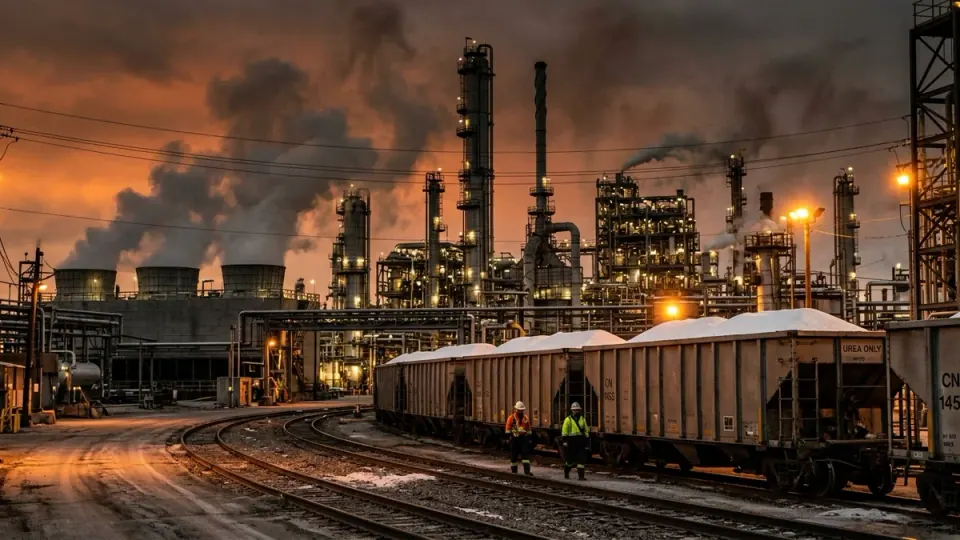
The Nitrogen Trap
As natural gas feedstocks tighten and Middle Eastern ammonia export terminals face blockade risks, global synthetic nitrogen prices have surpassed historic peaks. We model the 2027 agricultural deficit and the return of food nationalism.