The Gigawatt Compute Trap
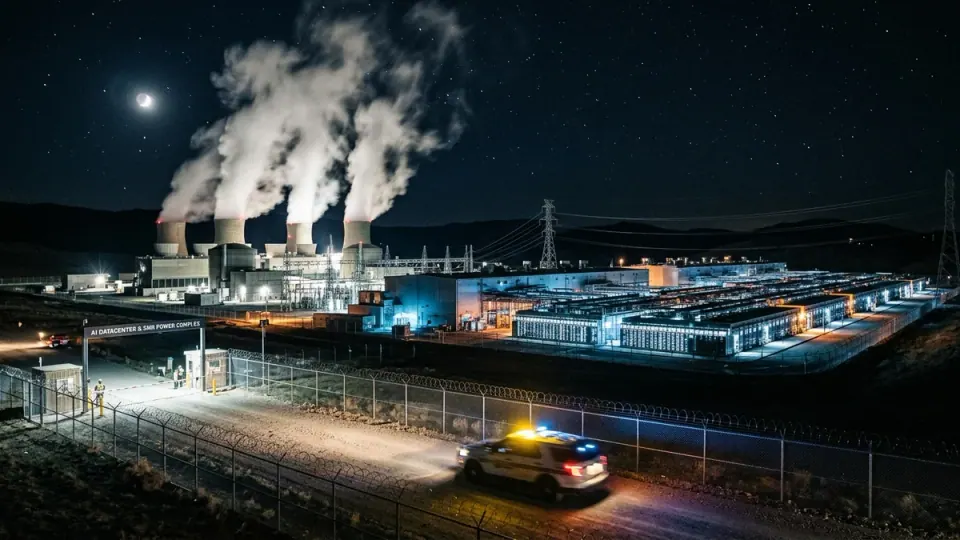
The insatiable electricity appetite of frontier artificial intelligence training clusters is colliding with aging electrical grids, forcing tech conglomerates to monopolize baseload nuclear and gas generation while civilian utility rates skyrocket.
Behind high-security perimeters in Virginia, Texas, Ireland, and Scandinavia, a profound energetic reallocation is quietly dismantling the civilian power architecture. Over the past twenty-four months, the hyper-accelerated race to train frontier artificial general intelligence (AGI) models—requiring clusters of over 100,000 state-of-the-art accelerators consuming thousands of megawatts of uninterrupted electrical power—has collided head-on with the physical and thermodynamic limits of national electrical transmission grids governed under FERC electric reliability mandates, even as open-weights reasoning breakthroughs challenge brute-force scaling.
To secure the continuous, multi-gigawatt baseload energy demanded by next-generation synthetic neural compute, tech conglomerates are bypassing public utility interconnect queues altogether. In historic capital transactions, hyperscale cloud operators have begun executing a 181 GW private gas and nuclear power grab—purchasing entire multi-gigawatt nuclear power stations, securing private behind-the-meter long-term power purchase agreements (PPAs), and contracting fleets of industrial aeroderivative gas turbines.
This aggressive private monopolization of sovereign baseload power is triggering an acute systemic crisis: civilian electricity tariffs are surging, heavy manufacturing facilities are being denied grid hookups, and the fragile margin of reserve generation that protects urban centers from catastrophic brownouts is being rapidly cannibalized by non-negotiable compute loads.
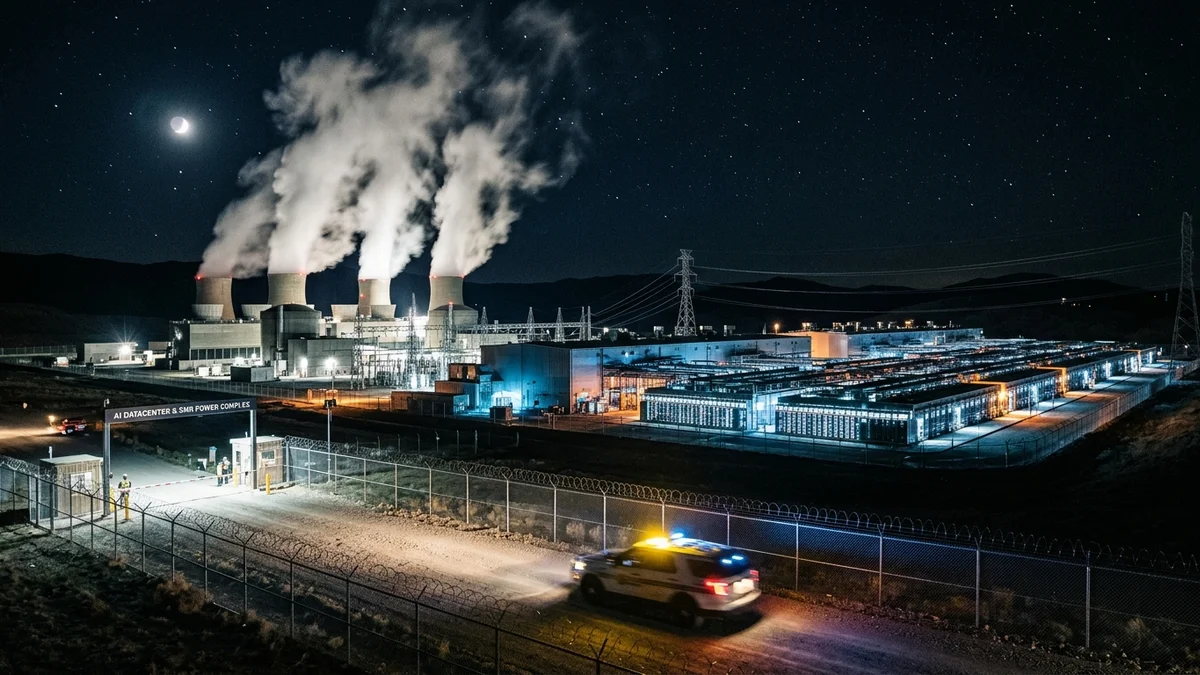
The Thermodynamic Reality of Frontier Neural Compute
The public discourse surrounding artificial intelligence focuses almost exclusively on algorithms, parameters, and digital interfaces. The engineering reality of AI, however, is pure thermodynamics: the conversion of vast quantities of electrical energy into high-temperature waste heat across silicon wafers.
A single current-generation AI accelerator card draws between 700 and 1,200 watts under peak matrix multiplication load. When 100,000 of these accelerators are concentrated inside a single hyperscale compute warehouse—alongside high-radix optical switches, direct-to-chip liquid cooling loops, and multi-megawatt chiller plants—the total power draw of a single installation exceeds 1.2 to 2.0 gigawatts. To contextualize this metric: a 1.5-gigawatt AI training datacenter consumes the equivalent hourly electricity required to power a major industrial metropolis of over 1.2 million households.
Unlike traditional commercial datacenters or industrial factories that can reduce load during peak hours or shift operations to night shifts, frontier model training requires unyielding, 99.999% baseload stability:
- Checkpointing and Interconnect Fragility: In an ultra-dense cluster, all 100,000 accelerators operate in synchronous parallel. A single sub-second voltage sag or frequency drop that resets a switchboard aborts the entire training run, wiping out days of multi-million-dollar compute cycles.
- Continuous Thermal Inflexibility: The power density of modern server racks has surged past 100 kilowatts per rack. At these densities, a loss of primary electricity to liquid cooling pumps will cause high-bandwidth memory (HBM) stacks to overheat and suffer irreversible silicon delamination within eight to twelve seconds.
- Negative Grid Inertia: Hyperscale datacenters do not provide rotational inertia to the transmission grid; their massive electronic rectifiers and switch-mode power supplies draw square-wave harmonics that destabilize grid voltage frequencies, forcing grid operators to run expensive spinning reserves solely to smooth out AI electrical draw.
| Metric | Standard Cloud DC (2018) | Frontier AI Cluster (2026) |
|---|---|---|
| Power Demand Per Facility | 30 - 80 Megawatts | 1,000 - 2,500 Megawatts |
| Power Density Per Rack | 5 - 10 kW / Rack | 100 - 150 kW / Rack |
| Cooling Technology | Chilled Air Cooling | Direct-to-Chip Dielectric |
| Daily Water Evaporation | ~300,000 Gallons | 4 - 8 Million Gallons |
| Grid Interconnect Queue Wait | 12 - 18 Months | 7 - 10 Years |
| Dedicated Baseload Source | Public Grid Blend | Dedicated Nuclear / Gas |
Faced with 8-year utility interconnection queues to connect to public grids, hyperscale operators have adopted an aggressive strategy: buying up existing baseload power generation directly at the source.
Behind-the-Meter Cannibalization and Civilian Tariff Inflation
The economic mechanism driving this energy crisis is the behind-the-meter co-location agreement. Rather than transmitting electricity over public transmission lines and paying state regulatory distribution fees, AI corporations are building compute centers directly adjacent to operating nuclear and natural gas plants. By connecting their server halls directly to the generator's step-up transformer, the tech companies effectively wall off the plant's baseload power from the civilian grid.
The societal and economic consequences are immediate and severe:
- 01.Evaporation of Regional Reserve Margins: In major transmission jurisdictions such as PJM Interconnection (serving 65 million people across 13 US states) and the Nordic power pool tracked via the ENTSO-E Transparency Platform, hundreds of megawatts of zero-carbon baseload electricity that previously stabilized public regional grids are being systematically removed from the civilian market.
- 02.Industrial Rationing and Denial of Service: Domestic manufacturing plants, steel mills, microchip cleanrooms, and municipal water authorities seeking to electrify operations are routinely informed by utility regulators that there is zero available transmission capacity until 2034, strangling the real physical economy to feed digital compute clusters and echoing International Energy Agency (IEA) warnings on grid bottlenecks.
- 03.Severe Consumer Electricity Inflation: Because cheap, amortized baseload nuclear generation has been locked up in exclusive long-term private tech contracts, public utilities are forced to activate inefficient, expensive peaker gas turbines and diesel generators to meet civilian demand. Utility regulators have passed these multi-billion-dollar fuel costs directly onto residential consumers, driving U.S. EIA monthly electricity rate spikes where civilian bills surge between 25 and 45 percent in datacenter-dense corridors.
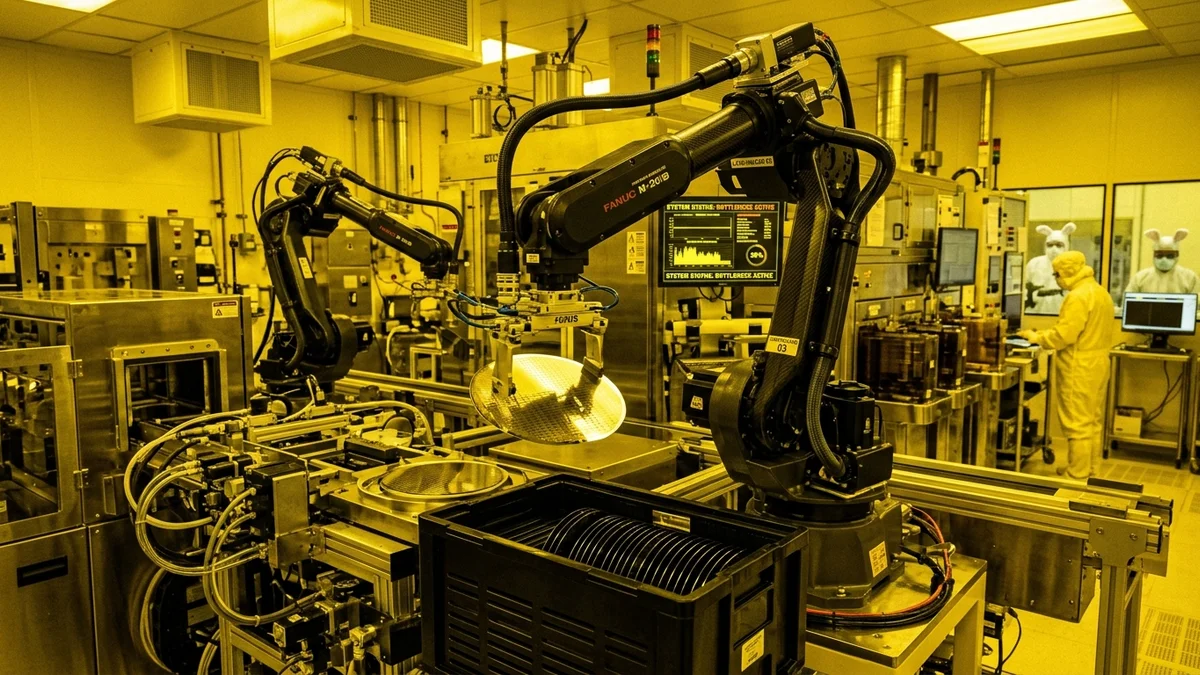
The Silicon-Energy Nationalism Pincer Movement
The compute energy trap does not exist in a geopolitical vacuum; it is the central operational theater of the new Cold War between the United States and China. Both superpowers view artificial superintelligence as the ultimate strategic high ground—the decisive capability that will automate cyber warfare, optimize hypersonic trajectory design, break global cryptographic ciphers, and dictate future economic supremacy.
Consequently, national security directives are subordinating civilian economic stability to the frantic sprint for raw compute supremacy:
- Sovereign Energy Mandates: Western and Chinese governments are actively granting national security emergency exemptions to hyperscalers, allowing them to restart retired coal-fired power plants, bypass environmental water-consumption limits, and secure priority fuel allocations ahead of civilian municipal needs.
- Geographic Silicon Hoarding: As physical power grids in traditional tech hubs hit maximum thermal saturation, tech giants are expanding compute colonies into fragile peripheral regions—seizing agricultural water aquifers tracked by the USGS Water Use Information Program for evaporative server cooling in arid basins and dominating hydro-power corridors in the Pacific Northwest and Scandinavia.
Civilian populations are being placed in direct competition with synthetic machine minds for the basic metabolic inputs of life: electricity, fresh water, and industrial capital.
Strategic Doctrine for the Era of Energy Cannibalization
As corporate and state entities continue to funnel planetary baseload generation into neural network training, civilian resilience requires total rejection of grid stability assumptions:
- Anticipate Structural Grid Surcharges and Blackouts: Assume that public grid reliability will deteriorate steadily through the late 2020s, accelerating the trajectory toward systemic grid failure. Expect frequent summer rolling blackouts and winter cold-snap curtailments as utilities struggle to balance volatile renewable generation against rigid, non-sheddable AI compute baseload.
- Defensive Household Energy Sovereignty: Residential preparedness must focus on total electrical independence: off-grid solar energy arrays paired with dedicated lithium iron phosphate (LiFePO4) battery storage, hybrid DC-coupled inverters capable of full physical micro-grid islanding, and mechanical low-draw heating/cooling systems that do not depend on the public grid.
- Divestment from Digital Cloud Fragility: Recognize that consumer-facing cloud services, smart-home automation systems, and continuous high-bandwidth internet connectivity will become increasingly expensive, rationed, and unreliable. Ensure that critical personal data, navigation maps, survival manuals, and household operating equipment can function indefinitely in a local, disconnected offline posture.
The machines are demanding the fire of the earth. In the coming struggle between silicon algorithms and human survival, only those who secure their own physical energy will remain master of their fate.
Real-time geospatial feed aggregating USGS M5.0+ earthquakes, NASA EONET wildfires, volcanoes, severe storms, UN/EC GDACS alerts, and NOAA geomagnetic status.
Related Reports & In-Depth Intel
Big Tech's 181-Gigawatt Power Grab
Tired of waiting seven years in public utility queues, data center developers across the US, UK, and Europe are building 181 gigawatts of private on-site gas turbines to feed AI clusters.
The Collapse of Patching Windows
As automated static analysis audits nine months of C/C++ network code in 90 hours for $935, defenders are witnessing the permanent death of traditional 6-month vulnerability grace periods—triggering Google Project Zero's 'Full X' mandate and federal AI-FORTS grid mobilization.
Strategic Analysis: The Open-Weights Reasoning Revolution, DeepSeek-R1 Shockwaves
The sudden algorithmic leap of high-efficiency open-weights reasoning architectures has shattered the trillion-dollar hyperscale capital expenditure narrative, exposing the extreme structural vulnerability of centralized semiconductor monopolies and utility grid capacity.
Strategic Assessment: Unaligned Frontier Compute, Sovereign Datacenter Siege
A strategic evaluation of the global race to construct multi-gigawatt sovereign AI clusters, the kinetic vulnerabilities of semiconductor supply chains, and the militarization of autonomous frontier models. We examine the transition from commercial software innovation to existential national security competition.