The Epistemic Flood
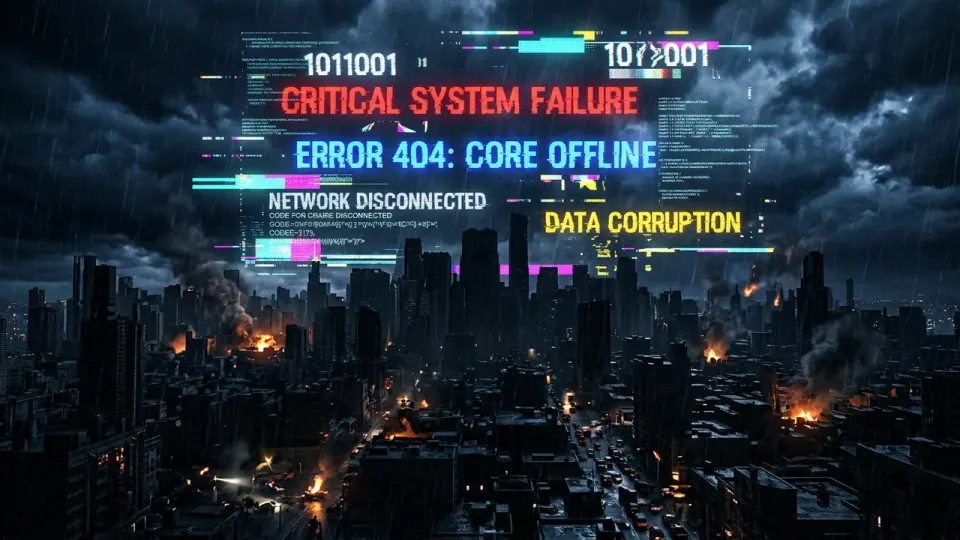
As automated synthetic media triggers Google's November 2026 search purge and AI deepfake injections penetrate regional banking clearance workflows, modern societies confront a quiet institutional collapse: the destruction of shared informational verification.
Every complex technical civilization relies on an invisible layer of infrastructural trust just as vital as its copper electrical lines or municipal water mains: an epistemic commons. Whether coordinating emergency disaster evacuations, validating scientific technical manuals, routing commercial banking transfers, or tracking geopolitical commodity disruptions, modern institutions assume citizens and operators can reliably distinguish authentic human testimony and empirical telemetry from industrial-scale fabrication at negligible verification cost.
By November 2026, two converging signals across global digital ecosystems exposed how badly that epistemic bedrock has fractured. First, Google's November 2026 Core Update triggered massive search-visibility turbulence across news, publisher, and creator ecosystems as search architects mounted an aggressive counter-offensive against hyper-scaled, AI-generated text farms, synthetic author personas, and automated misinformation SEO pipelines flooding global query indices. Second, major autumn 2026 cyber intelligence briefs documented threat groups deploying real-time multimodal deepfake injections directly inside automated cyberattack chains—notably targeting South Korean financial institutions and digital asset exchanges to fool biometric, voice, and video identity checks.
Together, these trends illustrate why global public search volume around artificial intelligence in late 2026 has shifted sharply away from breathless productivity hype toward deep institutional anxiety over authenticity, search degradation, and automated social engineering—a wider erosion of epistemic trust addressed across risk frameworks like the NIST AI Risk Management Framework. When synthetic falsehood drops in cost to zero while physical verification climbs exponentially in friction, trust itself collapses back onto narrow, offline social networks and hardened physical documentation.

Anatomy of the Search Ecosystem Crisis
Analyzing global web-traffic telemetry and search metrics surrounding late 2026 illuminates how rapidly generative language engines changed the economics of online discovery from scarce human curation into an adversarial arms race over attention slots.
- Zero-Cost Content Farm Saturation: Throughout 2025 and 2026, commercial operators paired lightweight open-weights models with automated web scrapers to launch tens of thousands of synthetic news, health, finance, and technical-support domains. Rather than authoring original field investigations, these automated pipelines scraped breaking news feeds—from El Niño climate advisories to Middle Eastern shipping escalations—spun hundreds of rewritten clones within minutes, invented convincing synthetic author biographies complete with AI-generated headshots, and stuffed structured metadata designed exclusively to hijack trending Google News and Discover slots.
- The Technical Verification Arms Race: Search providers responding with punitive algorithmic purges such as the November 2026 Core Update face a brutal dilemma. Tightening heuristic filters aggressively enough to evict plausible AI-rewritten spam inevitably collides with legitimate multilingual independent journalism, niche engineering blogs, and non-English community archives whose stylistic footprints occasionally resemble statistical machine patterns. Meanwhile, sophisticated spam syndicates iterate directly against ranking signals using adversarial reinforcement feedback loops.
- The "Zero-Click" Summary Echo Chamber: Simultaneously, consumer dependence on embedded AI search summaries further divorces end readers from checking primary institutional data tables, methodological caveats, or contradictory on-the-ground sources. When an upstream automated summary hallucinates a crop deficit metric, misreads a cyber-advisory CVSS severity threshold, or cites an unverified synthetic mirror blog, millions of downstream users absorb the distortion instantaneously before corrective reporting even reaches page one.
| Information Vector | Legacy Human Era (2015) | Generative Flood Era (Nov 2026) |
|---|---|---|
| Plausible 1,500-Word Essay | Hours of Research/Writing | <4 Seconds (~$0.01 Compute) |
| Fake Expert Identity/Bio | Manual Stock Photo & Forgery | Instant Consistent Headshot + Hist. |
| KYC/Bank Video Biometric | High Deterrence (Live Video) | Vulnerable to Real-Time Deepfake |
| Technical Survival Manual | Field-Tested / Peer-Vetted | Flooded w/ Unsafe Hallucinated PDF |
| Epistemic Burden Location | High Cost on Producer | Shifted 100% Onto End Consumer |
Weaponized Deepfakes Enter Operational Banking Workflows
While low-grade AI text farms corrode open public search, a far sharper kinetic danger crystallized across commercial finance in late 2026: autonomous technical exploitation fused seamlessly with live audio-visual identity synthesis.
As highlighted in federal cyber intelligence advisories and the CISA Known Exploited Vulnerabilities Catalog tracking automated intrusion workflows—explored in depth in our FBI ARTEX machine-speed siege analysis—alongside regional Asian financial threat briefs and ENISA assessments, sophisticated criminal syndicates no longer view technical hacking and human social engineering as separate workflows performed by different specialists. In documented autumn 2026 attacks targeting South Korean banks and cryptocurrency platforms, automated agents paired vulnerability exploitation and credential harvesting with real-time deepfake injection:
- 01.Live Liveness Bypass: Modern banking apps and treasury authorization portals introduced "selfie video challenges"—asking signers to turn their head left, blink, or recite a randomized four-digit PIN on camera—specifically to defeat static photograph spoofing. Modern real-time neural rendering pipelines intercept virtual camera streams or compromised workstation drivers, mapping cloned executive faces and cloned vocal timbres onto live video responses in milliseconds.
- 02.Corporate Treasury Paralysis: When a chief financial officer's voice and video feed during an urgent late-night Zoom treasury call can be cloned cleanly from ninety seconds of public earnings-call audio—and simultaneously backed up by legitimately hijacked internal Slack tokens or email threads courtesy of an autonomous breach framework—standard digital authorization workflows break down completely. Every urgent remote instruction becomes presumptively suspect.
- 03.Emergency Aid & Market Hoax Amplification: Beyond direct bank wire fraud, coordinated adversarial campaigns can inject ultra-convincing synthetic audio clips of central bank governors at the Federal Reserve, refinery safety regulators, or utility dispatchers right inside high-tension windows (such as mid-November oil choke-point scares or winter blackout mornings), triggering automated algorithmic commodity liquidation spikes or local bank-run withdrawals before official press bureaus can issue verified denials.
The Quiet Hazard: Hallucinated Practical Knowledge
A third, gravely overlooked symptom of the 2026 epistemic flood affects everyday physical resilience directly: the poisoning of actionable technical, agricultural, medical, and engineering reference repositories online.
Thousands of automated SEO micro-sites and mass-published print-on-demand e-books generated in recent years now clutter top search results for critical practical topics: wild mushroom foraging identification, solar LiFePO4 battery bus-bar fusing calculations, municipal water chlorination shock dosages, home canning botulism prevention temperatures, and structural wood-stove chimney clearance codes. Unlike vague political commentary, hallucinated numerical parameters in physical engineering or chemistry manuals injure or kill people directly.
A generative farm trained exclusively on scraped secondary summaries routinely blurs imperial and metric measurements (ppm chlorine versus ml household bleach percentage, watt-hours versus amp-hours across 12V and 48V buses), fabricates non-existent medicinal plant traits, or omits fatal carbon-monoxide draft interlocks. As mainstream search algorithms struggle to purge billions of plausible-sounding synthetic clone pages, a novice technician or stressed household looking up emergency generator transfer-switch wiring during an outage faces unprecedented hazard navigating polluted online results.
Collapse of Municipal Feedback Loops and Crisis Rumor Velocity
Equally corrosive is what synthetic distortion does to real-time civil emergency coordination during active weather, power, or currency shocks. Local authorities rely heavily on search indexing, social alerting channels, and community mapping tools to broadcast boil-water advisories, mobile transformer repair locations, and evacuation detours. When automated botnets flood regional hashtags and low-trust aggregator domains with realistic synthetic disaster clips—showing burning bridges that never collapsed or fabricated rationing decrees attributed to municipal water boards—emergency dispatchers lose critical reaction minutes debunking ghosts while citizens hesitate to trust legitimate shelter alerts. Worse, sustained exposure to indistinguishable fabrication produces epistemic exhaustion: large segments of the public eventually tune out all official and independent telemetry indiscriminately, substituting fatalistic cynicism or tribal rumor networks precisely when clear engineering communication matters most.
Model Collapse and Training Data Incest
Behind public search interfaces looms a slower mathematical decay confronting AI platforms themselves. As billions of synthetic articles, machine-translated product reviews, and hallucinated pseudoscientific tables wash over the open web, subsequent model-training crawlers inadvertently harvest their own diluted linguistic residue. Without rigorous cryptographic provenance sorting pre-synthetic empirical corpora from modern derivative sludge, automated reasoning models gradually suffer variance compression and factual drift—becoming smoother rhetorically even as obscure engineering corner cases, localized meteorological anomalies, and minority-language technical vocabularies quietly erode out of statistical recall.
Institutional Adaptation: Return of Verified Physical Provenance
Facing structural epistemic degradation across open digital channels, smart institutions, critical infrastructure operators, and resilience-focused households are actively rebuilding trust architecture around verifiable offline friction:
- Out-of-Band Cryptographic & In-Person Authorization: High-value financial desks, utility switching centers, and sensitive supply-chain coordinators are steadily abandoning video-call identity trust entirely, adopting analog sovereignty countermeasures and mandating hardware cryptographic keys (
FIDO2 / YubiKeymulti-party quorum signatures) alongside pre-agreed offline challenge-response codebooks for emergency authorizations.
- Curated Offline Knowledge Vaults (`Pre-2022 & Primary Manuals`): Instead of assuming reliable open search access during high-stress grid or market disruptions, engineering teams and households following our guide to building an offline survival data archive are downloading vetted primary PDF archives directly from established meteorological, agricultural extension (
USDA, UN FAO), military engineering (FM), and manufacturer technical portals—storing clean checksum-verified copies alongside bound physical reference books immune to remote search poisoning or server blackouts, and bookmarking vetted primary monitors in our Useful Websites directory.
- Reputation Networks & Human Editorial Proof: Paradoxically, the flood of cheap synthetic media is dramatically driving up the institutional value of narrow, human-edited publications with traceable technical track records, empirical primary-source citations, and accountable author continuity—precisely what algorithmic anti-spam sweeps like November 2026's Core Update attempt to reward. Regional trade guilds, independent emergency engineering bulletins, and cryptographic newsletter registries are steadily supplanting anonymous algorithmic search aggregators as primary crisis coordination layers across both private industry and disaster preparedness communities.
Conclusion
The collision between automated search spam purges and deepfake-assisted financial cybercrime in late 2026 marks the decisive close of internet information innocence. Cheap intelligence flooded the public commons before cryptographic provenance or institutional verification could keep pace, turning passive online consumption into an active cognitive hazard.
Whether defending corporate treasury workflows against real-time synthetic executives or auditing technical specifications for emergency off-grid life support, late 2026 confirms one universal operating rule: never trust unverified screen telemetry at face value. Verify primary physics, anchor decisions on physical provenance and vetted offline manuals, and re-introduce deliberate human friction wherever high-consequence choices depend on digital signals—because only verified material grounding endures when algorithmic feeds drown in their own synthetic noise.
Real-time geospatial feed aggregating USGS M5.0+ earthquakes, NASA EONET wildfires, volcanoes, severe storms, UN/EC GDACS alerts, and NOAA geomagnetic status.
Related Reports & In-Depth Intel

When the Pacific Boils
How the 2026 El Niño ocean heat engine rewrites jet streams, triggers simultaneous megafires and atmospheric rivers, and pushes power grids to the edge.
190,000 Pink Slips and a Missing Boom
Corporate layoffs tied to AI restructuring hit roughly 190,000 workers through November 2026, yet independent economic audits show many firms cutting headcount just to pay server bills without seeing real productivity gains.
Big Tech's 181-Gigawatt Power Grab
Tired of waiting seven years in public utility queues, data center developers across the US, UK, and Europe are building 181 gigawatts of private on-site gas turbines to feed AI clusters.
Why the Plastics Treaty Died in Geneva
After INC-5 collapsed in Busan and INC-5.2 stalled in Geneva, the Global Plastics Treaty exposed an uncomfortable truth: oil majors now need virgin polymers to survive.