The Empty Granary
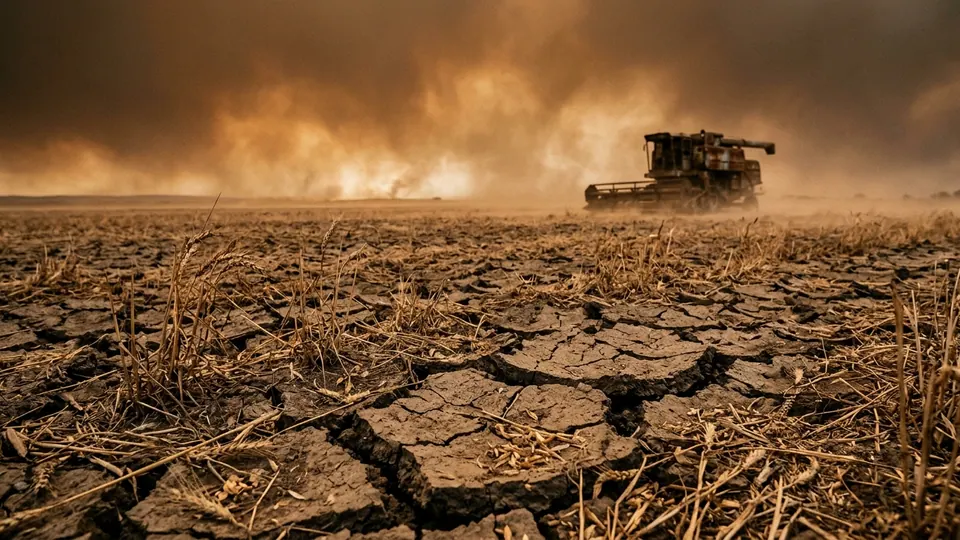
The 2026 El Niño is not just a weather anomaly. It is a synchronized stress test on global rice, wheat, cocoa, and maritime chokepoints that leaves importing nations exposed.
Why This El Niño Hits Harder Than 1997 or 2016
I have covered commodity desks, port strikes, and failed monsoons for four decades, and the pattern is always the same: the public watches the thermometer while the real damage happens in the soil moisture column six months before the grocery bill jumps.
In 2026, El Niño arrived on top of a planetary baseline that had no slack left. Global sea surface temperatures were already running roughly 1.1°C above the twentieth-century average before the eastern equatorial Pacific began its latest warm-phase surge. When you stack a strong El Niño onto an ocean that is already carrying record thermal inertia, you do not get a neat, localized drought. You get a synchronized disruption across the exact latitudes that feed eight billion people.
The arithmetic of global grain reserves is unforgiving. For wheat, corn, and milled rice combined, the world operates on roughly 90 to 100 days of ending stocks-to-use. That sounds comfortable until you subtract China's strategic reserves, which are not for sale on the open market regardless of price. Exclude Beijing's silos, and the exportable global buffer drops closer to 55 days. That is the margin between orderly trade and export bans.
Rice, Monsoon Failure, and the Asian Export Trap
Rice is where El Niño draws blood first. Unlike wheat or soybeans, which are traded in massive deep-water bulk volumes across hemispheres, more than 90 percent of the world's rice is grown and consumed in Asia, and only about 10 percent of global production ever crosses an international border. That thin export market makes rice prices violently sensitive to small weather shocks.
During a strong El Niño, the Walker Circulation shifts eastward. Warm surface water pools off South America, while cooler, drier air sinks over Maritime Southeast Asia, eastern India, and mainland Indochina. In normal years, the southwest monsoon delivers 70 to 80 percent of India's annual rainfall between June and September. When ENSO ocean-atmosphere anomalies suppress those rains, reservoir levels in Punjab, Haryana, and the Cauvery basin drop fast.
India accounts for roughly 40 percent of global rice exports. We already saw in 2023 and 2024 how quickly New Delhi reaches for export duties and outright bans on non-basmati white rice the moment domestic inflation ticks above 6 percent. In 2026, with monsoon deficits hitting key paddy belts in Thailand, Vietnam, and Indonesia simultaneously, importing nations across West Africa and the Middle East are competing for a shrinking pool of Thai 5% broken and Vietnamese grades.
When global rice and cereal prices jump 30 to 40 percent in dollar terms, the shock is magnified by currency depreciation in importing countries. A ton of rice priced in US dollars costs far more in Egyptian pounds, Nigerian naira, or Ghanaian cedi than it did five years ago. Governments that subsidize bread and rice—from Cairo to Jakarta—face an ugly choice: blow out their fiscal deficits to keep street prices flat, or let food inflation rip through urban households that already spend 45 to 60 percent of their income on calories.
The Panama Canal Bottleneck Returns
El Niño does not just starve crops of rain; it starves the world's most important artificial waterway of fresh water.
The Panama Canal does not run on seawater. Every single ship that transits the locks requires roughly 200 million liters of fresh water, gravity-fed from Gatun Lake, to lift and lower vessels over the continental divide. Gatun Lake depends entirely on tropical rainfall in its surrounding watershed.
During El Niño years, Panama's dry season stretches longer and bites deeper. When lake levels fall below operational thresholds, the Panama Canal Authority has no choice but to slash daily transit slots from the normal 36–38 vessels down to 20–24, while tightening maximum draft limits.
That draft restriction is a quiet tax on global food and energy. A Panamax bulk carrier hauling US corn or soybeans from the Gulf Coast to East Asia cannot load to full capacity if it risks scraping the lock sill. Shippers must either light-load—paying the same crew and fuel costs for 20 percent less cargo—or reroute around the Cape of Good Hope or Cape Horn, adding 10 to 14 days of steaming time and burning tens of thousands of dollars in extra bunker fuel.
At the same time, high-priority LNG tankers and container ships bid up canal auction slots into the millions of dollars, pushing dry-bulk grain and fertilizer carriers to the back of the queue. Fertilizer delayed by three weeks misses the planting window in Brazil or the Midwest. A missed planting window shows up six months later as a smaller harvest.
Cocoa, Coffee, and Sugar: The Canary Crops
If you want to see how El Niño breaks agricultural biology, look at tree crops and perennials before you look at row crops.
In West Africa—specifically Ivory Coast and Ghana, which together produce over 60 percent of the world's cocoa—El Niño brings the Harmattan wind: a dry, dust-laden Saharan blast that desiccates cocoa pods and stresses aging trees. Combined with swollen shoot virus and decades of underinvestment in replanting, 2026 cocoa arrivals at Abidjan and San Pedro ports have remained structurally tight, keeping chocolate manufacturers locked in a multi-year supply squeeze.
In Southeast Asia, Robusta coffee plantations in Vietnam's Central Highlands—the world's largest producer of the bitter, high-caffeine bean used in instant coffee and espresso blends—have faced groundwater depletion as farmers pump aquifers dry to keep trees alive through El Niño heat. In Brazil, erratic rainfall and high nighttime temperatures during flowering hurt Arabica cherry set in Minas Gerais, while dry weather in India and Thailand crimps sugarcane crushing yields.
These are not luxury problems. For millions of smallholder farmers from Kumasi to Dak Lak, tree crops are their only cash income. When yields collapse, rural credit dries up, farmers skip fertilizer and fungicide applications for the following season, and a one-year weather shock turns into a three-year structural deficit.
Southern Hemisphere Breadbaskets Under Heat Stress
While El Niño often brings welcome winter moisture to parts of the southern United States and Argentina's Pampas, it punishes Australia, southern Africa, and northern Brazil.
Australia is a top-five global wheat exporter. In El Niño years, high-pressure systems park over the eastern and southern grain belts—New South Wales, Victoria, and South Australia—cooking winter wheat during its critical grain-fill stage in spring. A 10-million-ton swing in Australian wheat output immediately tightens the Asian milling market, forcing Indonesian and Japanese buyers to source more expensive North American or Black Sea grain.
Southern Africa faces an even grimmer equation. Zambia, Zimbabwe, Malawi, and parts of South Africa rely heavily on rain-fed white maize, the dietary staple of the region. When El Niño stalls the mid-season rains in January and February, maize tassels burn in the sun during pollination. No amount of late rain can save a maize crop once pollination fails. In 2026, regional food security monitors and grain boards are once again staring at multi-million-ton import requirements at the exact moment global freight rates and exportable white maize supplies are tightest.
What Breaks Next: Sovereign Debt and Port Politics
Food crises rarely stay confined to the agricultural pages. In my forty years of watching fragile states and sovereign debt, the sequence is almost mechanical:
- 01.Month 1–3: Subsoil moisture drops; satellite NDVI vegetation indices turn brown across key export basins. Commodity traders bid up futures.
- 02.Month 4–6: Exporting governments panic about domestic inflation and impose export quotas, minimum export prices, or outright bans.
- 03.Month 7–9: Importing nations with weak foreign-exchange reserves cannot finance letters of credit for grain cargoes at the new, higher prices. Ships sit anchored outside ports waiting for central bank dollar clearances.
- 04.Month 10–12: Subsidies crack, bread and cooking-oil prices double in local markets, and urban unrest erupts in capitals that were quiet six months earlier.
We are living in a world where geopolitical friction—from Red Sea shipping diversions to Black Sea insurance premiums—already adds friction to every ton of food moved across water. Layering a major 2026 El Niño on top of that fragile maritime network means there is no spare capacity to absorb a simultaneous failure in two major breadbaskets.
The Household Takeaway
You do not need to own a grain elevator to read the tape. When El Niño is active, the lag between crop failure and retail shelf shock is roughly four to eight months. The smart move is not panic-buying; it is quiet, methodical buffering of essential dry staples—rice, cooking oils, dried legumes, coffee, and sugar—while they are still priced off last season's harvest.
Pay attention to the secondary effects, too. Animal protein prices follow grain prices with a predictable lag: when corn and soybean meal jump because of South American or Midwestern weather, cattle ranchers liquidate herds early—briefly depressing beef prices—before tightening supply sends steak, poultry, and dairy sharply higher six to nine months later. Likewise, cooking oils—palm oil from Malaysia and Indonesia, soybean oil from Argentina and the US—are tightly coupled to El Niño rainfall anomalies in Southeast Asia. A dry spell in Sumatra or Kalimantan shows up in supermarket frying oil, margarine, and packaged bakery goods around the world.
The granary is not empty yet, but the margin for error is gone. In a tightly coupled global food system, weather in the equatorial Pacific is no longer regional news—it is the opening bell for the next twelve months of grocery inflation and geopolitical strain.
Real-time geospatial feed aggregating USGS M5.0+ earthquakes, NASA EONET wildfires, volcanoes, severe storms, UN/EC GDACS alerts, and NOAA geomagnetic status.
Related Reports & In-Depth Intel
The Winter Freight Tax
As the Iran and Gaza conflicts drag into another winter, longer shipping routes, war-risk insurance, and higher fertilizer costs are quietly taxing everything from groceries to winter hardware.
The Looming El Niño of 2026
The global climate system is bracing for a historic El Niño event in late 2026. This comprehensive analysis details the meteorological signals, expected agricultural collapse, and cascading geopolitical effects.
El Niño Food Vulnerability and Global Farm Adjustments
A focused look at why El Niño exposes global rice, maize, and tree-crop supply chains—and which real-world agricultural adjustments are actually working in the field right now.
Super El Niño Food Defense
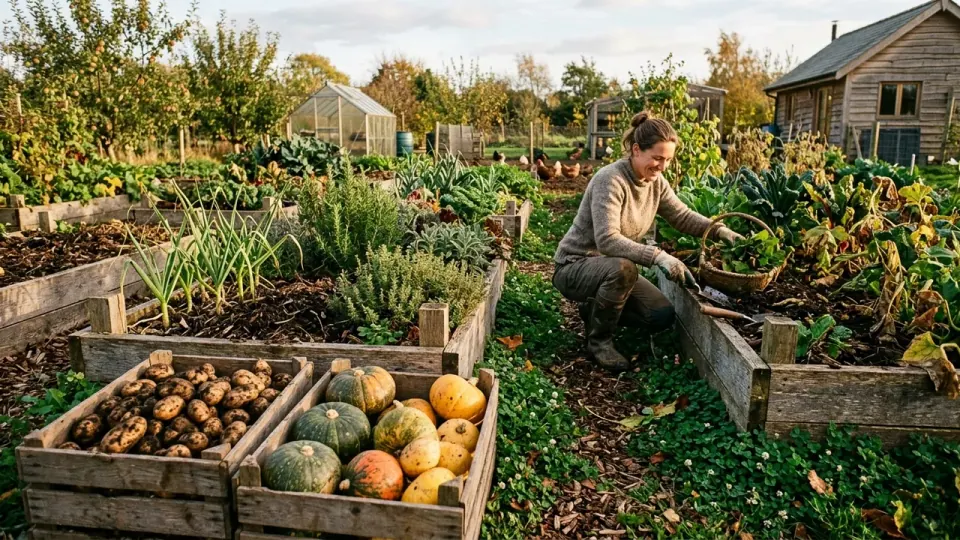
As the +1.47°C 2026–2027 Super El Niño shatters traditional planting calendars with drought-to-deluge shocks, surviving multi-year staple inflation requires combining contour rainwater harvesting, lime-ash nixtamalization to prevent deadly pellagra, and steel-lined hermetic calorie storage.