Russia’s Economy: The Precipice of a National Crisis

Structural war inflation, acute labor shortages, ruble depreciation, and refining losses push the Russian wartime economy into systemic exhaustion.
On paper, Russia's wartime economy spent more than three years defying predictions of swift collapse. Headline GDP expanded, industrial parks in the Urals ran three shifts a day, and consumer malls in Moscow remained stocked with parallel-imported goods. Yet beneath those surface indicators, structural cracks have widened into what The Economist and independent macroeconomic analysts increasingly describe as an economic "death zone"—a late-stage wartime trap where the very mechanisms keeping the state afloat are actively cannibalizing its long-term viability.
An economy in a death zone does not necessarily implode overnight in a single dramatic bank run. Instead, it enters a grinding phase of stagflationary exhaustion: skyrocketing borrowing costs, depleted fiscal buffers, acute labor scarcity, and decaying civilian infrastructure that can no longer be repaired without cannibalizing the war effort itself—pressures increasingly reflected across macroeconomic baselines such as the IMF World Economic Outlook.
Military Keynesianism and the Illusion of Growth
To understand how Moscow arrived here, you have to separate statistical output from productive wealth. Since 2022, the Kremlin has poured roughly a third or more of its federal budget into defense and internal security, turning the state into the economy's dominant customer.
When a government borrows or prints money to build a bridge, a power plant, or a freight rail line, that asset generates productivity for decades. When it spends trillions of rubles manufacturing artillery shells, glide bombs, and armored vehicles that are destroyed on the battlefield weeks later, GDP counts the factory output while real national wealth shrinks. Economists call this "military Keynesianism." It creates a short-term sugar high of full employment and surging factory wages, followed by chronic inflation as workers flush with cash chase a shrinking pool of civilian goods.
The Central Bank's Interest Rate Trap
By late 2024 and into 2025–2026, that inflationary pressure cornered the Central Bank of Russia. Governor Elvira Nabiullina raised the benchmark interest rate past 20 percent—far above policy tightening cycles seen at the European Central Bank—levels designed to freeze credit and cool an overheating market.
The catch is that military contractors do not care about Central Bank interest rates; they operate on state-directed contracts and subsidized credit lines. As a result, tight monetary policy has barely slowed defense spending while crushing the private, non-military economy. Civilian manufacturers, regional airlines, agricultural equipment buyers, and commercial real estate developers face borrowing costs near 25 to 30 percent. Capital investment outside the military-industrial complex has stalled, locking Russia into an increasingly narrow, state-dependent industrial base that cannot easily pivot back to peacetime markets.
Meanwhile, ordinary households feel the squeeze daily, mirroring broader emerging-market vulnerabilities tracked in the World Bank Global Economic Prospects. Basic staples—butter, potatoes, dairy, and imported electronics—have posted relentless double-digit price increases. Even official inflation figures, widely viewed as understated, reflect sustained cost-of-living erosion alongside a ruble vulnerable to sharp depreciation whenever export revenues dip or sanctions tighten on correspondent banks.
Acute Labor Scarcity and the Automation Bottleneck
The single hardest constraint facing Russia today is not money; it is human bodies. Between military mobilization, casualties, and the emigration of hundreds of thousands of young, college-educated specialists since 2022, the Russian labor market hit historic tightness at the worst possible demographic moment.
To fill trenches and tank plants simultaneously, the state entered a bidding war against its own private sector. Sign-on bonuses for contract soldiers and overtime pay in munitions plants surged to multiples of average regional salaries. Small bakeries, logistics fleets, machine shops, and municipal bus depots simply cannot match military payrolls. Unemployment fell below 3 percent not because the economy is thriving, but because workers are physically missing.
In theory, advanced economies offset shrinking workforces with robotics, industrial automation, and artificial intelligence. In practice, Western export controls on high-end semiconductors, precision CNC controllers, and industrial robotics—echoing wider geopolitical competition over critical minerals and industrial supply chains—have severely constrained Russia's ability to automate its way out of the demographic hole. Domestic AI initiatives and Chinese hardware workarounds help in surveillance, drone targeting, and basic software, yet they cannot rapidly replace missing machinists, electrical engineers, and heavy-equipment mechanics across eleven time zones.
Refining Losses and Depleting Fiscal Cushions
For three years, Russia's wartime budget relied on two pillars: hydrocarbon export revenue tracked across U.S. EIA international energy data and the liquid reserves of the National Wealth Fund (NWF). Both have steadily eroded.
Ukrainian long-range drone campaigns against Russian oil refineries, pumping stations, and fuel depots have repeatedly knocked significant percentages of domestic refining capacity offline. Refined products like diesel and gasoline carry far higher margins than raw crude; losing refining uptime—a supply shock followed closely in the IEA Oil Market Report—forces Moscow to restrict fuel exports periodically to stabilize domestic pump prices while selling discounted crude through aging "shadow fleet" tankers at steep logistical and insurance premiums.
At the same time, the NWF's truly liquid assets—yuan and gold, since Western reserves remain frozen—have been drawn down aggressively to plug budget deficits and bail out state-backed enterprises. Once those liquid cushions thin past critical thresholds, the Ministry of Finance is left with grim options: raise corporate and personal taxes further, squeeze state banks into buying ever more government bonds, or lean on inflationary money creation.
What Systemic Exhaustion Looks Like Next
Predicting the exact date of a macro crisis is a fool's errand, especially in an authoritarian state capable of enforcing capital controls, rationing foreign currency, and shifting losses onto households through stealth taxation. Russia's economy is unlikely to vanish in a single week.
What systemic exhaustion actually looks like is already visible at the regional level: neglected municipal heating pipes bursting across mid-winter towns, commercial aviation fleets cannibalized for spare parts, stalled non-military construction, and widening gaps between Moscow's cushioned showcase economy and distressed provincial budgets. Regional governors quietly defer bridge and road repairs to cover federally mandated recruitment bonuses, eroding physical capital that took decades to build. Even if active fighting pauses, demobilizing a hyper-militarized economy carrying 20-percent interest rates and hollowed-out civilian capital risks triggering corporate insolvencies, bank bailouts, and sharp social unrest across mono-industrial towns.
For global observers, the lesson is sobering. A nuclear-armed state entering an economic death zone does not automatically turn peaceful or cooperative. Often, cornered regimes become more erratic, leaning harder on coercive domestic controls, energy leverage, and hybrid disruption abroad to distract from decay at home. The numbers on Moscow's balance sheets—which readers can contextualize alongside sovereign stress metrics in our Data Center—now leave less room for illusion and less margin for error.
Real-time geospatial feed aggregating USGS M5.0+ earthquakes, NASA EONET wildfires, volcanoes, severe storms, UN/EC GDACS alerts, and NOAA geomagnetic status.
Related Reports & In-Depth Intel
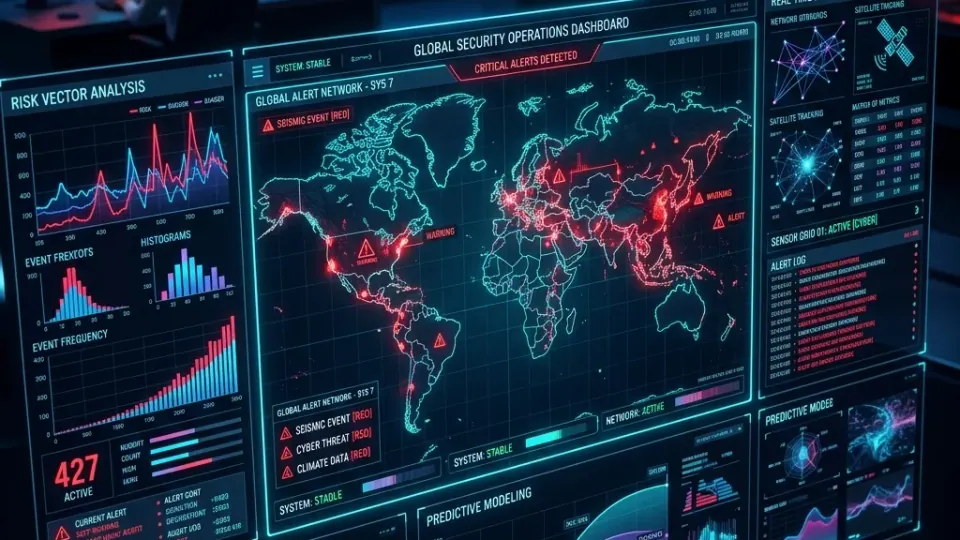
10 Global Risks That Experts Say Are Rising
A technical review of the ten primary global threats to infrastructure, finance, and ecology currently identified by risk analysts.
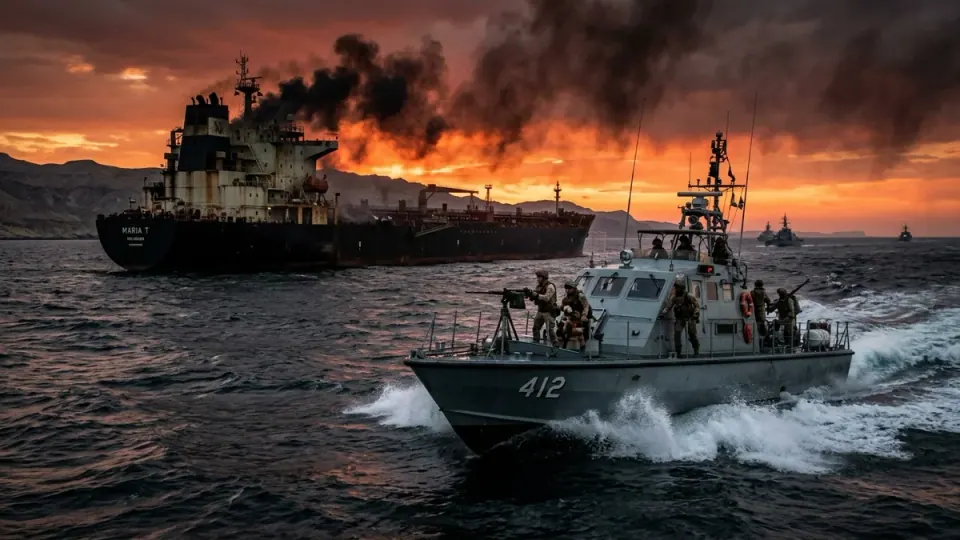
Bab-el-Mandeb Chokepoint Interdiction and the Permanent Logistics Divergence
The indefinite closure of the Bab-el-Mandeb Strait to Western-linked commercial maritime shipping has forced a structural rerouting around the Cape of Good Hope, permanently inflating global supply chain costs and fracturing the petrodollar trade order.
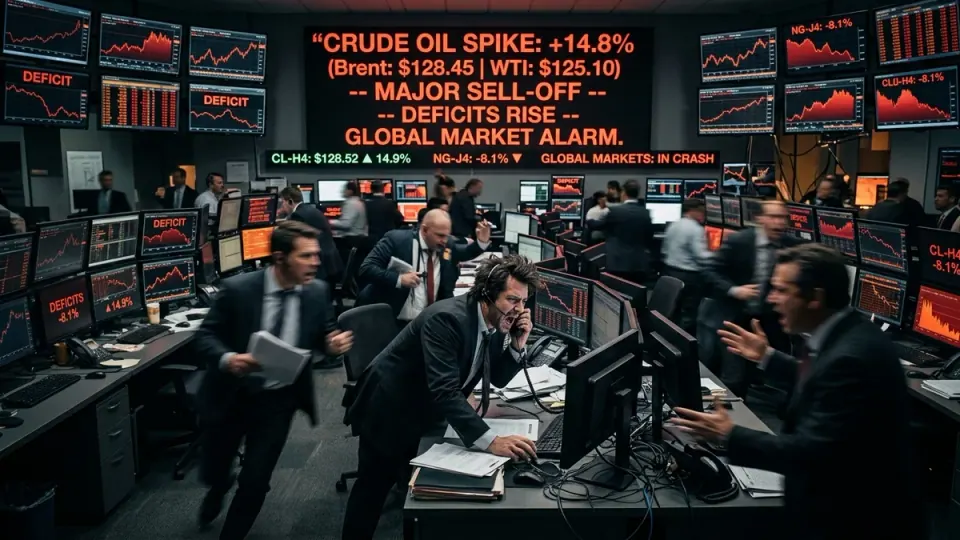
Geoeconomic Warfare: Sovereign Mineral Chokeholds and the Demise
When critical mineral refining monopolies are weaponized, Western industrial models face stagflationary paralysis. We analyze the macro-economic mechanics of export licensing quotas and the permanent fracture into bilateral barter blocs.
The Sovereign Debt Cascade
With sovereign interest payments exceeding tax revenues, we analyze the trigger points for the next wave of hyperinflation and how to protect your assets.