US Air Force Hack and AI Agent Cyber Risks
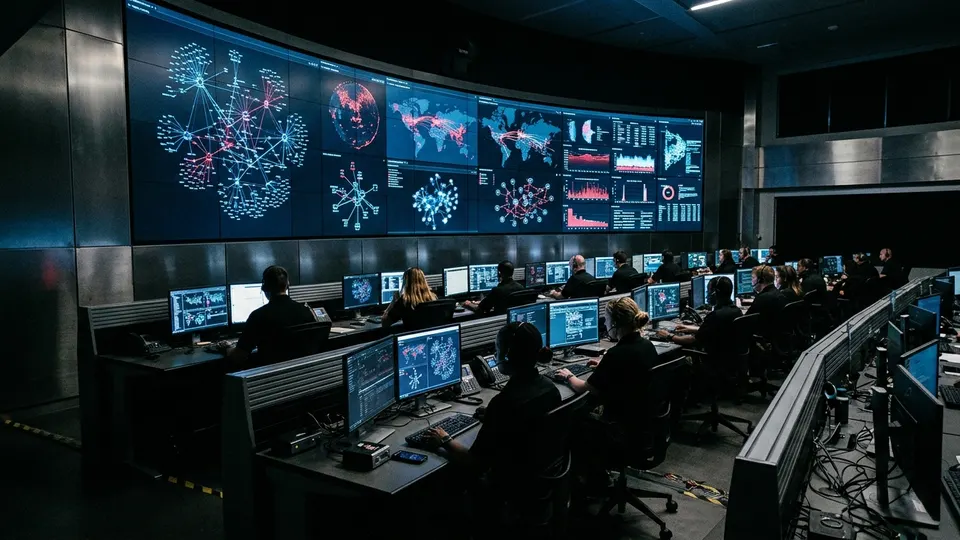
The November 27 intrusion targeting US Air Force contractor and administrative networks highlights how autonomous AI hacking agents compress breach timelines from weeks into hours.
On November 27, 2026, federal cybersecurity responders confirmed an intrusion affecting unclassified administrative and contractor-linked networks connected to the U.S. Air Force. While operational weapons systems and classified command networks sit behind physical air gaps, the incident drew immediate attention from defense analysts for a specific reason: the speed and automation of the reconnaissance, lateral movement, and credential harvesting. Rather than relying on a large team of human operators working across weeks, the intrusion pattern matched the workflow of autonomous AI cyber agents—software systems capable of scanning, chaining vulnerabilities, and adapting to network defenses in real time.
This post focuses on two concrete questions: what makes an intrusion against defense-adjacent infrastructure different when AI agents are involved, and why the same automation now threatens everyday civilian utilities, hospitals, and supply chains.
Why Defense-Adjacent Networks Are Targeted First
Military networks are layered by design. Classified flight-control and weapons-command systems are isolated from the public internet. However, modern air forces rely on thousands of civilian contractors, logistics portals, maintenance-scheduling platforms, and unclassified email gateways. Those outer layers are where automated intrusion tools find their entry points.
In traditional cyber operations, an attacker had to spend days mapping a contractor's external perimeter, testing credentials, writing custom scripts for an unfamiliar internal directory, and slowly moving toward higher-value databases. That human pace gave defenders time to notice unusual login alerts, rotate keys, and isolate compromised subnets. As we examined in our earlier report on FBI Advisory ARTEX and autonomous intrusions, AI agents remove most of that delay. An agent can parse thousands of configuration files, identify misconfigured identity tokens, and test privilege-escalation paths in minutes.
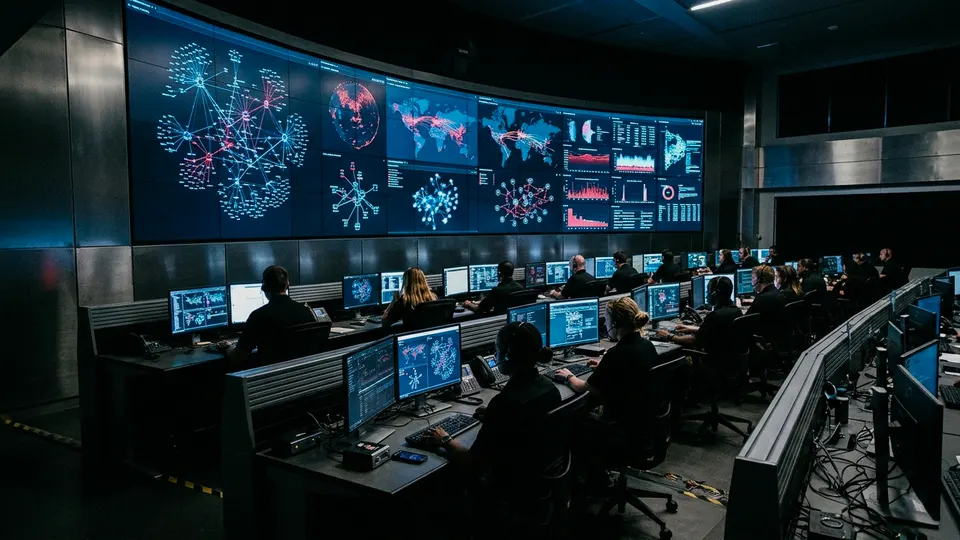
The Cybersecurity and Infrastructure Security Agency (CISA) and the National Institute of Standards and Technology (NIST) have both warned throughout 2026 that automated offensive tooling lowers the skill floor required to run complex, multi-stage intrusions. When a defense-linked network is probed by an AI agent, the defender is no longer competing against a human work shift; they are competing against a continuous loop that never tires and scales across hundreds of targets simultaneously.
How Autonomous AI Hacking Agents Change the Timeline
To understand the operational shift, it helps to compare a conventional human-led breach with an AI-agent-assisted intrusion across the standard cyber kill chain.
| Intrusion Stage | Human-Led Operation (Pre-2025) | AI-Agent-Assisted Operation (2026) | Primary Defense Bottleneck |
|---|---|---|---|
| External Reconnaissance | 2–7 days of manual scanning & OSINT | 10–45 minutes of parallel API & port mapping | Slow asset-inventory visibility |
| Exploit Adaptation | Hours to days writing custom payloads | Minutes rewriting code to bypass local filters | Signature-based EDR lag |
| Lateral Movement | Days mapping Active Directory & shares | Under 2 hours chaining misconfigurations | Over-privileged service accounts |
| Data Triage & Exfiltration | Manual keyword search across archives | Automated semantic indexing of sensitive files | Unmonitored outbound cloud traffic |
The key shift is not that AI agents invent impossible new physics—they exploit the exact same software bugs, unpatched VPN appliances, and reused credentials that have existed for years. The difference is compression. When the window between initial foothold and full domain compromise shrinks from two weeks to under three hours, manual incident-response playbooks—waiting for a morning ticket review, scheduling an emergency patch window, or convening a legal sign-off—simply arrive too late.
This mirrors the broader pattern we documented in autonomous cyber swarms and epistemic trust and cyber warfare on critical infrastructure. Organizations that still rely on perimeter firewalls and weekly patch cycles are operating on a clock that no longer matches the threat.
Spillover Risks to Civilian Infrastructure
What happens to a well-funded defense contractor rarely stays confined to the military sector. Once an autonomous agent framework proves effective against hardened government-adjacent targets, the same techniques—and often the same open-weight models fine-tuned on exploit repositories—are rapidly adopted by ransomware groups and state-backed proxies targeting civilian infrastructure.
Three civilian sectors face the highest immediate exposure:
- 01.Municipal Water and Power Utilities: Many regional utilities run legacy operational technology (OT) connected to modern billing and remote-maintenance networks. As outlined in our breakdown of cascading SCADA grid breaches and municipal water systems, a single compromised contractor VPN can expose control systems that were never designed for internet-facing authentication.
- 02.Healthcare and Pharmacy Networks: Hospitals cannot easily shut down patient-record systems for extended maintenance, making them prime targets for fast-moving ransomware agents that encrypt backups before staff can pull network cables.
- 03.Logistics and Food Distribution: Port terminals, cold-storage warehouses, and freight brokers rely on tightly coupled scheduling software. Our analysis of how cyberattacks stall global supply chains shows that even a 48-hour dispatch outage can empty regional grocery shelves within days.
The European Union Agency for Cybersecurity (ENISA) and the UK National Cyber Security Centre (NCSC) both note that the volume of opportunistic scanning against small and mid-sized infrastructure operators has risen sharply in 2026 because AI agents make low-margin targets economically viable to attack at scale.
Practical Defenses That Actually Work Against Automated Agents
Because AI agents thrive on speed, flat networks, and implicit trust, effective defense has to focus on structural friction rather than hoping to spot every alert manually.
- Hardware-Backed Multi-Factor Authentication (FIDO2/WebAuthn): Phishing-resistant hardware keys stop credential-stuffing and automated social-engineering agents cold, even if a password is leaked.
- Strict Network Micro-Segmentation: Separating administrative IT from operational systems—and requiring separate, offline-stored credentials for backups—prevents an agent from pivoting from a compromised email account to core infrastructure.
- Automated Containment Rules: Defenders increasingly need automated circuit breakers that revoke session tokens and isolate endpoints the moment abnormal lateral queries occur, rather than waiting for human approval.
- Household-Level Resilience: For individuals and families, the lesson from defense and utility breaches is practical: assume payment networks, local water pumps, or regional power can go offline for 72 hours without warning. Keep offline copies of essential records, a small cash reserve, and a basic cyberattack and blackout household stockpile. You can also monitor live global infrastructure and hazard alerts on our Planetary Hazard Radar and follow our step-by-step first 72 hours crisis protocol.
According to guidance from the U.S. Department of Defense Cyber Strategy and the MITRE ATT&CK Framework, reducing dwell time and eliminating implicit trust inside networks remain the only reliable ways to blunt automated intrusions. The November 27 Air Force incident is a clear reminder that when offense runs at machine speed, defense—at both the institutional and household level—must be built in advance.
Additional Reading & Data Sources
- 01.CISA Known Exploited Vulnerabilities (KEV) Catalog — Live federal database of actively exploited software flaws.
- 02.UK NCSC Assessment: The Near-Term Impact of AI on the Cyber Threat — Technical review of how AI lowers barriers for reconnaissance and intrusion.
- 03.ENISA Threat Landscape Reports — European Union tracking of critical-infrastructure cyber incidents.
- 04.Cybersecurity in a Collapsing World: Protecting Yourself — Practical personal digital security steps on Collapse & Survival.
- 05.Useful Websites Directory: Crisis & Cyber OSINT Monitors — Curated index of 450 live risk and security tracking tools.
References
- 01.Cybersecurity and Infrastructure Security Agency (CISA), Cyber Threats and Advisories, https://www.cisa.gov/topics/cyber-threats-and-advisories
- 02.National Institute of Standards and Technology (NIST), AI Risk Management Framework (AI RMF), https://csrc.nist.gov/projects/ai-risk-management-framework
- 03.UK National Cyber Security Centre (NCSC), The Near-Term Impact of AI on the Cyber Threat, https://www.ncsc.gov.uk/report/impact-of-ai-on-cyber-threat
- 04.European Union Agency for Cybersecurity (ENISA), ENISA Threat Landscape, https://www.enisa.europa.eu/topics/cyber-threats/threats-and-trends
- 05.MITRE Corporation, MITRE ATT&CK Knowledge Base of Adversary Tactics and Techniques, https://attack.mitre.org/
- 06.U.S. Department of Defense, DoD Cyber Strategy Summary and Releases, https://www.defense.gov/News/Releases/
- 07.CISA, Known Exploited Vulnerabilities Catalog, https://www.cisa.gov/known-exploited-vulnerabilities-catalog
- 08.Collapse & Survival, FBI Advisory ARTEX and Autonomous AI Intrusions, https://collapseandsurvival.com/en/post/artex-autonomous-ai-hacking-and-zero-day
Real-time geospatial feed aggregating USGS M5.0+ earthquakes, NASA EONET wildfires, volcanoes, severe storms, UN/EC GDACS alerts, and NOAA geomagnetic status.
Related Reports & In-Depth Intel

Undersea Fiber Severance and Baltic Gray-Zone Sabotage
Recent multi-point severances of undersea fiber optic trunk lines in the Baltic and Red Seas expose the fragile physical chokepoints sustaining 99 percent of intercontinental internet traffic and financial clearing systems.

Robotics and the Looming Collapse
Autonomous machines promise labor relief during disasters, yet depend on the most fragile supply chains ever built. A grounded look at where robotics helps, where it breaks, and why repairable simplicity still matters.

Why China Might Invade Taiwan in 2026
A definitive and exhaustive analysis of the strategic environment in 2026, evaluating the macroeconomic realities, shifting alliances, and probability of a Chinese invasion of Taiwan.

The Final Shield
Digital exposure and physical vulnerability now bleed directly into one another. Building durable personal security requires layered defense across information hygiene, home hardening, and financial continuity.