Robotics and the Looming Collapse

Autonomous machines promise labor relief during disasters, yet depend on the most fragile supply chains ever built. A grounded look at where robotics helps, where it breaks, and why repairable simplicity still matters.
Every major technological wave carries the same quiet promise: that machines will insulate us from scarcity, exhaustion, and dangerous labor. Today, quadruped robots inspect radiation zones, autonomous drones map flood-damaged bridges, and articulated warehouse arms pick freight around the clock. When planners imagine severe infrastructure disruption or post-catastrophic recovery, it is tempting to assume autonomous fleets will step in where human crews cannot.
Yet anyone who has maintained industrial equipment under field conditions recognizes an awkward paradox. Modern robotics represents the apex of globalized complexity—dependent on sub-5-nanometer logic chips, rare-earth permanent magnets tracked in USGS Mineral Commodity Summaries and exposed to critical minerals embargoes, cloud-tethered software updates, and continuous electrical power. Under systemic stress, the very machines built to handle crisis environments are often the first systems to fail if their logistical umbilical cord gets cut.
Where Automation Actually Delivers Under Stress
Dismissing robotics outright would be just as foolish as treating it as magic. Narrow, ruggedized automation—evaluated in NIST disaster resilience engineering programs—already outperforms human crews in specific high-risk recovery roles:
- Disaster reconnaissance: Thermal-equipped drones and tethered inspection rovers locate survivors beneath collapsed concrete, map wildfire perimeters at night, and check damaged chemical tanks without putting paramedics into toxic plumes.
- Grid and pipeline inspection: Autonomous aerial patrols scan hundreds of miles of high-voltage transmission towers after ice storms, pinpointing downed conductors days faster than truck crews navigating blocked rural roads.
- Precision agriculture: GPS-guided sprayers and automated milking or sorting systems stretch scarce farm labor while cutting herbicide and fertilizer waste—critical when chemical inputs tighten.
In short bursts backed by intact depots, robotics acts as a genuine force multiplier. The trouble starts when temporary emergencies turn into prolonged supply-chain breakdowns.
The Maintenance and Supply-Chain Trap
Walk into a modern automated fulfillment center or hospital pharmacy and ask what happens when a proprietary servo actuator or optical sensor fails. Nobody pulls out a lathe and machines a replacement part in the back room. Repairs require serialized OEM modules shipped overnight from Shenzhen, Stuttgart, or Austin, followed by software calibration authenticated against a vendor server.
If semiconductor fabs stall, maritime shipping lanes seize up, or vendor cloud servers go offline, sophisticated robots rapidly turn into expensive paperweights. Software licensing locks intensify the risk: many commercial agricultural tractors, medical analyzers, and industrial arms already disable core functions when cryptographic certificates expire or telemetry links drop. Even battery degradation poses an unforgiving clock. High-discharge lithium-polymer and lithium-ion packs lose capacity over hundreds of cycles and swell or fail outright if stored improperly or exposed to freezing temperatures. Without fresh cells, specialized lubricants, and replacement harmonic-drive bearings, autonomous fleets cannibalize themselves for parts within months.
Human skill atrophy compounds the hardware bottleneck. When municipalities or factories automate routine diagnostics, welding, and mechanical troubleshooting, fewer technicians remain who can read a wiring schematic, bypass a failed controller, or operate machinery manually. Replacing experienced human judgment with proprietary black boxes trades short-term payroll savings for brittle, unrecoverable failure modes.
Energy Constraints and the Compute Penalty
Autonomy is also far hungrier for electricity than promotional videos suggest. Lifting payloads with brushless motors, running continuous LiDAR sweeps, stabilizing gimbals, and executing onboard computer-vision inference burn watt-hours relentlessly. A humanoid or legged platform traversing rubble often exhausts its internal battery in sixty to ninety minutes before needing a high-wattage charger.
In an energy-abundant grid—where baseline demand shifts are tracked by U.S. EIA Electric Power Monthly and the IEA World Energy Outlook—recharging a robotic fleet overnight costs pennies. In a crisis defined by diesel rationing, damaged substations, or winter solar shortfalls, every kilowatt-hour is contested between hospital ventilators, water lift pumps, and heating. Under hard energy constraints, simple mechanical leverage, diesel-electric hybrids, wheeled carts, and human-operated hand tools frequently deliver far more useful work per watt than bipedal or quadruped platforms struggling over wet mud and uneven debris.
Security Risks: Autonomous Weapons and Economic Shock
Beyond engineering limits, the rapid spread of cheap robotics reshapes both social stability and physical security. On modern battlefields from Ukraine to the Red Sea, commercial flight controllers, carbon frames, and open-source vision stacks have turned inexpensive first-person-view (FPV) drones into precision weapons—a shift analyzed in our briefings on algorithmic kill webs and autonomous drone swarms and autonomous drone threats to critical infrastructure. When autonomous terminal guidance pairs with low-cost airframes, small non-state groups gain strike capabilities once reserved for national air forces—complicating defense around critical civilian grids and water plants flagged in CISA Industrial Control Systems advisories.
At home, uneven automation widens economic fractures. Warehousing, freight logistics, and routine inspection jobs face steady displacement precisely as housing costs climb and retraining safety nets fray. A society that sheds entry-level and mid-skill livelihoods faster than it distributes productivity gains builds political volatility—making communities less cohesive right when mutual trust matters most.
Designing for Repairable Resilience
If automation is going to serve human survival rather than fail alongside the grid, design priorities need to invert toward field maintenance and hardware resilience. Robustness and maintainability beat novelty every time:
- Open hardware and local repair: Systems built around standardized fasteners, off-the-shelf DC motors, common 12-volt or 24-volt battery packs, and open-source firmware can be patched by local machinists and electronics technicians without vendor permission or cloud authentication.
- Manual mechanical overrides: Critical municipal equipment—water treatment valves, grain elevator augers, fuel transfer pumps, and backup generators—must remain operable by hand crank or analog switch if digital controllers fry during a surge or cyberattack.
- Modular standardization: Farms and municipalities gain far more resilience from sharing common hydraulic fittings and interchangeable electric motors than from deploying bespoke proprietary fleets.
- Skill preservation: Keep practical mechanical repair skills, electrical diagnostics, welding, and agricultural literacy alive across generations so communities never become helpless hostages to software licenses.
Technology has always extended human capability, from the waterwheel and cast-iron plow to the diesel tractor and hydraulic crane. Yet the tools that endure longest through hard times share one practical trait: ordinary people can understand how they work, power them simply from local sources, and fix them with what is already sitting on the shop workbench.
Authoritative Sources & Further Reading
Real-time geospatial feed aggregating USGS M5.0+ earthquakes, NASA EONET wildfires, volcanoes, severe storms, UN/EC GDACS alerts, and NOAA geomagnetic status.
Related Reports & In-Depth Intel
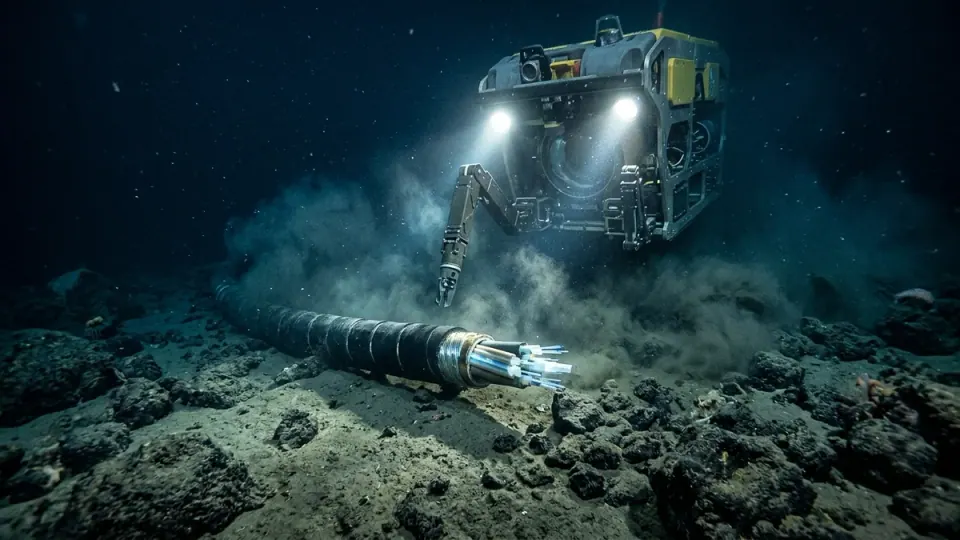
Undersea Fiber Severance and Baltic Gray-Zone Sabotage
Recent multi-point severances of undersea fiber optic trunk lines in the Baltic and Red Seas expose the fragile physical chokepoints sustaining 99 percent of intercontinental internet traffic and financial clearing systems.

US Air Force Hack and AI Agent Cyber Risks
The November 27 intrusion targeting US Air Force contractor and administrative networks highlights how autonomous AI hacking agents compress breach timelines from weeks into hours.
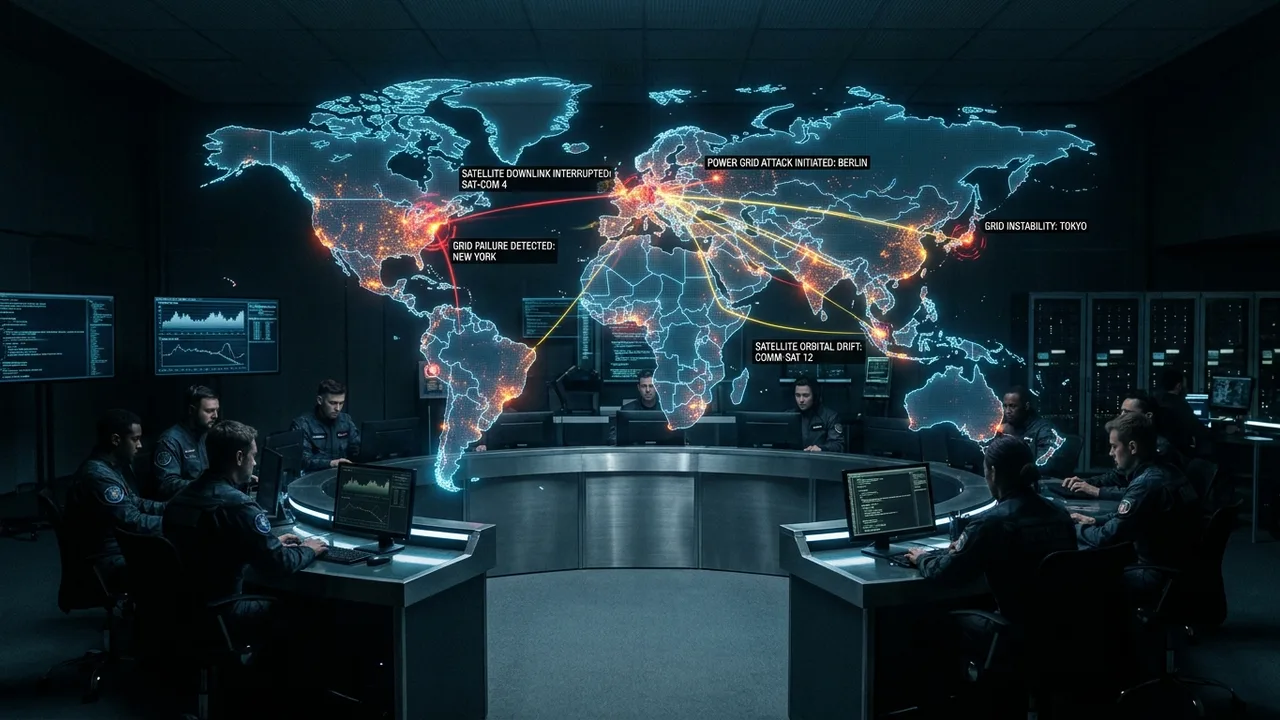
Machine-Speed Siege: FBI Advisory ARTEX, Three-Hour Autonomous Intrusions
Two watershed November 2026 cybersecurity disclosures—the FBI FLASH warning on autonomous ARTEX penetration agents and Forescout's 90-hour AI bug-hunting benchmark—prove that the defensive human patching cycle has been structurally outpaced by weaponized machine intelligence.

When One Cloud Glitch Grounds a Continent
A mid-November Microsoft 365 blackout, an FAA telecom failure, and an automated chemical dosing malfunction at a European pool proved we wired real-world physical safety into fragile remote software.